 Marina Bay Food Market Grazing Route After a Conference Day
Neighborhood Guides
Telok Ayer Scenic Walk Planner: Temples to Hill Steps
Telok Ayer packs old seafront temples, restored Amoy Street shophouses and a hill park into one short walk. Go on a weekday morning or a calm Sunday.
Telok Ayer Street once ran right along the water's edge, and the sailors and migrants who landed here built temples and mosques to give thanks for a safe crossing. The sea has long since been pushed back by reclamation, yet the street still follows the old curve of the shore. Walking it today means moving between incense smoke, carved timber shutters and glass towers in the space of a few blocks, and the contrast is what makes this one of the most rewarding short walks in the city centre.
Reading the Old Shoreline in the Street Plan
Stand at the southern end of Telok Ayer Street and look along it. The gentle bend is the clue. Before land reclamation, waves lapped close to where the temple steps now rise, and boats unloaded passengers almost at the doorstep. Knowing this turns a pleasant stroll into a small act of time travel, because every place of worship along the way was positioned to face the arriving ships rather than the modern road.
The street is long but rarely crowded on foot, since office workers stick to the covered walkways and the lunch rush is concentrated in short bursts. Walk on the temple side first, then cross and return along the shophouse side. Doing it twice, in opposite directions, shows you the facades from angles that a single pass misses, and you will notice roof ornaments and painted door gods that are easy to walk past.
Thian Hock Keng and the Temple Row
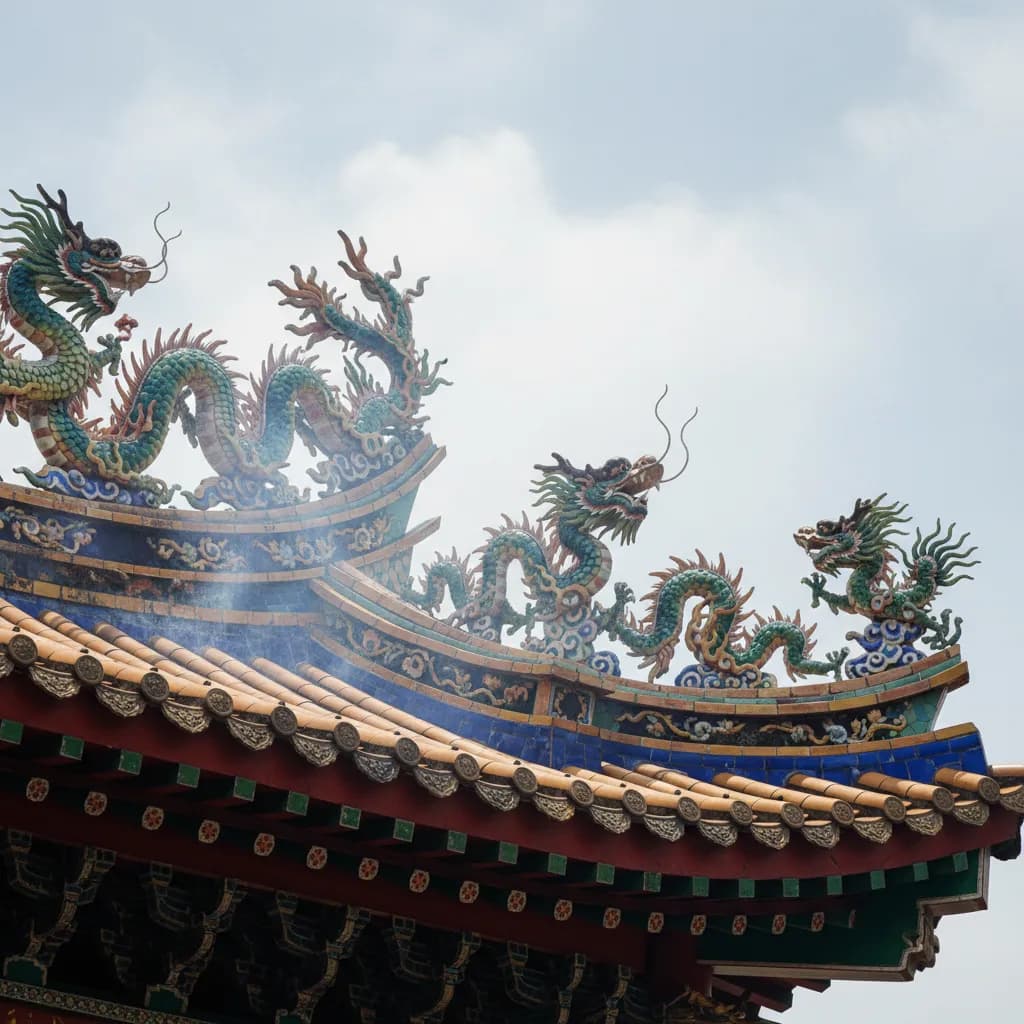
Thian Hock Keng is the anchor of this walk, a Hokkien temple dedicated to the sea goddess Mazu, who was believed to protect travellers on the water. Its roof ridges carry dragons built from shards of coloured porcelain, and the courtyards are cool and calm even when the city outside is loud. Step in quietly, keep to the edges if prayers are under way, and look up at the carved beams rather than only at the altars.
A short distance along, you pass a small mosque built by South Indian Muslim traders, and further on a memorial hall and a Methodist church with Chinese roots. The variety on one street tells the story of a port town where communities lived side by side. Treat each threshold with the same respect, removing shoes where asked and dressing modestly, and you will be welcomed rather than merely tolerated.
Amoy Street's Restored Shophouse Rows
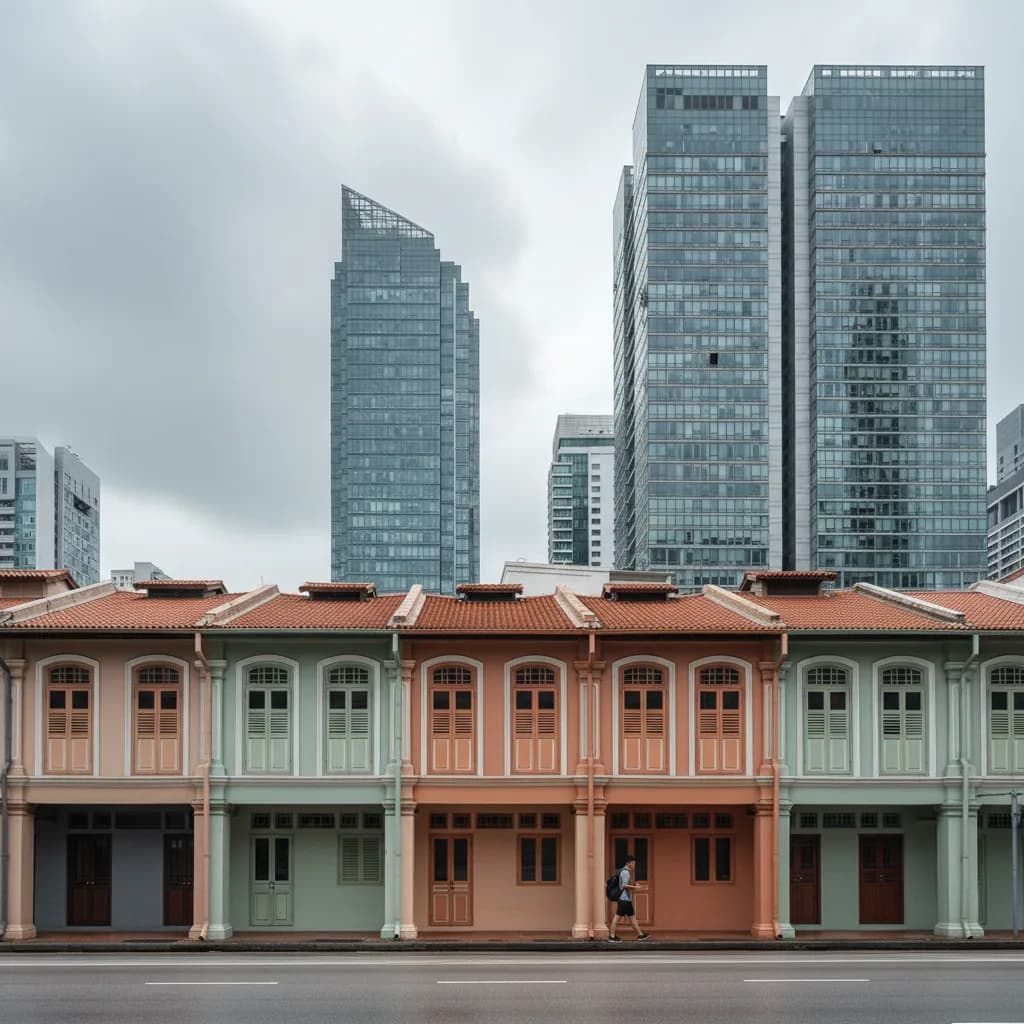
Parallel to Telok Ayer Street runs Amoy Street, where long rows of conservation shophouses have been restored with pastel paint, louvred shutters and ornamental plaster. Many now hold small restaurants, bars and design studios, but the upper floors keep their original windows, and the effect is of a street that has been polished without losing its bones. Mid-morning, before the lunch crowd arrives, is the best time to admire the facades without dodging queues.
Look for the decorative details that change from house to house: flower motifs on the pilasters, small balconies, the five-foot way tiles underfoot. Some shophouses carry tiny shrines by the door. The narrow cross lanes linking Amoy Street to Telok Ayer Street are worth threading as well, because they hide murals and back courtyards. Walk slowly enough to spot them, since the whole street can be crossed in a few minutes if you rush.
Climbing Up to Ann Siang Hill
The pleasant surprise of this neighbourhood is that it has a hill. A short stairway and path rise from the back of Amoy Street to Ann Siang Hill Park, a pocket of greenery with wooden boardwalks and shady trees that feels far removed from the towers around it. The climb is gentle and takes only minutes, yet it changes your perspective completely, letting you look down over the rooftops you have just walked past.
At the top, Ann Siang Road and Club Street spread out with more shophouses, many now holding boutiques and cafés. The houses here are slightly grander, built for wealthier families and clan associations, and the street slopes in a way that makes the facades step down like a staircase. Linger here if you want a coffee break, or continue across the ridge and down into the edge of Chinatown for a longer route.
When the District Feels Calmest
Telok Ayer has two distinct personalities. On weekdays, the lunch hour floods the streets with office workers, and the shophouse dining rooms fill quickly. Early on a weekday, though, the lanes are quiet and the light is soft on the pastel facades. Sundays are calmer still, because many offices are shut, and the area takes on the relaxed feel of a small town rather than a business district.
Evenings bring a third mood. Bars spill out onto the five-foot ways, and the temples are lit warmly against the darkening sky. If you want photographs of the temple roofs, aim for late afternoon when the sun catches the porcelain dragons. For a peaceful wander with few interruptions, choose a Sunday morning, start at the temples and finish on the hill as the heat begins to build.
Keeping Cool on a Short City Walk
This is an easy walk in distance but a hot one in practice, since the open temple courtyards and the climb to the hill both catch the sun. The five-foot ways in front of the shophouses provide continuous shade, so use them whenever you can rather than walking on the road. Office lobbies and air-conditioned cafés also offer breaks, and nobody minds a walker ducking in for a few minutes.
Carry a water bottle and refill it whenever you sit down for a drink. If a tropical downpour arrives, the covered walkways make it possible to keep walking for some distance without getting wet. The temples are especially atmospheric during rain, when the courtyards fill with the sound of water running off the roof tiles. Wait out the heaviest burst under the eaves and then continue once it eases.
Pairing Telok Ayer With Nearby Districts
Telok Ayer sits between Chinatown, Tanjong Pagar and the financial district, so it links easily with other walks. Head west through the hill and you reach the shophouses and street markets of Chinatown proper. Turn south, and the restored terraces of Duxton Hill are a short stroll away. Head east, and you meet the waterfront promenades around Marina Bay, where the sea that once reached Telok Ayer Street now lies.
A satisfying half-day route links all three: start with the temples at Telok Ayer, climb to Ann Siang Hill, drop into Chinatown for lunch at a hawker centre, then walk out to the bay as the afternoon cools. It covers centuries of history and a complete change of scenery, and each segment is short enough that you can stop whenever the heat or your feet say enough.
Using the Karpo APP on This Route
Ask the Karpo APP for a heritage stroll around Telok Ayer that ends with a shaded café or a hill view, and it pulls together nearby options that fit. It is also handy when your plans shift halfway through, for example if rain arrives or you decide to extend the walk into Chinatown. Describe what you want in a sentence and adjust the suggestions until the route feels right for your pace and your company.
Practical Notes for Telok Ayer Walkers
Dress modestly if you plan to enter the temples and the mosque, and carry a light scarf for covering shoulders. Some places of worship ask visitors to remove shoes, so wear pairs that slip on and off easily. Photography is generally fine in courtyards, but avoid photographing worshippers at prayer. The stairs to Ann Siang Hill are short but can be slippery after rain. For anything specific about a temple visit, speak with the caretakers at the entrance, who are usually happy to help.
Ask Karpo for more information.
Keep reading
- Marina Bay Food Market Grazing Route After a Conference Day
 River Valley Food Market Grazing Route With Young Kids
 Serangoon Food Market Grazing Route for a Homecoming Weekend