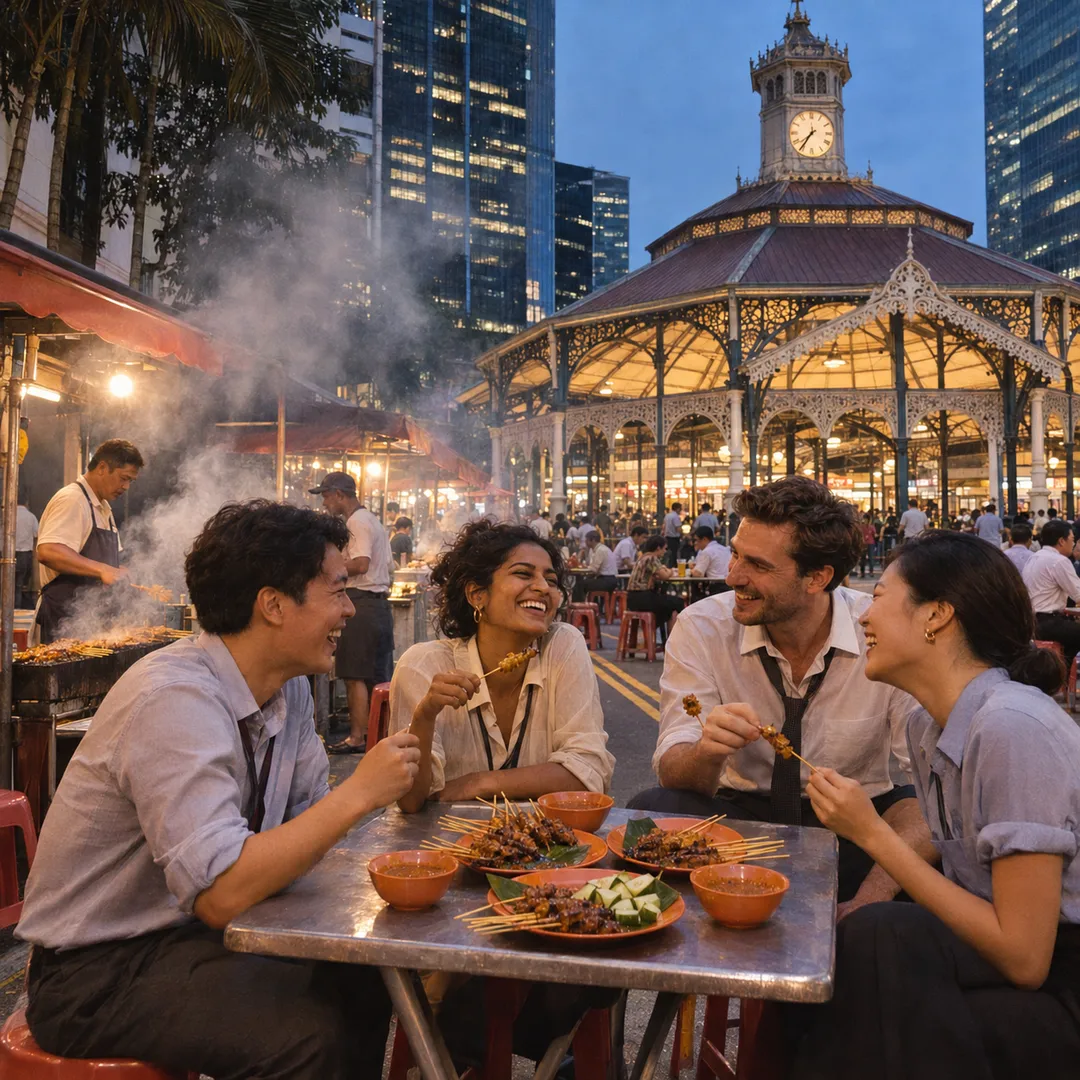
 Marina Bay Food Market Grazing Route After a Conference Day
Neighborhood Guides
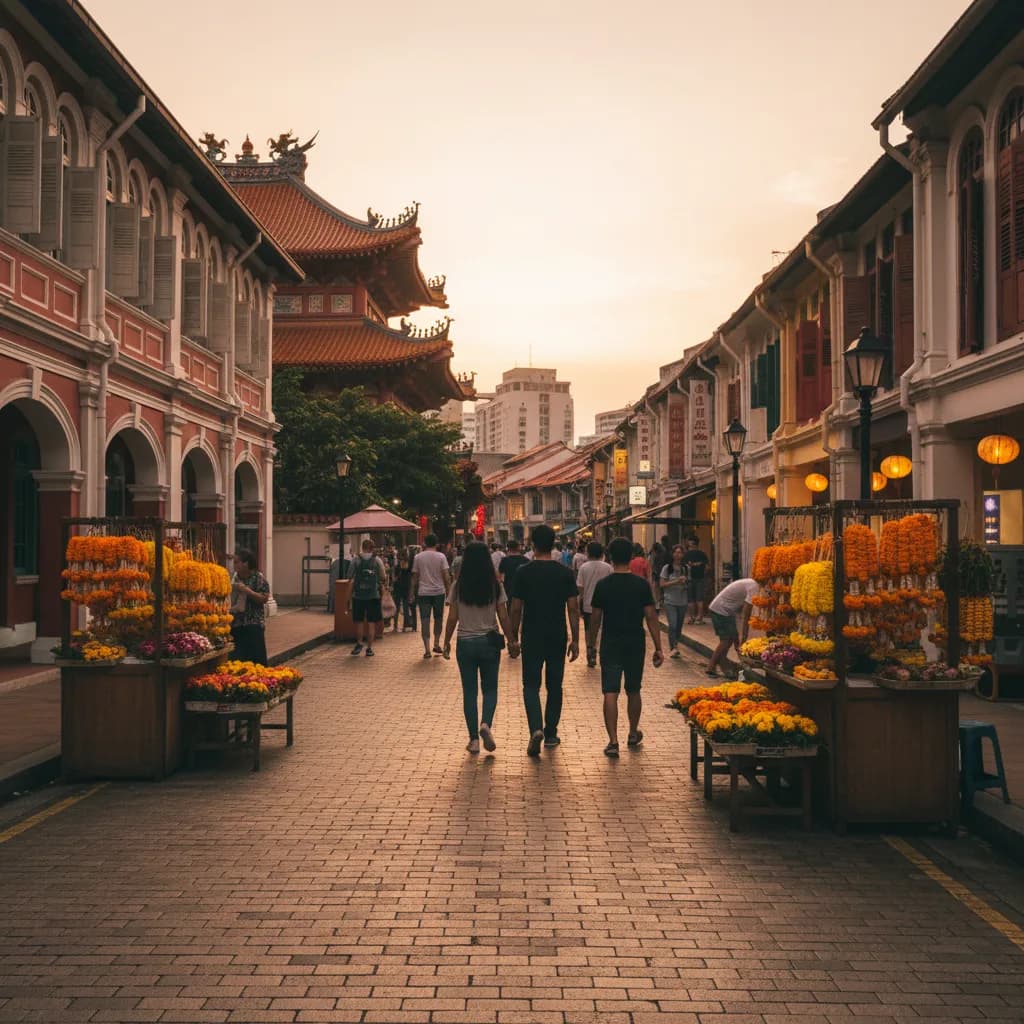
Bugis Scenic Walk Planner: Waterloo Street to Chapel Lawns
Bugis walks best from flower stalls on Waterloo Street into the Bras Basah museum lawns and a lit colonial chapel. Set out near dusk when the stone cools.
Bugis is often treated as a shopping stop, yet a few streets away from the malls lies one of Singapore's most varied walking routes. Waterloo Street is a car-free stretch where a Buddhist temple, a Hindu temple and arts groups share the same pavement, and beyond it the Bras Basah precinct opens into museum lawns, old school buildings and a former convent. The walk shifts from devotion to art to calm green space in barely a kilometre.
Waterloo Street's Mix of Faith and Flowers
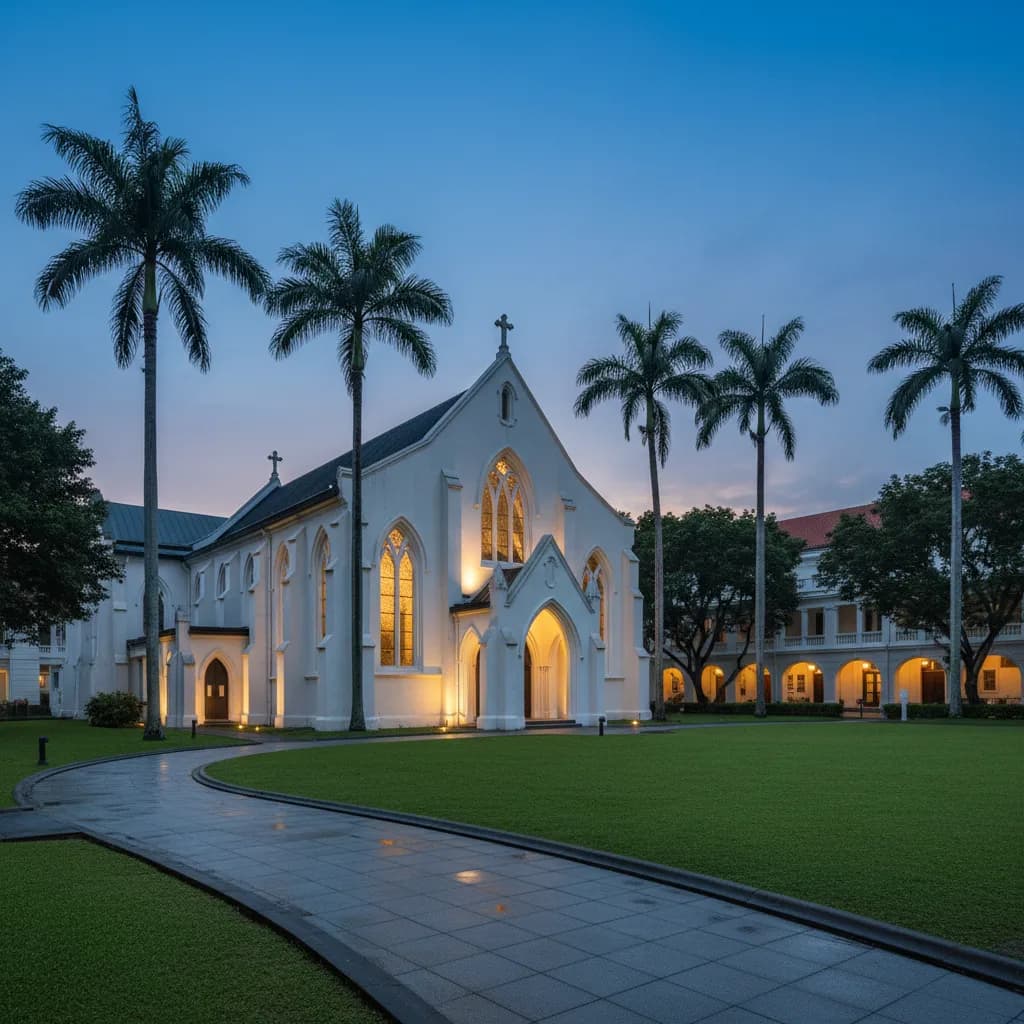
Waterloo Street is a pedestrian mall, which means you can wander without watching for traffic. Its focal point is a busy Buddhist temple dedicated to Guan Yin, the goddess of mercy, where devotees shake fortune sticks and leave offerings of flowers and fruit. Next door stands a Hindu temple, and many worshippers pray at both. The shared street captures something essential about Singapore, where different traditions meet on a single block.
The edges of the mall are lined with stalls selling fresh flowers, marigold garlands, joss sticks and lucky charms. Fortune tellers sometimes set up small tables, and the scent of incense mixes with jasmine. Linger here for a few minutes before moving on, watching the rituals without intruding. If you want to enter either temple, dress modestly, remove your shoes where required and keep photography discreet around people at prayer.
The Arts Belt Behind the Temples
Walk further along Waterloo Street and the mood changes. Old shophouses and former school buildings have been turned into studios and rehearsal spaces for theatre groups, dance companies and visual artists. The facades are mostly restored with pale paint and tall shuttered windows, and on many evenings you will hear music or voices practising through an open door. This is a working arts district rather than a showpiece, which gives it an unforced charm.
Look for public artworks along the route, including sculptures tucked into small plazas and murals on side walls. Some studios open their doors for exhibitions or performances, so it pays to glance at posters and noticeboards as you pass. Even without stepping inside, you get a sense of creative life humming within the old buildings, and the contrast with the temple scene a few doors back is striking.
Into the Bras Basah Museum Precinct
Cross Bras Basah Road and you enter a precinct of museums, universities and heritage buildings set among lawns and old trees. The national museum, an art museum housed in a former school, and several smaller galleries sit within a short walk of each other. The spaces between them are as pleasant as the buildings themselves, with shaded paths, wide lawns and benches that make it easy to rest between stops.
Fort Canning Park rises behind the museums, offering a green climb with views back towards the city. If you have the legs for it, a loop up the hill and back down through the gardens adds a lovely nature break to the walk. Otherwise, stay on the flat, wander between the museum facades and enjoy the colonial architecture with its white columns, arched windows and generous verandas.
CHIJMES and the Old Convent Courtyards
One of the highlights of the precinct is CHIJMES, a former convent school whose chapel and cloisters have been restored into a complex of restaurants and event spaces. The gothic chapel, with its stained glass and white spires, is one of the most beautiful buildings in the city. Around it, arcaded walkways frame a sunken courtyard where people gather for drinks as the evening cools.
Come here at dusk, when the chapel is lit and the courtyard lamps begin to glow. The atmosphere is relaxed and elegant, and the setting feels far removed from the shopping crowds of Bugis. Walk around the cloisters slowly to see the arches from different angles, and step into the chapel if it is open to visitors, since the interior details reward a close look even when it is quiet.
The Evening Shift in Bugis
Bugis comes alive after the sun goes down. The temples are lit warmly, the flower sellers keep trading, and the shophouse eateries around the district fill with diners. The museum precinct becomes quieter, though lawns are often busy with joggers and couples strolling. This combination of busy streets and calm green spaces makes an evening walk especially satisfying, since you can switch between moods within a few minutes.
Some museums and cultural spaces host night events, including light installations and outdoor screenings during festivals. If your visit coincides with one, the precinct transforms into an open-air gallery. Even on ordinary nights, the illuminated facades of the old buildings create a gentle glow. Wear light clothing and bring water, since the evening air remains warm and humid even after sunset.
Keeping the Route Comfortable
This is a fairly flat walk with plenty of shade, which makes it one of the more comfortable routes in central Singapore. Waterloo Street is open to the sky, but covered walkways connect much of the museum precinct, and the lawns are fringed with large trees. Museums and malls offer air-conditioned breaks if the heat gets too much, and nobody minds a walker resting inside a lobby.
Rain is the main obstacle. If a downpour arrives, take refuge in a museum, a café or the arcades of the old convent. The temples are also atmospheric in the rain, with the sound of water on the roof tiles and incense smoke hanging in the damp air. Once the shower eases, the paths drain quickly and the lawns smell fresh, which makes it a good moment to resume walking.
Linking Bugis to Kampong Glam and the River
Bugis borders Kampong Glam to the east, so you can easily extend the walk into the mural lanes and textile shops around the mosque. To the south, the Singapore River lies a short stroll beyond the museum precinct, with riverside promenades that lead towards Clarke Quay and Boat Quay. Either extension turns a short heritage stroll into a full afternoon or evening of walking.
A satisfying plan begins in Kampong Glam in late afternoon, crosses into Bugis for the temples as the light softens, continues through the museum precinct at dusk, and ends with dinner in the courtyards of the old convent. This route keeps you mostly in shade and lets you experience the district as the city shifts from day to night, which is the most beautiful time to walk here.
Planning the Walk With the Karpo APP
Open the Karpo APP and ask for a dusk route from Waterloo Street to the museum lawns with dinner near the old convent. It brings together places that suit the walk and suggests how to extend it into Kampong Glam if you have more time. When the weather turns or someone in your group wants a gallery rather than a meal, ask again and the plan adapts.
Practical Notes for Bugis Walkers
Dress respectfully if you plan to enter the temples, and be prepared to remove your shoes. Keep photography discreet near worshippers. The museum precinct has plenty of benches and shaded paths, so families with children can rest easily. Fort Canning Park involves some stairs, so skip it if mobility is a concern. Carry water and a small umbrella for sudden showers. If a specific exhibition matters to you, ask the museum front desk about it when you arrive.
Ask Karpo for more information.
Keep reading
- Marina Bay Food Market Grazing Route After a Conference Day
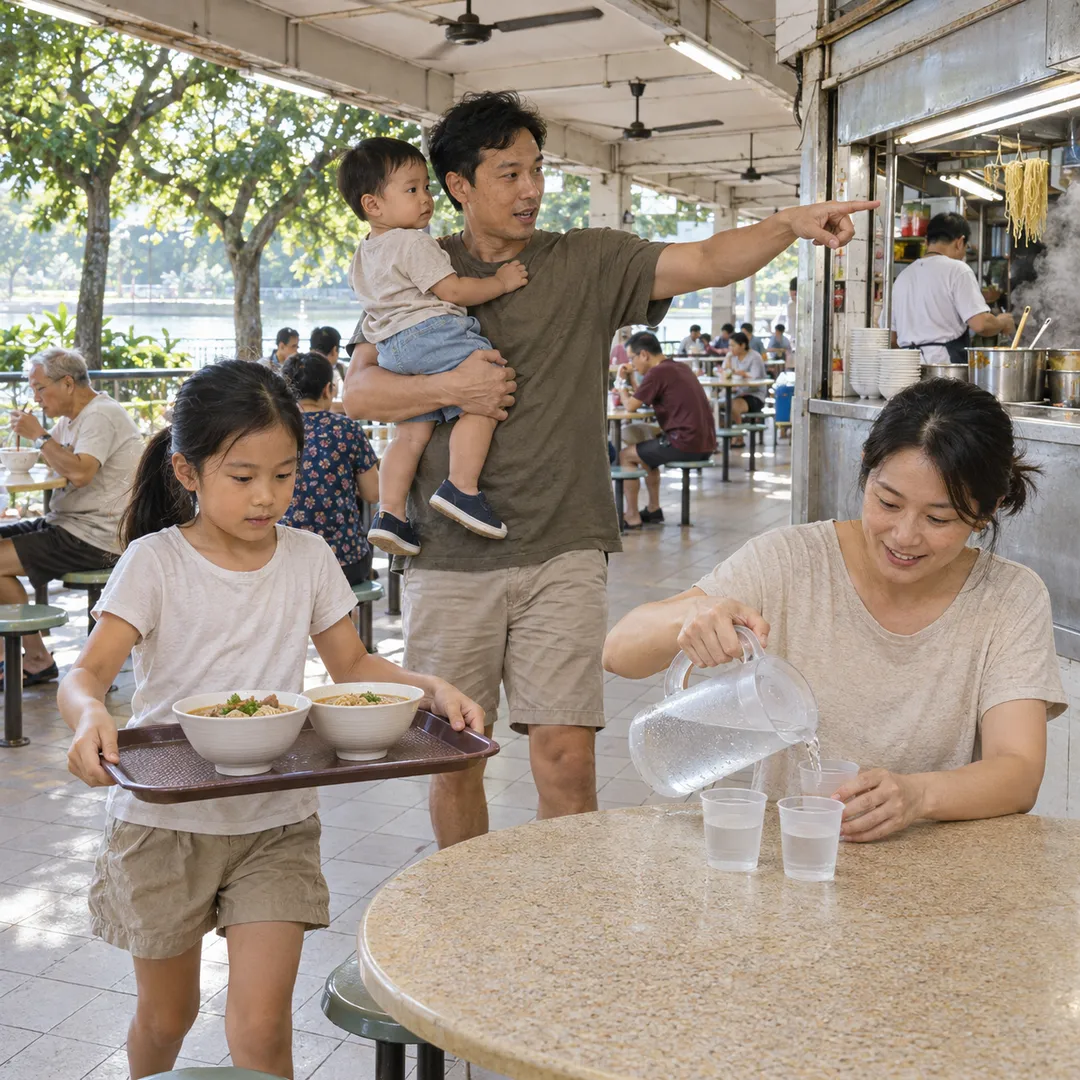 River Valley Food Market Grazing Route With Young Kids
 Serangoon Food Market Grazing Route for a Homecoming Weekend