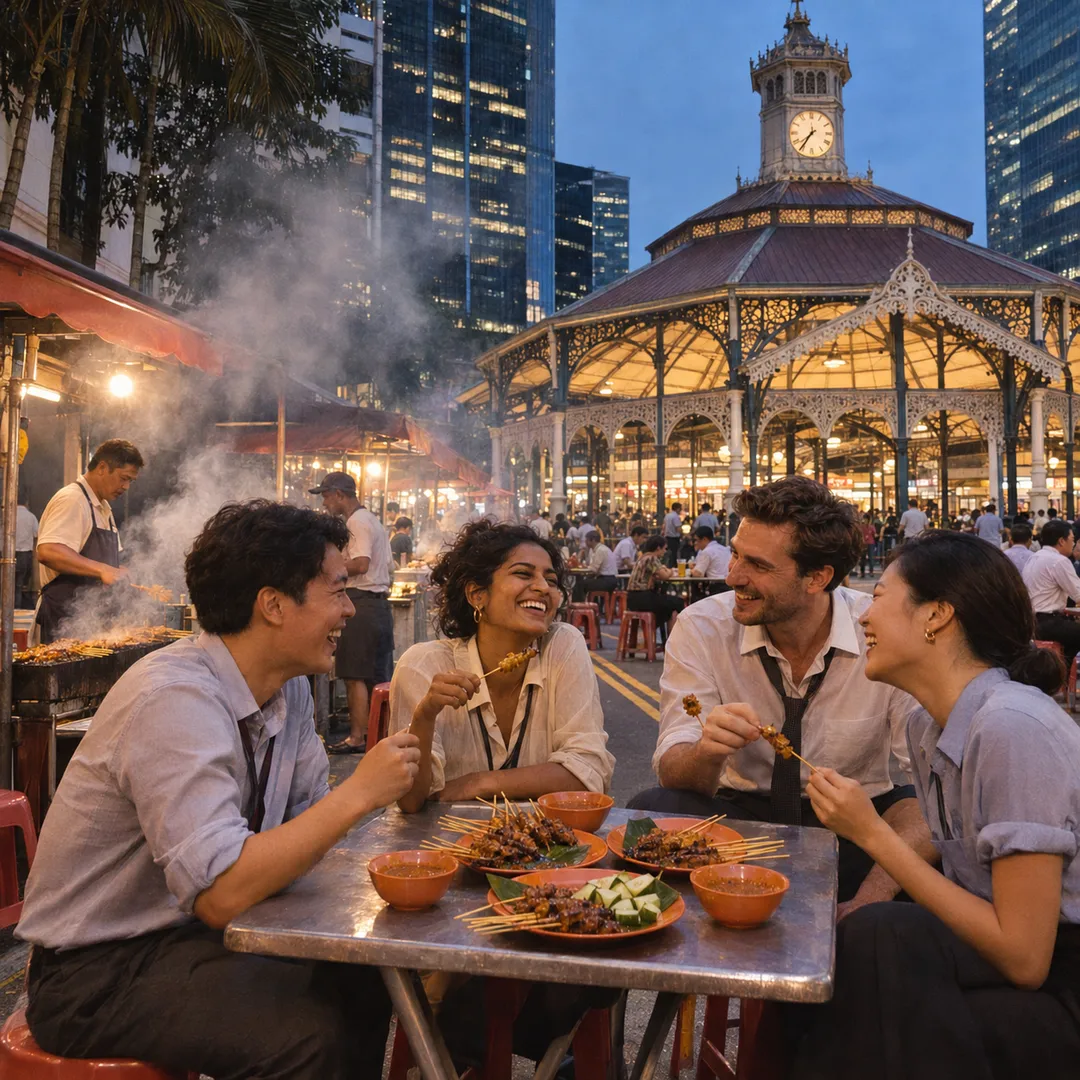
 Marina Bay Food Market Grazing Route After a Conference Day
Neighborhood Guides

Duxton Hill Scenic Pedestrian Stroll: Tanjong Pagar Route
Explore historic shophouses, shaded pedestrian lanes, and quiet heritage stairs on a scenic pedestrian stroll winding across Singapore's elevated Duxton Hill.
Rising gently above the bustling commercial avenues of Tanjong Pagar, Duxton Hill offers one of the most characterful pedestrian walking enclaves in central Singapore. Unlike the standard gridiron streets across much of downtown, this elevated knoll preserves an intimate enclave of conserved architectural terraces and peaceful pedestrian footpaths. Taking a scenic pedestrian stroll up its winding slope reveals an unhurried urban sanctuary where motor vehicles naturally yield to brick paving, mature tropical trees, and pedestrian-first public walkways.

The sensation of climbing Duxton Hill feels immediately distinct from navigating Singapore's glass-and-steel downtown corridors. The walk begins naturally where Duxton Road meets the curving ascent into the hill. As you walk upward, traffic hum softens into the background, replaced by the whisper of breeze through broad angsana canopies and the steady rhythm of footsteps against paved stone. The gradient is gentle and welcoming, making it an accessible wander for architecture enthusiasts, neighborhood flaneurs, and photographers seeking soft morning shadows.
Architectural Layers Along Conserved Arcades
Architecturally, the terraces along Duxton Hill showcase a remarkable concentration of conserved Straits Eclectic shophouse design. Each building displays ornate decorative plasterwork, classical pilasters, and colorful ceramic tiles framing solid timber entrance doorways. Walking beneath the continuous covered verandas—traditionally termed the five-foot way—offers pedestrians sheltered passage from tropical midday heat and sudden passing cloudbursts.
Looking above the covered ground-floor colonnades reveals hand-carved timber louvered shutters finished in contrasting shades of sage green, warm terracotta, and deep maritime blue. These tall casements were originally engineered to maximize cross-ventilation in equatorial heat, catching breezes that drift upward from the harbor basin. Decorative fanlights above second-story windows feature sunburst patterns and stained-glass geometric motifs that cast warm jewel-toned reflections onto the walkways below.
The cul-de-sac at the top of the hill forms an expansive pedestrian clearing surfaced with rustic brick pavers. Shaded by sprawling rain trees, this quiet square creates a natural gathering terrace where walkers can pause on public benches and take in the harmonious domestic proportions of early urban Singapore. Independent publishers, boutique design consultancies, and quiet reading cafes inhabit the ground floors, maintaining an engaging community presence without overwhelming the hilltop with commercial noise.
Hidden Stone Staircases and Craig Road Enclaves
A captivating feature of wandering Duxton Hill on foot is its network of outdoor stone stairways. Cut into narrow passages between shophouse rows, these pedestrian flights connect the elevated ridge directly down to Craig Road and Duxton Road below. Stepping down these staircases provides sudden shifts in vantage, framing narrow slices of distant skyscrapers between weathered retaining walls adorned with hanging ferns and potted palms.
The descent along these secluded steps reveals textured brickwork softened by layers of tropical moss and climbing creepers. Many property owners place ceramic planter troughs along the landing terraces, displaying fragrant frangipani, maidenhair ferns, and colorful bougainvillea that lend the staircases the feel of a shared vertical garden. The acoustics within these narrow passageways mute the surrounding city, creating reflective walking interludes where only the rustle of leaves accompanies your footsteps.
Reaching Craig Road brings walkers onto a broad, tree-sheltered sidewalk lined with traditional provisions stores, neighborhood coffee roasters, and independent art bookshops. The contrast illustrates how thoughtful urban preservation allows historic streetscapes to retain their neighborly warmth within modern Singapore. Pedestrians can sit along shaded stone planters, watch daily neighborhood life unfold, and enjoy the effortless transition between brick hillside lanes and ground-level avenues.
Green Pathways Through Duxton Plain Park
Continuing the scenic pedestrian stroll westward brings walkers into Duxton Plain Park, a slender linear greenway curving gracefully along the historic rail trace. Long converted into a protected pedestrian thoroughfare, this shaded corridor provides an uninterrupted walking connection from Duxton Hill toward Yan Kit and Outram without contending with heavy street traffic.
Towering banyan trees line the parkway, their aerial roots hanging in dramatic curtains across the path. Birdsong fills the air as black-naped orioles flit through the upper foliage, creating an atmosphere that feels remarkably removed from the neighboring financial district. The pathway features public rest pavilions, smoothly paved walking tracks, and glimpses into the rear service lanes and spiral emergency staircases of neighboring heritage homes.
Walking the length of Duxton Plain Park offers an intimate look at the domestic back of shophouse life. Traditional cast-iron spiral stairs curve gracefully against whitewashed rear walls, while small kitchen courtyards feature hanging laundry poles, potted herbs, and clay water jars. The quiet, unhurried pace of the linear park invites walkers to slow their stride, take deep breaths of fresh green air, and appreciate how nature and heritage intertwine in central Singapore.
Sensory Rhythms and Twilight Pacing
As daylight shifts, the sensory character of Duxton Hill undergoes subtle yet striking transformations. In the early morning hours, the air carries the clean scent of damp stone and freshly brewed espresso from small neighborhood cafes setting up their outdoor tables. Walkers often have the entire brick plateau to themselves, allowing for uninterrupted appreciation of architectural details and quiet contemplation.
When late afternoon approaches, the angle of the sun casts elongated shadows across the brick paving, bathing the pastel facades in a warm golden glow. Soft evening breezes funnel through the covered arcades, while warm amber lighting begins to illuminate the verandas and garden terraces. This transitional hour creates a relaxed, sociable ambiance where pedestrians can unwind after a busy day and experience the gentle evening rhythm of Tanjong Pagar.
Practical Route Notes and Walking Etiquette
The most comfortable hours to embark on a scenic pedestrian stroll around Duxton Hill fall between eight and ten in the morning, when tropical temperatures remain gentle and pedestrian traffic is light. Morning sunlight glances horizontally across east-facing facades, highlighting intricate bas-relief moldings and vibrant shophouse colors. Alternatively, late afternoon brings refreshing breezes from the nearby southern coastline, accompanied by warm lantern light illuminating the verandas as dusk settles.
Access to the walking route is straightforward via Singapore's mass transit network. Maxwell MRT Station on the Thomson-East Coast Line offers direct access just a short walk from the northern approach, while Tanjong Pagar MRT Station on the East-West Line connects walkers to the southern entrance via Peck Seah Street. Sturdy flat walking shoes with reliable grip are recommended for navigating brick paving and historic outdoor steps.
Because Duxton Hill remains a residential and creative neighborhood where residents live above ground-floor spaces, walkers should practice considerate pedestrian etiquette. Keeping conversation quiet within narrow stairways and covered arcades respects local residents, while public paths should remain unobstructed for neighborhood strollers. If you are exploring nearby dining or planning connected walking routes through Tanjong Pagar, consulting the Karpo APP offers convenient community route suggestions tailored to your walking pace.
Ask Karpo for more information.
Keep reading
- Marina Bay Food Market Grazing Route After a Conference Day
 River Valley Food Market Grazing Route With Young Kids
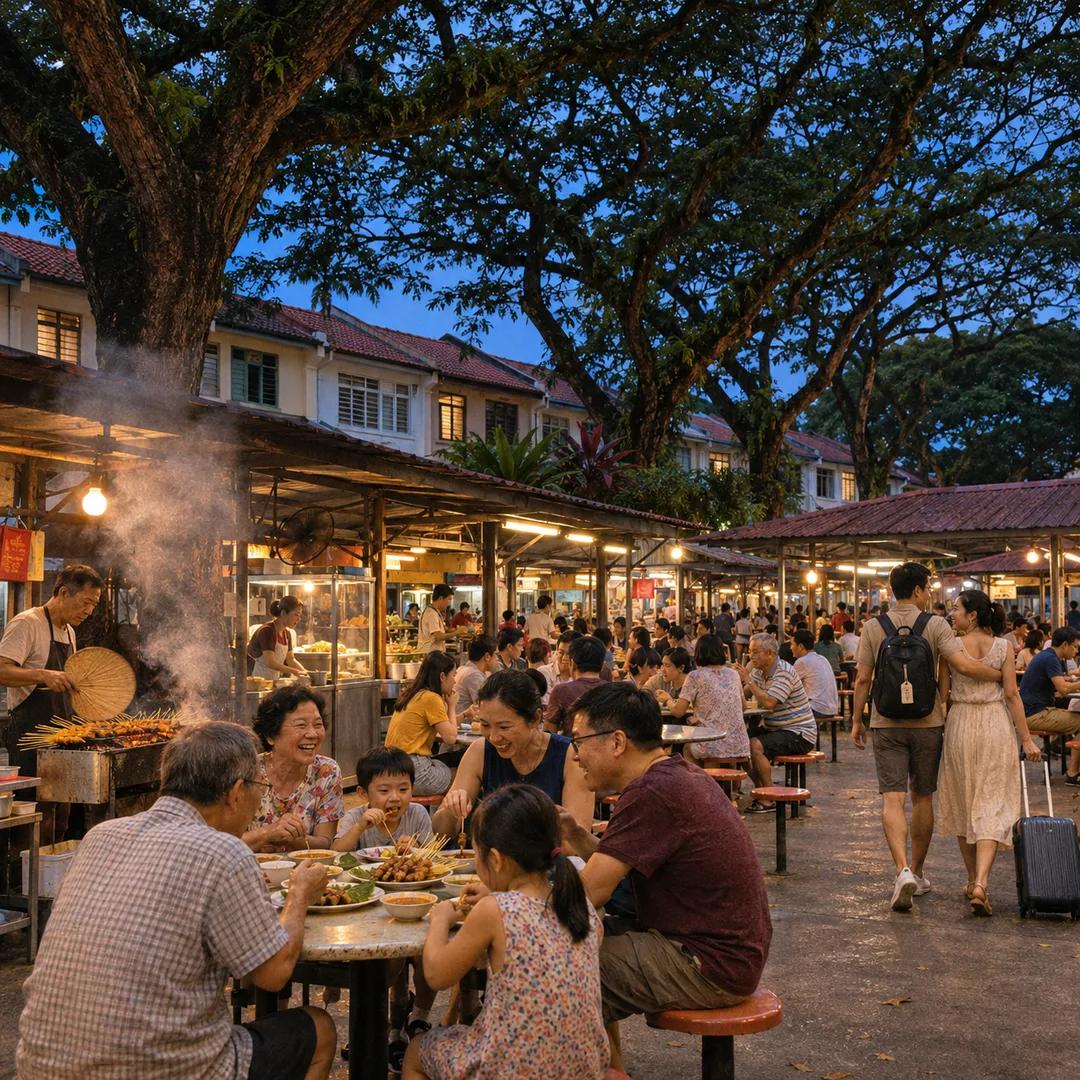 Serangoon Food Market Grazing Route for a Homecoming Weekend