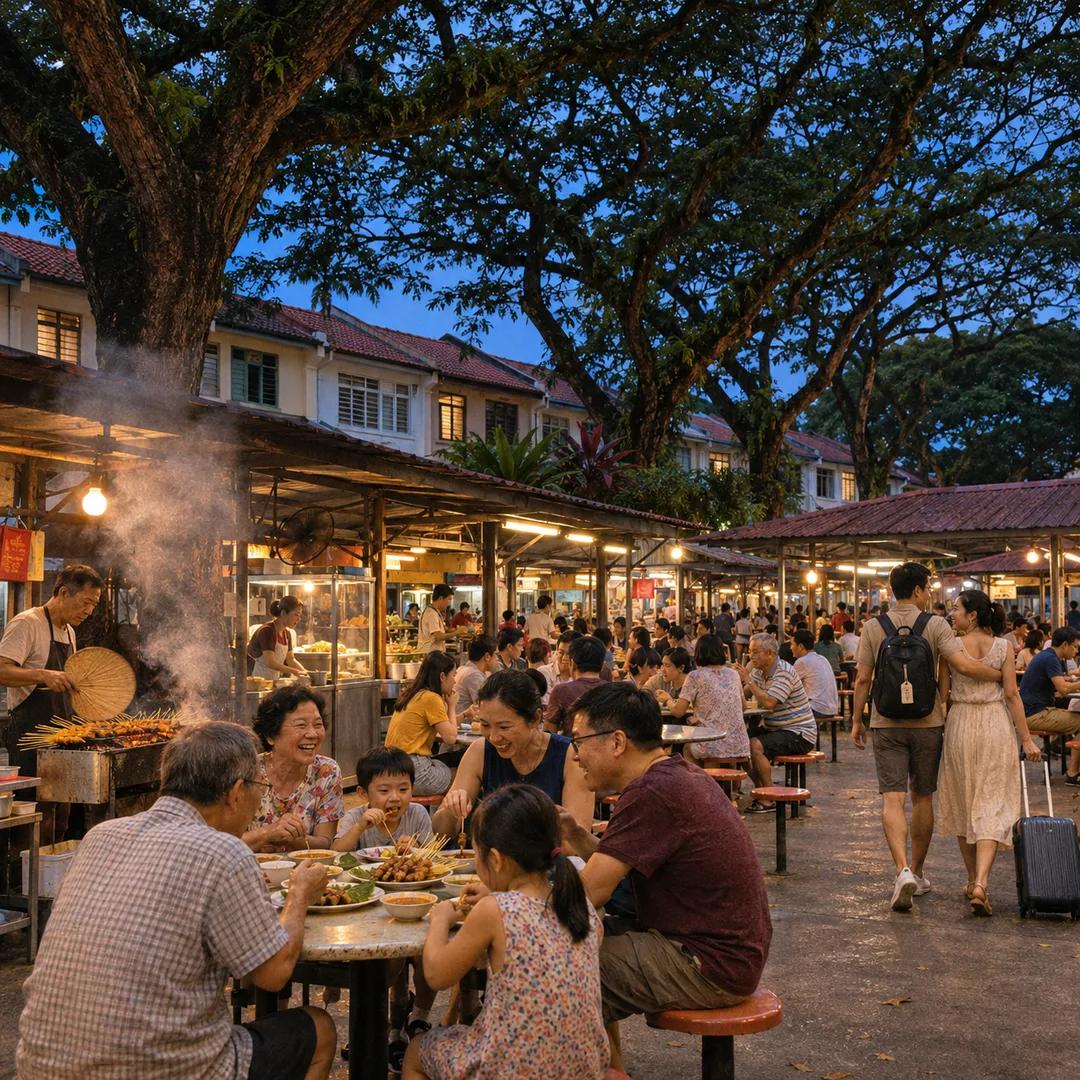
 Marina Bay Food Market Grazing Route After a Conference Day
Neighborhood Guides
Keong Saik Scenic Pedestrian Stroll: Chinatown Heritage Loop
Trace curving heritage shophouses, historic temple architecture, and vibrant urban lanes on a scenic pedestrian stroll around Singapore's Keong Saik corner.
Curving gently between New Bridge Road and Neil Road along the southern edge of Chinatown, Keong Saik Road provides one of the most distinctive and visually engaging walking routes in Singapore. Unlike the rigid grid layouts common in colonial administrative quarters, this corridor follows an organic crescent curve that continuously shifts sightlines as you advance on foot. Embarking on a scenic pedestrian stroll through this vibrant urban enclave reveals sweeping shophouse verandas, ornate architectural details, and an inviting pedestrian atmosphere where historic charm meets modern city life.
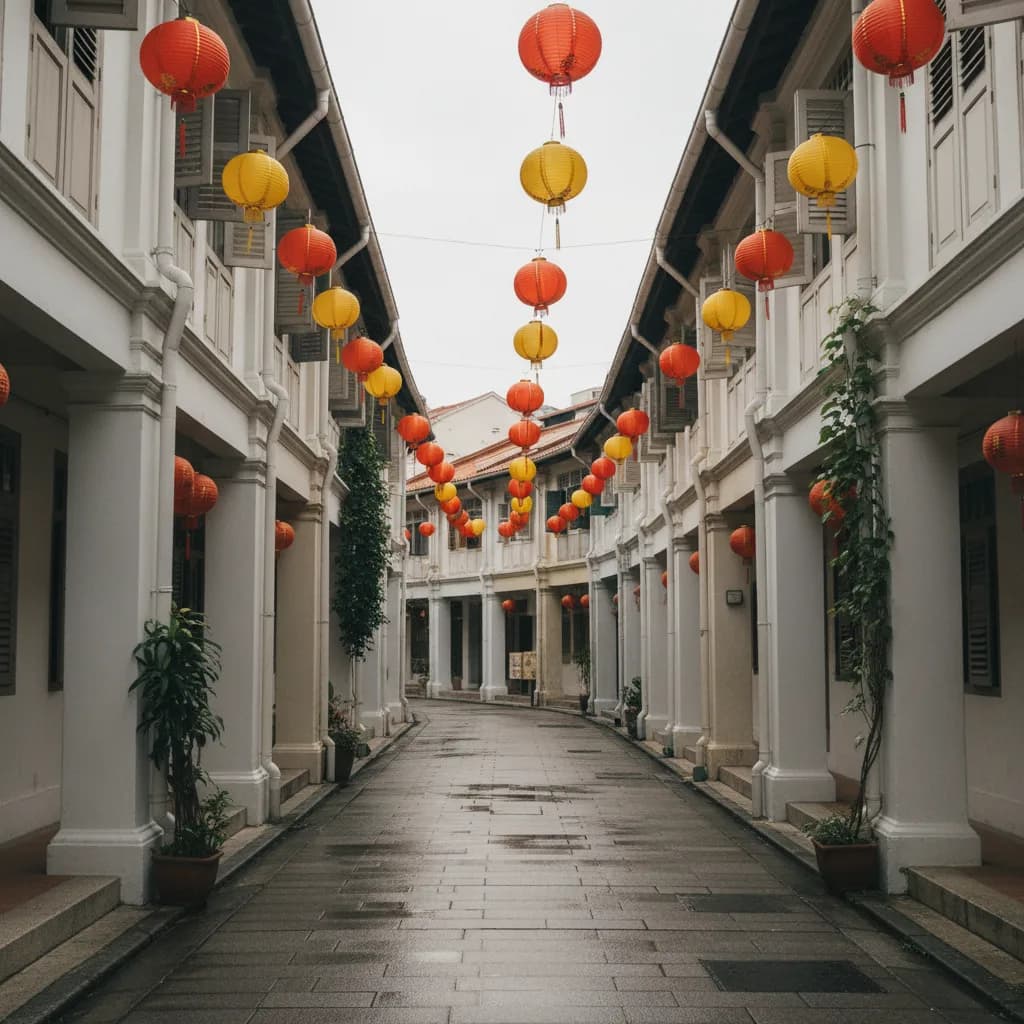
The gentle curvature of Keong Saik Road creates an immediate sense of exploration for pedestrians. Because the street bends gradually, walkers cannot see the entire length at a single glance, encouraging a leisurely pace where each step unfolds a new perspective. Colorful two- and three-story shophouse facades appear in sequential layers, their classical pilasters, decorative plaster reliefs, and pastel-painted masonry catching sunlight at shifting angles throughout the day.
Along both sides of the roadway, continuous five-foot ways—covered pedestrian arcades mandated by early municipal building codes—offer welcoming shelter from tropical midday heat and sudden rain showers. Stepping into these shaded walkways allows pedestrians to slow down and observe fine architectural craftsmanship up close. Glazed ceramic tiles with intricate floral patterns line the entrance thresholds, while polished timber louvres and double-leaf wooden doors showcase the meticulous preservation of Singapore's built heritage.
Striking Corner Landmarks and Sweeping Balconies
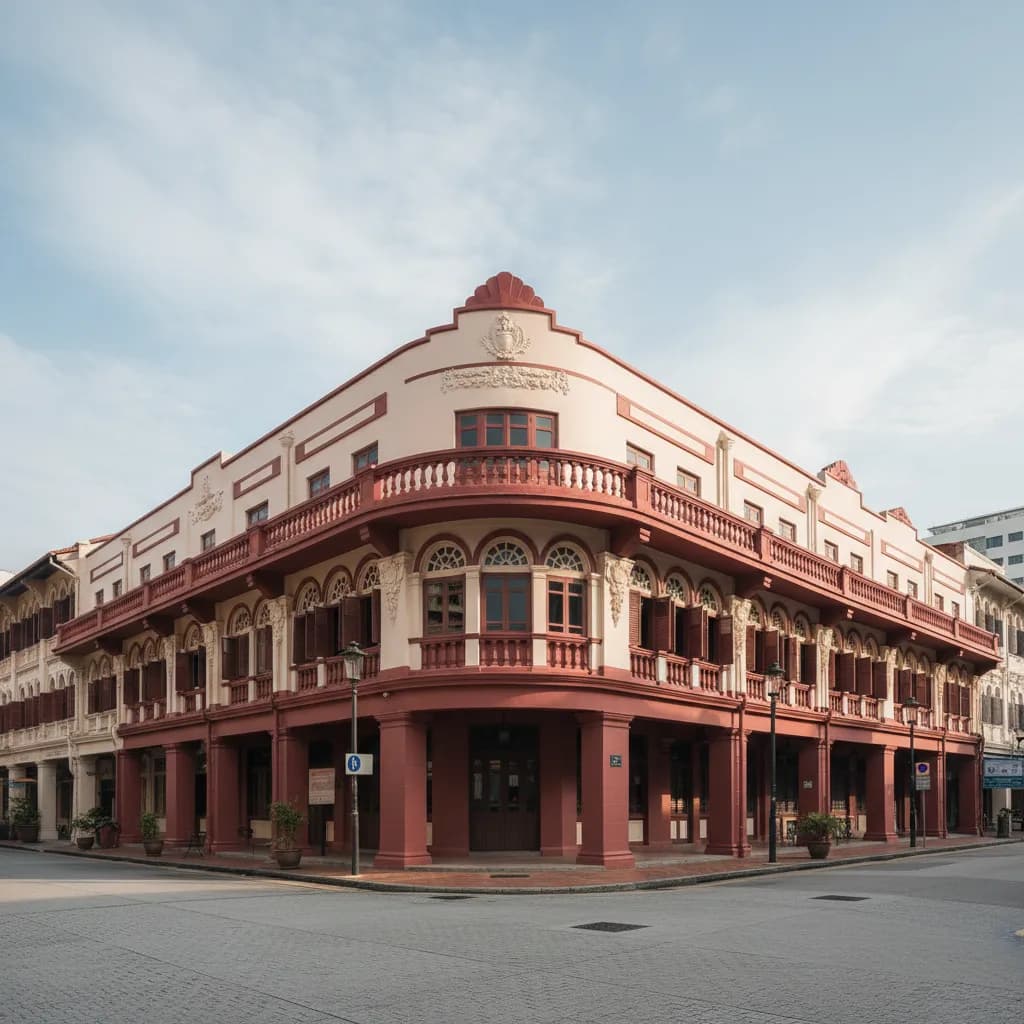
The defining architectural highlight of Keong Saik Road is its dramatic corner architecture, particularly where the road converges with Teck Lim Road. Here, an iconic wedge-shaped building commands the triangular junction with sweeping horizontal lines, rounded cantilevered balconies, and a distinctive cylindrical turret rising above the roofline. Walking around this corner allows pedestrians to appreciate how heritage builders ingeniously solved the geometry of converging plots, creating a sculptural urban presence that anchors the street's walking experience.
Upper levels along the corridor display an array of ornate balustrades and decorative pediments that reward walkers who look above the street level. Balconies crafted from painted wrought iron and molded precast concrete jut out over the shaded five-foot ways, often dressed with cascading ferns and potted tropical foliage. The interplay between crisp painted balustrades and leafy green accents gives the pedestrian corridor a distinctive garden-city warmth that complements the sturdy masonry below.
Between the corner landmarks, the rhythm of the shophouse rows remains remarkably intact. Arched ground-floor entrances lead the eye inward toward quiet courtyards and intimate boutique lobbies, while the second-story windows feature decorative fanlights with colored stained glass. The gentle incline of the roadway keeps motor vehicles moving at a calm crawl, allowing pedestrians to cross comfortably between opposite sidewalks to photograph dramatic facade angles from the best vantage points.
Vibrant Cultural Landmarks Along the Pedestrian Curve
Following the sweep of Keong Saik Road brings walkers past the striking presence of Sri Layan Sithi Vinayagar Temple, whose multi-tiered entrance tower, or gopuram, rises majestically above the surrounding shophouse rooflines. The ornate tower is adorned with vivid sculptures depicting celestial deities, decorative floral bands, and mythological figures painted in brilliant pigments. This prominent Hindu temple stands as a vibrant visual and cultural anchor along the street, adding rich spiritual resonance to the historic walking loop.
Pausing near the open entrance of the temple compound, pedestrians frequently catch the delicate fragrance of fresh jasmine flower garlands and burning camphor drifting into the open-air street. The ornate temple gateway creates a peaceful contrast against the neighboring lifestyle cafes and creative studios, offering a vivid illustration of the harmonious cultural layering that characterizes Singapore's historic urban districts. Walkers can admire the exterior artistry from the sidewalk or enter quietly while respecting temple visiting etiquette.
The perimeter of the temple grounds offers one of the most photogenic viewpoints along the entire route. Standing across the street, you can frame the intricate terracotta and painted motifs of the gopuram against the clean pastel lines of adjacent shophouse cornices. This striking visual juxtaposition highlights the organic evolution of Chinatown, where sacred traditions and creative urban living share the same pedestrian corridor in effortless balance.
Connecting Through Jiak Chuan Road and Bukit Pasoh
From the main sweep of Keong Saik Road, intimate pedestrian side streets invite deeper exploration of the surrounding heritage conservation area. Branching off along Jiak Chuan Road, walkers enter a quiet single-block connector street lined with pastel-hued shophouses painted in shades of terracotta, pale olive, and soft cream. Because Jiak Chuan Road experiences minimal vehicle traffic, it serves as a serene pedestrian sanctuary where footfalls echo softly along the covered verandas and shaded curbs.
Continuing through Jiak Chuan Road connects pedestrians directly to Bukit Pasoh Road, another renowned heritage street characterized by its gentle hillside gradient and dignified architectural facades. The shophouses along Bukit Pasoh often feature grander neoclassical proportions, with second-story bay windows, fluted Corinthian columns, and ornate parapets displaying decorative calligraphic plaques. Walking up the gentle incline of Bukit Pasoh Road provides panoramic backward glances across the red-tiled roofs and verdant tree canopies of Chinatown.
A complete scenic walking circuit also includes the tranquil rear service lanes running parallel between Keong Saik Road and Neil Road. Unlike typical utilitarian back alleys, these paved corridors are remarkably clean, orderly, and peaceful. Pedestrians strolling through these secondary lanes can admire historic outdoor spiral staircases affixed to upper rear terraces, lush potted plant arrangements maintained by residents, and creative wall murals that celebrate the neighborhood's artistic character.
These rear alleyway connections allow walkers to loop effortlessly between Keong Saik Road and Bukit Pasoh without retracing their steps along the main thoroughfare. The shaded service passages provide quiet resting moments away from street sounds, where overhead utility lines have been neatly tucked away to preserve the open sky and architectural silhouettes. This network of intimate secondary paths turns a simple street walk into a layered, rewarding pedestrian journey.
Atmospheric Shifts from Morning Light to Evening Lanterns
The pedestrian character of Keong Saik Road changes markedly across the course of the day, offering distinctly different walking atmospheres depending on your schedule. During the early morning hours, the street awakens with gentle residential tranquility. Soft morning sunlight strikes the west-facing facades at a low angle, casting dramatic diagonal shadows beneath the covered arcades while local shopkeepers sweep their five-foot ways and neighborhood cafes begin preparing fresh morning brews.
As dusk approaches, Keong Saik Road undergoes an enchanting atmospheric shift. Warm glow spills from ground-floor dining verandas, and ambient lanterns illuminate the covered walkways in golden light. The curving street becomes an inviting nighttime promenade where pedestrians stroll leisurely between artisan dessert counters, intimate bistros, and outdoor seating areas. The combination of gentle street lighting and historic building facades creates an intimate urban corridor perfect for an evening digestive walk.
Practical Walking Tips and Transit Connections
To make the most of your scenic pedestrian stroll, plan your visit for the early morning between eight and ten o'clock when outdoor temperatures are moderate and the street is free from crowds. This timeframe is ideal for photography, as natural morning light highlights the textures of carved plasterwork and ceramic tiles without harsh midday glare. Alternatively, late afternoon from five o'clock onward offers cooler breezes and an easy transition into the vibrant evening dining ambiance.
Accessing Keong Saik Road by public transportation is exceptionally straightforward. Outram Park MRT Station, a comprehensive interchange connecting the East-West, North-East, and Thomson-East Coast Lines, is located just a brief five-minute stroll away via Exit 4. In addition, Maxwell MRT Station along the Thomson-East Coast Line sits roughly three minutes from the eastern end of the street, offering convenient start and end points for your walking route.
Comfortable walking shoes are recommended, as exploring the connecting side lanes and gentle slopes involves varied stone and paved walkways. Remember to carry water and wear sun protection during warmer daylight hours, and maintain considerate pedestrian etiquette when walking past quiet residential units and sacred temple grounds. To customize your walking loop with personalized route recommendations and nearby artisan refreshment stops, opening the Karpo APP provides seamless conversational planning for exploring Singapore's historic neighborhoods.
Ask Karpo for more information.
Keep reading
- Marina Bay Food Market Grazing Route After a Conference Day
 River Valley Food Market Grazing Route With Young Kids
 Serangoon Food Market Grazing Route for a Homecoming Weekend