 Kovan Hainanese Curry Rice Lunch Picker: Heartland Plates
Restaurants
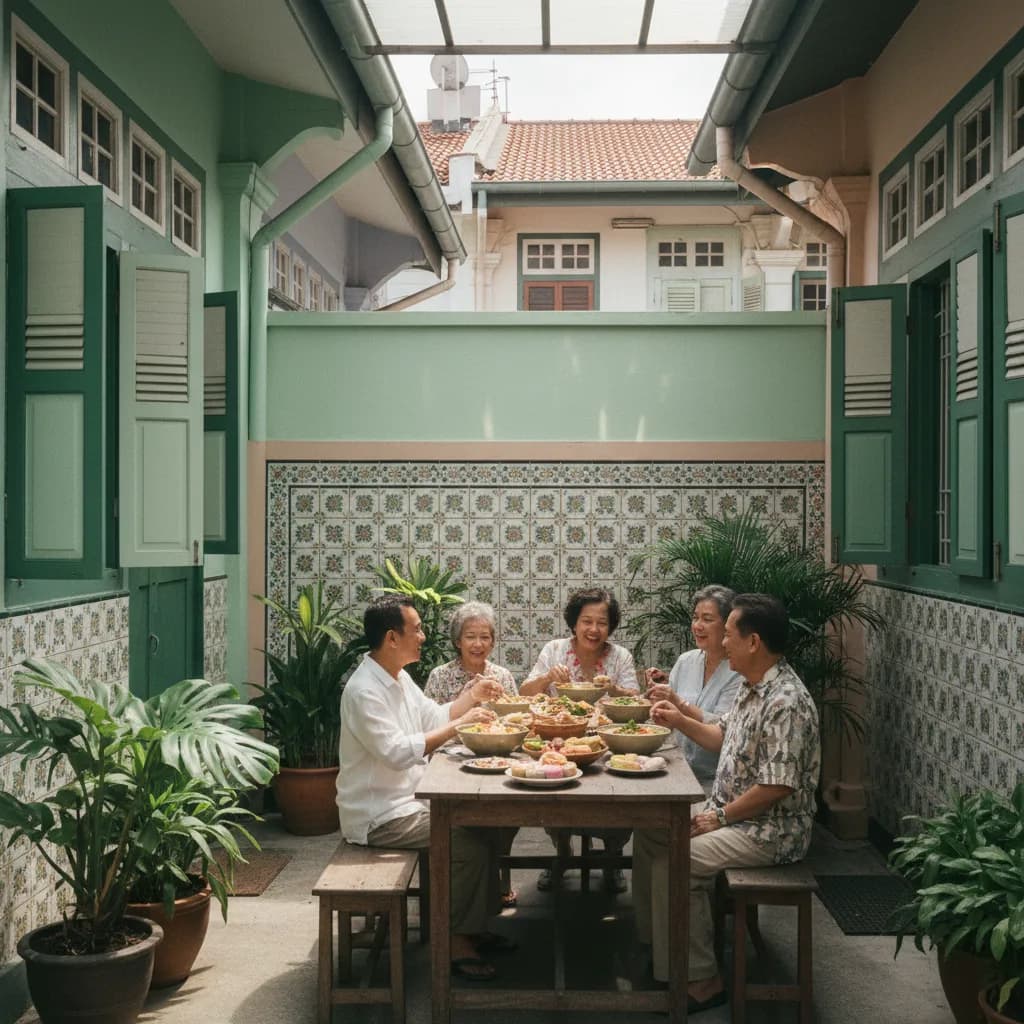
Katong Scenic Courtyard Dining Finder: Peranakan Airwells
Katong hides calm courtyard meals in Peranakan terraces, tiled airwells and shaded forecourts along Joo Chiat and East Coast Road, far from the city rush.
Katong began as a seaside retreat, a place where wealthy families built weekend villas and coconut plantations ran down to the shore. Peranakan households, descendants of early Chinese traders who married into local communities, made it their heartland, and their terrace houses with carved doors and patterned tiles still line the side streets. Courtyard dining here means airwells inside old homes, forecourts shaded by frangipani and slow family lunches rather than glamorous terraces.
From Seaside Villas to Shophouse Streets
Before land reclamation pushed the coast south, the sea lapped close to East Coast Road, and Katong was where city families came to escape the heat and bustle of the old town. Bungalows sat among the palms, and the area developed a relaxed, residential character that it has never quite lost, even as the city grew around it.
When shophouses and terraces replaced many of the villas, Peranakan and Eurasian families settled in large numbers. Their cooking, crafts and customs shaped the neighbourhood, and today Katong is where many Singaporeans go to taste nyonya dishes, buy beaded slippers or simply wander streets that feel a world away from the towers of the central business district.
Reading a Peranakan Terrace
A typical Peranakan terrace house has a short front porch, a pair of carved timber doors and a half-height pintu pagar, a swinging gate that let breezes in while keeping passers-by from looking straight inside. Walls are often faced with glazed ceramic tiles in floral and geometric patterns, and the upper storeys carry shuttered windows and ornate plaster.
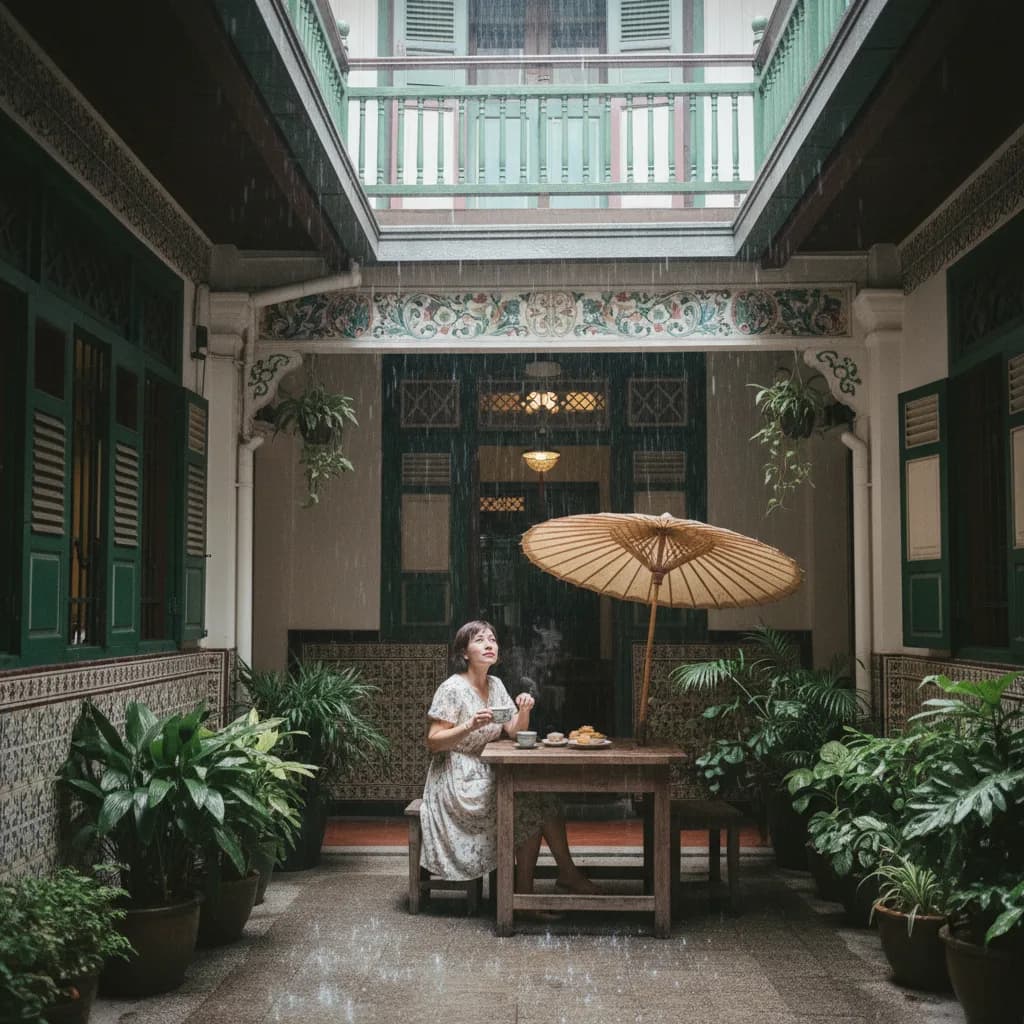
Deep inside, many of these houses have an airwell, an open shaft that brought rain and light into the heart of the home. Some eateries and cafes in converted terraces have kept this feature, and a table beneath the open sky, surrounded by tiles and potted plants, is the closest thing Katong has to a classic courtyard.
Koon Seng Road and the Pastel Rows
Koon Seng Road is the most photographed street in Katong. Its row of terrace houses is painted in soft pinks, greens and blues, with tiled facades and elaborate gables that glow in morning light. These are private homes, not restaurants, so admire them from the pavement and keep voices low.
Treat a stroll here as the appetiser for your meal. Arriving early, before the heat builds, gives you the street almost to yourself and the best light for photographs. From here it is a short walk to Joo Chiat Road, where the dining options begin and you can choose a table that echoes the same colours and craft.
Joo Chiat Road and Its Forecourts
Joo Chiat Road runs north from East Coast Road and is lined with two-storey shophouses that hold kueh makers, coffee shops, bakeries and newer restaurants. Many have small forecourts or covered five-foot ways where a few tables catch the breeze, and some have rear yards or airwells that are worth asking about when you arrive.
The pace here is unhurried. Neighbours greet each other, aunties pick up cakes for family gatherings and regulars linger over coffee. It is a good street for a late breakfast or a light lunch, especially if you like to watch neighbourhood life go by while you eat in the shade.
East Coast Road and Katong Laksa
East Coast Road is the main artery of old Katong, and it is famous for laksa, a rich coconut curry noodle soup that locals often eat with just a spoon because the noodles are cut short. Several long-running laksa stalls and shops compete along this stretch, and debates about which bowl is best are part of the local fun.
Most laksa spots are simple and busy rather than scenic, so enjoy your bowl quickly and save the slow courtyard moment for a dessert stop or a cafe nearby. Pairing a quick, intensely flavoured lunch with a lingering kopi in a quieter terrace afterwards is a very Katong way to spend an afternoon.
Who You Will Share the Tables With
Katong draws extended families on weekends, often three generations around a single table, ordering dishes to share. You will also meet young couples on brunch dates, cyclists refuelling after a ride along the coast and visitors on the heritage trail. The atmosphere is warm and familiar rather than trendy.
Fit in by ordering a few dishes to pass around, saying thank you to the staff and not rushing families who are lingering over a meal. Many places are family-run, and owners are often happy to explain a dish or share a story about the house if you show genuine interest.
Timing Around Heat and Rain
Mornings and late afternoons are the most comfortable times for courtyard dining in Katong. Midday heat can be intense in open airwells, though tiled floors and high ceilings help keep spaces cooler than you might expect. Look for fans and shady corners if you are sensitive to the sun.
Afternoon storms are common, and an airwell in the rain is one of Katong's quiet pleasures. Water drips down the open shaft into a drain while you stay dry under the surrounding roof. If you are lucky enough to be seated in one when the clouds burst, order another drink and watch the show.
Extending the Walk to East Coast Park
After lunch, walk or take a short ride south to East Coast Park, the long seafront park built on reclaimed land. Its paths, beaches and barbecue pits are popular with families, and the sea breeze is a welcome change after an afternoon in the terraces. Ships wait at anchor on the horizon, a reminder of the trade that built Singapore.
Many locals cycle along the park path and then head up to Katong for food, or do the reverse. Combining heritage streets with a seaside stroll makes for a full, relaxed day out, and the sunset over the water rounds it off perfectly.
A Gentle Heritage Loop Before You Eat
Start your visit at the junction of Joo Chiat Road and East Coast Road, walk north along Joo Chiat, detour onto Koon Seng Road for the pastel terraces, then loop back past the old shophouses toward the Peranakan craft shops on East Coast Road. The circuit takes under an hour at a slow pace, with plenty of stops for photographs.
Keep an eye out for small heritage details: carved animals above doorways, old shop signs in Chinese and Malay, and the tiled steps of the five-foot ways. These touches give context to the food you are about to eat and make even a simple bowl of noodles feel connected to a long story.
Using Karpo to Choose Your Courtyard
Tell Karpo what you have in mind, such as a nyonya lunch in a tiled airwell, a quiet coffee in a terrace forecourt or a family meal after a ride along the coast, and it suggests candidate places in Katong that match. Compare a few, then contact the restaurant directly to confirm the seating you want.
Keep a backup nearby. Katong is compact and full of good food, so if your first choice is crowded you can walk a few doors along and still find a table with heritage character. A relaxed attitude suits this neighbourhood best.
Ask Karpo for more information.
Keep reading
- Kovan Hainanese Curry Rice Lunch Picker: Heartland Plates
 Tampines Mee Rebus Breakfast Picker: Round Market Bowls
 Jurong West Mee Rebus Breakfast Picker: Boon Lay Bowls