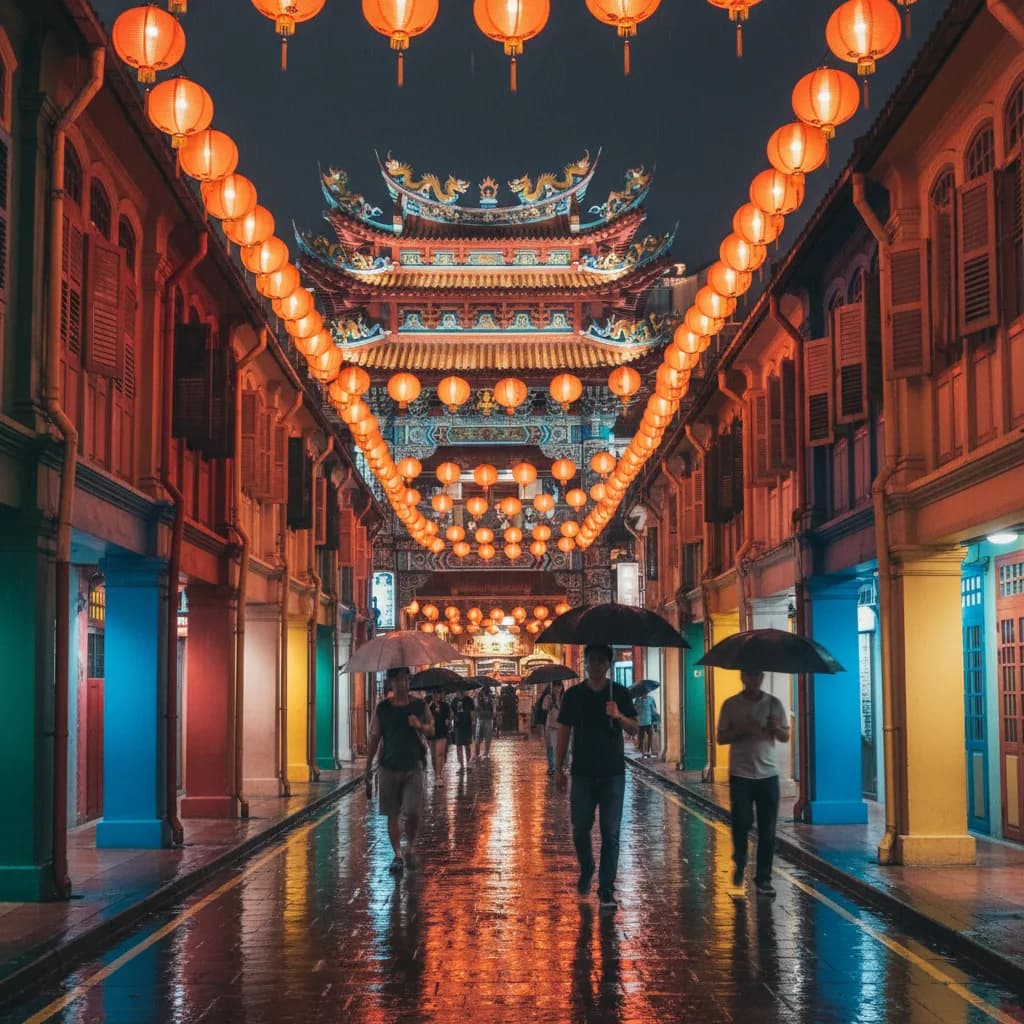
 Chinatown New in Town Weekend Planner: Errands and Temples
Weekend Plans
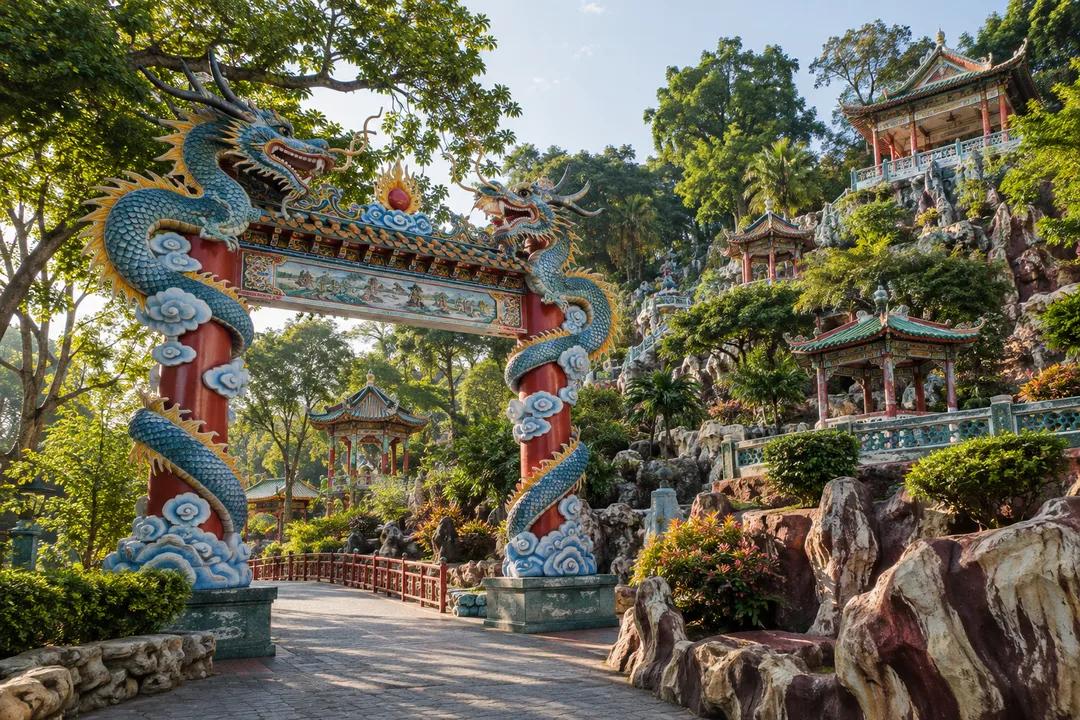
Singapore Scary Attraction Guide: Haw Par Villa Hell's Museum
Explore Haw Par Villa Hell's Museum in Pasir Panjang, traversing graphic afterlife dioramas, the notorious Ten Courts of Hell, and rich folklore heritage.
Haw Par Villa stands upon a coastal ridge in Pasir Panjang, located at 262 Pasir Panjang Road, Singapore 118628. Originally constructed in 1937 by eccentric Burmese-Chinese entrepreneurs Aw Boon Haw and Aw Boon Par, the visionary creators of the world-renowned Tiger Balm medicinal ointment, this extraordinary cultural park was conceived to educate the public on traditional Chinese morality and folklore. Following an extensive multi-million dollar revitalization by heritage curator Journeys, the park unveiled Hell's Museum in October 2021, creating the world's only museum specifically dedicated to examining death, burial rituals, and the afterlife across Asian cultures, anchored around the infamous Ten Courts of Hell cave complex.
Exploring Tiger Balm Heritage and Asian Underworld Iconography
Visitors enter the air-conditioned galleries of Hell's Museum through a restored colonial bungalow situated in the lower park grounds. The introductory indoor exhibits trace how comparative world religions—spanning Daoism, Buddhism, Hinduism, Christianity, and ancient regional animism—conceptualize human mortality and spiritual transitions. Curated funerary artifacts, ceremonial joss paper offerings, miniature spirit houses, and interactive multimedia displays explore how cross-cultural anxieties about sin, karma, and reincarnation shaped communal ethics across Southeast Asia for centuries.
The museum curates an immersive, thought-provoking dialogue rather than relying on standard carnival jump scares. Thoughtfully sequenced exhibits juxtapose traditional Hungry Ghost Festival customs with contemporary eco-burial methods and Singaporean hospice reflections. Informative archival displays present deep historical scholarship regarding the Aw brothers' philanthropic vision, demonstrating how the vivid visual sculptures functioned as accessible educational parables for illiterate maritime trading communities during the early twentieth century.
Stepping out from the modern gallery brings visitors onto the sunlit garden terrace, where life-sized stone sculptures of mythological beasts, filial piety exemplars, and Buddhist deities climb the terraced hillside. The juxtaposition between bright tropical sunlight, lush frangipani blossoms, and gruesome sculptural realism creates a surreal psychological threshold before entering the darkened cavern of the Ten Courts of Hell, priming the senses for deeper ancient moral allegories.
Inside the Brutal Moral Allegories of the Ten Courts of Hell
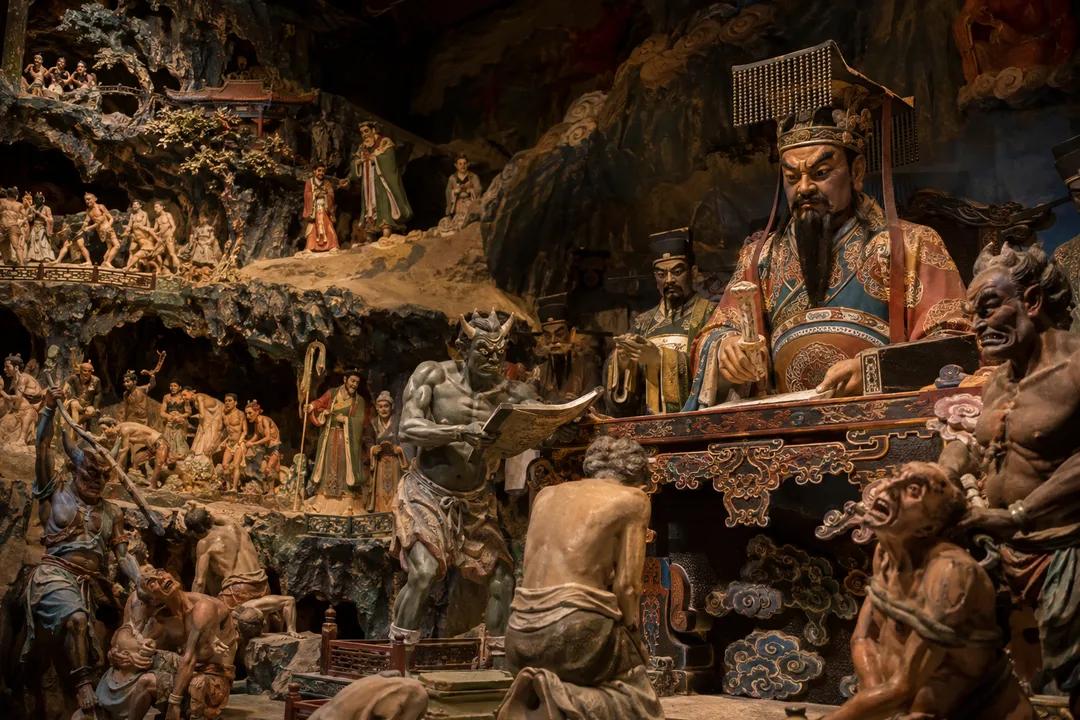
The historic heart of the experience is the Ten Courts of Hell, a cavernous sixty-meter tunnel carved into the hillside representing the traditional Chinese purgatory known as Diyu. Illuminated by eerie emerald and vermilion spotlights, the walk-through diorama depicts the severe retributions meted out by the ten Yamas or underworld magistrates. Sinners are judged according to specific earthly transgressions, ranging from tax evasion, gossip, and disrespecting elders to corruption, violent theft, and commercial deception.
The dioramas showcase graphic, unabashed visual morality that has terrified and fascinated generations of Singaporean families. In the First Court, souls face the Mirror of Retribution reflecting their earthly deeds before descending into darker caverns. In the Fifth Court of King Yama, sinners who committed greed or fraud are ground into pulp inside enormous stone mortars or cast into the boiling Lake of Blood. The Sixth Court depicts dishonest merchants sawed in half between wooden planks for cheating customers, while corrupt officials in subsequent chambers face disembowelment, flesh-tearing vultures, and rolling crushers.
Before souls conclude their harrowing journey, they arrive at the Tenth Court where Lady Meng Po serves her Five-Flavored Broth of Forgetfulness to erase all earthly memories prior to stepping onto the Wheel of Reincarnation. Despite its gruesome subject matter, the craftsmanship of the painted plaster statues remains an irreplaceable monument of vernacular Asian folk art. Meticulously restored by artisan conservators, the figures possess expressive, agonized faces and visceral detailing that vividly convey centuries-old warnings against dishonesty.
Visiting in the quiet morning hours allows for detailed contemplation of the intricate craftsmanship without the bustling tour crowds that gather on weekend afternoons. The cool cavern atmosphere provides immediate respite from the tropical humidity, though the graphic scenes of dismemberment and underworld judges demand steady composure from sensitive visitors.
Admission Details, Guided Tour Schedules, and Weather Precautions
Access to the main outdoor park grounds of Haw Par Villa remains completely free to the general public, while admission to Hell's Museum operates on ticketed entry. General admission tickets cost S$18 for adults aged thirteen and older, and S$10 for children aged seven to twelve, while senior citizens aged sixty-five and over enjoy a concession rate of S$15. Children under seven are admitted free of charge, though parental discretion is advised due to explicit depictions of physical torture. During the annual October Halloween season, the park hosts the Haw Ror Villa festival featuring night mazes and ghost story encounters, with special event tickets starting at S$55 per person.
Hell's Museum opens Tuesday through Sunday from 10:00 am until 6:00 pm, with final ticket sales and entry permitted at 5:00 pm; the museum is closed on Mondays for maintenance. The outdoor park grounds open daily from 9:00 am until 8:00 pm. Spending approximately ninety minutes ensures sufficient time to explore both the air-conditioned museum displays and the outdoor courts. The museum gift shop and ticketing counters accept cashless payments via PayNow, GrabPay, Visa, and Mastercard.
Because substantial portions of the walkthrough wind along open-air garden paths and humid stone caves, dressing in lightweight clothing and bringing insect repellent is strongly recommended. Sudden tropical rainstorms are common in Pasir Panjang, so carrying an umbrella provides vital shelter while moving between exhibit pavilions. Wheelchair access is available within the indoor museum gallery, although steep exterior steps around the hillside sculptures limit full access for mobility scooters.
Exploring Pasir Panjang Coastal Environs and Local Dining Gems
Reaching Haw Par Villa is exceptionally convenient via Singapore's Mass Rapid Transit system. Haw Par Villa MRT Station on the Circle Line (CC25) sits directly outside the main pedestrian gate, with Exit A depositing travelers right at the park's vibrant archway. Numerous public bus routes, including 10, 30, 51, 143, 188, and 200, stop along Pasir Panjang Road directly opposite the station, providing quick transit links from HarbourFront, Buona Vista, and Jurong East.
If driving or hailing a ride, a dedicated open-air parking lot operates adjacent to the main ticketing pavilion, charging standard hourly parking rates via the electronic road pricing system. The location along Pasir Panjang Road also connects smoothly to the West Coast Highway, making it a straightforward fifteen-minute drive from central Singapore or Sentosa Island.
After finishing the underworld walkthrough, walk five minutes westward along Pasir Panjang Road to Island Creamery for scoops of burnt caramel or Teh Peng ice cream. For a substantial seafood dinner, travel two bus stops westward to Pasir Panjang Food Centre, located at 121 Pasir Panjang Road, where open-air hawker stalls serve charcoal-grilled stingray with spicy sambal, crispy oyster omelettes, and freshly pressed sugarcane juice amid coastal breezes.
Ask Karpo for more information.
Keep reading
- Chinatown New in Town Weekend Planner: Errands and Temples
 Kampong Glam New in Town Weekend Planner: Mosque to Murtabak
 Holland Village New in Town Weekend Planner: Meet People