 Katong Indoor Swimming Pool Lane: East Coast Lap Swim
Sports Social
Singapore Rowing Fitness Studio: 2 Ways To Use Ergometers
Compare a Singapore rowing fitness studio class with open-gym ergometer access by matching instruction, equipment certainty and independence to your goal.
Compare a Singapore rowing fitness studio class with independent ergometer access by deciding which part of the experience you want to buy: teaching or space to row on your own. Both can involve the same kind of machine, but the admission products solve different problems. Start with your need for instruction and a clearly described session, then compare access conditions instead of treating every gym that pictures a rower as a substitute for a coached class.

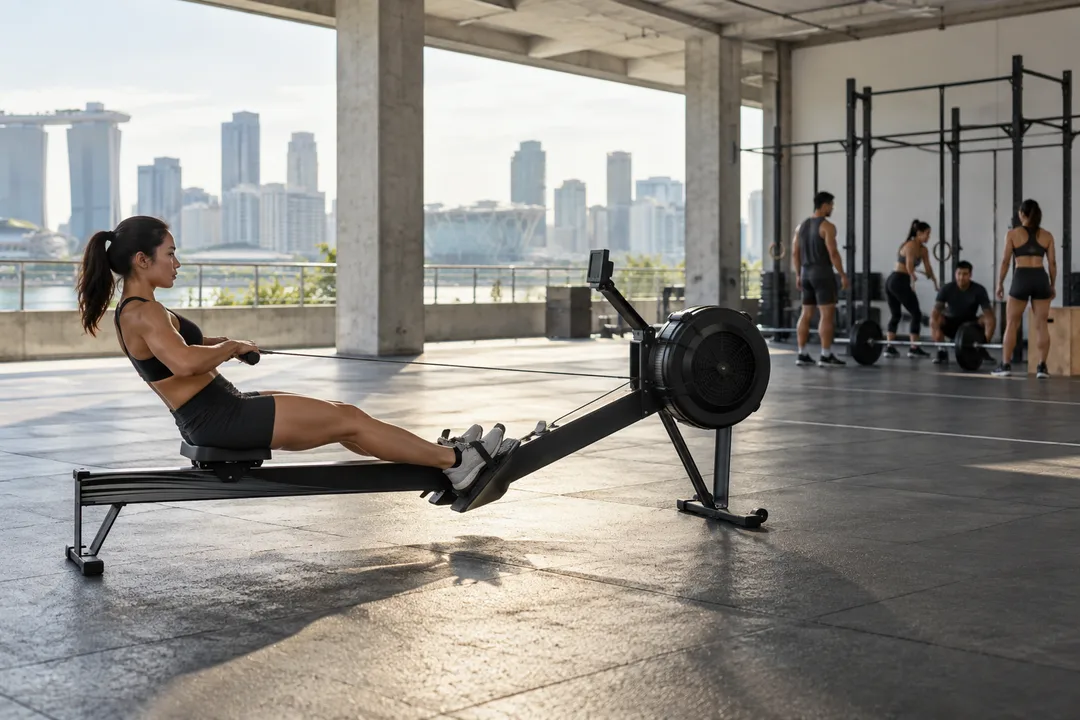
The pictured class space and independent ergometer are generated examples of two exercise settings, not photographs of available sessions.
Decide whether the missing ingredient is knowledge or access
If you want someone to explain equipment setup and guide the session, write that as the main purpose of the visit. Access to an ergometer alone does not meet it. If you already know how you intend to use the machine, the main question may instead be whether independent visitors can use it under a clearly stated admission product. These are purchase decisions rather than judgements about which activity is more serious.
Avoid describing yourself only as beginner or experienced. Those labels hide useful differences. An experienced gym user can be new to the rowing machine, while a confident rower can still want feedback on a particular skill. Name the part you want help with. The comparison then becomes more precise: a taught session that addresses that part, or independent access that serves an activity you are already prepared to manage.
Describe both options in one comparison request
In the Karpo APP, a sample prompt is: “Help me compare indoor rowing options in Singapore. I am deciding between a coached class and independent use of an ergometer. I care about instruction, access conditions and what one visit includes.” Add candidate descriptions if you have them. This asks for help organising a decision. It does not imply that Karpo can reserve a machine, observe equipment occupancy or assess your rowing technique.
Keep the options named accurately in your personal notes. A group circuit with short rowing intervals is not necessarily a rowing lesson. A day pass to a gym is not necessarily a reserved ergometer. A private coaching product is different again. Compare the exact product wording you have rather than translating everything into “rowing session.” Accurate names prevent a neat comparison from erasing the distinctions that matter most to the purchase.
What a taught session needs to explain
Look for a description of the class format and who it is intended for. Then identify the teaching element that answers your goal. Does the description say anything about newcomers, equipment introduction or feedback? Use only what is actually written or directly answered. The presence of a coach in a picture establishes very little about the session you can buy. It does not tell you how much individual attention is included.
A useful enquiry is narrow: “I want an explained introduction to the rowing machine. Which published session provides that?” This is better than asking whether a workout is good for beginners in every possible sense. You are asking about a service, not requesting a general fitness assessment. Once the service is described, keep that answer attached to the product name so you do not accidentally buy a different format from the same provider.
What independent access needs to establish
For open-gym use, separate admission eligibility from equipment information. A venue might describe an ergometer without offering the type of visitor access you need. Equally, a public day pass does not prove a particular machine will be unused when you arrive. This article makes neither claim about a named gym. The point is to ask about access on its actual terms and avoid treating an equipment image as a reservation promise.
Record any stated rules about using the training area, sharing equipment and receiving staff assistance. If no rules are provided, do not invent a time limit or a priority system. Ask the question that affects your plan. A visit that depends entirely on one unreserved machine has a different uncertainty from a class product with a defined format. The uncertainty belongs in the choice, even when it cannot be turned into a precise probability.
Compare the whole admission product
Put instruction, intended activity and access commitment beside each other. Compare actual quoted costs only when available, and include the product conditions that affect your visit. A lower admission amount may buy less of what you need. A higher class price may include teaching you do not currently want. Neither observation proves better value in isolation. Value depends on whether the purchase supplies the missing ingredient you identified at the start.
For a hypothetical learner seeking setup help, a cheap independent visit can be an incomplete solution if no instruction is included. For a self-directed visitor, paying for a group format they dislike can also miss the goal. These examples are decision logic, not claims about provider prices or services. They show why comparing only a headline amount can produce a confident answer to the wrong question.
Keep the fallback relevant to the original purpose
If a taught session is unavailable, independent equipment use is not automatically an appropriate substitute for a learner who wanted instruction. A different date or another genuinely described introduction may preserve the goal better. Similarly, a group circuit is not an equivalent fallback for someone seeking uninterrupted individual practice. A backup should address the same purpose, unless you consciously decide to change what the outing is for.
Skip any option that requires you to assume the central service is included. That could be teaching, guest access or use of the equipment that motivated the trip. Resolve the key condition before paying or remove the candidate. There is no need to invent a long list of alternatives just to keep the comparison busy. Two accurately understood products can produce a better decision than ten places grouped together under a vague rowing label.
Practical Notes for choosing one visit
Write a final sentence stating what you are buying and what remains your responsibility. For a class, that sentence might identify the named teaching format and the provider’s preparation instructions. For independent access, it might identify the admission product and the equipment conditions stated by the gym. These are examples of note structure, not promises about a business. Keep the actual receipt with the specific session or visit information.
Afterwards, judge the purchase against the original purpose. Did the teaching explain what you wanted to learn, or did the independent access let you complete the activity you intended? Record a concrete answer before buying a longer commitment. The same person can choose different products on different occasions. A clear distinction between instruction and access gives those choices a sensible basis without making one form of rowing the default answer to every fitness need.
Ask Karpo for more information.
Keep reading
- Katong Indoor Swimming Pool Lane: East Coast Lap Swim
 Chinatown Indoor Swimming Pool Lane: Singapore Lap Guide
 Telok Ayer Indoor Swimming Pool Lane: Singapore CBD Lap Swim