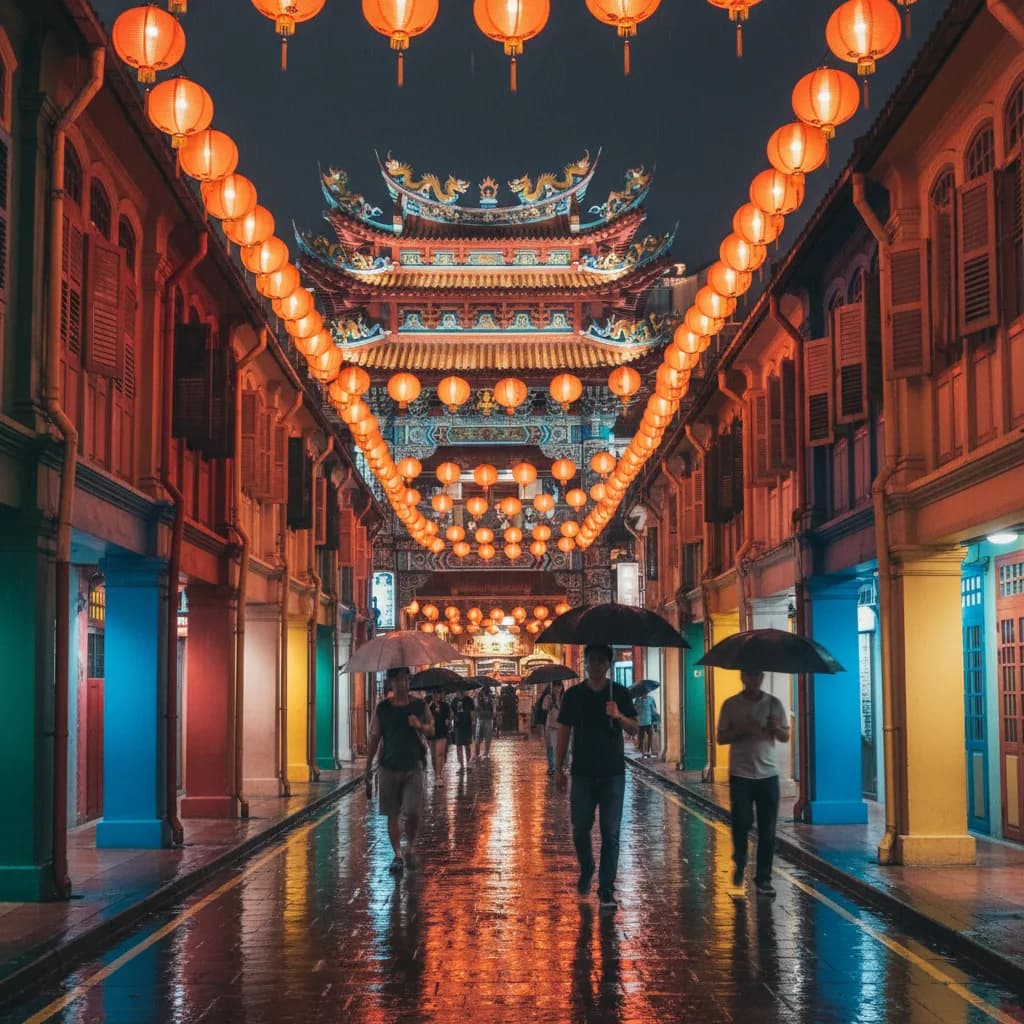
 Chinatown New in Town Weekend Planner: Errands and Temples
Weekend Plans

Singapore Rooftop Botanical Terrace: Marina Bay Loop
Plan a Marina One rooftop botanical terrace outing in Singapore with Green Heart planting, shade choices, skyline contrast, and a measured walking loop.
Marina One's Green Heart gives a Singapore rooftop botanical terrace plan a planted anchor in the Marina Bay and Downtown Core area. Decide whether your group needs cool shade, a planted interior, or an open-air view after a long day. Put that preference into Karpo APP and let the route brief shape the first loop around comfort and sequence.
Let Shade Set The Opening
Start by giving the garden one job. It can be a meeting point for people arriving from different directions, a quiet pause before the waterfront, or a visual warm-up for architecture. Naming the job prevents the outing from becoming a race between landmarks. It also gives the app a clear reason to keep one route short.
Marina Bay changes quickly from sheltered surfaces to bright open edges. If heat is a concern, place the green terrace before the most exposed section. If the sky is the reason for going out, reverse that order and use the plants as a closing exhale. Both choices are valid; they simply create different energy curves.
For a fifteen-minute visit, choose one level, one framed view, and a simple exit. For a longer afternoon, add a slow perimeter loop and one seated conversation. Ask for the time you actually have instead of selecting every possible stop. A planning tool can scale the route to your window without claiming a precise dwell time.
Photographers can treat the green space as a study in contrast. Make one frame about foliage against reflective glass, one about a shadow line, and one about a person-sized path. Describe in the route brief that you want changing foregrounds and moderate walking. The goal is a visual rhythm that explains the place, not five versions of the same skyline.

Compare Greenery With Open Sky
A family route benefits from shapes. Invite children to find arcs, grids, spirals, or repeated edges, then let adults choose the next direction. The game stays grounded in what is visible and gives everyone a reason to slow down. Put that prompt in the route brief so the onward choice remains playful rather than purely geographic.
Solo visitors can choose between pause and destination. A pause needs one loop and a clean exit; a destination deserves a notebook, a longer look, and a second recommendation. Describe that distinction in the app. It will help you compare a restorative plan with a more social one without forcing both into the same afternoon.
When the central view feels busy, move toward a quieter edge rather than abandoning the garden. Ask for less circulation, more shade, or a place to sit. The app can rank those preferences as route criteria. It should not promise a vacant bench or live occupancy; the useful part is making the trade-off explicit before you set out.
A rooftop botanical terrace is a good first chapter because planted texture lowers the intensity of a large district. After the green pause, choose one open-sky contrast: water, a broad civic axis, or a longer view between towers. One contrast gives the route shape. Three would turn the outing into a checklist.
Use Marina Bay As The Second Act
Use a short weather branch. In bright heat, keep the exposed walk minimal and let the terrace carry the experience. In rain, retain the green anchor and swap the open section for an indoor pause. State the preference as a branch in Karpo APP, rather than writing a promise about weather protection or access.
Friends can divide the decisions without splitting the route. One person chooses the visual mood, another chooses walking tolerance, and a third chooses the finish. The app then has a genuine group brief. This is more helpful than asking everyone to vote on a long attraction list while standing in the sun.
Skip this format when you want a high-energy attraction with timed entry or a remote landscape. Marina Bay works when you enjoy transitions: planted shade to open sky, cool surfaces to bright pavement, and quiet looking to public movement. Choose it for attention and contrast, not for a dramatic all-day expedition.
If energy drops, shorten the final leg first. Keep the terrace and one satisfying view, then let the route brief include a transit-friendly ending. A plan that can lose a stop without losing its point is more useful than a rigid itinerary. It also keeps a group from treating the last hour as an endurance test.
Keep The Exit Flexible
Write your route brief with a concrete trade-off: “green first, low walking, one skyline frame, calm finish.” That phrase tells the tool what to protect. Vague requests such as “things to do in Marina Bay” invite too many options and hide the decision that actually matters.
Let meals, cafés, and shopping remain optional. If the group is hungry, request one nearby finish after the garden. If the group is content, leave the district while the contrast still feels fresh. The terrace should not become an excuse to cross every block; it should make the next decision easier.
Choose a regroup signal before anyone wanders. A shared lift lobby, a visible stair, or a street corner can work as a meeting rule without requiring a detailed venue claim. Put that rule in the notes so the route remains usable for mixed groups, especially when one person photographs while another keeps walking.
Finish Before The Route Feels Full
Practical notes: carry water, allow a few minutes for lifts or transitions, and wear shoes that handle standing on hard surfaces. Keep one spare indoor option in the plan. The best rooftop botanical terrace day is not the one with the most stops; it is the one where the group still has attention at the final turn.
Write a compact version and a generous version in Karpo APP. The first has one garden loop and one open-sky contrast. The second adds a slower walk and a flexible finish. Change the walking limit next time instead of rewriting the whole brief. That small adjustment makes the tool useful across seasons and companions.
End by looking back from street level. The planted structure may feel different when the city surrounds it rather than when you stand inside it. Name the detail you want to remember—leaf texture, reflected light, or a cool transition—and use it as the next search cue instead of a generic score.
Ask Karpo for more information.
Keep reading
- Chinatown New in Town Weekend Planner: Errands and Temples
 Kampong Glam New in Town Weekend Planner: Mosque to Murtabak
 Holland Village New in Town Weekend Planner: Meet People