 Marina Bay Food Market Grazing Route After a Conference Day
Neighborhood Guides
Keppel Bay Riverside Dockland Walk: Calm Route, Easy Exit
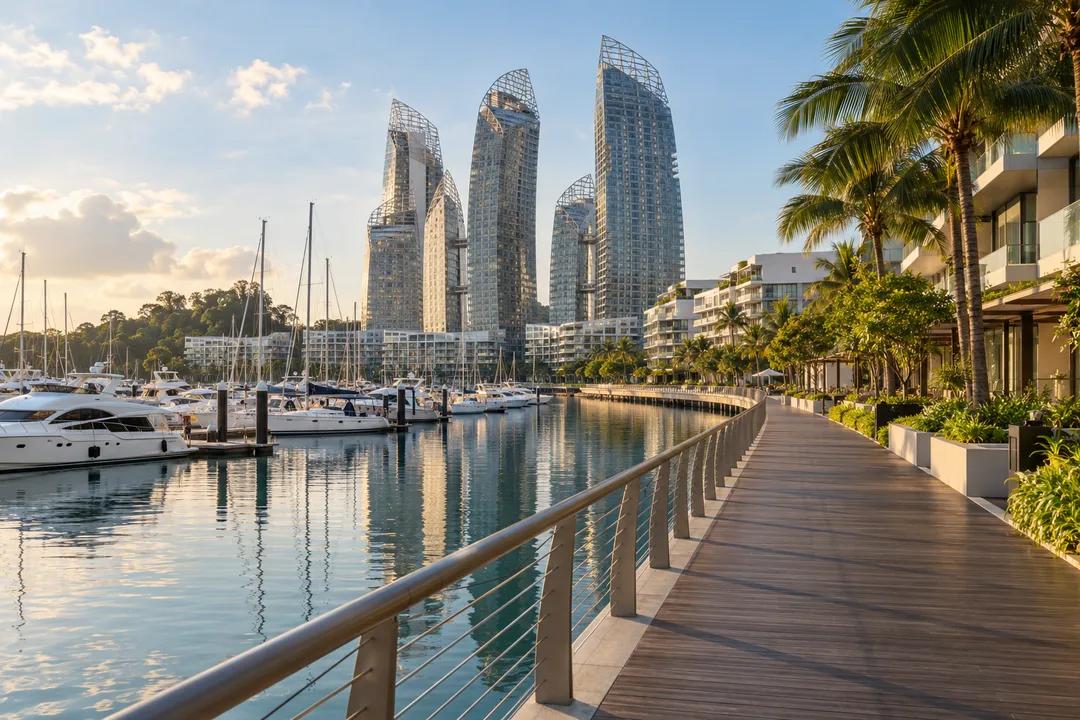
Shape a Keppel Bay riverside dockland walk around marina calm, sheltered pacing, and a flexible ending that can change with wind, rain, or energy.
Keppel Bay rewards a riverside dockland walk that treats the marina as a continuous mood rather than a collection of attractions. Begin in Karpo APP with the feeling you want: quiet water watching, an architecture-led stroll, or an easy conversation route. Add the amount of time the group can comfortably spend outside and say whether a loop or an out-and-back feels better. The useful output is an ordered brief that keeps the harbour present while still leaving room for a pause, a detour, and a decision to stop.

Choose Your Marina Mood
The first choice is how close the group wants to stay to the water. A marina-close plan favours wakes, ropes, masts, and small shifts in reflection. A building-led plan gives more attention to edges, balconies, planting, and the way the waterfront frames the sky. You can ask for a blend that alternates the two so the walk does not become visually flat. State the main mood before naming the details. That helps the route keep a single emotional thread even when the surroundings change.
Let Water and Buildings Alternate
A human-sized loop is usually more useful than the longest possible route. Ask for one main circuit and a short extension, then make the extension optional in the wording. This gives the group a clear base plan and an easy way to add movement if the weather and energy cooperate. A shorter route should still contain the marina's defining texture, so it does not feel like a consolation. The point is proportion: enough water to remember the place, enough flexibility to keep the outing comfortable.
Set a Human-Sized Loop
Give one detour a job. It might be a design-detail pause, a quieter place to watch boats, a more planted stretch, or a finish that makes the transition to the next part of the evening easy. Several vague add-ons make the route feel busy before it begins. Name the one thing that would make the walk feel personal, then ask for a route that supports it. If the detour takes over, remove it and keep the main water thread intact rather than adding another stop.
Use One Detour Well
Wind is part of an open marina walk, so put comfort into the brief before choosing distance. Ask for a version with more sheltered links and another with longer open views, then decide after you see the sequence. On a breezy day, the water can be the highlight without becoming the entire walk. A practical route alternates exposure with relief and leaves room for a layer, water, and an unhurried pause. You are planning a choice between textures, not promising a single perfect condition.
Plan for Wind Before Distance
Keep the harbour continuous by resisting unnecessary jumps between unrelated points. A good request says what should connect: water to architecture, boats to planting, or open view to quieter edge. Let the planner arrange the order around that connection, then read the result as a story. If the sequence feels like errands, remove a pin. Keppel Bay is more convincing when the group can notice one change at a time and still understand why the next segment follows the last.
Keep the Harbour Continuous
Put the midpoint decision in plain language. After the group has had its first sustained water view, it can continue toward a stronger architectural frame, take the short return, or pause before choosing. Naming those options reduces the pressure to keep walking simply because the route card continues. It also helps mixed groups agree without a debate at every turn. A flexible plan is not vague; it has a clear base, a clear branch, and a reason for each branch.
Give the Group a Midpoint
A reusable prompt might read: Keppel Bay, calm marina mood, moderate pace, water and architecture alternating, one design detour, sheltered option, and a shorter finish. Add whether the group wants photographs, conversation, or a quiet reset. If the first route is too dense, change the number of anchors. If it feels too empty, add one visual question about reflections, lines, or boats. Small edits produce a more useful second version than a completely new request.
Write a Reusable Request
Practical notes should protect the atmosphere. Wear shoes that feel reliable on a waterfront surface, carry water, and keep a light layer available for wind. If someone needs step-free movement or frequent pauses, state that before the route is shaped. A rainy version can focus on shorter exposed sections and a more sheltered rhythm. The planner cannot make weather disappear, but it can help you decide what to preserve when conditions change: the water, the architecture, or simply the time together.
End Without Overfilling
Finish while the marina still feels generous. If the group has found its best view, stop there. If everyone wants more, take the optional extension. Save the version that made that decision easy, because it can become the starting point for another Keppel Bay outing with a different pace. The strongest route brief is modest and specific: name the mood, the water relationship, the one detour, and the exit. Karpo APP can help turn that thought into a sequence the group can actually use. Let the ending stay as calm as the beginning. The route can finish with a final look over the marina, a transition toward the next plan, or a quiet decision to stop. Preserve that choice in the brief instead of treating it as an afterthought. When the group knows the base route and the optional extension, everyone can enjoy the water without negotiating every corner. Save the version that feels proportionate, then reuse the same logic on a cooler morning or a busier evening.
Ask Karpo for more information.
Keep reading
- Marina Bay Food Market Grazing Route After a Conference Day
 River Valley Food Market Grazing Route With Young Kids
 Serangoon Food Market Grazing Route for a Homecoming Weekend