 Sentosa Christmas Light Up Walk Planner for Young Families
Free Things to Do

Singapore Quiet Museum Gallery Finder: Telok Ayer Spaces
Find serene museum rooms and peaceful heritage collections across Telok Ayer. Explore uncrowded historic clan shrines and quiet temple courtyard exhibitions.
Slipping away from the towering glass skyscrapers of Singapore's central financial district brings visitors onto Telok Ayer Street, where the island's earliest maritime history remains vividly preserved. Long before land reclamation pushed the shoreline eastward, Telok Ayer served as the coastal landing point for nineteenth-century Chinese, Indian, and Malay immigrants who stepped ashore to offer gratitude for safe ocean voyages. Today, applying an insightful quiet museum gallery finder approach enables cultural wanderers to leave bustling banking concourses behind and step into tranquil former clan associations, serene temple museums, and secluded immigrant heritage galleries. Within these sacred courtyards and restored merchant halls, intricate stone carvings, archival photographs, and historic trade relics offer deeply restorative cultural immersion amidst modern corporate momentum.
Experiencing Folk History at Fuk Tak Chi Museum
Visiting Fuk Tak Chi Museum inside Far East Square along Telok Ayer Street immerses travelers in Singapore's oldest former Chinese temple, erected in 1824 by Hakka and Cantonese settlers. Thoughtfully restored as a free public heritage street museum, the consecrated pavilion preserves its original timber roof trusses, hand-carved stone guardian deities, and ornate ceramic ridge figures. Inside the cool, sheltered interior, a remarkable three-dimensional miniature diorama depicts early immigrant life along the nineteenth-century Telok Ayer waterfront, complete with sampans, trading junks, and humble wooden piers. Because modern pedestrians frequently pass by the exterior shophouse facade without realizing a museum lies within, the tranquil interior remains remarkably hushed, allowing contemplative visitors to study antique clay roof tiles, vintage account registers, and brass offering vessels in peaceful solitude.
Admiring Chulia Heritage at Nagore Dargah
Walking further down Telok Ayer Street leads to the Nagore Dargah Indian Muslim Heritage Centre, a breathtaking national monument built between 1828 and 1830 by Chulia immigrants from southern India's Coromandel Coast. The building's unique facade blends classical European arched windows and fluted columns with ornate Islamic minarets and intricate plaster filigree. Inside the air-conditioned ground-floor galleries, curated exhibits document the pioneering history of Indian Muslim traders, money changers, and scholars who shaped Singapore's multicultural commerce. The interior rooms remain an oasis of absolute calm throughout the day, where soft acoustic insulation and subdued exhibition lighting encourage visitors to inspect historic maritime travel logs, embroidered trade textiles, and ceremonial artifacts without distraction or crowding.
Studying Immigrant Records at Ying Fo Fui Kun
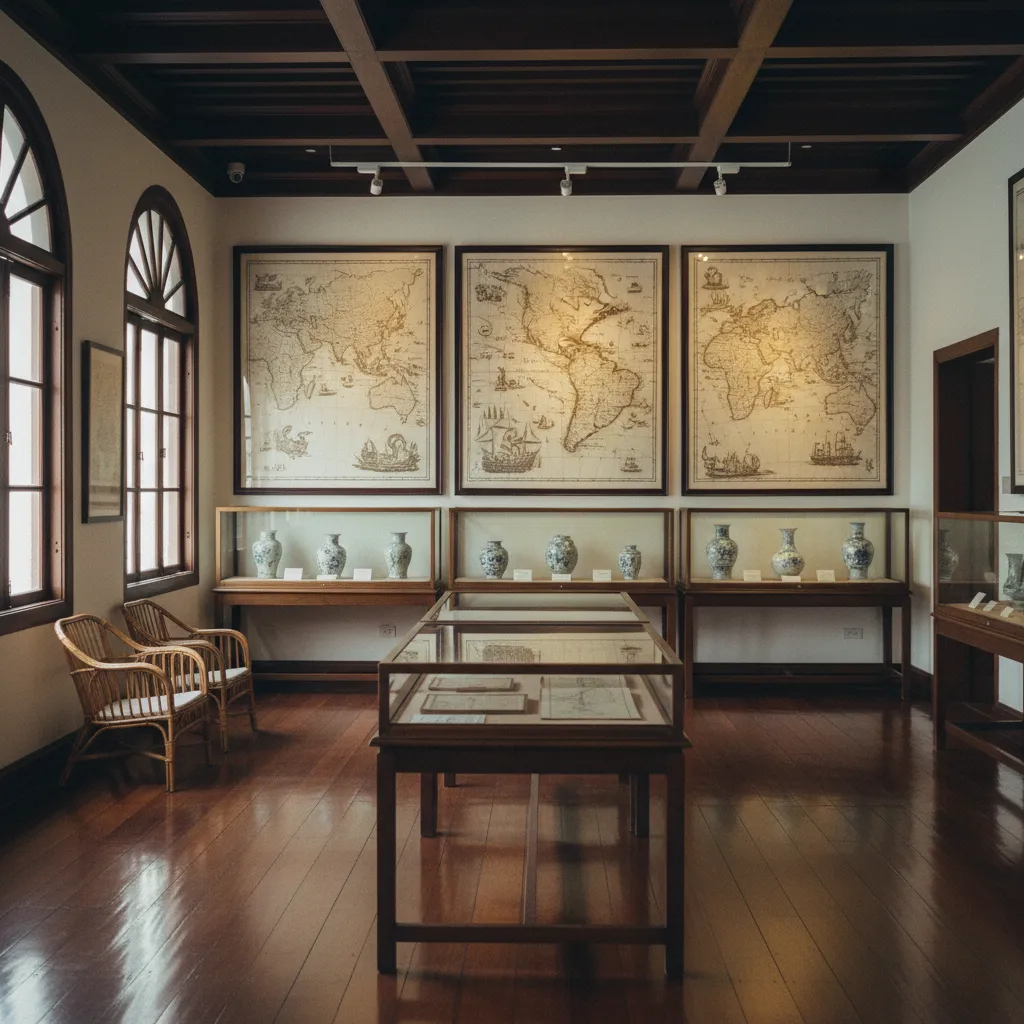
Entering Ying Fo Fui Kun at 98 Telok Ayer Street unveils Singapore's earliest Hakka clan association, founded in 1822 with its current two-storey building completed in 1887. The second-floor ancestral hall features magnificent gilded woodcarvings, antique calligraphy scrolls, and brass ritual implements maintained with reverent pride by clan elders. The ground-floor exhibition space displays historical immigrant lineage ledgers, nineteenth-century clan charters, and black-and-white portraits of early community leaders. Because the clan house operates as a private heritage institution that graciously opens its doors to respectful cultural visitors, it experiences virtually no commercial tour traffic. Solitary travelers can sit quietly upon traditional rosewood benches, admiring the subtle play of natural light filtering through tall timber shutters onto century-old floor tiles.
Planning Early Morning Cultural Visits
Planning early visits between 8:30 AM and 10:30 AM on Monday through Thursday provides the most serene atmosphere across the Telok Ayer and Amoy Street conservation zone. During these morning hours, neighboring corporate offices have settled into their work routines, and the area's celebrated dining establishments remain closed for midday prep. The soft morning sunlight strikes the eastern facades of Telok Ayer's monuments at a picturesque angle, illuminating gilded roof ridges and detailed stone reliefs with exceptional clarity. Exploring before the midday tropical heat intensifies allows you to stroll comfortably between clan halls and temple courtyards without experiencing physical fatigue or navigating bustling lunch crowds.
Upholding Thoughtful Gallery Etiquette
Upholding thoughtful cultural manners is essential when visiting consecrated heritage monuments and active clan spaces along Telok Ayer. In places of worship like Thian Hock Keng and Nagore Dargah, dressing respectfully with covered shoulders and knees honors the religious traditions of the host communities. Stepping carefully over raised wooden thresholds rather than standing upon them, speaking in hushed tones, and turning off phone ringers preserves the sacred tranquility of the prayer halls. In clan archives, seeking permission before photographing historic ancestral tablets or archival documents demonstrates courtesy toward the living guardians who maintain these community treasures.
Recharging Within Telok Ayer Green and Pocket Gardens
Recharging within peaceful urban green spaces offers an enjoyable pause during your historical explorations. Telok Ayer Green, a landscaped pocket park situated between Telok Ayer Street and Amoy Street, features shady angsana trees, manicured lawns, and evocative bronze sculpture tableaux depicting nineteenth-century immigrant arrivals, Chinese market traders, and Indian milk vendors. Sitting on one of the wooden park benches with an architecture book provides a tranquil vantage point to admire the dramatic contrast between low-rise conserved shophouse roofs and soaring contemporary glass office towers. Alternatively, climbing the gentle pedestrian stairway toward the summit of Ann Siang Hill Park leads to secluded benches surrounded by tamarind trees and historic colonial bungalows.
Following Covered Shophouse Walkways Along Amoy Street
Following covered shophouse colonnades along Amoy Street keeps your cultural walk entirely sheltered from sun and rain while offering a continuous visual feast of architectural detail. These historic walkways feature ornate floor tiles imported from Europe during the rubber boom era, detailed plaster relief pilasters, and traditional wooden folding doors known as pintu pagar. Wandering through cross-street alleyways such as McCallum Street and Boon Tat Street allows you to transition between clan museums and heritage shrines without walking along main automotive roads. The gentle, rhythmic sequence of arched shophouse bays creates a deeply meditative urban walking rhythm that complements the historical depth of the exhibits.
Commuting to Heritage Zones via Downtown Transit
Commuting to Telok Ayer is remarkably simple and fast due to excellent underground transit integration. Telok Ayer MRT station on the Downtown Line places you directly at the intersection of Telok Ayer Street and Cross Street, with escalators ascending steps away from Fuk Tak Chi Museum and Far East Square. Alternatively, Tanjong Pagar MRT station on the East-West Line sits a short five-minute walk to the south, while Raffles Place MRT station links smoothly from the northern financial district. Choosing underground station concourses during the hottest midday hours ensures your transit transitions remain cool, comfortable, and completely stress-free.
Curating Tranquil City Excursions with Karpo APP
Curating tranquil city excursions and uncovering historic hidden gems throughout Singapore's historic core is seamless with Karpo APP. The platform charts peaceful heritage walking loops, provides historical context for conserved monuments, and alerts you to quiet visitation windows across traditional cultural institutions. Whether you wish to inspect century-old immigrant maritime records or admire sacred architectural plasterwork undisturbed by tourist crowds, Karpo APP helps you experience Singapore's living heritage with effortless precision, transforming a simple city walk into an enriching journey of cultural discovery.
Ask Karpo for more information.
Keep reading
- Sentosa Christmas Light Up Walk Planner for Young Families
 Tanjong Pagar Christmas Light Up Walk Planner for Teams
 Bugis Christmas Light Up Walk Planner for Interfaith Friends