 Katong Indoor Swimming Pool Lane: East Coast Lap Swim
Sports Social
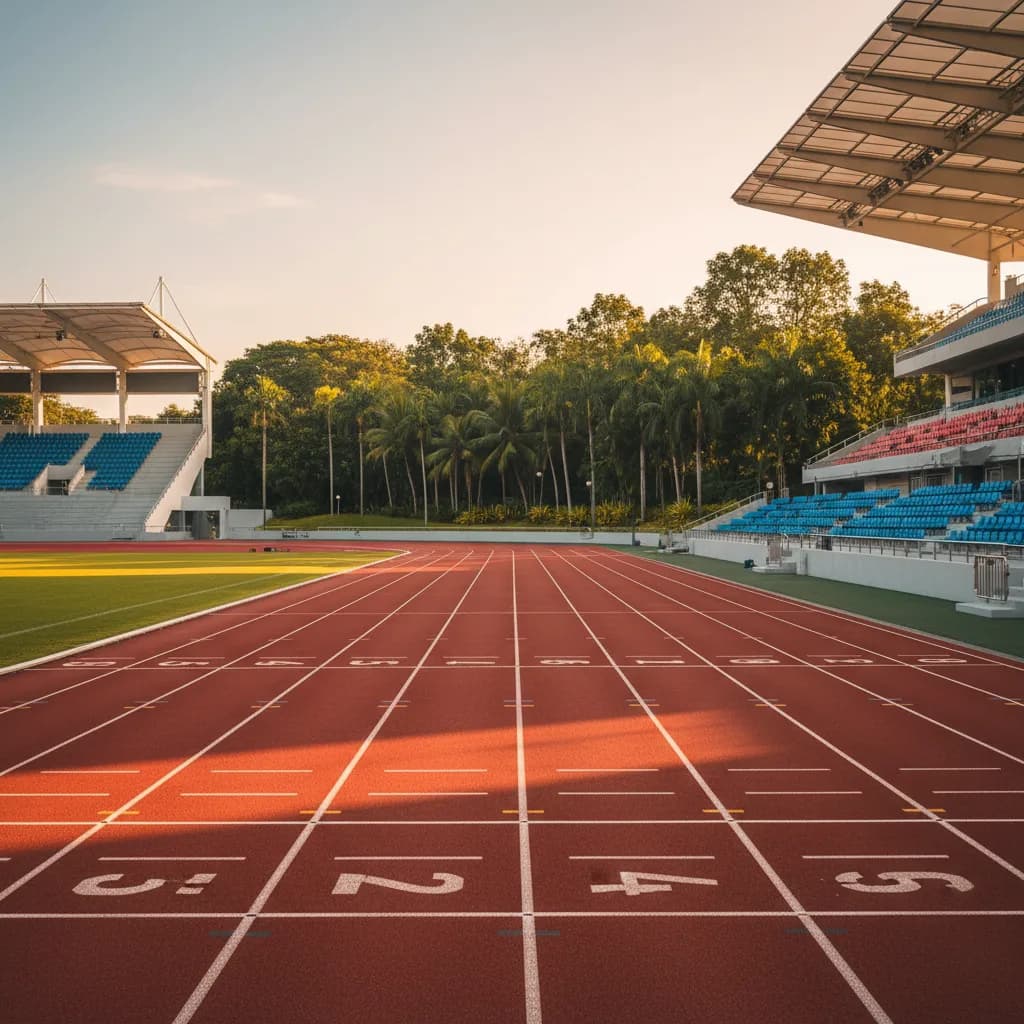
Tiong Bahru Public Track Training Loop: Lane Rules and Pace
Access public track training loop options near Tiong Bahru with synthetic lane etiquette, equatorial pacing plans, and Singapore running advice.
Tiong Bahru stands as one of Singapore's most architecturally distinctive heritage enclaves, celebrated for its curved pre-war Art Deco residential blocks, shaded rear alleys, and relaxed café culture centered around Yong Siak Street and Seng Poh Road. While the neighborhood's tranquil streetscapes and mature angsana canopies provide an inviting backdrop for casual morning recovery jogs, the local street layout presents real friction for focused interval conditioning. Frequent signalized pedestrian crossings along Outram Road, morning vehicle traffic along Tiong Bahru Road, and irregular flagstone walkways interrupt sustained anaerobic efforts. Distance runners seeking calibrated tempo blocks, exact 400-meter repetitions, and strict pacing discipline cannot rely on crowded residential pavements. Establishing a dedicated training routine requires mapping an efficient corridor from Tiong Bahru to nearby municipal athletics facilities, where regulation synthetic tracks offer uninterrupted open access to structured speed training.

ActiveSG Queenstown Stadium as the Primary Speed Facility
The premier dedicated running track facility accessible from Tiong Bahru is the ActiveSG Queenstown Stadium, situated along Stirling Road at postal code 148948. Located roughly three kilometers west of Tiong Bahru Market, Queenstown Stadium features a regulation eight-lane 400-meter all-weather polyurethane athletics track surrounding a full-sized natural turf pitch. Operated under Sport Singapore's ActiveSG network, the track welcomes individual community runners without mandatory membership lock-ins or cumbersome booking hurdles. Athletes can warm up with a progressive twenty-minute aerobic jog westward through the quiet park connectors along Alexandra Canal, transitioning directly from residential streets into a high-performance running environment that elevates endurance development.
Queenstown Stadium provides crucial amenities tailored for serious track workouts under equatorial conditions. The venue includes clean sheltered grandstand seating, public restrooms, changing facilities, and dedicated chilled water dispensers located near the track entrance. High-output stadium floodlights illuminate the synthetic oval during early morning and evening slots, creating safe visibility for interval work before sunrise or after office hours. Runners who plan rigorous speed repetitions benefit from the uninterrupted perimeter, completely free from vehicular traffic, off-leash pets, and bicycle commuters that often congest urban greenways across the central corridor.
Track Etiquette, Anti-Clockwise Flow, and Lane Hierarchy
Successful group training and individual speed workouts depend upon strict adherence to established athletics track etiquette. When entering the oval at Queenstown Stadium, runners must always follow the standard counter-clockwise running direction. Lane 1 and Lane 2 are reserved exclusively for athletes conducting fast interval repetitions, measured threshold pace trials, and maximum sprint efforts. Jogging at warm-up speeds, walking during recovery intervals, or pausing to adjust fitness trackers in these inner corridors creates dangerous hazards for approaching runners moving at high velocity and precision.
Athletes cooling down or recovering between hard repetitions must immediately clear the inside lanes, stepping out to Lane 7 and Lane 8 or resting along the infield perimeter turf. When executing an overtaking move in the fast lanes, always check over your right shoulder and pass deliberately on the outside before smoothly angling back into Lane 1 once clear. Carrying bone-conduction earphones or leaving one ear uncovered ensures you stay receptive to verbal cues such as track clear calls from accelerating club runners, preserving an orderly and supportive training atmosphere for everyone on the synthetic oval.
Synthetic Cushioning and Footwear Choices for Tropical Humidity
The regulation textured polyurethane surface installed at Queenstown Stadium provides critical biomechanical protection compared to the rigid granite pavers and poured concrete pavements that dominate urban Singapore. The multi-layered elastic track matrix cushions vertical ground impact forces during landing, significantly reducing cumulative strain on knees, shin splints, and Achilles tendons during high-cadence strides. Distance runners increasing their weekly quality mileage rely on this responsive energy return to sustain aggressive pacing without incurring unnecessary joint trauma over long training blocks.
Footwear selection plays a vital role in workout efficiency and track longevity. Standard road running shoes featuring breathable engineered mesh uppers and blown rubber outsoles perform exceptionally well across both wet and dry synthetic surfaces. While regulation short track spikes are permitted during sanctioned competitive events, lightweight neutral road racing flats or responsive tempo trainers provide ample traction while minimizing calf strain for regular community workouts. Runners should inspect outsole grooves before stepping onto the oval, removing any trapped road gravel that might tear the synthetic topcoat.
Alternative Weather Routing at Singapore Sports Hub
When tropical monsoon downpours or severe lightning alerts temporarily close open-air venues like Queenstown Stadium, Tiong Bahru runners have access to an outstanding sheltered training alternative at the Singapore Sports Hub. Situated at 1 Stadium Drive at postal code 397629, the 100PLUS Promenade forms a continuous, fully covered 888-meter elevated running track encircling the National Stadium. Easily reached via the East West MRT Line from Tiong Bahru station to Kallang or Stadium station, this elevated track provides complete rain protection and smooth rubberized flooring.
The 100PLUS Promenade features clearly demarcated running and walking lanes, gentle sweeping curves, and ambient cooling airflow provided by the stadium's massive dome architecture. While an 888-meter loop differs from standard 400-meter geometry, the consistent synthetic surface and total shelter enable athletes to complete continuous tempo runs, long fartlek sessions, and sustained marathon pacing blocks regardless of torrential equatorial downpours. Open freely to the public throughout the day, it serves as Singapore's ultimate all-weather endurance training refuge.
Structuring Interval Sessions and Karpo APP Route Guidance
A structured track workout from Tiong Bahru begins with a ten-minute dynamic mobility routine on the infield grass, focusing on leg swings, walking lunges, and calf activation. A classic progression comprises eight to ten 400-meter repetitions at 5K target pace, separated by ninety seconds of walking recovery, followed by four 200-meter accelerations to refine turnover and running economy. Hydration requires proactive planning in Singapore's high ambient humidity; runners should consume water before commencing repetitions and take measured sips from trackside fountains between sets.
Following high-intensity track efforts, runners should invest ten minutes in an easy cool-down jog around the outer perimeter, accompanied by gentle static stretching and electrolyte replacement. The Karpo APP serves as a versatile companion for Singapore endurance runners, mapping out low-traffic pedestrian routes between Tiong Bahru and local athletics stadiums while logging training corridors and recovery notes. By integrating dedicated municipal track facilities with smart route planning, runners living in Tiong Bahru achieve elite speed conditioning within Singapore's vibrant urban landscape.
Ask Karpo for more information.
Keep reading
- Katong Indoor Swimming Pool Lane: East Coast Lap Swim
 Chinatown Indoor Swimming Pool Lane: Singapore Lap Guide
 Telok Ayer Indoor Swimming Pool Lane: Singapore CBD Lap Swim