 Katong Indoor Swimming Pool Lane: East Coast Lap Swim
Sports Social
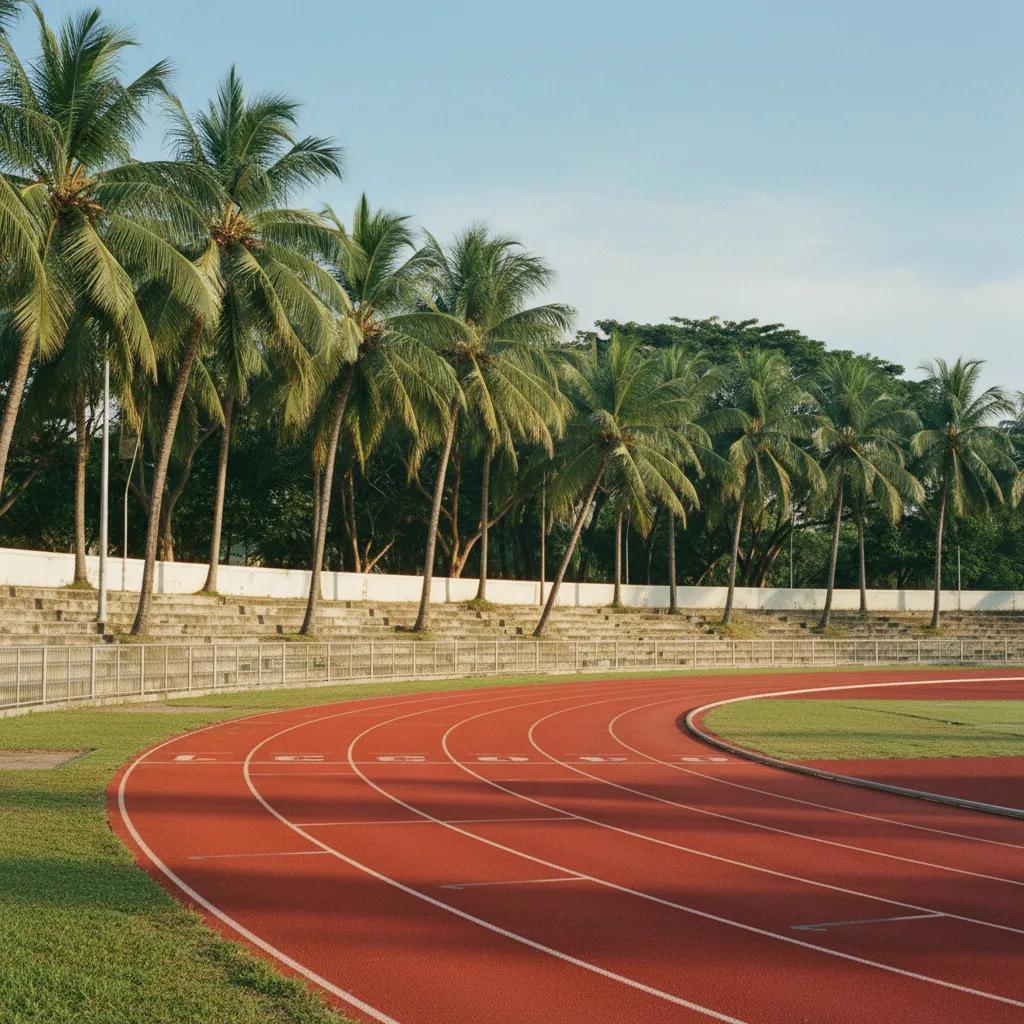
Public Track Training Loop in Tanjong Pagar: Singapore Guide
Navigate public track training loop routes from Tanjong Pagar with comprehensive stadium access tips, equatorial pacing plans, and Singapore running advice.
Tanjong Pagar stands as one of Singapore's most captivating urban neighborhoods, seamlessly blending heritage two-storey conservation shophouses along Craig Road and Duxton Hill with soaring commercial towers in the Central Business District. While the area offers world-class dining, specialty espresso bars, and vibrant street life, its narrow historic walkways, traffic signals, and continuous pedestrian movement create obvious constraints for structured running workouts. Athletes attempting sprint repeats or sustained threshold tempos along Tanjong Pagar Road or Cantonment Road quickly encounter street crossings and sidewalk impediments. To achieve uninterrupted speed development, runners in Tanjong Pagar look outward to municipal sporting stadiums where professional all-weather synthetic tracks deliver measured loops and open running lanes.

Connecting Tanjong Pagar to ActiveSG Queenstown Stadium Track
The premier public athletics facility accessible to runners in Tanjong Pagar is ActiveSG Queenstown Stadium, located at 473 Stirling Road, Singapore 148948 in nearby Queenstown. As Singapore's first satellite town sports complex, Queenstown Stadium features a regulation 400-meter, eight-lane all-weather polyurethane synthetic running oval surrounded by sheltered spectator grandstands and mature rain trees. Operated under Sport Singapore's ActiveSG network, the stadium track is open to the public free of charge during scheduled community running hours each morning and evening.
Reaching Queenstown Stadium from Tanjong Pagar is remarkably fast and convenient using the East West MRT Line. Boarding a westbound train at Tanjong Pagar MRT station brings you to Queenstown MRT station in just four stops, taking approximately eight minutes. From Queenstown station Exit A, a gentle five-minute warm-up jog along Commonwealth Avenue and Stirling Road leads directly to the stadium turnstiles. For runners preferring a complete road warm-up, jogging westward through Tiong Bahru and along the Alexandra Canal Linear Park provides roughly 4.2 kilometers of continuous pedestrian pathway before beginning track work.
Queenstown Stadium provides essential amenities tailored for tropical athletes, including covered changing pavilions, clean restrooms, secured coin lockers, and chilled water refill stations. The facility is equipped with high-powered stadium floodlights that illuminate the synthetic oval during early morning and late evening sessions, allowing runners to execute demanding speed sessions outside peak equatorial sun hours.
Tropical Climate Management, Hydration, and Timing Strategies
Executing intense interval sessions in Singapore's tropical climate requires deliberate scheduling and physiological discipline. Ambient temperatures in the city consistently hover between 26 and 32 degrees Celsius, accompanied by relative humidity levels frequently surpassing 80 percent. These climatic factors significantly impair the body's natural evaporative cooling mechanisms, causing core body temperatures and heart rates to rise much faster than in temperate zones.
Local running clubs and experienced endurance athletes structure their track sessions during the pre-dawn window between 6:00 AM and 7:30 AM, or in the evening after 6:30 PM once the direct sun has dropped below the stadium grandstand. Hydration must begin hours before arriving at the track oval. Drinking electrolyte-rich fluids and having a cold water bottle accessible on the infield benches enables quick sips between interval sets. Monitoring heart rate recovery times rather than fixating solely on pace ensures safe and sustainable cardiovascular conditioning in equatorial humidity.
Track Etiquette and Synthetic Lane Disciplines at ActiveSG Facilities
ActiveSG stadiums welcome a diverse mix of competitive track athletes, amateur marathoners, military fitness trainees, and community brisk walkers. To ensure harmonious and safe operation, strict lane etiquette is enforced across all eight synthetic lanes. Running proceeds exclusively in an anti-clockwise direction around the oval. Lane 1 and Lane 2 are dedicated strictly to fast runners conducting timed interval repetitions, tempo efforts, and sprint finish work.
Recreational joggers maintaining conversational paces are expected to utilize Lanes 3, 4, and 5, while casual fitness walkers and athletes taking rest pauses must stay in Lanes 7 and 8. When completing a hard repetition, runners must never halt abruptly in Lane 1; instead, gradually decelerate while drifting toward the outer edge of the curve or step directly onto the natural grass infield. Always look behind you before crossing active lanes to avoid obstructing oncoming runners powering along the back straight.
Synthetic Cushioning and Footwear Recommendations
The textured polyurethane surface at Queenstown Stadium offers superb shock attenuation that shields runners from the repetitive pounding associated with concrete and tile pavements. The engineered resilience of the synthetic track absorbs ground impact forces and provides dependable wet-weather traction during sudden tropical afternoon showers. This cushioning proves invaluable when logging demanding weekly interval volumes.
For community track sessions, breathable lightweight road racing flats or responsive cushioned daily trainers are the ideal footwear choice. Breathable engineered mesh uppers are crucial in Singapore's humid air to prevent excessive moisture accumulation inside the shoe. While dedicated sprint spikes with standard pyramid pins are permitted, road flats deliver plenty of grip on the rubberized surface without stressing calves and Achilles tendons during longer distance intervals.
Lightning Risk and Monsoon Safety Protocols in Singapore
Singapore experiences frequent sudden convective thunderstorms, particularly during the inter-monsoon seasons. ActiveSG sporting complexes are outfitted with automated lightning warning alert systems connected to regional meteorological sensors. When a lightning threat is detected within the operational radius, a high-decibel siren sounds and visual strobe beacons activate around the grandstand perimeter.
All runners on the track must immediately vacate the open synthetic oval and seek shelter beneath the covered grandstand or spectator concourse. Training is paused until the all-clear chime sounds, typically thirty minutes following the last recorded lightning discharge. Respecting these municipal safety protocols preserves athlete well-being during intense tropical weather events.
Structuring Structured Speed Sessions and Karpo APP Guidance
A standard track workout for Tanjong Pagar athletes begins with fifteen minutes of dynamic mobility exercises on the covered stadium concourse, followed by four 80-meter acceleration strides on the track straight. An effective interval routine comprises eight repetitions of 400 meters at current 5K race pace, separated by sixty seconds of active walking rest in Lane 8. This format develops neuromuscular cadence, stride efficiency, and cardiovascular power in an easily manageable structure.
To coordinate training schedules, check ActiveSG stadium opening hours, and locate optimal running corridors connecting Tanjong Pagar to nearby athletic facilities, athletes can rely on the Karpo APP. The platform helps runners identify quiet morning routes, water points, and transit connections across Singapore's downtown district. Completing your interval training and returning to Tanjong Pagar leaves you primed to enjoy cold cold-brew coffee or traditional local breakfast along charming shophouse streets.
Ask Karpo for more information.
Keep reading
- Katong Indoor Swimming Pool Lane: East Coast Lap Swim
 Chinatown Indoor Swimming Pool Lane: Singapore Lap Guide
 Telok Ayer Indoor Swimming Pool Lane: Singapore CBD Lap Swim