 Katong Indoor Swimming Pool Lane: East Coast Lap Swim
Sports Social
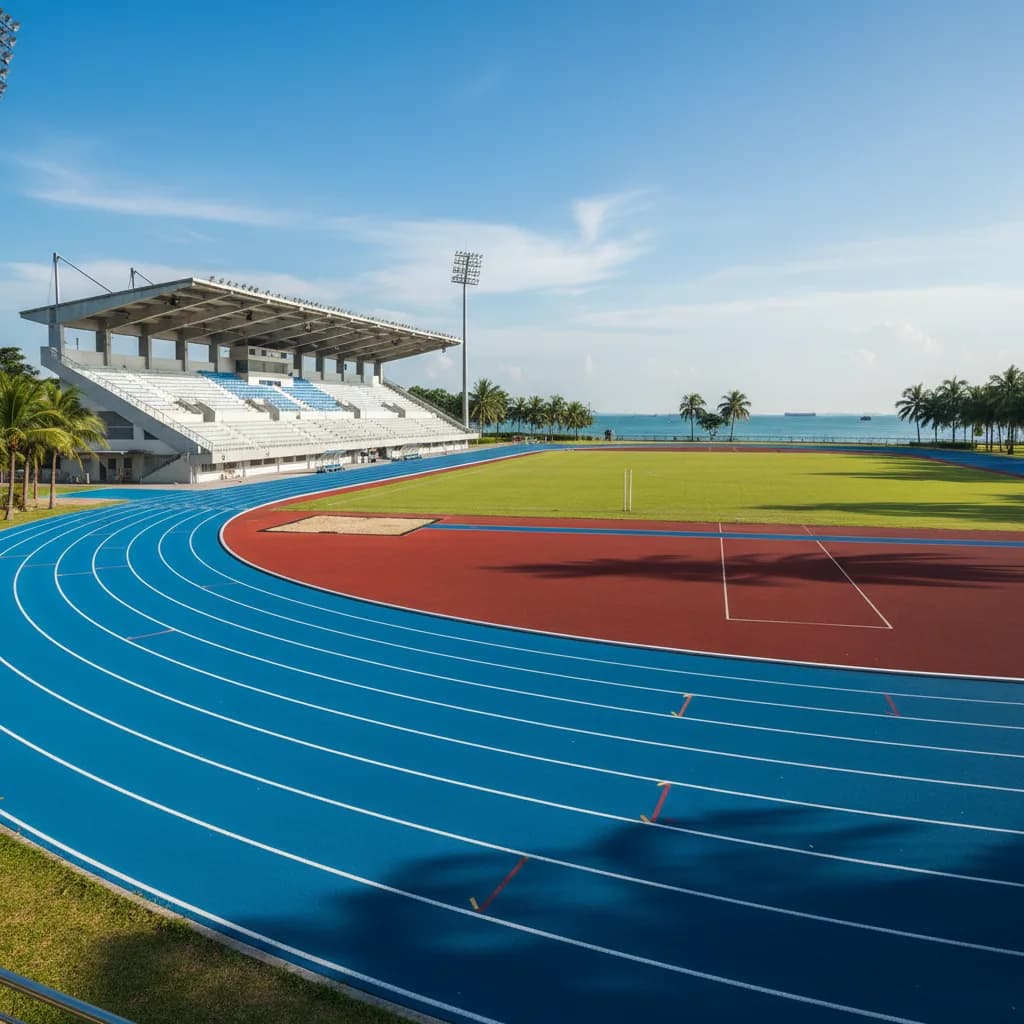
Katong Public Track Training Loop: Lane Rules and Pace
Find public track training loop routes near Katong with synthetic stadium navigation, East Coast running advice, and equatorial pacing guidelines.
Katong stands as Singapore's celebrated Peranakan cultural heartland, famed for its pastel-hued heritage shophouses along Koon Seng Road, intricate ceramic tile decorations, and bustling dining corridor lining East Coast Road. While the seaside proximity and historic residential charm create an inspiring setting for relaxed weekend recovery runs, the neighborhood's built environment poses noticeable obstacles for focused speed development. Narrow five-foot ways, outdoor cafe seating, pedestrian congestion, and continuous traffic signals across Tanjong Katong Road break the rhythm required for calibrated interval training. Serious distance runners seeking uninterrupted tempo blocks, exact 400-meter repetitions, and controlled pacing discipline cannot execute high-intensity workouts along crowded urban pavements. Establishing an effective speed routine requires charting an intentional route from Katong toward dedicated municipal athletics stadiums, where regulation all-weather ovals provide open public access to structured interval conditioning.

ActiveSG Bedok Stadium as the Primary Eastern Hub
The primary outdoor athletics destination serving community athletes in the Katong precinct is ActiveSG Bedok Stadium, located along Bedok North Street 2 at postal code 469642. Situated roughly four kilometers northeast of Katong, Bedok Stadium features an eight-lane 400-meter all-weather synthetic track enclosing a regulation football field. Managed under Sport Singapore's public recreation network, the stadium operates with free community access during scheduled training windows, removing administrative barriers and private club fees. Athletes can warm up with a steady aerobic jog through the quiet park connectors bordering Bedok Reservoir Road, arriving at the track fully primed for high-cadence speed repetitions on a certified running oval.
Bedok Stadium offers comprehensive facilities tailored for demanding track sessions under equatorial climatic conditions. The complex incorporates covered grandstand seating for sun protection, secure gear storage areas, modern restrooms, and high-flow chilled water refilling stations. Expansive field lighting illuminates the synthetic oval during dawn hours and evening sessions, enabling runners to train comfortably during cooler morning temperatures or after workday hours. The contained stadium perimeter prevents interference from bicycles, electric mobility scooters, and casual pedestrians, creating an orderly athletic venue where interval pacing remains pristine and uninterrupted.
Track Etiquette, Anti-Clockwise Flow, and Overtaking Discipline
Maintaining track safety and efficiency requires disciplined adherence to established running conventions. Upon stepping onto the synthetic track at Bedok Stadium, athletes must uniformly respect the standard counter-clockwise running direction. Lane 1 and Lane 2 function as dedicated fast lanes, designated exclusively for athletes performing hard repetition blocks, timed threshold intervals, and maximal sprint efforts. Warming up at leisurely paces, lingering during recovery intervals, or standing stationary in these inner lanes creates immediate collision risks for oncoming runners executing timed pace targets and strict split intervals.
Athletes performing recovery walking or low-intensity warm-down strides must immediately clear the inner corridors, transitioning out to Lane 7 and Lane 8 or resting along the perimeter infield grass. When passing slower runners in the inner lanes, always overtake decisively on their right shoulder while leaving sufficient clearance before blending back toward the inside rail. Avoiding isolating noise-canceling headphones and keeping ears receptive to vocal track clear notifications ensures seamless communication with club runners, fostering an encouraging and safe training atmosphere for all community members on the oval.
Synthetic Shock Absorption and Footwear Considerations
The regulation textured polyurethane synthetic surface at Bedok Stadium provides critical shock absorption compared to the unforgiving concrete sidewalks and coastal tarmac prevalent across Katong and East Coast Park. The resilient elastic material attenuates heavy vertical strike forces upon foot contact, minimizing cumulative micro-trauma across the plantar fascia, patellar tendons, and lower back during fast repetition cycles. Distance runners sharpening their race fitness rely on this forgiving synthetic bounce to sustain demanding workouts without incurring excessive muscular soreness or recurring joint fatigue over long seasonal blocks.
Footwear selection directly influences both track longevity and athletic performance. Standard neutral road running shoes featuring breathable knit uppers and durable blown rubber outsoles deliver optimal grip across dry and rain-slicked synthetic tracks. While sanctioned track meets permit the use of short pyramid track spikes, responsive lightweight road racing flats provide balanced cushioning and dependable traction for routine community speed sessions without overloading calf musculature. Athletes should inspect their outsoles prior to stepping onto the track, brushing away stray coastal gravel or asphalt debris that could tear the synthetic topcoat.
All-Weather Alternatives at Singapore Sports Hub
When sudden tropical rain squalls or lightning warning signals temporarily suspend open-air track operations at Bedok Stadium, Katong runners have direct access to sheltered training alternatives at the Singapore Sports Hub. Positioned at 1 Stadium Drive at postal code 397629, the 100PLUS Promenade provides a fully covered 888-meter rubberized track surrounding the National Stadium. Easily accessible via Mountbatten Road or the Circle MRT Line from Dakota station to Stadium station, this elevated venue guarantees seamless workout execution regardless of severe equatorial weather.
Complementing the covered promenade, the nearby Kallang Practice Track at 52 Stadium Road at postal code 397724, also recognized as the Home of Athletics, provides a dedicated eight-lane 400-meter synthetic oval bordered by lush coastal landscaping. Featuring professional lane markings, broad turn radii, and regular public access hours, these combined Kallang facilities give East Coast runners flexible options to adapt their speed workouts around varying weather conditions and training goals throughout the year.
Structuring Paced Repetitions and Karpo APP Route Guidance
An effective interval session begins with ten minutes of dynamic mobility on the infield grass, focusing on leg swings, walking hamstring sweeps, high knees, and brief acceleration strides. A proven workout template involves eight to ten 400-meter repeats at current 5K race pace, interspersed with ninety seconds of walking recovery, finished with four 100-meter strides to reinforce efficient sprint mechanics. Hydration requires diligent attention in Singapore's tropical humidity; runners should consume fluids prior to initiating intervals and take disciplined sips from water dispensers between repetition sets.
Following strenuous track work, runners should complete ten minutes of easy jogging along the stadium's outer boundary, followed by light static stretching and carbohydrate rehydration. The Karpo APP serves as an invaluable training guide for Singapore endurance athletes, mapping low-stress connecting corridors between Katong and regional athletics tracks while highlighting public water points and transit connections. By linking heritage neighborhood living with professional track infrastructure, Katong runners enjoy world-class speed training within Singapore's dynamic urban landscape.
Ask Karpo for more information.
Keep reading
- Katong Indoor Swimming Pool Lane: East Coast Lap Swim
 Chinatown Indoor Swimming Pool Lane: Singapore Lap Guide
 Telok Ayer Indoor Swimming Pool Lane: Singapore CBD Lap Swim