 Sentosa Christmas Light Up Walk Planner for Young Families
Free Things to Do
Telok Ayer Public Reading Garden: Two Free Pocket Parks
Telok Ayer has two free pocket parks for reading: Telok Ayer Green beside Thian Hock Keng and Ann Siang Hill Park off Club Street. Both suit a quiet chapter.
Telok Ayer is the busiest lunchtime strip in Singapore's financial district, but two small public parks give readers a free bench away from the queues. Telok Ayer Green sits beside Thian Hock Keng temple and traces the line of the old shoreline where immigrants once landed. Ann Siang Hill Park, at 78 Club Street, climbs the last surviving hill of the district through tamarind, nutmeg and cinnamon trees. Both are run by NParks and are free to enter. Neither is large, so pick your time well.
Telok Ayer Green: Reading on the Old Shoreline
Before land reclamation pushed the coast eastward, Telok Ayer Street ran along the water, and this was where many Chinese and Indian immigrants first stepped ashore. Telok Ayer Green is laid out to follow that original shoreline. It sits between two national monuments that early arrivals visited to give thanks, Thian Hock Keng temple and the Nagore Durgha Shrine.
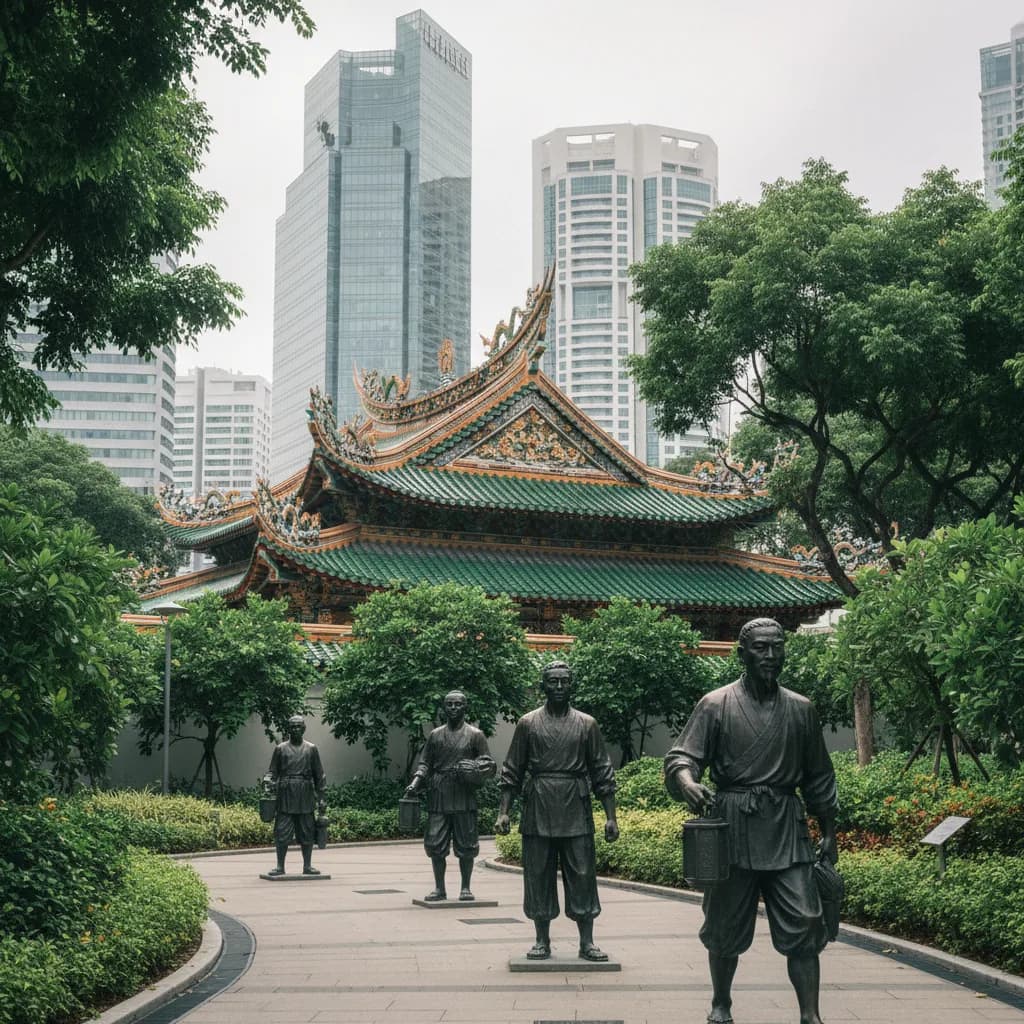
Bronze sculptures dot the paths and recall the people who lived here. Artist Lim Leong Seng's Chinese Procession shows immigrants carrying lanterns along Telok Ayer Street in the 19th century, while another work depicts an Indian milk trader. A sampan used to ferry goods completes the set. These figures make the park feel like an open-air history book, which suits anyone reading about the region's migrant past.
The green is compact, and the benches are popular with office workers at lunch, when the space fills with takeaway boxes and phone calls. Our honest view: skip it in the middle of the working day. Come early in the morning, on a weekday afternoon after the lunch rush, or at weekends, when the CBD empties and you may have the sculptures almost to yourself.
Who reads here? Early on, you will see bankers with coffee scanning reports before the market opens, older residents from Chinatown on a slow walk, and the odd tourist sketching the sculptures. A paperback history of Singapore or a memoir about migration feels natural on these benches, because the figures around you are telling the same story in bronze.
Thian Hock Keng: The Temple Beside the Green
Thian Hock Keng at 158 Telok Ayer Street is the oldest and most important Hokkien temple in Singapore. Work began in 1839 and finished in 1842, paid for by community donations, with the largest gift from the merchant Tan Tock Seng. It is dedicated to Mazu, the sea goddess sailors prayed to for a safe crossing, and it became a national monument in 1973.
A restoration between 1998 and 2000 received an honourable mention in the UNESCO Asia-Pacific Heritage Awards. The temple is a place of worship rather than a reading room, so do not settle into its courtyards with a book. Instead, step inside briefly to see the carved dragons and colourful roof details, then take your book back to the green next door, where the roofline frames your view.
Ann Siang Hill Park: A Leafy Climb Above Club Street
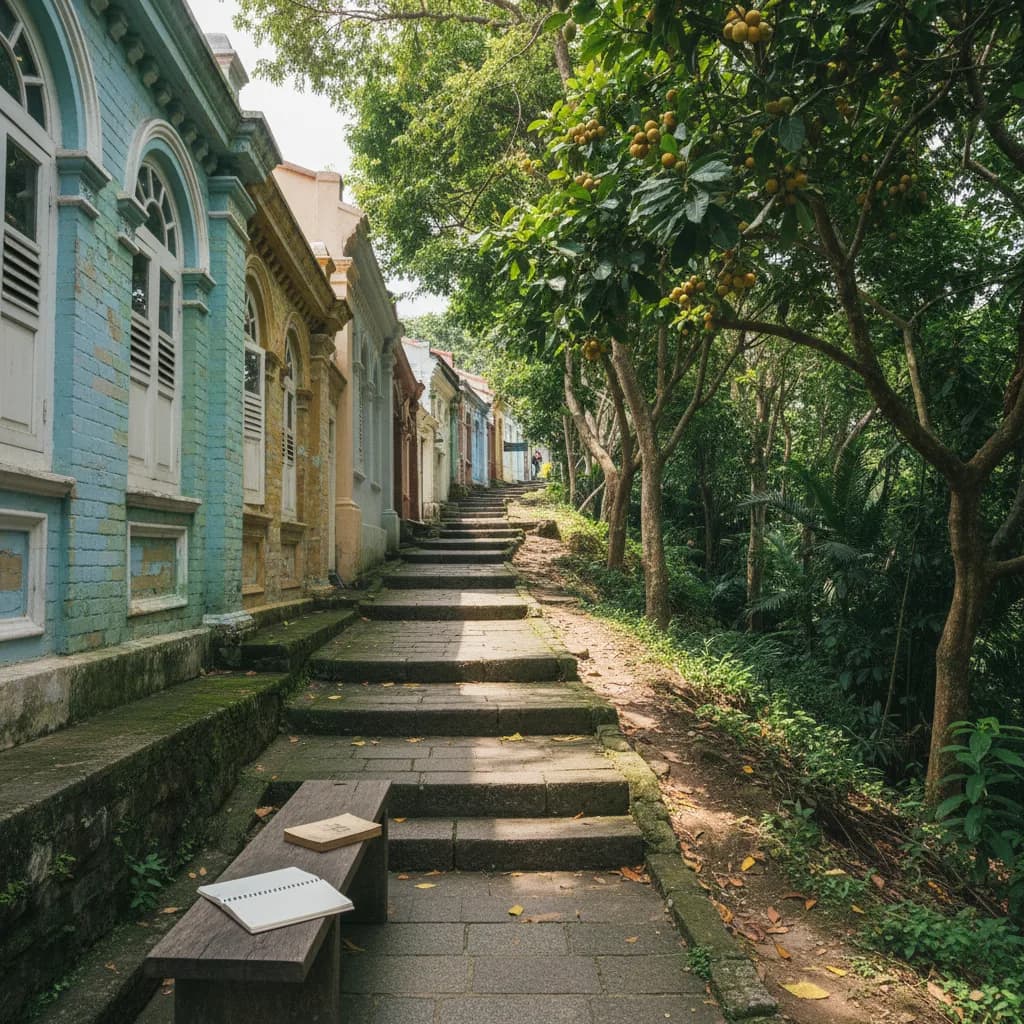
Walk a few minutes west and look for the stairways rising between the shophouses. Ann Siang Hill Park was completed in 2004 and threads a footpath up the slope, linking Amoy Street with Club Street and Ann Siang Hill. The hill was first known as Scott's Hill after Charles Scott, who grew nutmeg and cloves here, and later took its name from the merchant Chia Ann Siang, whose estate covered it.
The planting still nods to that history, with nutmeg, cinnamon, tamarind and breadfruit trees along the path. Because the park is on a slope, benches are spread out and partly hidden by the trees, which gives each one a surprising sense of privacy. It suits a short story collection or a few chapters of a novel between meetings, rather than a full afternoon.
On weekday evenings, the bars and restaurants along Club Street and Ann Siang Road bring noise and crowds to the top of the hill. Read here in the morning or early afternoon instead. Nearby, the Chinese Weekly Entertainment Club, founded by Peranakan elites in 1889, still stands at 76 Club Street, and it may have given the street its name.
Which Pocket Park Fits Your Break
Pick Telok Ayer Green if you want sculptures, open sky and the view of the temple roof, and you can avoid the lunch rush. Pick Ann Siang Hill Park if you want shade, birdsong and the feeling of being tucked away, even though the climb can be warm on a humid day. Both are small, so neither is a good choice for groups or for spreading out a picnic.
For a longer read, Hong Lim Park, home of Speakers' Corner, is a short walk away toward Chinatown, with more lawn and a bigger canopy. The Karpo APP can help you compare these spots by walking time from your office or hotel, so you choose the right bench for the time you actually have.
A Short Pioneers Walk With Reading Stops
NParks publishes a self-guided Pioneers Trail that links Ann Siang Hill Park and Telok Ayer Green, and it makes a natural reading route. Start at Telok Ayer MRT station on the Downtown Line, walk south along Telok Ayer Street past the shophouses and settle in the green first.
From there, cut through to Amoy Street and climb the steps into Ann Siang Hill Park. Pause halfway up for your second chapter, then continue to the top at Ann Siang Road and Club Street. If you still have time, walk down toward Chinatown and Hong Lim Park to finish your book in a larger space.
Practical Notes for Reading in the CBD
Both parks are free and open to the public. Seating is limited, so arrive with a backup plan in case every bench is taken. Singapore's heat and sudden downpours shape the day, so carry water and an umbrella, and use the shophouse five-foot ways for shelter when a storm passes over.
Mosquito repellent helps in the greener parts of Ann Siang Hill Park. Keep your voice low near the temple and the mosque, where people come to pray, and dispose of food packaging properly. Because Telok Ayer is a working district, weekends tend to be calmer, and early weekday mornings offer the coolest and quietest reading of all.
Ask Karpo for more information.
Keep reading
- Sentosa Christmas Light Up Walk Planner for Young Families
 Tanjong Pagar Christmas Light Up Walk Planner for Teams
 Bugis Christmas Light Up Walk Planner for Interfaith Friends