 Katong Indoor Swimming Pool Lane: East Coast Lap Swim
Sports Social

Public Pickleball Court Finder: Tanjong Pagar Team Play
Tanjong Pagar team play starts with a committed group. Choose a suitable session, share equipment duties and keep the social finish optional for colleagues.
A team pickleball outing from Tanjong Pagar needs a participation plan before it needs a court. A public pickleball court finder can help frame the search, but the organiser still has to distinguish colleagues who want to play from those who simply want to join the evening. Start with a small committed group and a session suited to its experience. The shophouse streets are a place to meet or walk afterwards, not evidence that an available playing surface lies around the corner.
Let colleagues choose their level of involvement
An office invitation carries a different pressure from a message between established playing partners. Make declining easy, and ask privately about experience or accessibility needs. Some people will want a first lesson, some will bring years of racket sport, and others will prefer dinner afterwards. Recording these choices early gives you an honest headcount. It also stops the most enthusiastic colleague from booking a competitive format that the rest of the team never actually wanted.
Separate interest from commitment in the invitation. A useful first message asks for a preferred day and whether the person wants instruction, casual play or only the social part. Once a suitable offer has been found, send a second message with its actual conditions. Collect firm responses before spending on behalf of the group. Keep managers and juniors on the same terms about shared costs, and make any company contribution explicit rather than allowing assumptions to grow.
Treat Tanjong Pagar as the departure area
The contrast between conserved shophouses and office towers gives Tanjong Pagar a natural role in an after-work plan. Colleagues can leave different buildings and converge before travelling to the selected sports facility. Choose that departure point for clarity and shelter rather than for a picturesque photograph. If some people already live closer to the court, let them go directly. Requiring everyone to return to the office district can make a supposedly convenient team activity needlessly complicated.
Duxton Hill can supply a separate walking element for those who want one, while Telok Ayer offers another nearby street setting to explore on a different evening. Neither should become a compulsory extension to a paid sports session. Write the invitation around the shared activity, then list the walk as optional. Anyone carrying a laptop, managing childcare or returning across the island should know exactly which part they are agreeing to attend and where they can leave.
A court and a hosted group solve different problems
Use the description of the sports offer to decide whether it fits the team. With a court reservation, your colleagues provide the playing group and manage their own use of the space. An organised session may have a host, participants or instruction, depending on what it advertises. A photograph showing several players is not proof of coaching or open registration. The difference matters most for a mixed team where a complete beginner needs help and an experienced player expects rallies.
ActiveSG's website provides separate routes for booking facilities and joining programmes. Use the appropriate category when researching options, and read the actual provider's terms for the offer you choose. Keep court access distinct from any additional service. Rental paddles, beginner teaching, spectators and refreshments should enter your plan only when the relevant description supports them. A team event becomes awkward when the organiser confidently promises facilities that were never included in the reservation.
Plan the rotations before inviting a large department
For a larger group, the central question is how much time each person spends participating. Ask the operator or session host about its permitted group size and format. Do not divide a court reservation among an expanding guest list merely to make the individual share look cheaper. A colleague who travels across town for a handful of rallies may reasonably feel that the invitation was misleading. Smaller groups and separate dates can provide a better experience than a single overcrowded outing.
If your selected format permits rotations, explain the principle beforehand and let the host's rules take priority. Mix colleagues thoughtfully so that experienced players do not spend the whole evening competing only with one another. Give newcomers room to learn without turning every error into a lesson from the sidelines. Keep the aim modest: enough participation that everyone understands why they came. A first company session does not need a trophy, a league table or a photograph of every point.
The equipment conversation belongs in the invitation
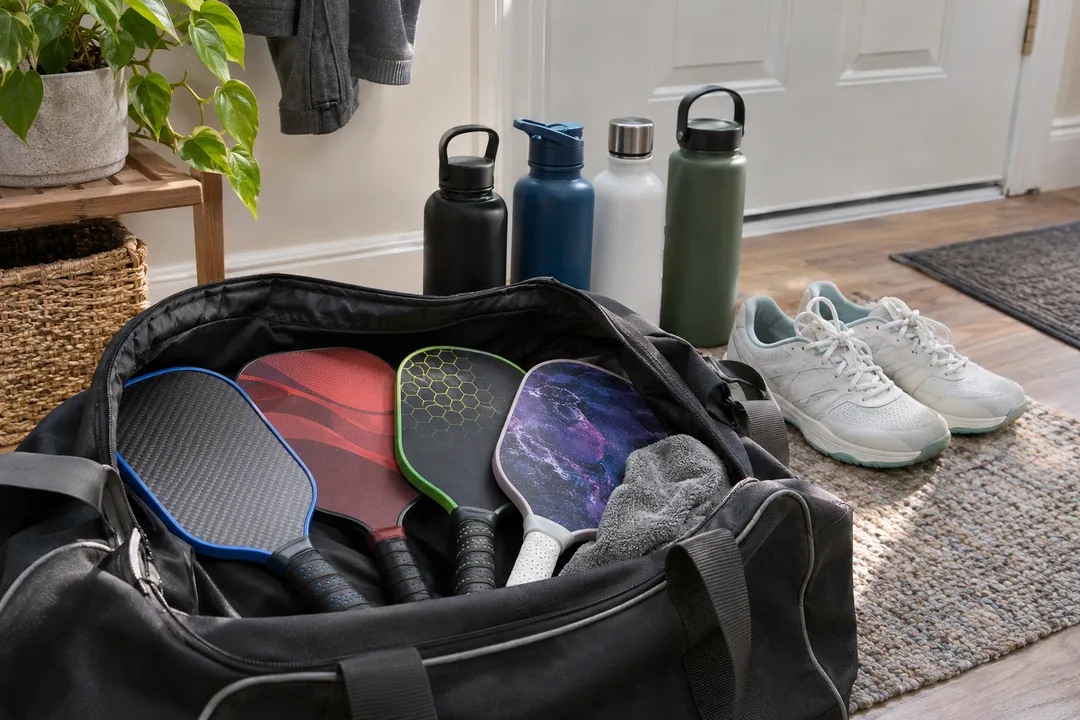
Ask each player to identify what they will bring. One person can organise the ball supply, another can coordinate spare paddles where borrowing is permitted, and everyone can arrange their own clothing and water. Avoid surprising a new colleague with a specialist shopping list after they have committed. If an advertised beginner session includes equipment, record exactly what it includes and any collection arrangements. If it does not, resolve the gap before finalising the attendance list.
A workplace group also needs a plan for bags. Laptops, office shoes and spare shirts create a different load from a player's ordinary kit. Use only storage arrangements stated by the facility, and avoid promising lockers or showers from a photograph. Someone who cannot comfortably bring valuables may choose to leave them at work and travel separately. That is a useful constraint to design around, rather than a reason to pressure them into following the organiser's preferred route.
Make the finish less demanding than the start
After the session, a group meal can work if it has been discussed separately. Ask about food preferences and whether people want to sit down or head home. You do not need a second compulsory booking to prove that the team evening was successful. A short walk around the shophouse streets can be enough for those returning to Tanjong Pagar. Keep voices and equipment contained around other pedestrians, and carry paddles in bags rather than practising along the pavement.
If rain or a work delay changes the plan, use the actual provider's cancellation and attendance terms. Share the provider's stated refund arrangements with colleagues, and choose any replacement through its own booking process. Decide who communicates any change and where the group will read that message. A clean decision to reschedule can protect both the budget and people's goodwill. It is better than asking everyone to keep travelling while the organiser tries to improvise a different sport.
Practical Notes for the colleague organising
Before sending the final invitation, write a compact summary: confirmed participants, selected offer, reservation owner, equipment arrangements, meeting point and optional social finish. Include the real payment split privately when relevant. Public access does not mean free play, and a space being empty does not grant the group permission to use it. The provider's own booking confirmation is what turns your team's plan into an agreed session. Keep that record separate from tentative suggestions in the office chat.
You can bring the outing brief into the Karpo APP when asking for ideas around the group evening. State Tanjong Pagar as the departure area and name the constraints that matter, such as beginner inclusion or a short social finish. The court provider remains the place to complete its reservation process. When the first outing ends, ask colleagues one useful question: would they prefer another casual game, a coached introduction or a different activity? Their answer is more useful than treating attendance as proof that everyone enjoyed the format.
Ask Karpo for more information.
Keep reading
- Katong Indoor Swimming Pool Lane: East Coast Lap Swim
 Chinatown Indoor Swimming Pool Lane: Singapore Lap Guide
 Telok Ayer Indoor Swimming Pool Lane: Singapore CBD Lap Swim