 Katong Indoor Swimming Pool Lane: East Coast Lap Swim
Sports Social
Marina Bay Public Pickleball Court Finder: After Work
Marina Bay works as a starting point for an after-work game. Plan the players, travel and booking before adding a short waterfront walk to the evening.
Marina Bay is a starting point for a pickleball outing, rather than a promise of a court beside the water. A useful public pickleball court finder plan begins with when you can leave work, who will play and how far everyone will travel. Keep the waterfront stroll optional. The game needs an authorised court and an actual booking or a hosted session that accepts your group. A photograph of open paving around the bay tells you nothing about permission to put down a net.

Start with the latest person leaving the office
For an after-work group, the most important location is often the office of the person who finishes last. Write down each player's earliest realistic departure, including time to change and collect equipment. Use those departures to select a playable window together. Choosing a beautiful court first and asking colleagues to rush there afterwards creates a brittle arrangement. One delayed meeting can otherwise leave several people travelling towards a session they cannot properly use.
Give the organiser a clear answer rather than a vague expression of interest. Say whether you can play, whether you own a paddle and whether you must leave immediately afterwards. Treat a colleague who wants only the walk as a separate participant. Spectating permission and space depend on the selected facility. An invitation to meet at Marina Bay should not silently turn into an obligation to pay for a court or join a competitive game.
Use the promenade as a meeting reference
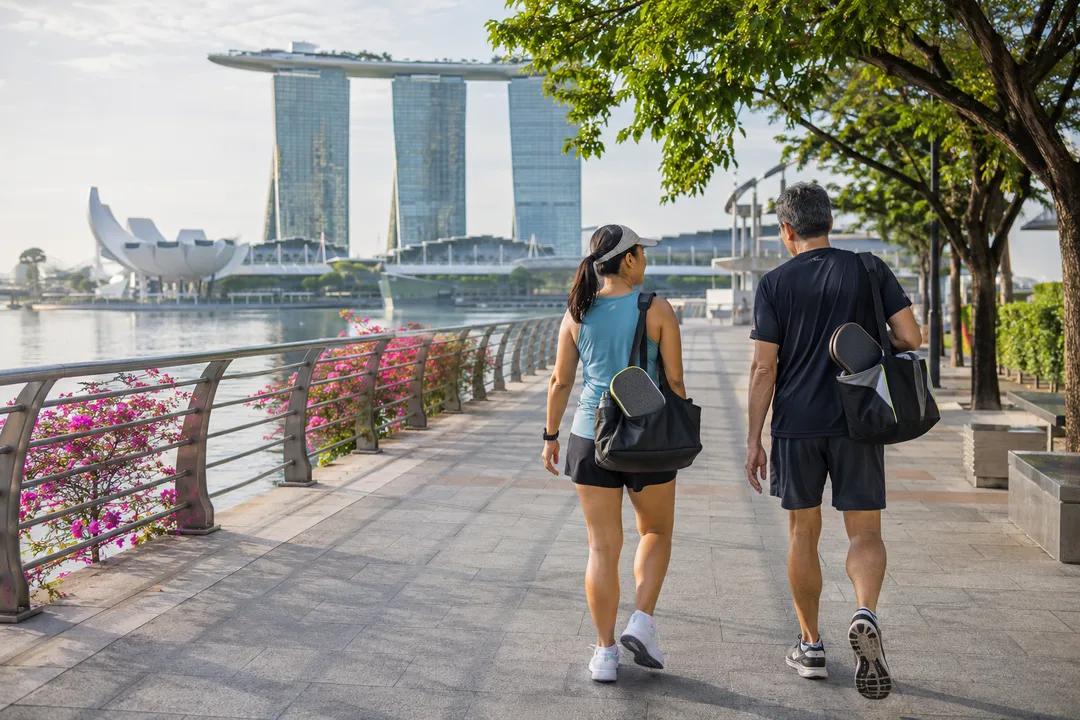
The bay makes a memorable visual reference, with Marina Bay Sands across the water and the city skyline changing as you walk. That does not make every part of the waterfront a convenient meeting point for the same onward journey. Pick one named landmark that everyone recognises, then decide the transport connection after selecting the actual sports destination. A waterfront meeting can be pleasant, but travelling away from the court just to gather the group wastes the evening.
Skip the preliminary walk if the booking starts too soon after your last colleague leaves work. You can keep the bay for another day or make it an optional finish after the game. Separating the sport from sightseeing also makes the invitation clearer for a visitor carrying luggage or an office worker still dressed for meetings. Nobody needs to complete a decorative itinerary before reaching the activity they agreed to do.
Read the offer before counting players
ActiveSG's official website separates facility bookings from programmes. That distinction is useful when reading any pickleball listing. A court reservation supplies playing space under the operator's conditions. A programme or organised session may supply instruction or other players, but its description must say so. Do not infer that a private reservation includes opponents, coaching, spare paddles or permission for additional spectators. Those are different needs, even when the photographs look similar.
For a group bringing its own players, record the facility name, activity and reservation type together. For a solo colleague, record whether an advertised session accepts individual registration. If the description leaves the format unclear, ask the operator a direct question about joining, rather than circulating the link as a confirmed game. The practical result should be one understandable invitation, with each person knowing whether they are joining a group or sharing a court reservation.
Compare the whole evening, not the map pin
Make a small comparison with three columns: when everyone can arrive, what the session includes and how everyone gets home. A location that looks farther away can still be easier for a dispersed team. Conversely, a central address can involve an awkward transfer for the person carrying the equipment. Calculate the journey using the actual entrance given by the operator. A familiar district name is too broad to settle which exit or building approach to use.
Shelter deserves its own decision. A roof, enclosed hall and outdoor court are different physical arrangements. Use the operator's description rather than guessing from a cropped picture. If the group needs an indoor option, make that a selection condition from the beginning. Do not keep a weather-sensitive reservation and assume that another hall will absorb everyone at the same time. A backup becomes useful only when its own access and booking requirements work for the group.
Keep one reservation owner and one readable message
Once you choose, put one person in charge of the booking record. Follow the provider's rules about account ownership, attendance and payment. Other players should receive the location, meeting instruction, equipment responsibilities and finish plan in ordinary language. Sending six screenshots without explaining which one is final makes it harder to spot a mistaken date or a different branch. A short message containing the actual choice is easier for a colleague to act on between meetings.
Ask about equipment before collecting commitments. Someone new to pickleball may own running shoes but no paddle or appropriate ball. Decide who brings each item and whether the selected offer provides any equipment. Keep the packing list specific to this outing. Water, a change of shirt and a bag for damp clothing are useful personal choices, while access credentials belong with the reservation holder. Do not leave everyone assuming that someone else has brought the essentials.
Let the game determine the social finish
A short walk by the water can be a pleasant change of pace, but it should follow the group's energy and onward route. If you return to Marina Bay, agree a single stopping point instead of extending the outing through several waterfront landmarks. Someone who needs to go home should be able to leave without breaking up the rest of the evening. The successful plan is the one people can repeat, rather than the longest possible route.
Food can remain a separate decision after the equipment is packed. Ask who wants a meal and what dietary needs matter before suggesting a place. That prevents the court organiser from becoming responsible for an unplanned restaurant reservation as well. Keep drinks and loose belongings away from the playing area during the session, and follow the venue's own rules about food. A relaxed social plan still depends on leaving the sports space ready for its next users.
Practical Notes for a workable invitation
Your final note should answer four questions: who is playing, what has actually been booked, where the group meets and when each person is free to leave. Attach the provider's reservation details privately to the people who need them. Keep any discussion about splitting costs transparent, using the actual booking amount and agreed participants. Do not describe a public facility as free merely because it is publicly accessible. Access, court hire and organised activities are separate matters.
Use the Karpo APP as the next place to ask for ideas around the evening, with your starting area and constraints written clearly. Complete the court transaction through the named provider's own booking route. Carry the confirmed arrangement back into your group message so suggestions do not get confused with reservations. If no suitable game fits the available window, choose the Marina Bay walk on its own and organise the sport for another date. That is a finished decision, not a failed night out.
Ask Karpo for more information.
Keep reading
- Katong Indoor Swimming Pool Lane: East Coast Lap Swim
 Chinatown Indoor Swimming Pool Lane: Singapore Lap Guide
 Telok Ayer Indoor Swimming Pool Lane: Singapore CBD Lap Swim