 Kovan Hainanese Curry Rice Lunch Picker: Heartland Plates
Restaurants
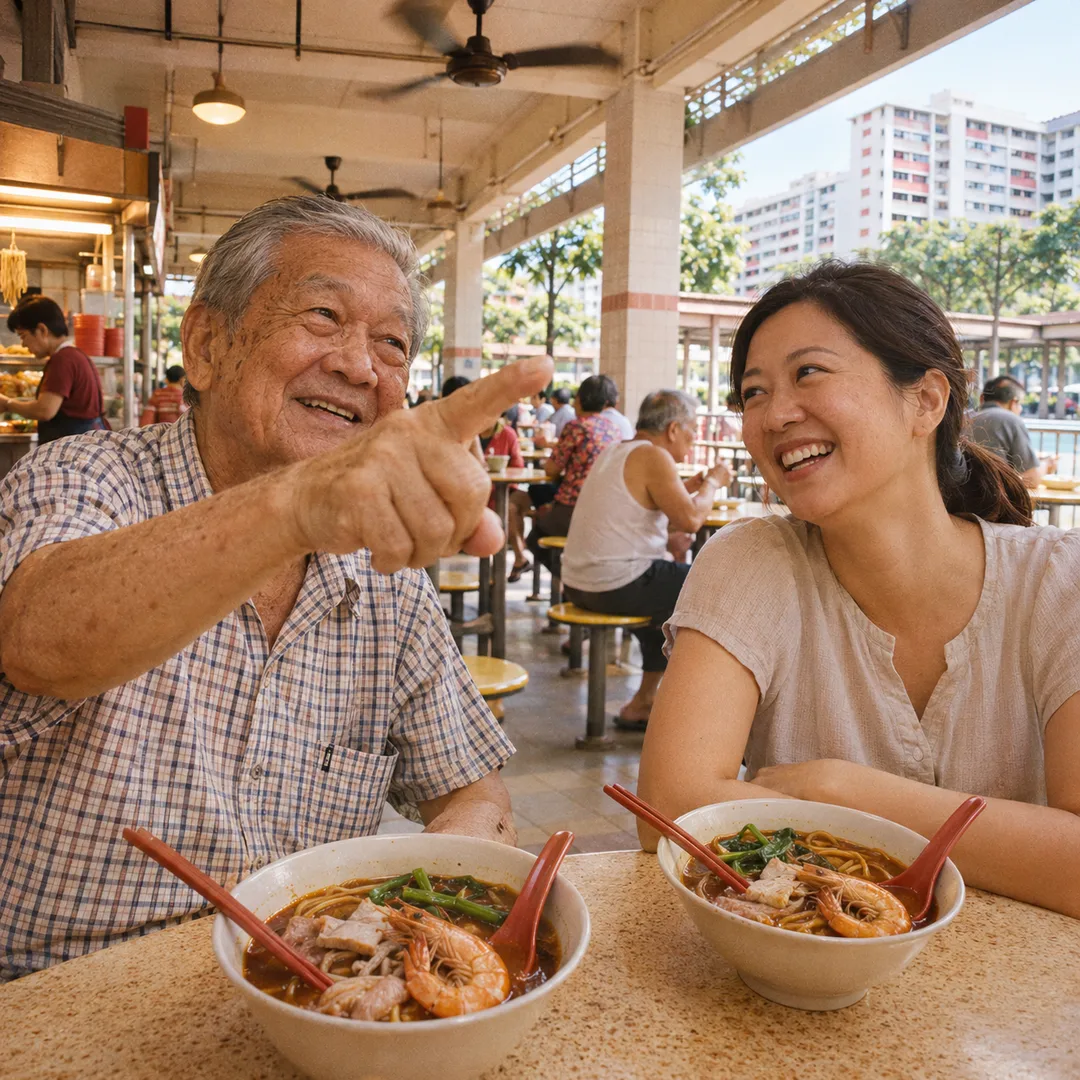
Toa Payoh Prawn Noodle Breakfast Picker With a Parent
A Toa Payoh prawn noodle breakfast picker for a family memory walk: order soup or dry together, let a parent lead, then see the dragon playground and Town Park.
Prawn noodles are a bowl of yellow noodles and rice vermicelli in a dark, sweet broth made from prawn heads and pork bones, topped with prawns, pork and fried shallots. In Toa Payoh, one of the first new towns built for the families who moved out of the old kampongs, it is the taste of many childhoods. This prawn noodle breakfast picker is for adult children who want to take a parent home for a morning.
A Town That Many Families Remember
Toa Payoh was built as one of the earliest satellite towns of the public housing programme, turning swampy ground into rows of slab blocks, markets and schools. Families from crowded shophouses and villages moved here to their first flats with running water and lifts. For many parents now in their sixties and seventies, these blocks hold their first home, first job and first friends.
Bringing a parent back here is often less about sightseeing and more about letting memories come out in their own time. A hawker breakfast is the perfect starting point. It is familiar, relaxed and full of small details that trigger stories, from the clink of kopi cups to the way the prawn noodle uncle calls out orders.
Let Your Parent Choose the Stall
Resist the urge to pick the stall you saw recommended online. Ask your parent where they used to eat, or which stall smells right to them. Older residents often have firm views about which prawn noodle broth is honest and which is too sweet, and following their lead turns the meal into a shared memory rather than a tour.
Even if the stall they remember has changed hands or vanished, the act of looking around together sparks conversation. Listen for names of hawkers, nicknames for blocks and stories about queues. Those details are what you will treasure later, more than the meal itself, so let the morning move at their pace. If the original stall is gone, ask the neighbouring hawkers where it moved; in older estates, people often know exactly which relative took over or which market the family shifted to.
Ordering Together: Soup, Dry and Old Habits
Prawn noodles come in two main styles. Soup puts everything in the broth, which many older people prefer because it is gentle on the stomach and easier to eat. Dry tosses the noodles in chilli and sauce, with broth on the side. Ask your parent how they used to have it, and order the same, at least for this morning.
Older diners often like bee hoon only, or a smaller portion with extra soup. If chewing is difficult, ask the stall for noodles cooked a little softer and prawns already peeled. Many hawkers are used to these requests from regular elderly customers and will happily help. Order a kopi or teh siew dai, with less sugar, which many seniors prefer these days.
Questions That Open Up Stories
Use the breakfast to ask gentle questions. What did the estate look like when you first moved in? Where did you buy groceries? Which block did your friends live in? Where did you go on weekends? These simple prompts tend to lead to long stories about crowded buses, old cinemas, wet market haggling and neighbours who became family.
Do not worry if some answers are vague or sad. Old towns hold both happy and difficult memories. Let silences sit. If your parent wants to show you somewhere, finish your bowl and go. A soft recorder on your phone can capture stories with permission, but just being present matters more than documenting everything.
The Dragon Playground and Town Park
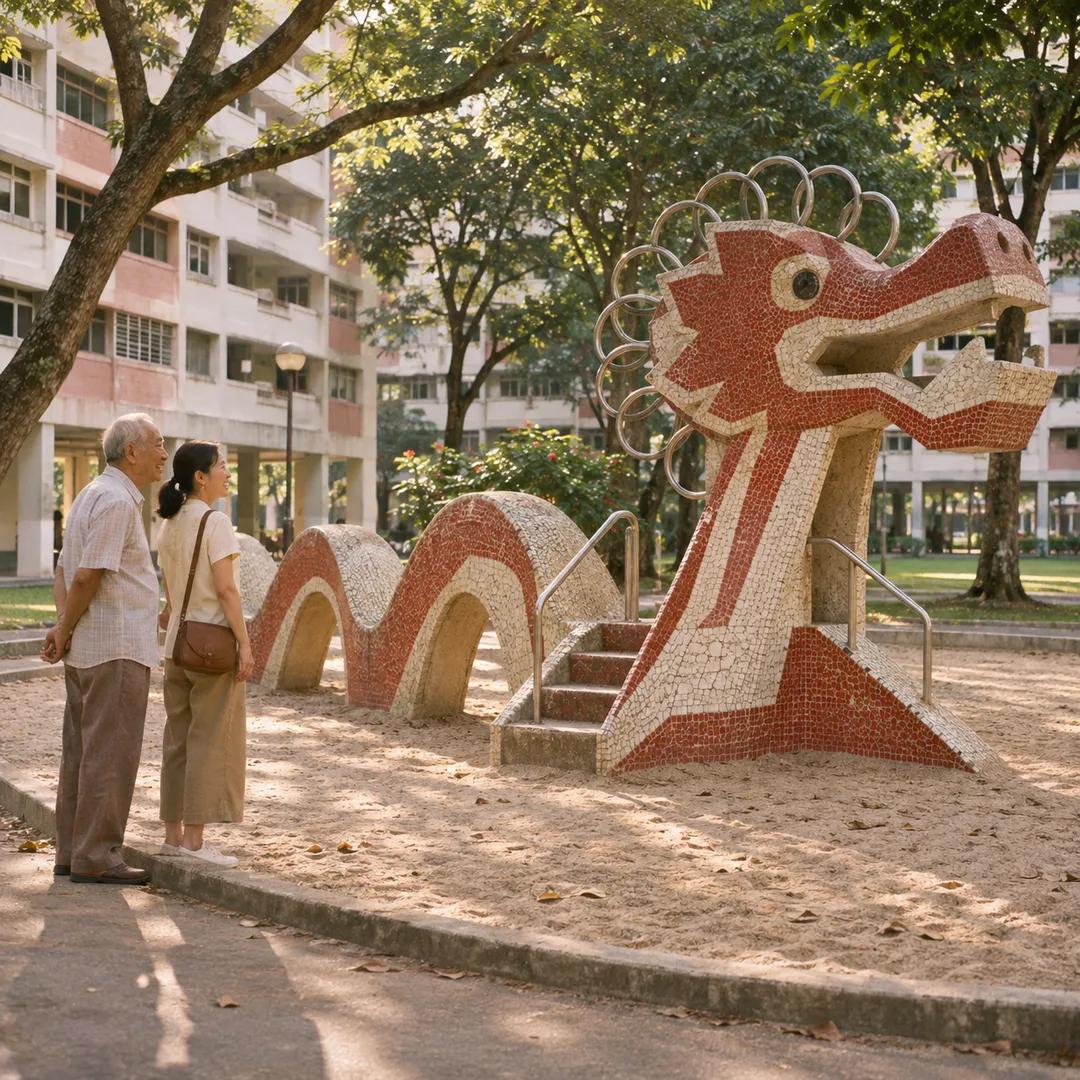
After breakfast, walk to one of the dragon playgrounds that have become symbols of the town. Designed for the housing board, the dragon with its ring-shaped mane and tiled body is a favourite of generations of children, and many parents will remember sliding down its tail. Today it is treasured as a piece of neighbourhood design history.
Toa Payoh Town Park lies close to the town centre, with a pond, bridges, willows and a lookout tower that was once a popular backdrop for wedding photos. Your parents may well have posed here, or attended friends' weddings with group photos by the water. Walk slowly around the pond and let them point out what has changed. Bring an old family photo taken here if you have one, and try to find the same spot together.
Blocks, Markets and the Town Centre
Toa Payoh's town centre still holds the mix that made it a model for later estates: shops on the ground floor, a library, a bus interchange and markets close by. Wander through the covered walkways and look at the older shops that still sell school uniforms, hardware and traditional pastries. Many of these feel unchanged since the parent's youth.
Older blocks have their own personalities, with numbered void decks where weddings, funerals and community events once took place. Your parent may point to a void deck where they held a wedding dinner, or a corner shop where they bought sweets. Listen, take a photo if it feels right, and keep moving at a gentle pace in the morning heat.
Making the Morning Comfortable
Older parents tire easily in tropical heat, so plan the route around shade and seats. Covered walkways connect much of the estate, and hawker centres and the town centre offer places to rest. Bring water, a small towel and an umbrella that can double as sun shade. Keep the walk short and flexible, with frequent stops.
If mobility is a concern, take a taxi between the hawker centre, the playground and the park instead of walking the whole way. Choose quieter weekdays over crowded weekends if possible. Finish with a cool drink or a dessert like chendol or ice kachang from a nearby stall, which many seniors associate with childhood treats.
Keeping the Tradition Going
A single morning in Toa Payoh can turn into a family ritual. Some adult children return every few months with a parent, trying a different stall or exploring another corner of the estate. Others bring their own children along, so three generations share a bowl of prawn noodles in the same town that started the family's story.
The Karpo APP can help you plan these mornings. Ask it for prawn noodle breakfast options in Toa Payoh that suit an older parent, compare a few, and save the ones you want to try next time. Over the years, the stalls may change, but the habit of eating together where your parent grew up will stay valuable.
Ask Karpo for more information.
Keep reading
- Kovan Hainanese Curry Rice Lunch Picker: Heartland Plates
 Tampines Mee Rebus Breakfast Picker: Round Market Bowls
 Jurong West Mee Rebus Breakfast Picker: Boon Lay Bowls