 Chinatown New in Town Weekend Planner: Errands and Temples
Weekend Plans
Pottery Ceramic Studio Toa Payoh: Clay People Classes
Plan a pottery ceramic studio visit at Clay People Studio in Toa Payoh, with its address, booking format, clay workflow, and practical tips for a smoother first
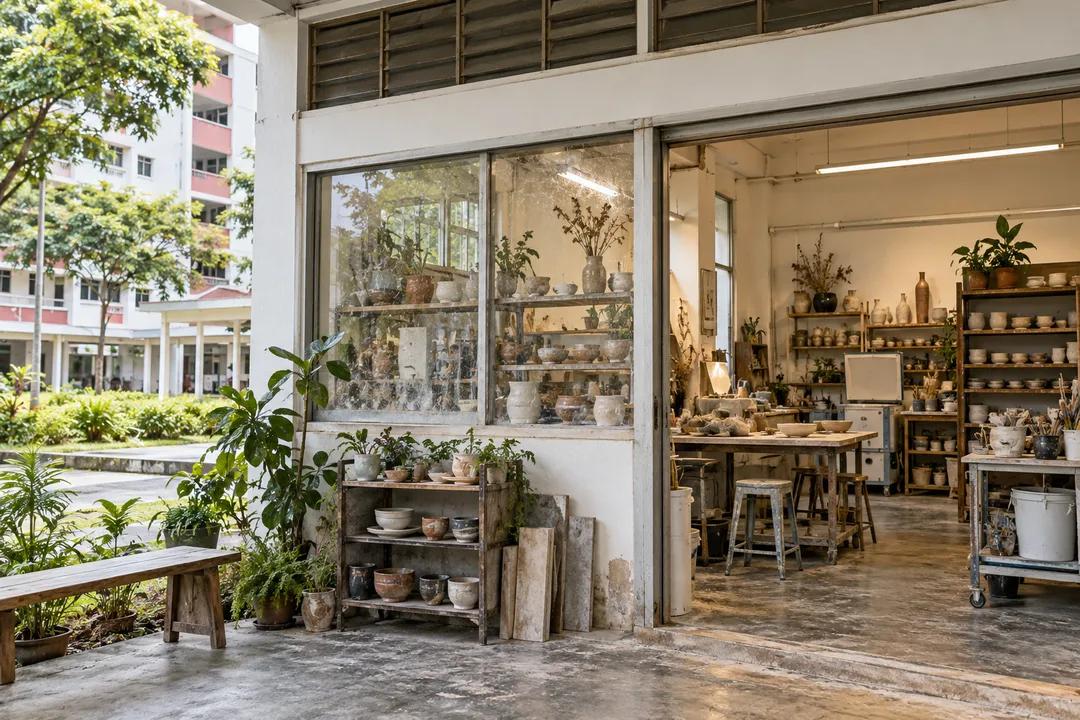
Clay People Studio sits at 1003 Toa Payoh Industrial Park #07-1527, Singapore 319075, in a setting that feels closer to a working makers’ room than a polished retail gallery. The address matters because an industrial-park visit rewards a little preparation: save the block and unit, keep the booking page open, and expect the final approach to be about finding the right lift rather than spotting a bright streetfront sign. The studio publishes its current class and open-studio choices on https://www.theclaypeople.org/our-studios.
Find the Working Room
Do not choose the first available pottery class simply because the time looks convenient. Clay People Studio presents several ways to work, so decide whether you want guided instruction, a wheel-focused session, or more independent time before paying. The useful distinction is how much explanation you need at the beginning. A complete beginner benefits from a format that makes wedging, centring, trimming, and firing expectations explicit. Someone who already knows the basics may prefer room to repeat a shape. The studio’s published schedule is the authority for the current format, timing, and fee rather than a copied city listing.
Choose a Format Before You Travel
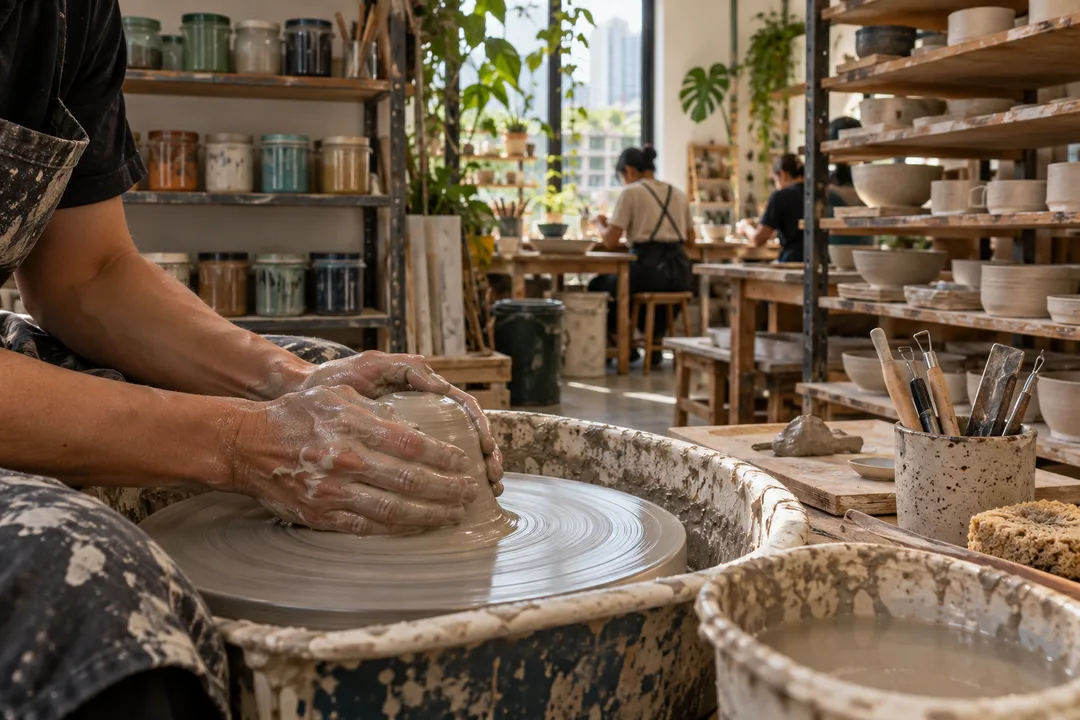
The opening minutes are where an industrial studio becomes legible. Notice where clay is stored, which tools are communal, where water belongs, and where unfinished pieces are placed. Ask one question before touching the wheel: what does the session include after the making stops? That answer may cover drying, glazing, firing, or collection. It is better to know this while choosing a form than after a thin rim collapses. A calm start also helps you notice the teacher’s demonstration. Watch the hands, not only the finished bowl; pressure at the base is usually more useful than a dramatic final shape.
What the First Ten Minutes Feel Like
Shared rooms run on small rules that are easy to miss in a social-media photograph. Keep slip inside the work area, return ribs and trimming tools, wipe the splash pan, and leave shelves for the next maker. Do not move another person’s drying piece to create a better picture. If the studio asks you to label work, write clearly before the clay begins to stiffen. These habits are not ceremony. They protect the next firing and prevent an enjoyable class from becoming a sorting problem for the staff. The quieter you work, the more feedback you can hear.
The Shared-Studio Etiquette
For a first session, one modest vessel is a better target than a matching dinner set. A small cup, pinch bowl, or low planter gives you enough surface to learn compression without turning every wobble into a crisis. If the wall begins to thin, stop lifting and support the form; height is not the same as progress. Keep the base thick enough for later trimming, then ask whether the studio prefers you to leave the foot uncut. The signature achievement here is not a perfect silhouette. It is understanding one decision well enough to repeat it.
Make One Form, Not Five
This is a good fit for a visitor who enjoys process, a local testing a new hobby, or a pair of friends willing to clean as carefully as they make. It is less suitable for someone who wants a guaranteed finished souvenir within an hour or who dislikes shared benches. A child or family group should read the age and supervision rules before booking rather than assuming every wheel session is casual. Regular makers will appreciate a place where repetition is possible. Newcomers should arrive ready to ask for help without treating the teacher’s demonstration as a performance.
Who Will Enjoy This Setup
After the class, give Toa Payoh Industrial Park a slower exit. The surrounding blocks are practical rather than postcard-pretty, which is exactly why they work as a reset after concentrated handwork. Walk a short loop, find a drink, and let the physical memory of the clay settle before reviewing your photographs. If you have booked a collection visit, do not bury it inside a tight itinerary elsewhere in Singapore. Keep the studio address with the reservation. The useful neighbourhood story is the contrast between a utilitarian work setting and the small, personal object you carry away.
A Toa Payoh Industrial-Park Walk
Firing and collection should be treated as part of the appointment, not an optional footnote. Ask what happens if a piece cracks, whether glazing is included, when collection is expected, and whether another person may collect on your behalf. Those details are especially important for travellers leaving Singapore soon. A piece that is still drying is not luggage. If the studio gives you a collection window, put it in your calendar before walking out. The most avoidable disappointment is leaving the city with a camera full of a bowl that the timetable never allowed you to retrieve.
Collection Is Part of the Plan
Wear clothes that can accept a pale smear of clay and shoes that are comfortable on a hard industrial floor. Trim long nails if you want finer control, tie back loose hair, and bring a bag that can eventually carry a wrapped object without pressure on the rim. Do not plan a formal dinner immediately afterwards unless you have readed the clean-up arrangement. If the booking form uses a programme name you do not recognise, ask before paying; the right question is what the session lets you make and what the studio does next.
Carry the Right Things
Clay People Studio is worth choosing when the attraction is learning how a piece comes into being. Its Toa Payoh address, published booking route, and practical studio character favour visitors who can give the material a little time. The strongest plan is simple: select the format online, arrive early enough to locate the room, make one manageable form, respect the shared tools, then read firing and collection before leaving. Skip the fantasy of instant mastery. A first class that teaches you where pressure belongs is a more useful souvenir than a rushed object that only looks good from one angle.
The Honest Take
Practical notes belong in the booking itself. Save the official studio page, the full unit address; do not rely on a screenshot of a social post. Ask what clothing, age, and collection rules apply to the selected programme. If the answer is not on the booking page, ask before the day of the session. That small habit is the difference between arriving prepared and spending the opening minutes solving logistics. Clay People’s industrial setting makes preparation feel worthwhile because the work, not the storefront, is the reason to come.
Ask Karpo for more information.
Keep reading
- Chinatown New in Town Weekend Planner: Errands and Temples
 Kampong Glam New in Town Weekend Planner: Mosque to Murtabak
 Holland Village New in Town Weekend Planner: Meet People