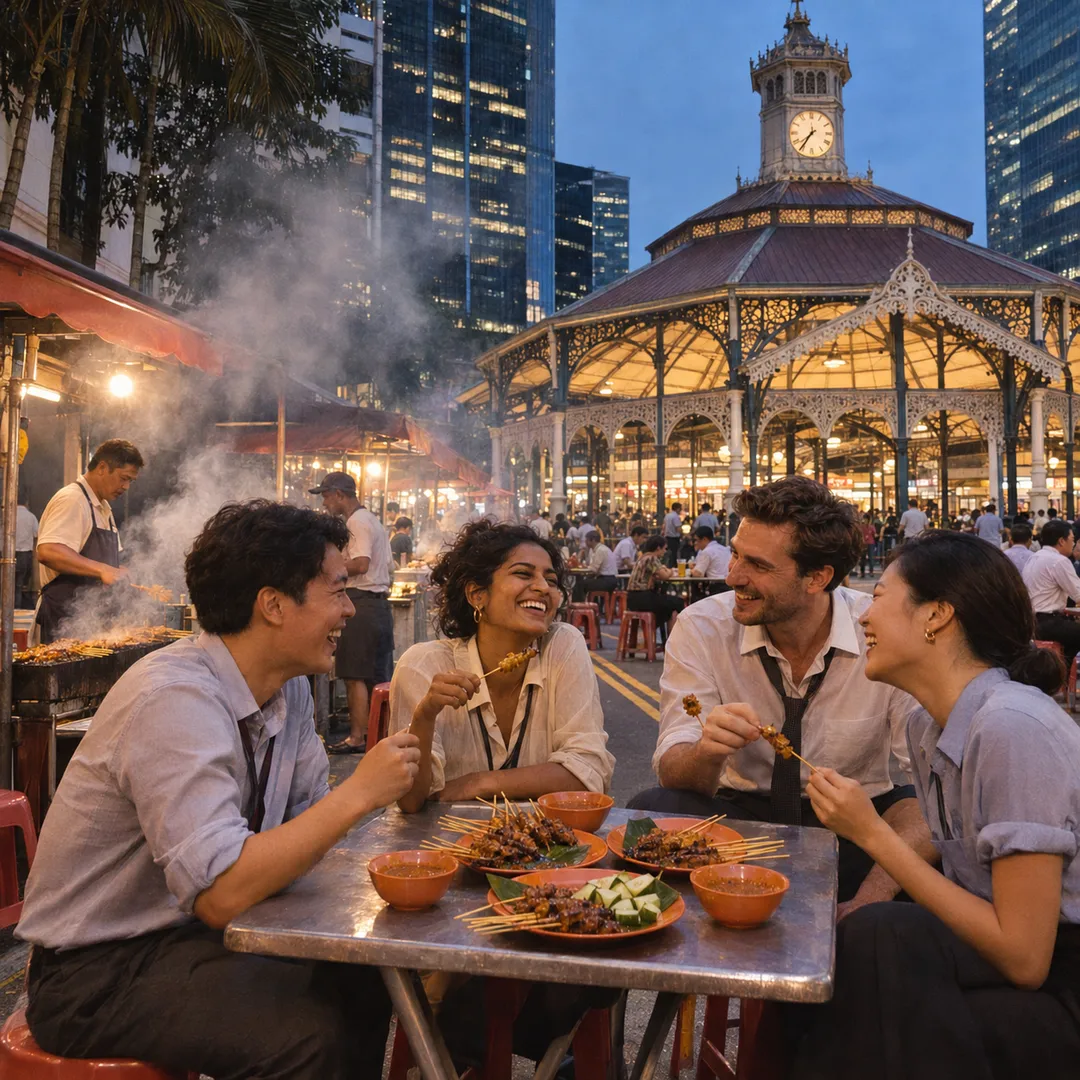
 Marina Bay Food Market Grazing Route After a Conference Day
Neighborhood Guides

Kampong Glam Post Work Route Planner: Domes and Lanes
Kampong Glam's golden-domed Sultan Mosque, Haji Lane murals and Arab Street textile shophouses sit five minutes from Bugis MRT. Plan an evening loop here.
Bugis MRT station, on the East-West and Downtown lines, is a five-minute walk from the golden dome of the Sultan Mosque, the centrepiece of the Kampong Glam conservation area. A Kampong Glam post work route planner is about pacing a small district with a big character: a pedestrian street of palms, a royal compound with a lawn, lanes of murals and textile shops, and the older mosque on Beach Road that most visitors miss.
Get Your Bearings First
Kampong Glam is compact, roughly the block between Victoria Street, Beach Road, Jalan Sultan and Ophir Road. Its historic core was gazetted for conservation in 1989, so the street grid and the scale of the shophouses have survived. From Bugis station, cross Victoria Street, walk along Arab Street, and you are in the middle of the area. Lavender station, also on the East-West line, sits just beyond the northern edge if you want a different exit.
On a weekday evening, the mix of people tells you what kind of place this is: families heading to evening prayers, students from the nearby arts and design schools, textile shop owners pulling down shutters and groups of friends from the CBD meeting after work.
Bussorah Street and the Sultan Mosque
Start on Bussorah Street, the pedestrianised avenue of palm trees that frames the mosque perfectly at its end. The original mosque here dates from 1824, built with support from Sultan Hussein Shah, but today's building, with its golden domes and tall minarets, was completed in 1932 to a design by Denis Santry of Swan and Maclaren. It was gazetted as a national monument in 1975.
The mosque is an active place of worship, and the evening prayers fall right in the after-work window. Our honest advice is to admire it from Bussorah Street and the surrounding roads at that time rather than trying to go inside. If you do want to visit the interior, check the visiting guidance on the mosque's official website, plan for a weekend afternoon and dress modestly.
The Royal Compound and Its Lawn
Behind the mosque, along Sultan Gate, stands the Istana Kampong Gelam, the former palace of the Malay royal family, built in the 1840s. It houses the Malay Heritage Centre, which reopened in April 2026 after a long renovation, and its wide lawn and outdoor galleries make a calm pause in an otherwise busy district. Next door, the smaller yellow Gedung Kuning was also built for the royal household and is one of the area's most photographed facades.
Haji Lane and Arab Street
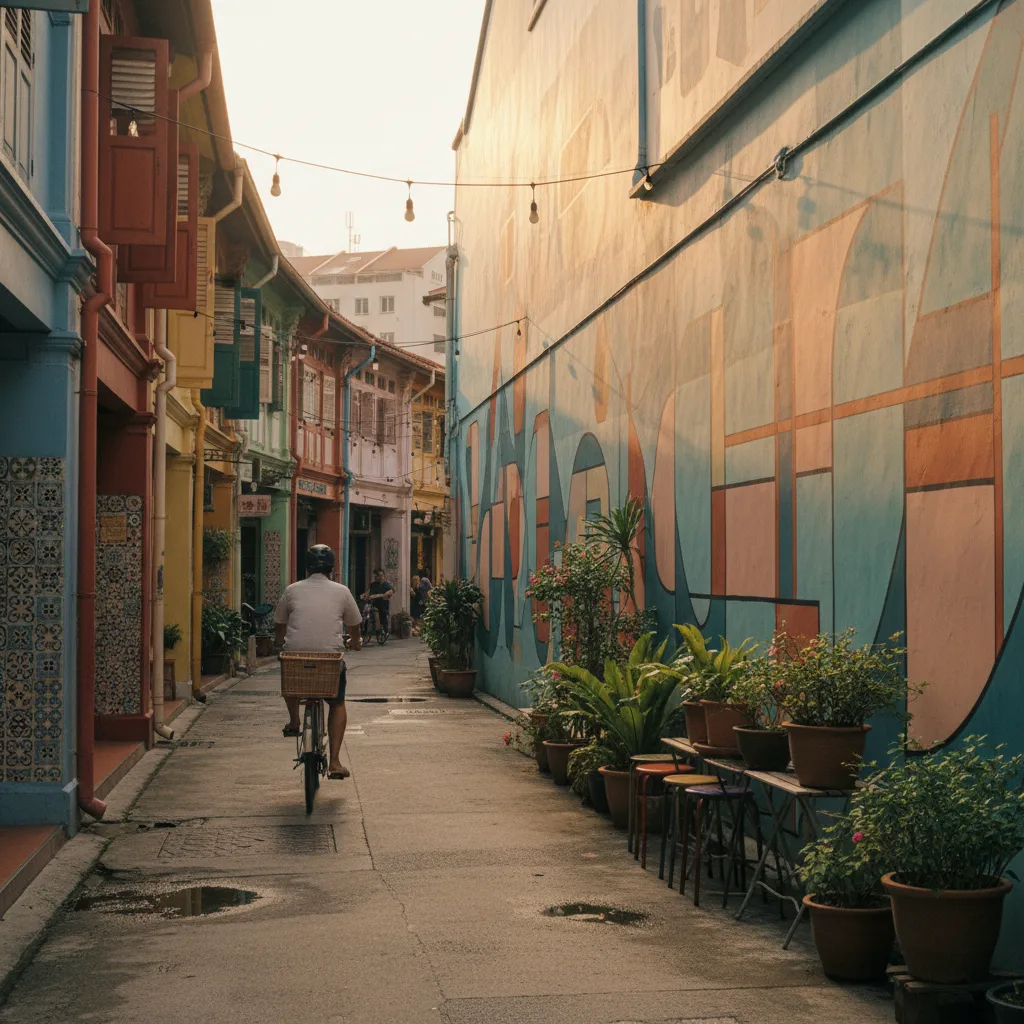
Haji Lane is narrow, colourful and covered in murals, and its tiny shophouse fronts have become a byword for independent fashion and bars. Arab Street and Baghdad Street, by contrast, still hold the textile, carpet and rattan trade that defined the area, with bolts of batik and lace stacked in the doorways.
We would skip Haji Lane on Friday and Saturday nights if you want to walk rather than queue. The lane is only a few metres wide, outdoor seating fills it, and progress becomes a shuffle. Walk it on a Monday or Tuesday evening instead, when you can actually look at the murals.
Beach Road and the Leaning Minaret
For a quieter finish, take Jalan Sultan or Arab Street east to Beach Road and walk north to the Hajjah Fatimah Mosque, built in 1846 and funded by a Malaccan-born businesswoman whose name it carries. Its minaret, which blends European and Chinese influences, famously leans a few degrees off vertical. It is a national monument, and on most evenings you will have the view almost to yourself.
From here, Nicoll Highway station on the Circle line is around ten minutes' walk east, and Lavender is a similar distance north. Both avoid the crush around Bugis at the end of the evening.
Sample Routes by Time Available
Thirty minutes is enough for the essentials: Bugis station, Arab Street, a slow walk down Bussorah Street towards the mosque, then around Sultan Gate past the Istana lawn and Gedung Kuning, and back along Baghdad Street to Bugis. Keep it this short on a Monday when you only need fresh air and a change of scene before the commute.
Seventy minutes lets you do the full district. Start at Bugis, walk the textile end of Arab Street, see the mosque from Bussorah Street, sit for a few minutes on the heritage centre lawn, cut through Haji Lane while it is still quiet, then follow Beach Road north to the Hajjah Fatimah Mosque. Finish with a dinner that Karpo has suggested near Nicoll Highway, so the last stretch home is a short one.
If you are meeting someone, name a clear landmark rather than a lane. The far end of Bussorah Street, facing the mosque, is easy to find and far less ambiguous than the corner of Haji Lane.
Ramadan and Festive Evenings
During Ramadan the area changes character after sunset, when people gather to break the fast and the streets around the mosque become much busier. It is a lively, generous time to visit, but leave extra time, expect crowds and be respectful around the mosque. Hari Raya Puasa light-ups and events add to the bustle in the following weeks.
Where Karpo Comes In
Karpo helps you decide where to stop and in what order. In the Karpo APP, write something like: finishing work near Bugis at six, want to see the Sultan Mosque at dusk and walk for forty minutes, then a relaxed dinner for three, heading home on the Circle line. Karpo suggests places and an order that ends near Nicoll Highway.
Karpo does not monitor crowds or queues live, does not reserve tables and does not give live train times. Check details on the venues' own websites, and if a first choice is full, ask Karpo for something nearby on a quieter street.
Practical Notes
Wear clothing that covers shoulders and knees if you plan to enter any religious site. Thunderstorms are common in the late afternoon, and the covered five-foot ways along Arab Street and North Bridge Road are the best shelter. Keep voices down on Sultan Gate and Bussorah Street during prayer times, and avoid photographing worshippers.
Ask Karpo for more information.
Keep reading
- Marina Bay Food Market Grazing Route After a Conference Day
 River Valley Food Market Grazing Route With Young Kids
 Serangoon Food Market Grazing Route for a Homecoming Weekend