 Chinatown New in Town Weekend Planner: Errands and Temples
Weekend Plans
Singapore Panoramic City Lookout: A Seletar Water Pause
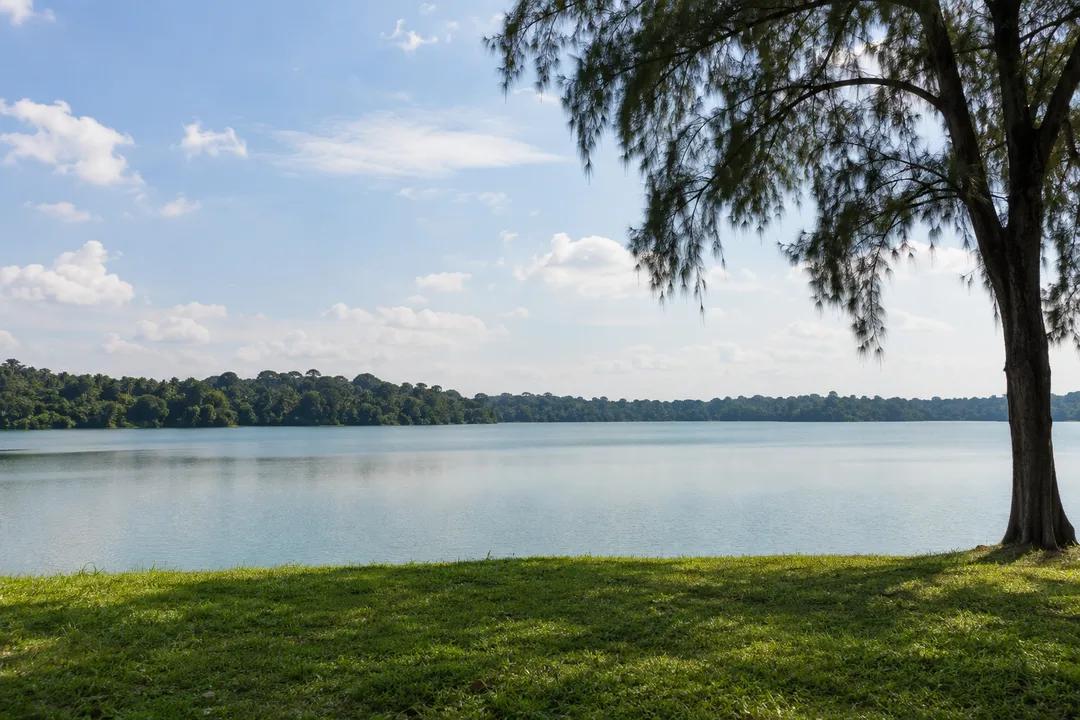
Upper Seletar Reservoir Park gives Singapore a water-and-forest panorama, with a distinctive lookout tower and room for a conversation-led outing.
Upper Seletar Reservoir Park offers a Singapore panorama with water at its centre and forest beyond it. Its rocket-shaped lookout tower gives the place a memorable outline, but the tower does not have to become the whole story. Choose this panoramic city lookout outing when you want an unhurried conversation about a landscape rather than a list of buildings. The reservoir gives you something shared to look towards, while leaving each person free to notice a different part of the scene.
A landscape can hold a conversation without directing it
An outing with someone you have not seen for a while does not always need a programme. It can be easier to talk while both of you look at water than while you sit facing one another and search for the next question. Treat that as a possibility, not a promise that a particular place will improve a relationship. The useful invitation is modest: spend some time together, let the landscape provide an occasional subject, and leave pauses unfilled when neither person wants to speak.
Begin with whatever is actually visible. A line across the water, the shape of the tower or the contrast between a bright surface and darker trees is enough. Avoid turning the opening exchange into a demonstration of local knowledge. You do not need to know how the reservoir works to notice its appearance. A simple comment about the view gives the other person room to respond with an observation, a memory or nothing more elaborate than agreement.
The setting is particularly appropriate if both people enjoy looking without feeling obliged to make something. There is no sketch to finish and no photograph that proves the outing succeeded. Leave the camera in your bag for a while if it distracts from the conversation you came to have. You can take a picture later, but it does not need to serve as the central event or the reason you chose a landscape with so much space in it.
The tower is a reference point, not an achievement
NParks identifies the rocket-shaped tower as a feature of Upper Seletar Reservoir Park. Its unusual form can make a useful subject even when you remain at ground level. Look at how that narrow built shape sits beside the width of the water. You might find the contrast playful, striking or oddly formal. Those are personal interpretations. There is no correct response, and no need to agree with a companion about what the structure makes you think of.
Do not measure the value of the visit by whether you reach an elevated position. People come with different levels of energy and different comfort around heights. The waterside landscape can remain the focus of your outing, with the tower simply helping to locate the scene in memory. A plan that allows everyone to take part is more useful than an ambition that quietly leaves one companion waiting for an experience they did not want.
If you do choose to view the landscape from an elevated position, let that be a separate decision based on the information and conditions at the site. This article does not give an access promise for the tower or describe a fixed route through it. Its visual role in the landscape is enough for the conversation proposed here. You can notice a distinctive piece of architecture without turning it into an obligation to climb or a target to complete.
Try exchanging a memory that the water brings to mind
A broad view of water may remind someone of an entirely different place: a childhood holiday, a ferry journey or an ordinary walk near home. Invite that connection only if it feels natural. Ask what the scene reminds them of, then follow their answer rather than returning immediately to your own memory. The reservoir becomes a starting point for a personal account, not a prop in a predetermined conversation exercise that everyone must perform.
Be clear about the difference between a memory and a claim about this park. If a scene recalls somewhere you visited years ago, describe it as that association. Do not turn the resemblance into an invented story about Upper Seletar. Equally, a quiet moment during your visit does not establish that the place is always quiet. Keeping those distinctions simple allows you to write or talk about the experience honestly without draining it of feeling.
You can keep a small record afterwards if you wish. Write the other person's chosen detail and your own on the same page. They might be entirely different: one person remembers a shape, the other a conversation that barely concerned the view at all. The record need not include private material you would not want to share. A few ordinary words can preserve the connection between the landscape and the company without turning someone else's story into content.
Let the shore change the scale of the outing
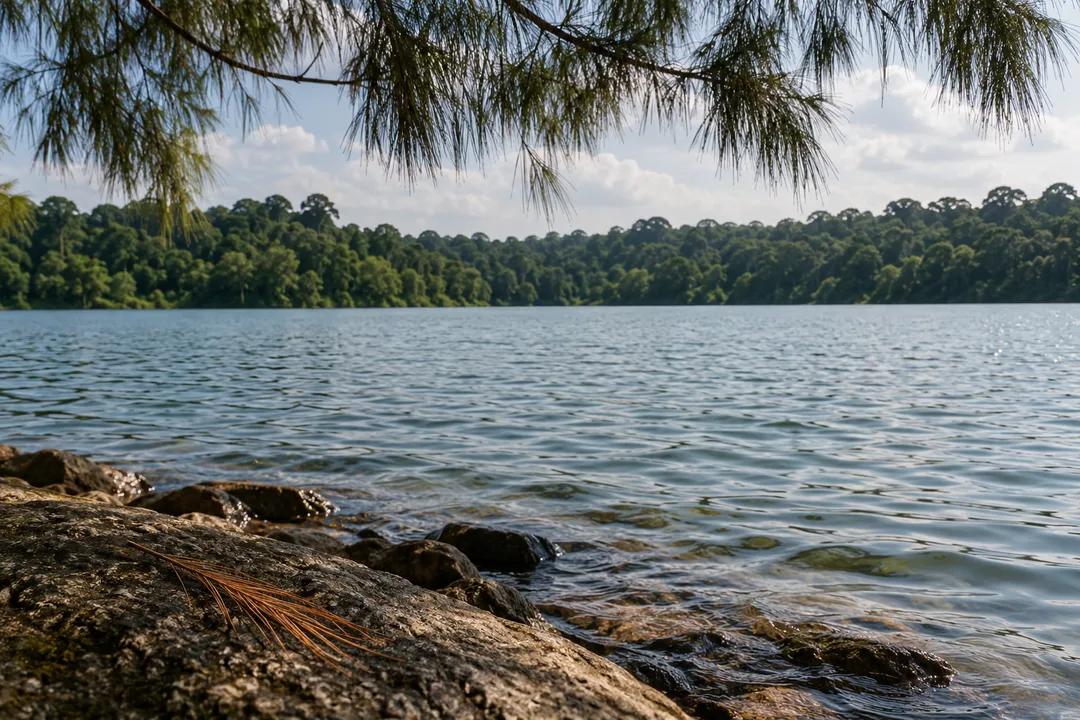
From a broad view, bring your attention back to the nearer water surface. It can contain patterns too small to register in a panorama: a change in reflection, a moving line or the boundary between a darker and a lighter patch. Describe only what you can see. Avoid assuming the cause of every mark on the water. You can enjoy a shifting surface without identifying a fish, a current or a weather effect that you have not established.
This change of scale gives the walk some variation without adding another destination. One stretch of attention can be about the reservoir's width, another about its edge, and another about the company beside you. There is no need to name these as stages while you are there. Allow the shifts to happen casually. If everyone is comfortable, linger with a detail. If somebody is ready to move, let the next part of the walk begin.
Upper Seletar is a reservoir landscape rather than a close-up city skyline. Skip it for this particular outing if a companion's main interest is identifying famous urban towers. Say what you have chosen before you set out: water, trees and a distinctive lookout structure. That honest description prevents an attractive phrase such as panoramic city lookout from creating the wrong expectation. The experience is about a spacious view within Singapore, with nature doing more of the visual work than buildings.
Practical Notes: make room for a shorter visit
Agree that the outing can be shorter than expected. Someone may be tired, distracted or simply less interested in the view than they imagined. Give that possibility a comfortable place in the plan rather than treating it as failure. Take belongings you can manage easily, keep the path clear when pausing, and use designated areas rather than finding an improvised position at the water's edge. The conversation does not become better because you choose an awkward place to stand.
When conditions stop supporting a pleasant outdoor visit, move on. A view can be memorable without requiring you to persist through discomfort. For another idea, ask the Karpo APP about an activity that matches the way you want to spend time together, such as a conversation-friendly outing or an indoor alternative. This is not a claim that the app monitors this reservoir or knows how crowded it is. The useful outcome is simpler: you chose a landscape that gave you and your companion some room, and you allowed the visit to take its own shape.
Ask Karpo for more information.
Keep reading
- Chinatown New in Town Weekend Planner: Errands and Temples
 Kampong Glam New in Town Weekend Planner: Mosque to Murtabak
 Holland Village New in Town Weekend Planner: Meet People