 Chinatown New in Town Weekend Planner: Errands and Temples
Weekend Plans
Singapore Panoramic City Lookout: Mount Faber in 2 Frames
Mount Faber pairs Singapore coastal views with green slopes, offering a city lookout for a two-frame harbour photo story built around scale and distance.
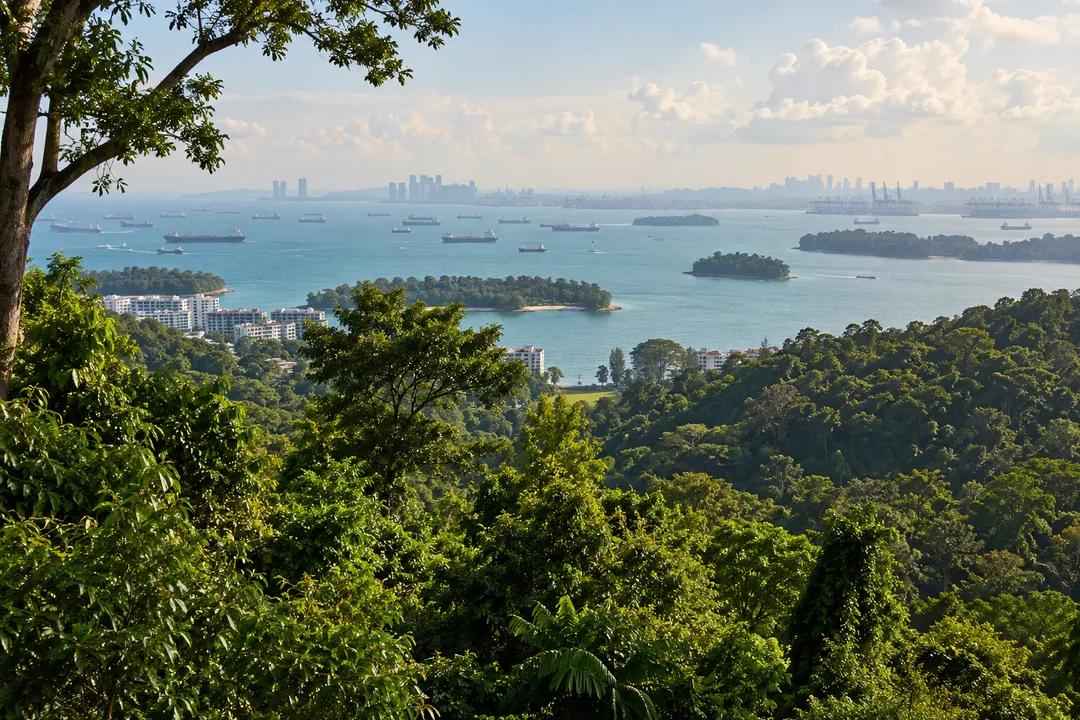
Mount Faber brings Singapore's southern coast into the same view as its green slopes. The park's own description emphasises its coastal and Southern Islands outlooks, making it a panoramic city lookout for people interested in the relationship between land and water. Instead of aiming for one all-encompassing photograph, make a short visual account of the harbour: a wide image to establish the setting, a closer frame to explain a detail, and a sentence about what connects them.
Decide what your harbour story is about
A distant ship is a tempting subject, but the more interesting question may be how small it looks beside the land around it. You could make that contrast the organising idea of your visit. Alternatively, concentrate on the meeting of vegetation and the built coast. Pick one relationship before taking a long sequence of pictures. That decision gives the outing a direction without requiring a rigid timetable or a list of features that must appear.
The word harbour can encourage a misleading expectation of uninterrupted industrial spectacle. What you see depends on your position and the visibility in front of you. Do not arrive with a promised inventory of cranes, vessels or identifiable islands. Treat those as things to observe if they are visible, rather than items the landscape owes you. The park's coastal setting is the reliable foundation. The particular arrangement you record belongs to the conditions of your own visit.
Make an establishing frame that includes the hillside
Begin by giving the green slope a place in the picture. Leaves or a landform at the edge can help the water feel distant instead of making the image look like an aerial crop with no viewpoint. Look for a foreground that explains where you are standing, without leaning into vegetation or stepping away from the path to obtain it. A partially framed view can describe the experience more honestly than a completely unobstructed-looking panorama.
Consider how the foreground affects scale. A large leaf can make a distant object seem tiny. A broad area of featureless water can make it difficult to judge distance at all. Neither result is inherently better. Choose the one that supports your idea, then make a note of why. This little act of interpretation is useful later, when the memory of a pleasant view has become less specific and the photographs need to explain themselves.
Look for a detail that changes the meaning
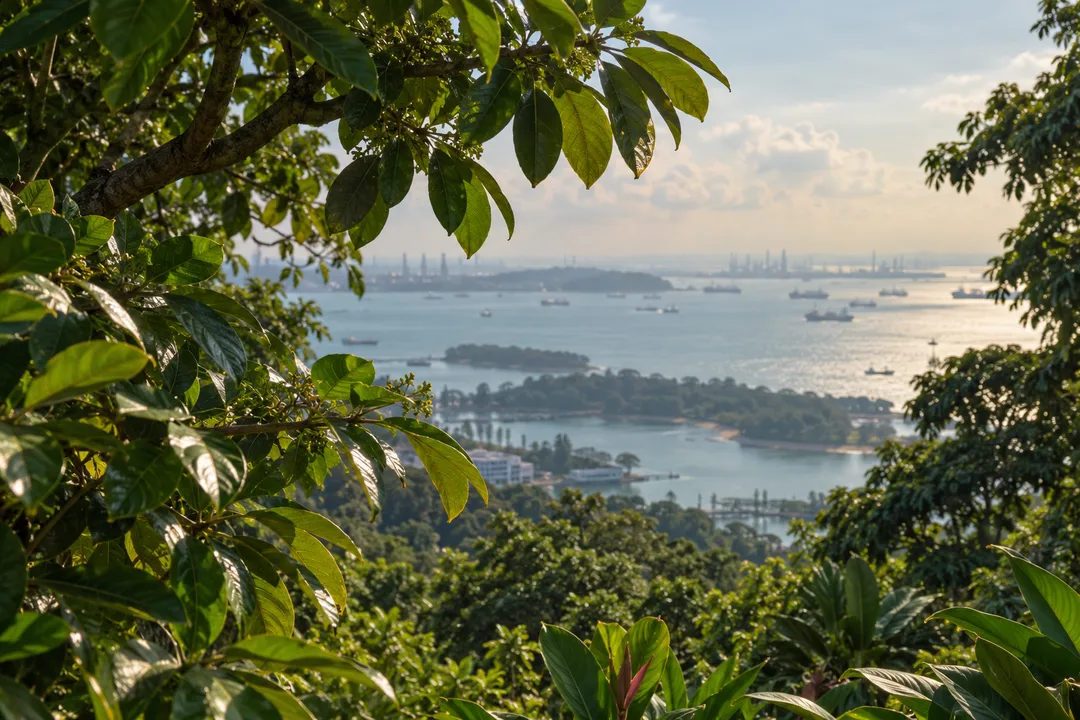
Your second image should add information rather than simply enlarge the first. Perhaps a strip of water creates separation between two dark land shapes. Perhaps a small built edge interrupts a soft green outline. If the detail only makes sense after you explain it at length, find a simpler one. A two-picture story works when the wide frame establishes a relationship and the closer frame makes one part of that relationship easier to notice.
Resist treating camera zoom as a substitute for identification. A small shape does not become a named island or a particular type of vessel merely because you enlarge it. Where you cannot establish the identity, describe the visible form. Calling something a low dark outline is more accurate than assigning it an impressive name from memory. You can still make a strong image without turning the caption into a catalogue of claims you cannot support.
Write the caption before selecting the favourite photograph
Try a sentence with an ordinary verb: the green slope frames the water, a pale band separates the coast, or a distant object interrupts the horizon. These are examples of a caption's job, not descriptions of a fixed view that will await you. Use the verb that fits what you actually observed. If the sentence could accompany any coastal photograph, make it more precise by naming the relationship that caught your attention.
Then select the image that best supports that sentence. This order often produces a more coherent record than picking the most dramatic exposure and inventing an explanation afterwards. It also helps you notice when the photograph did not capture the thing you thought it did. Keep that mismatch as a useful lesson. A picture can be attractive while failing to explain your observation, and an unremarkable-looking frame can sometimes be the more faithful account.
A conversation for companions with different interests
One visitor may be interested in ships while another notices the trees first. Rather than asking both people to adopt the same subject, let those differences guide the exchange. Each person can choose one photograph for the other to describe without a caption. Listen for what they notice and what they overlook. The activity works because the hill and coast create several possible scales of attention, from nearby vegetation to distant water.
Do not make the conversation depend on specialist knowledge. A child can compare a jagged outline with a smooth one. Someone who dislikes photography might choose the sound or colour they associate with the view instead. Keep the exercise flexible enough that people can stop contributing without spoiling the outing. Shared looking should leave room for an ordinary pause, rather than turning every moment in the park into a performance or a question that demands an answer.
Let the walk have intervals without a camera
Between observations, put the camera away. Looking continuously through a screen can reduce the hillside to a sequence of possible frames and make the walk itself feel incidental. Give your attention back to the path and the people with you. You can return to the camera when a genuinely different relationship appears. There is no need to document every change in the view merely to prove you completed an ambitious photographic route.
Mount Faber belongs to a wider landscape of southern Singapore parks, but this visit does not require completing the Southern Ridges. A larger route introduces different walking demands and decisions. Keep it separate from the harbour exercise, especially if companions have different levels of energy. The account you are making can be complete with a few connected observations from this park. Distance walked is not a measure of how closely you paid attention.
Practical Notes for an edited photo story
Carry only the equipment you are comfortable managing while walking. A normal camera view is sufficient for an establishing image and a closer detail. If you need to change a lens or organise a bag, do it from a stationary position that leaves the path clear. Keep fingers, straps and loose belongings away from the edge of any viewpoint. Never move backwards while checking a composition. Finish taking the picture before moving to another position.
Choose a different outing if your priority is a guaranteed clear skyline or a particular ship sighting. This is an invitation to observe a coastal landscape, not a live viewing forecast. The Karpo APP can be a place to ask for other Singapore outing ideas using your interests as a starting point. It is not presented here as a harbour-monitoring service. Leave with a pair of images and a caption that belong together, rather than a large album of pictures you cannot explain.
Ask Karpo for more information.
Keep reading
- Chinatown New in Town Weekend Planner: Errands and Temples
 Kampong Glam New in Town Weekend Planner: Mosque to Murtabak
 Holland Village New in Town Weekend Planner: Meet People