 Chinatown New in Town Weekend Planner: Errands and Temples
Weekend Plans
Singapore Panoramic City Lookout: Draw One Barrage Skyline
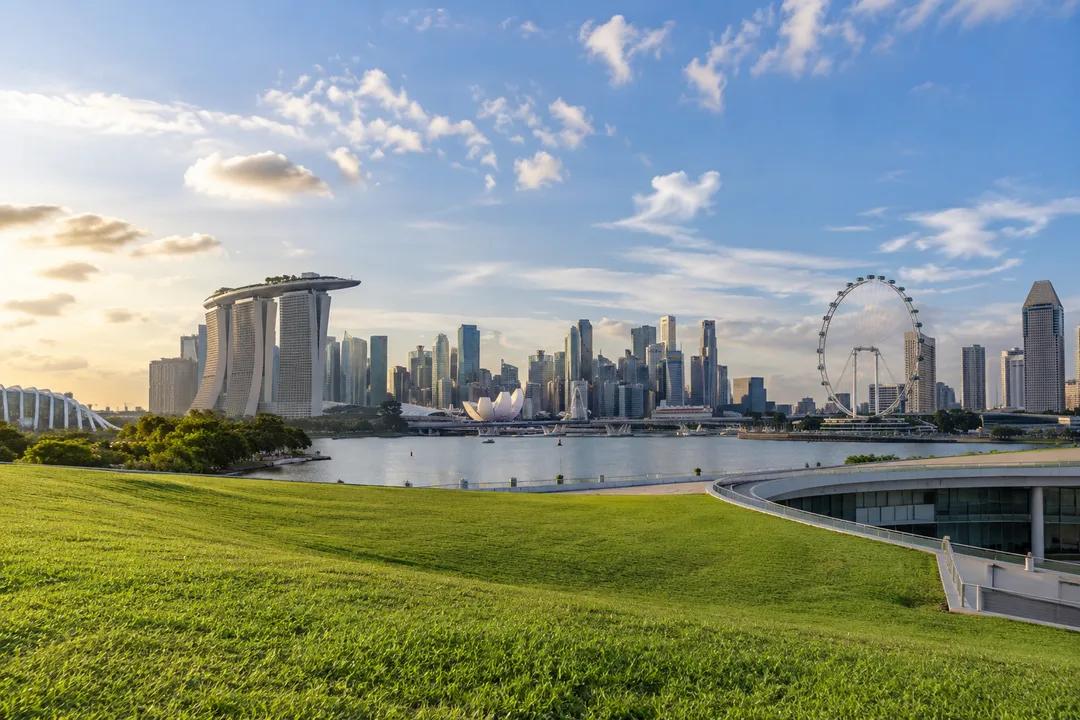
Marina Barrage offers a Singapore skyline for a single-line drawing, using roof silhouettes and gaps to turn a broad city view into a personal contour study.
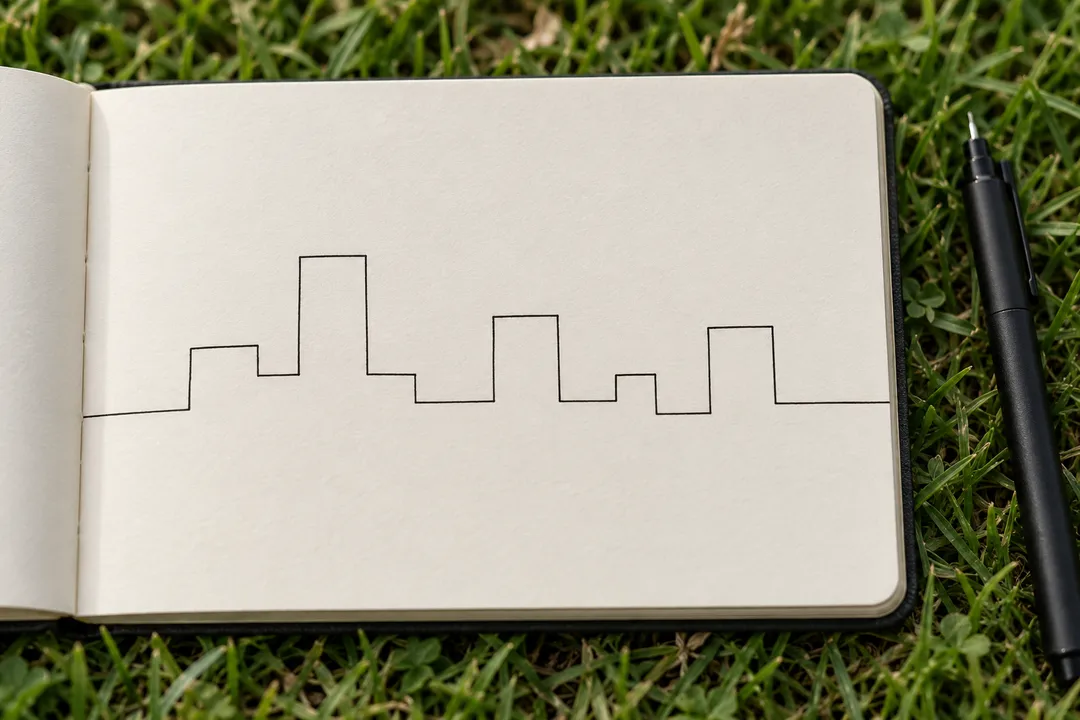
Marina Barrage makes a panoramic city lookout into a drawing exercise: follow the skyline with one unbroken pencil line. PUB describes the Green Roof as a place with sweeping views of Singapore's skyline. That broad prospect gives you a subject with both large silhouettes and small interruptions. Bring a pocket notebook rather than a list of buildings to identify. Your aim is a personal contour study that records how your eye travelled across the city, with the uncertain parts left visible. The images in this article are AI-generated illustrations. The notebook demonstrates a simplified continuous-line exercise, rather than an exact drawing of the skyline seen from Marina Barrage.
Give the skyline the width of a page
Turn the notebook sideways and choose where the drawing will begin and end. A panorama has no natural stopping point, so this decision matters more than finding an impressive building. Hold the page towards the view without walking around with it raised. Compare the width of the visible city with the width of the paper. You can select a shorter section if the skyline would otherwise shrink into a row of indistinct marks. The exercise needs readable changes of direction, not a complete inventory.
Leave space above the highest shape. A common frustration in this kind of drawing is reaching a tall form after using nearly all the paper. Before making your first mark, move the pencil through the air between the lowest and highest points you intend to include. This is a rehearsal for your hand, not a measurement of any tower. Give the city enough room to rise and fall. The pale space above the line will become as important as the graphite itself.
Follow the edge, including the awkward parts
Begin at one side and follow the boundary between built forms and sky. Let the pencil move slowly enough that your eyes can lead it. Where a roof disappears behind another shape, draw the edge you can actually see. Do not complete a familiar landmark from memory. The overlapping forms are part of the Barrage's distant city view, and losing track of an edge can be more interesting than drawing a polished symbol of a famous building.
Keep the pencil on the paper for a first attempt, allowing small sideways travels where necessary. A wobble may record the moment you looked down. A flattened peak may show that your hand moved faster than your attention. Neither requires an immediate correction. This is a record of looking, not an architectural elevation. If the page becomes tangled, stop at the next clear break and start a second attempt beneath it. Two short studies can reveal more than one heavily erased drawing.
Let the gaps carry the rhythm
After the first pass, look at the intervals between taller shapes. Some may be narrow slivers, while others form longer stretches of low contour. Represent those intervals honestly within your chosen frame. A skyline made from equally spaced towers looks orderly but loses the rhythm that attracted your attention. You need no building names to compare a tight cluster with a wider opening. The relationship is visible even when the individual details remain difficult to distinguish.
Try a second line using only the major rises and falls. This version deliberately leaves out minor rooftop details. Place it below the first, keeping the same beginning and ending shapes so the two drawings remain comparable. Then ask which one better conveys the stretch of city you selected. The simplified line might hold its proportions more convincingly, or it might remove the small interruption that made the view distinctive. Keep both versions until you have decided what that interruption contributes.
Put the grass back into the picture
PUB's Green Roof gives this skyline exercise its particular setting. The grass close to you and the built shapes in the distance belong to different kinds of visual experience: one has individual blades and uneven colour, while the other resolves into edges. On a separate corner of the page, draw a few nearby grass marks beneath a short piece of skyline. Allow a blank band between them. That empty paper can suggest distance without inventing a detailed foreground scene.
This addition changes the drawing from a row of buildings into a view from somewhere. Avoid covering the page with generic landscape decoration. A few marks should explain what the distant line alone cannot: your position near a grassy surface while looking towards a city. If you prefer to photograph the notebook afterwards, hold it against a plain background rather than arranging it at an edge or in somebody else's path. The drawing remains the subject, even when the surrounding place enters the frame.
A companion can edit without taking the pencil
If you are drawing with someone, exchange pages after the first attempts. Ask your companion to point to the stretch their eye followed most easily. They can trace the movement above the paper without adding marks. Their response may reveal that a quiet gap links the drawing together, or that a dark correction attracts attention away from the main contour. This is a specific conversation about the page in front of you, with no need to agree on artistic skill.
Give each other one small editing suggestion. It might be to leave a wider margin, reduce a crowded section, or retain a rough shape that feels alive. Avoid instructions to make everything more realistic. Realism is too broad a target for a short outing, and an instruction that could improve any drawing teaches little about this one. Make one fresh version from the observation you found useful. Return the original page to its owner without marking over their work.
Practical Notes for a small drawing kit
A pencil, notebook and clip are enough for this activity. Keep loose sheets and eraser fragments contained, and carry your own materials away. Choose a position where stopping to draw leaves other visitors room to pass. If the page is difficult to hold still, work in smaller sections rather than spreading equipment across the grass. The point of a pocket sketch is that it can remain a modest part of a shared outdoor space.
Stay focused on the drawing rather than turning the exercise into a search for the highest or most dramatic position. You do not need to approach an edge, raise yourself above a barrier, or follow somebody else's photographic setup. A less expansive view can still contain a clear sequence of contours. Work with the portion you can observe comfortably. The page should reflect that selection instead of implying that you recorded the entire city.
For a different outing idea after this one, you can ask Karpo APP for suggestions around a preference such as drawing, architecture or an outdoor pause. Keep the request simple and describe what you enjoyed about the exercise. The notebook itself holds the useful result: an uninterrupted line, a simplified alternative, and one decision about how much detail the skyline needs. Put a small mark beside the version you would keep, close the book, and let the unfinished lines stay unfinished.
Ask Karpo for more information.
Keep reading
- Chinatown New in Town Weekend Planner: Errands and Temples
 Kampong Glam New in Town Weekend Planner: Mosque to Murtabak
 Holland Village New in Town Weekend Planner: Meet People