 Marina Bay Food Market Grazing Route After a Conference Day
Neighborhood Guides
Tiong Bahru Neighborhood Walking Guide to Art Deco Curves
Walk Tiong Bahru's Art Deco estate to read its rounded corner blocks and spiral stairs, find the Monkey God temple and murals, and end at the busy market.
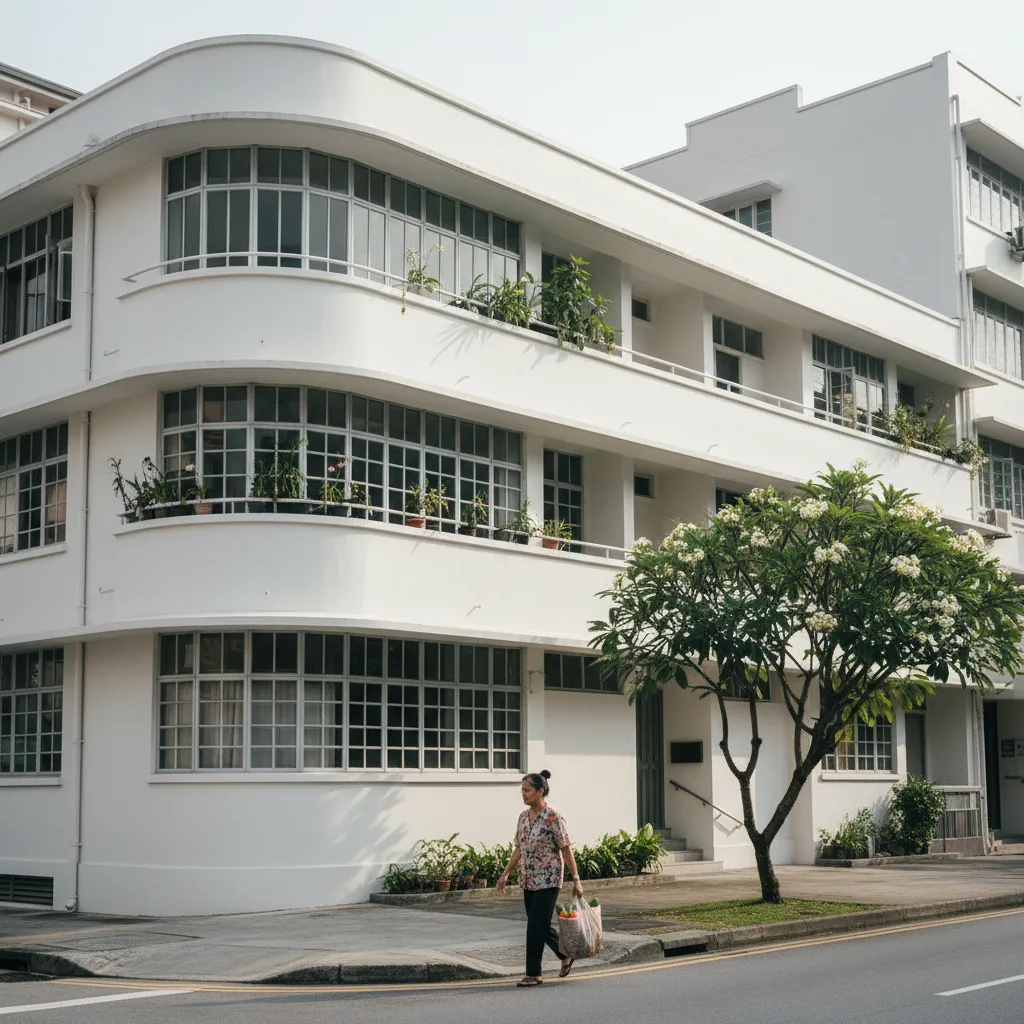
This Tiong Bahru neighborhood walking guide is for people who love buildings as much as breakfast. Tiong Bahru was one of the first public housing estates in Singapore, and its white, low-rise flats with rounded corners and long balcony lines still look strikingly modern. Most visitors come for the cafes and the market, then leave without noticing how carefully the whole estate was designed. The loop below takes about ninety minutes at a slow pace and shows you how to read the estate block by block.
Start with the Story of the Estate
Begin anywhere along Tiong Bahru Road and walk into the estate. Before the flats were built, this area was a mix of cemeteries, swampy ground and crowded kampong settlements. The colonial housing authority, the Singapore Improvement Trust, planned the estate as a model neighbourhood to show what decent, airy homes could look like for ordinary families. It was a bold idea at the time, and the estate became a template for the public housing that now shapes most of Singapore.
The early residents were a varied group, from clerks and teachers to families who had moved out of the overcrowded old town. Locals sometimes repeat a rumour that some flats were rented by wealthy men for their mistresses, which earned part of the area a cheeky nickname in Chinese. Whatever the truth, the stories tell you that from the start Tiong Bahru was seen as a smart, slightly glamorous address.
Learn the Shapes of Streamline Moderne
As you walk, focus on three details. First, the rounded corners. Many blocks curve smoothly at the street corners instead of meeting at a sharp angle, which gives the estate its gentle, flowing look. Some residents say the shape of certain blocks from above reminded people of an aeroplane. Second, the horizontal lines. Long balcony bands and ledges run along the facades, making the buildings look lower and longer than they are. Third, the windows. Rows of steel-framed windows with thin bars and small panes catch the light and let the breeze through.
This style is often called Streamline Moderne, a late branch of Art Deco inspired by ships, trains and the dream of speed. Give each person in your group a different detail to look for and swap notes at the next corner. You will be surprised how quickly you start spotting the patterns, and how much variety there is within a single estate.
Find the Spiral Staircases Out Back
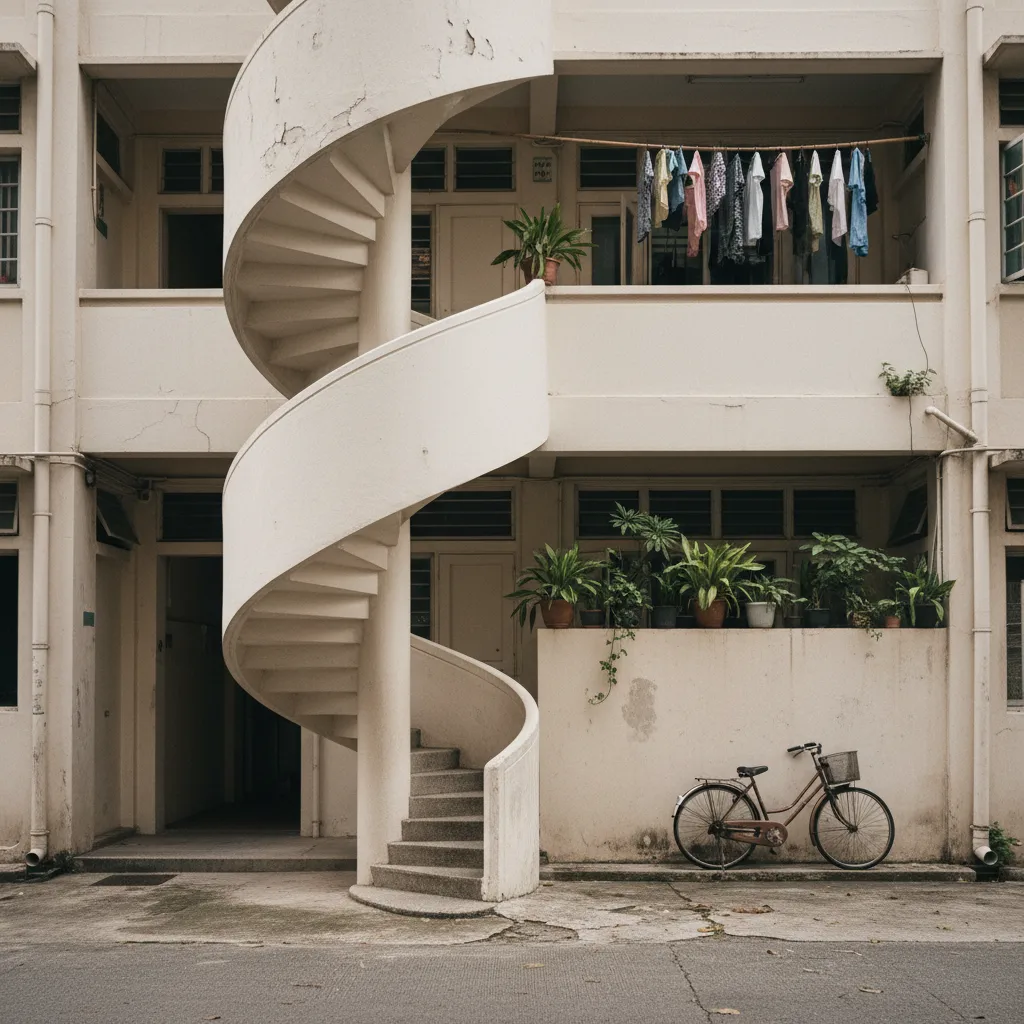
Walk behind the blocks into the back lanes. This is where Tiong Bahru hides its most photographed feature: spiral staircases that curl up the rear of the flats like ribbons. They were designed as service stairs, letting families take out rubbish and bring up deliveries without using the front stairs. Today they are simply beautiful, especially when the light falls across the curves.
Remember that these lanes are part of people's homes. Residents hang washing from the windows, park bicycles against the walls and chat across the back balconies. Take photos from the lane rather than climbing the stairs, keep your voice low and step aside for anyone carrying shopping. A smile and a quiet good morning usually earns a smile in return.
Look for the Wartime Shelter Block
One of the larger blocks in the estate was designed with a public air raid shelter on its ground floor, a rare feature in Singapore. During the Japanese invasion, frightened residents crowded into such spaces when the bombs fell. Visitors cannot simply wander into the shelter, though heritage groups sometimes lead small guided tours inside, and simply knowing it is there changes how you look at the calm, sunlit block above.
If you are walking with children, this is a good point to talk gently about what life was like during the war and how the estate survived. Many older Singaporeans still have family stories of hiding, of losing homes and of rebuilding afterwards, and the quiet streets of Tiong Bahru hold those memories too.
Pay Respects at the Monkey God Temple
Head to the small Qi Tian Gong temple, dedicated to the Monkey God, the mischievous hero of the classic novel Journey to the West. The temple is modest in size but busy with devotees, and the smell of incense fills the street outside. On festival days for the Monkey God, the temple can become crowded and lively, with offerings, performances and sometimes spirit mediums.
Visitors are welcome to look in respectfully. Dress modestly, avoid stepping on the raised threshold, and do not photograph worshippers at prayer without asking. Even a short pause here shows you that Tiong Bahru is not only a design showcase but also a neighbourhood with deep folk traditions.
Search for the Kampong Life Murals
Scattered around the estate are large murals by the Singaporean artist Yip Yew Chong, who paints scenes of everyday life from his childhood. Look for a busy market scene with a fortune teller and letter writer, a home interior packed with old furniture and family details, and a bird-singing scene that recalls one of the estate's best-loved traditions. Each mural is full of small objects, from old radios to enamel basins, so stand close and spend a few minutes searching for details.
The bird-singing mural points to a real piece of local history. For many years, owners would bring songbirds in ornate cages and hang them from poles near the market, letting the birds sing to each other while the owners drank coffee. Older residents often remember the sound as part of their morning, and some still keep birds today.
End at Tiong Bahru Market
Finish at Tiong Bahru Market, the heart of the neighbourhood. The ground floor wet market sells fish, vegetables, flowers and spices, and the upper floor hawker centre is packed with stalls serving local favourites. Walk the wet market first to see how residents shop, then climb upstairs to eat.
Find a table, watch how regulars mark their seats with a tissue packet, and order from a stall with a steady queue of locals. Sharing several small dishes is the best way to taste a range of flavours. Sitting here at the end of your walk, surrounded by residents of every age, you see that the estate's original dream of a lively, liveable neighbourhood is still working.
Practical Notes for the Estate
Walk in the morning for softer light on the white blocks and cooler air. The estate is flat and compact, so it suits families, older walkers and anyone with a pushchair. Bring water and an umbrella for sudden rain, and wear comfortable shoes. There are plenty of shaded walkways, but the sun can be strong between blocks.
Plan Your Tiong Bahru Breaks
Before the walk, use the Karpo APP to browse bakeries, kopi stalls and small cafes inside the estate and around the market. Read up on what each place feels like, from a quiet corner for a pastry to a busy kopitiam table, and save a few. Then, whenever the heat or your feet ask for a rest, you will know exactly where to go next.
Ask Karpo for more information.
Keep reading
- Marina Bay Food Market Grazing Route After a Conference Day
 River Valley Food Market Grazing Route With Young Kids
 Serangoon Food Market Grazing Route for a Homecoming Weekend