 Marina Bay Food Market Grazing Route After a Conference Day
Neighborhood Guides

Keong Saik Neighborhood Walking Guide to Clans and Facades
Walk Keong Saik and Bukit Pasoh to read shophouse facades, find the clan associations behind their doors and end among the pastel terraces of Everton Road.
This Keong Saik neighborhood walking guide is for anyone who has eaten dinner on this famous curving street and wondered what the buildings were before the restaurants arrived. Keong Saik and the streets around it sit on a low rise at the edge of Chinatown, and every shophouse front here is a small history lesson if you know how to read it. The loop below links Bukit Pasoh's clan houses, the bend of Keong Saik Road, quiet Jiak Chuan Road and the pastel terraces of Everton Road, at an easy morning pace.
Start on Bukit Pasoh, the Street of Clans
Begin on Bukit Pasoh Road, a short street that older Singaporeans still call the street of clans. The name of the hill itself is Malay and refers to the earthenware pots once made here from local clay. Later, the shophouses filled with clan associations, the community organisations that helped migrants from the same district or surname in southern China find work, lodging, burial plots and company in a new land. Several of these associations still keep their headquarters on the street.
Walk slowly and look above the doors. Many carry large carved or painted boards with the association's name in Chinese characters, and some upper windows show framed portraits, ancestral tablets or trophy cabinets inside. A few of the buildings were also home to amateur music and opera societies, and if you pass at the right moment you may hear a practice drifting down from an upper floor. Do not try to enter unless a door is clearly welcoming visitors. The pleasure here is in standing on the five-foot way and imagining the arrivals, meetings and celebrations that took place behind those shutters.
Learn to Read a Shophouse Facade
Before you move on, stop in front of any shophouse and practise a small reading game. Singapore's shophouses are often grouped into styles that changed over the decades. The earliest are low and plain, with simple windows and very little decoration. Later fronts grew taller and more ornate, with plaster garlands, Chinese and European motifs, coloured tiles and elaborate window frames. The last wave turned toward Art Deco, with clean geometric lines, flat surfaces and stylised sunbursts or grooves.
Ask each person in your group to guess which style a building belongs to and explain why. There is no exam at the end, but the habit of looking carefully will change the rest of the walk. You will start to spot details everyone else misses: the carved panels under a window, the shape of the air vents, the little ledge where a family once kept potted plants, or the swing half-doors that let air pass while giving the home some privacy.
Follow the Curve of Keong Saik Road
Turn onto Keong Saik Road itself and follow its long, gentle curve. The street was named after a Straits Chinese businessman and community leader, and for much of its history it had a far rougher reputation than today. Old residents remember gambling dens, clan fights and a quarter of the street known for its brothels, alongside lodging rooms where Cantonese domestic workers, the majie who wore white tops and black trousers, shared cramped spaces and looked after each other.
Today most of those rooms have become boutique hotels, bars and restaurants, but the shape of the old street survives. Look at how the buildings bend with the road, how each front is slightly different from its neighbour, and how the five-foot way stays continuous so that people can walk sheltered from sun and rain. In the morning the street is quiet, with delivery vans, cleaners hosing the pavements and the occasional resident walking a dog, which makes it the best time to see the architecture without the evening crowd.
Detour Down Quiet Jiak Chuan Road
Halfway along Keong Saik, slip into Jiak Chuan Road, a short street that many visitors miss entirely. It has some of the most uniform rows of restored shophouses in the area, and the narrow width makes it feel more like a residential lane than a commercial strip. Stand at one end and look down the line of identical arches. It is one of the best spots in the neighbourhood for a photograph that shows how a whole terrace was designed together.
This is also a good place to talk about conservation. Much of this district was protected after years of uncertainty, when many old shophouses across Singapore were being cleared for new buildings. Owners here must follow rules about the facade, the roof and the five-foot way, while inside they can adapt the space. Peek through any open shopfront and you will often see that contrast: a historic front with a bright, modern interior behind it.
Climb Toward Everton Road
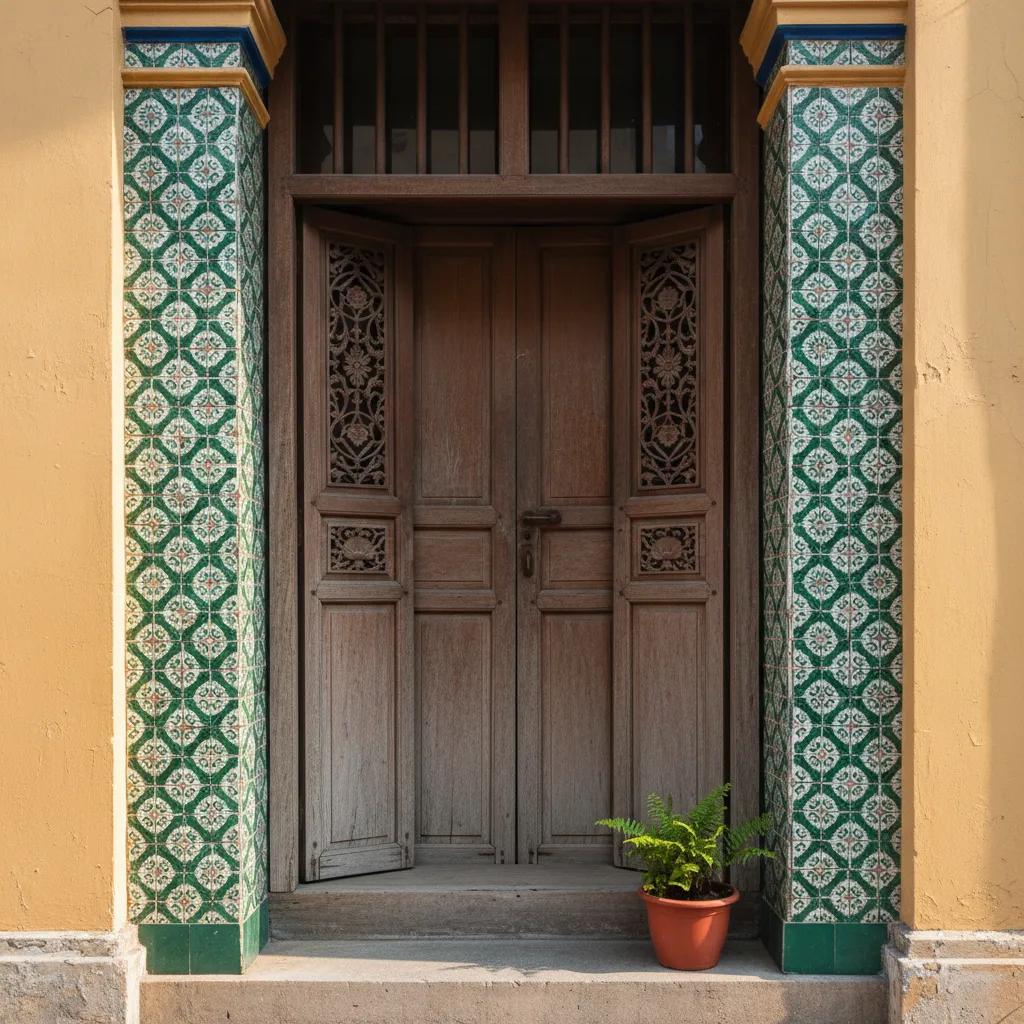
Cross over and walk up toward Everton Road and the residential streets beyond Neil Road. The shophouses here are more domestic, with fewer shopfronts and more family homes, and many are decorated with the glazed ceramic tiles often associated with Peranakan homes. Look for the floral and geometric patterns in greens, blues and pinks on the pillars, and for the carved wooden half-doors at the entrances.
Everton Road has become a favourite with photographers, so you may meet people setting up shots against the pastel walls. Be considerate, since these are real homes. Keep your voice low, do not lean on doors or gates, and avoid blocking the five-foot way for neighbours coming home with shopping. A quick nod to a resident watering plants goes a long way.
Rest in Everton Park and the Neighbourhood Cafes
Just behind the shophouses, the public housing blocks of Everton Park offer a different side of the same neighbourhood. The ground floors hold small coffee bars, bakeries and older provision shops, and the void decks are shady places where residents chat and children play. Sit for a while and enjoy the contrast between the heritage terraces you have just walked and the everyday life of an HDB estate.
If you want to make a day of it, continue downhill to Duxton Hill or back toward the Chinatown hawker centres for lunch. The whole loop is compact, and the main slopes are gentle, so it suits families and older walkers as long as you take shade breaks.
Practical Notes for Shophouse Walkers
Morning is the most comfortable time to walk, before the heat builds and before the evening dining crowd fills the five-foot ways. Bring water, a hat and an umbrella, which is useful for both the sun and the sudden tropical showers that can roll in without much warning. The five-foot ways give plenty of shelter, so you can keep walking through light rain.
Wear shoes with grip, because the tiled pavements can be slippery when wet. Most of the route is level, with gentle climbs on Bukit Pasoh and toward Everton Road. If you visit with a pushchair, watch for steps between neighbouring five-foot ways, which often sit at slightly different heights.
Line Up Your Keong Saik Breaks
Use the Karpo APP before your walk to browse coffee bars, kopitiams and bakeries around Keong Saik, Everton Park and Duxton Hill. Compare the feel of each one, from a quiet seat for sketching facades to a lively counter for a quick drink, and save a short list. When the heat catches up with you mid-loop, the next cool stop will already be waiting on your phone.
Ask Karpo for more information.
Keep reading
- Marina Bay Food Market Grazing Route After a Conference Day
 River Valley Food Market Grazing Route With Young Kids
 Serangoon Food Market Grazing Route for a Homecoming Weekend