 Marina Bay Food Market Grazing Route After a Conference Day
Neighborhood Guides
Kampong Glam Neighborhood Walking Guide to the Royal Quarter
Walk Kampong Glam from the old Malay palace and golden-domed Sultan Mosque through pilgrims' lanes and textile streets, with tips for visiting with respect.
This Kampong Glam neighborhood walking guide is built for a first visit that goes beyond photos of colourful lanes. Before it was a dining and shopping district, Kampong Glam was the seat of the Malay sultan and the gathering place of Muslim traders, scholars and pilgrims from across the region. The streets still carry that story in their names and buildings. Follow the loop below at a gentle pace, ideally in the morning or late afternoon, and give yourself about two hours.
Begin at the Old Palace Grounds
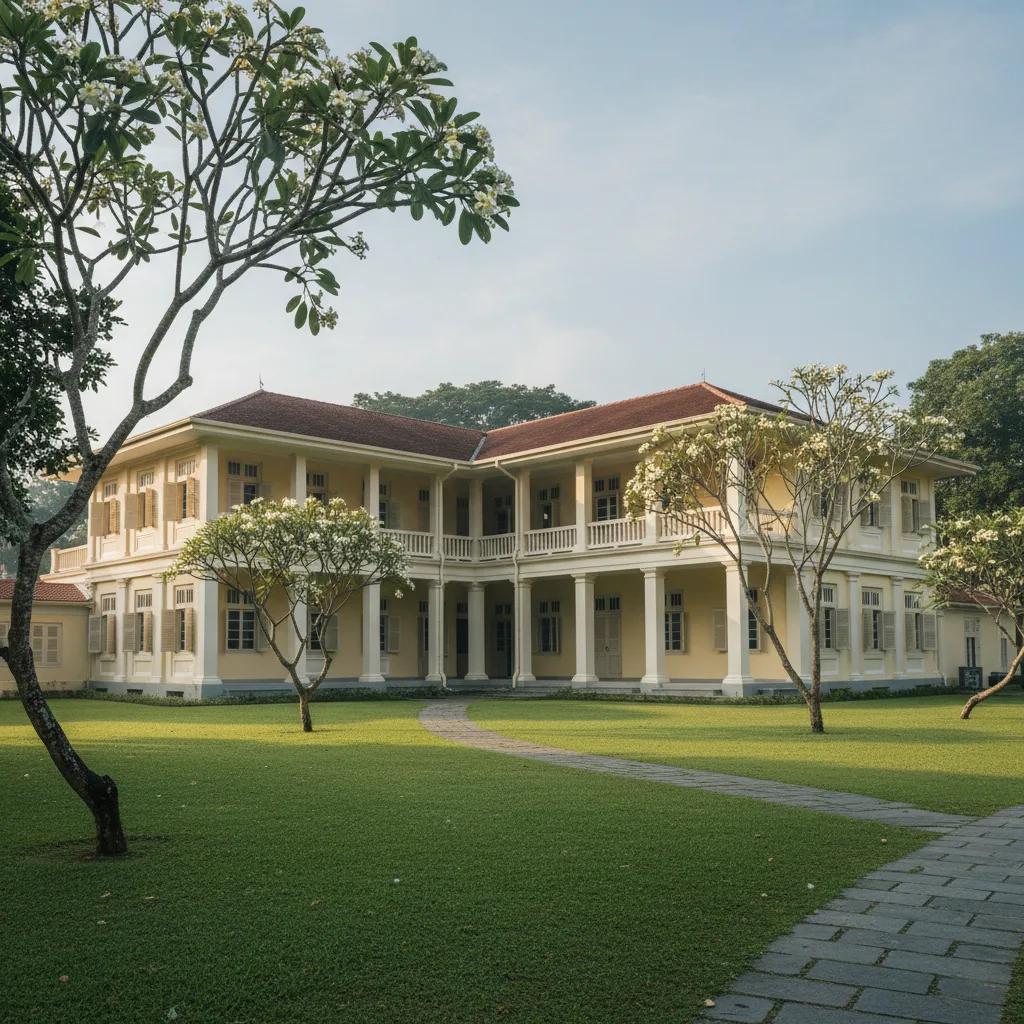
Start on the lawn in front of the Istana Kampong Gelam, the pale yellow palace that once belonged to the family of the sultan who signed the treaties that opened Singapore to the British. The building now houses the Malay Heritage Centre, which tells the story of Malay life, crafts, music and migration in Singapore. Even if you do not go inside, walking through the gardens gives you a feel for the calm and space that once surrounded the royal household.
Look at the long verandah, the shuttered windows and the way the building sits low among the trees. It feels more like a country house than a palace, which says a lot about how modest the court actually was. Next door, a smaller yellow mansion was once the home of a wealthy Malay family linked to the court, and together the two buildings show how status was displayed in this part of town.
Understand the Name Kampong Glam
While you are in the gardens, look for any tall, pale-barked trees with papery bark. The name Kampong Glam is often traced to the gelam tree, a paperbark that once grew thickly in this coastal area. Villagers used its bark to caulk boats and its oil for medicine, and the trees gave the settlement its name long before the shophouses arrived.
The quarter grew into a meeting place for many communities. Bugis seafarers from Sulawesi, Javanese traders, Arab merchant families and Indian Muslim traders all settled here, and the street names around you are a map of that mix. As you walk, notice names like Arab Street, Bussorah Street and Baghdad Street, each a small reminder of where the early residents came from.
A quick way to feel this mix is to listen as you walk. You may hear Malay, Arabic, Tamil, English and several Chinese dialects within a single block, from shopkeepers calling to each other, families on their way to lunch and visitors asking for directions. Ask your companions to count how many languages they notice by the end of the loop. It is a small game, but it turns the history of a meeting place into something you can actually hear.
Approach the Sultan Mosque with Care
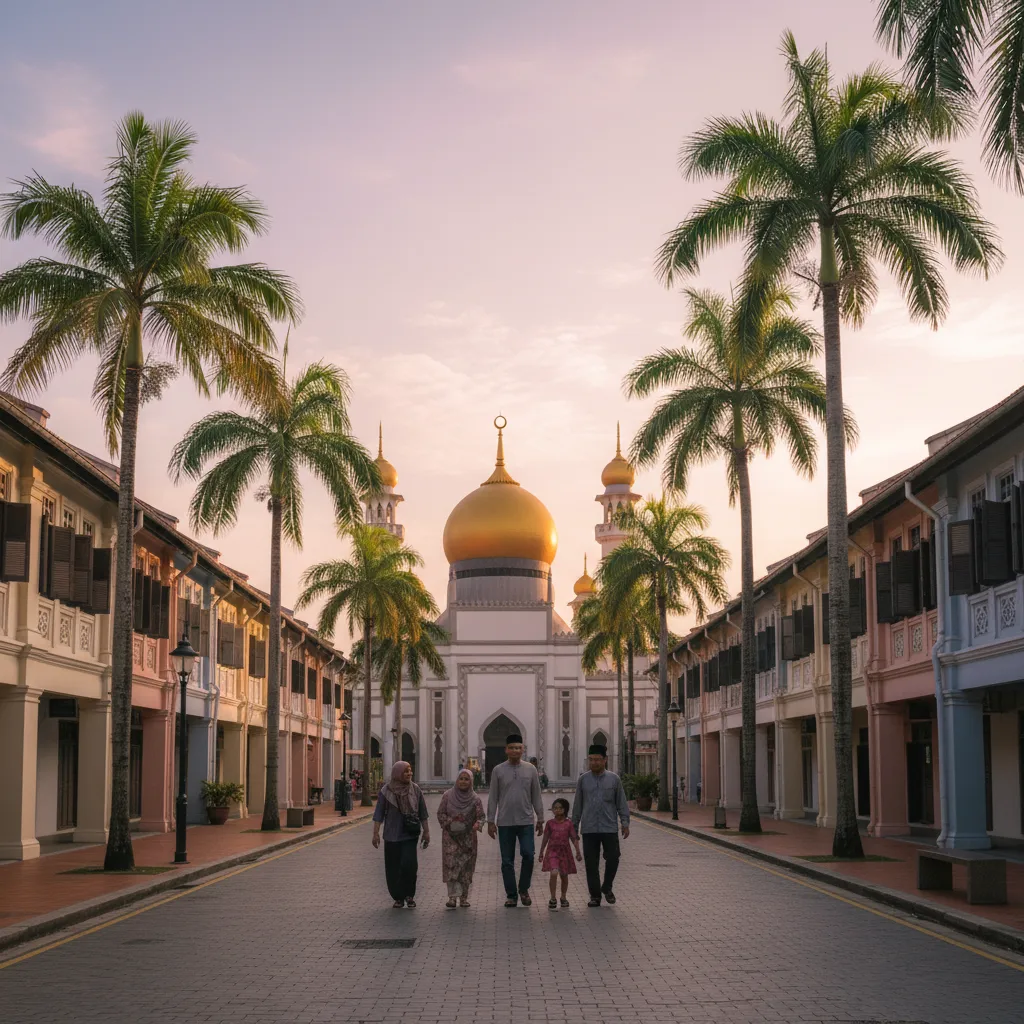
Walk down palm-lined Bussorah Street toward the golden dome of the Sultan Mosque. This approach is one of the most beautiful views in Singapore, with the dome rising above the shophouses at the end of the street. Pause halfway to take it in before the crowds around the entrance distract you.
Look closely at the base of the dome. It is ringed with a band of dark glass, made from the bottom ends of glass bottles donated by Muslims who could not afford to give money for the building. It is a lovely story about community and generosity, and it gives the gleaming dome a humble foundation. If you enter the mosque, dress modestly, with shoulders and knees covered, and borrow a robe at the entrance if needed. Remove your shoes, keep to the visitor areas and stay quiet, especially during prayer times, when the mosque may be closed to tourists.
Walk the Pilgrims' Lanes
From the mosque, wander the smaller lanes around it. In the past, Kampong Glam was the place where Muslims from across the region gathered before sailing to Mecca for the hajj, and lodging houses, travel agents and shops selling supplies for the journey filled the area. The name of the narrow lane later known for its murals and boutiques echoes that history of pilgrims.
Today the lanes are full of colourful murals, small fashion shops and cafes, and they can be busy with photographers. Enjoy the colour, but remember that the deeper story is about departures and returns, families waving off relatives on a long, risky voyage and welcoming them back with new titles and stories. Seeing the lanes through that lens makes the street art feel like the latest layer on a very old place.
Browse the Textile Shops of Arab Street
Turn onto Arab Street, where shops selling fabrics, carpets, batik and lace have long been part of the quarter's trade. Step inside one or two and admire the bolts of cloth stacked to the ceiling. Shopkeepers are used to visitors who are just looking, but a friendly greeting and genuine interest make the visit more pleasant for everyone.
If you are curious, ask about the difference between hand-drawn and printed batik, or how a particular pattern is used for weddings or festivals. Many of these businesses have been run by the same families for generations, and they often enjoy explaining their craft. This is also a good street to find small gifts, from scarves to prayer mats to hand-woven baskets.
Find the Blue Mosque at the Edge
Continue to the edge of the quarter to find the Malabar Mosque, a smaller mosque covered in striking blue and white tiles, built by the Muslim community from the Malabar coast of India. It is quieter than the Sultan Mosque, and its tiled walls and golden dome make a fine contrast with the grand building you saw earlier.
Nearby, the old Muslim cemetery holds the graves of members of the royal family and early community leaders. It is not a tourist site, so if you walk past, keep it brief and respectful. These quieter corners remind you that Kampong Glam has always been a place where people lived, worshipped and were buried, not only a place to visit.
Practical Notes for the Quarter
Plan your visit around prayer times if you want to enter the mosques, and avoid Friday midday prayers, when the Sultan Mosque is busiest with worshippers. Dress modestly for the whole walk, not just the mosque, as a sign of respect. Bring water and an umbrella, since shade can be patchy on some streets.
During Ramadan, the area takes on a special atmosphere in the evenings, with bazaars and families breaking their fast together. It is a wonderful time to visit if you are respectful of those who are fasting, and you avoid eating or drinking openly in front of worshippers during the day.
Pick a Kampong Glam Tea Stop
Use the Karpo APP before you set out to look up teh tarik counters, Malay and Middle Eastern cafes and quiet dessert spots around Kampong Glam. Learn a little about each one, choose the style of break that fits your group, and save a short list. After the mosque and the textile shops, you will be ready to sit down somewhere that feels right.
Ask Karpo for more information.
Keep reading
- Marina Bay Food Market Grazing Route After a Conference Day
 River Valley Food Market Grazing Route With Young Kids
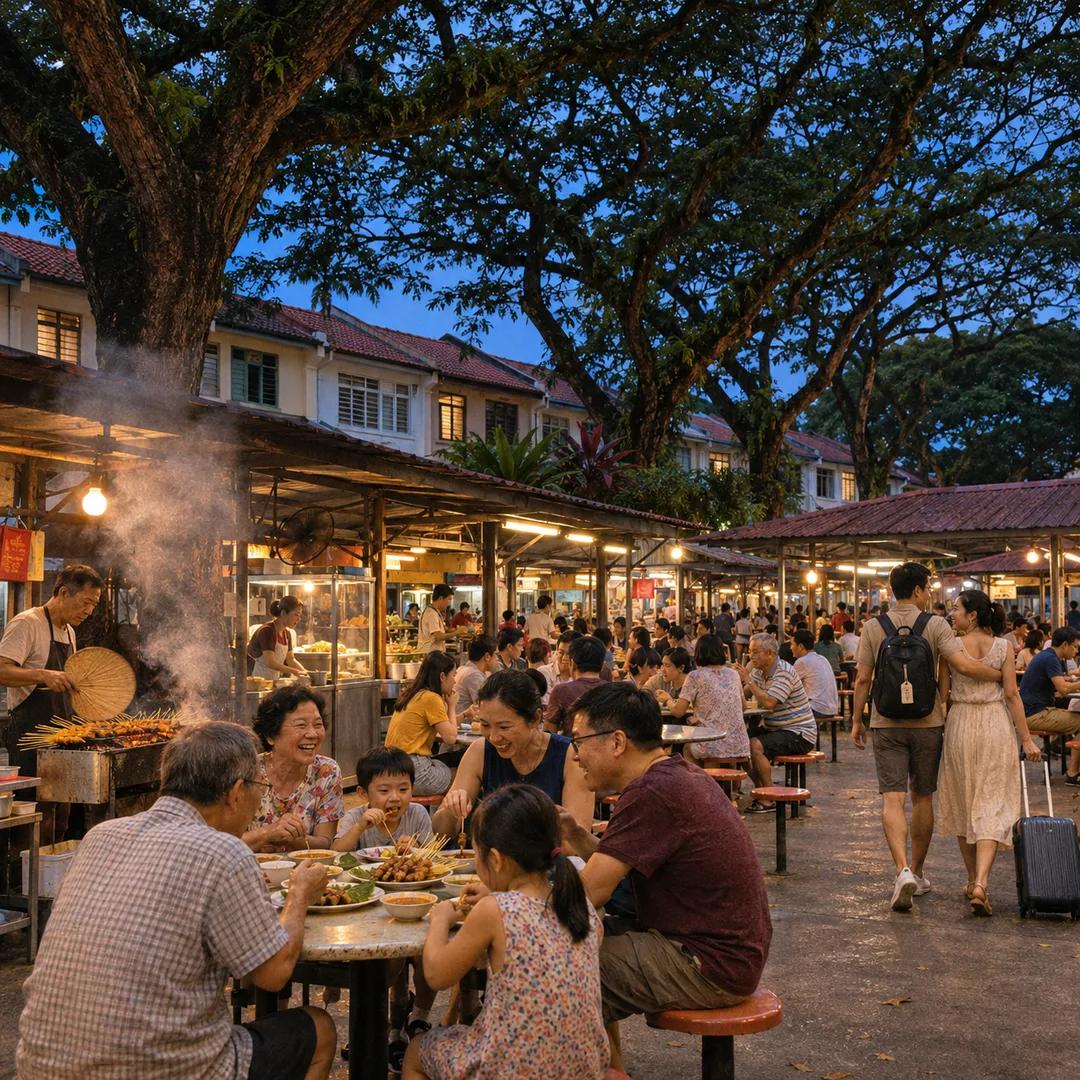 Serangoon Food Market Grazing Route for a Homecoming Weekend