 Marina Bay Food Market Grazing Route After a Conference Day
Neighborhood Guides
Joo Chiat Neighborhood Walking Guide From Market to Terraces
Walk Joo Chiat from Geylang Serai's Malay market and festive streets down to the Peranakan terraces of Koon Seng Road, reading facades and doorways on the way.
This Joo Chiat neighborhood walking guide follows one long road through two old communities. At the northern end sits Geylang Serai, the heart of Malay life in eastern Singapore. At the southern end, the terraces of Koon Seng Road show the colour and craft of Peranakan homes. Between them runs Joo Chiat Road, lined with shophouses that have seen almost every trade. Walk it north to south in the morning, before the heat builds, and allow about two relaxed hours.
Start at Geylang Serai, the Lemongrass Village
Begin near the Geylang Serai market hall. The name is usually explained as a mix of Geylang and serai, the Malay word for lemongrass, which once grew in fields across this low, damp land. When Malay families were moved out of older settlements near the city centre, many came here, and over time the area became a home base for Malay food, fabric, music and family life in the east.
Today you will see that history in the shape of the streets rather than in old buildings. Modern blocks stand where wooden village houses once stood, but the rhythm is still the same. Aunties shop early, men gather for coffee after morning prayers, and stalls sell the same herbs and spices that filled village kitchens. Spend a few minutes simply standing and watching before you start walking.
Walk the Market Hall Like a Regular
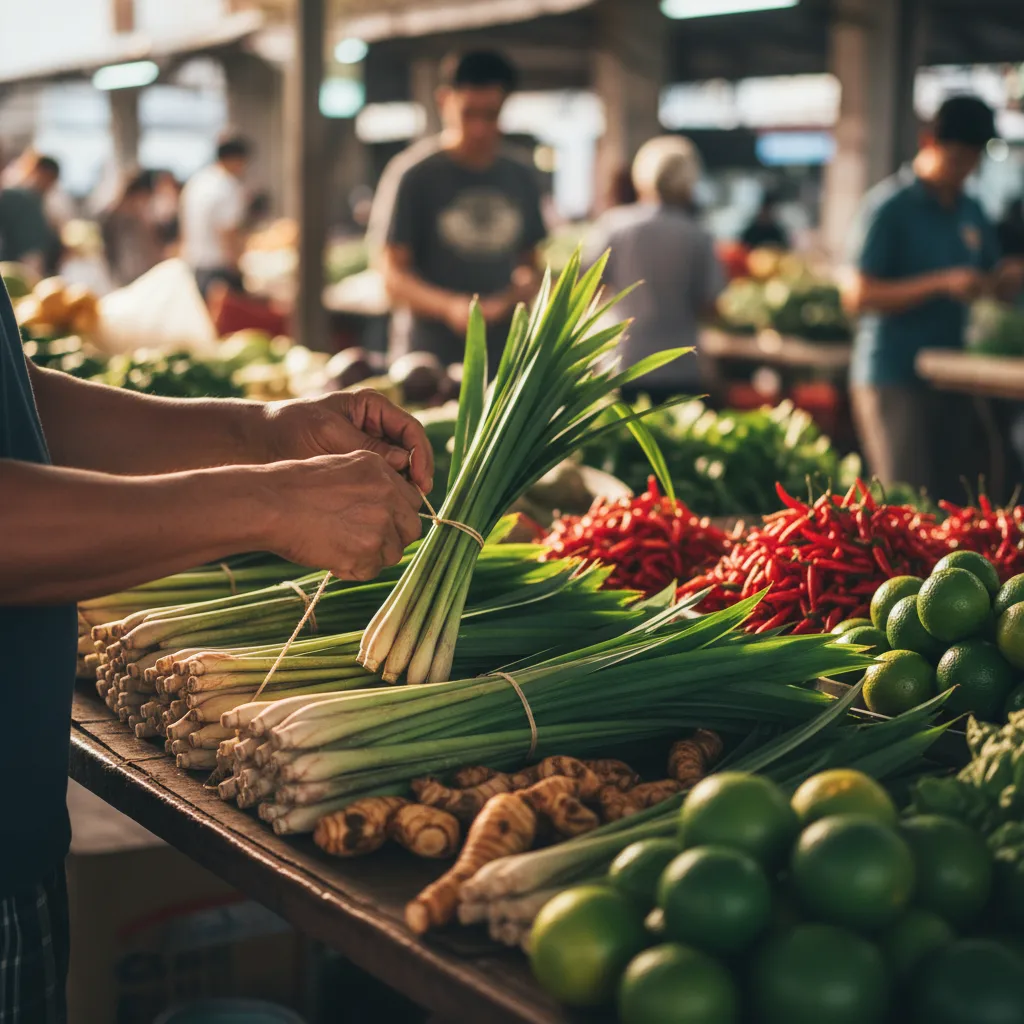
Step inside the market and walk the wet section slowly. Look for bundles of lemongrass, pandan leaves, turmeric root and fresh chillies, often sold by sellers who know exactly which dish each customer is cooking. If you are curious about an ingredient, ask what it is used for. Most stallholders are happy to explain, especially when the morning rush has eased a little.
Upstairs, the food centre is where you can try Malay breakfast classics such as nasi lemak, lontong in coconut gravy or a plate of kuih in bright colours. Share a few small plates rather than ordering one big meal, since there is a long road still ahead. Keep your tray tidy and return it when you finish, as locals do, then head back outside toward the main road.
See the Festive Streets and the Cultural Centre
Close to the market stands a modern cultural centre built to celebrate Malay heritage in the district. Its galleries and public spaces tell stories of kampung life, crafts and performing arts, and the building's design borrows ideas from traditional Malay houses. Even a short look around gives useful background for the rest of the walk, because many of the streets you will pass grew from those village roots.
If your visit falls during the fasting month, Geylang Serai changes completely after dark. The streets fill with festive lights, a large night bazaar and families buying clothes, cookies and decorations for Hari Raya. The atmosphere is joyful but crowded, so a morning walk is calmer. You can always come back one evening to see the lights, then compare the two moods.
Follow Joo Chiat Road South
Now cross toward Joo Chiat Road and begin walking south. The road takes its name from Chew Joo Chiat, a wealthy Chinese landowner who held large plantations in the area and helped build the road that linked them. Coconut groves and farmland once spread across this whole district. As the city grew east, the land was divided up and filled with shophouses, terraces and small factories.
Walking south, you will notice the mix of people and trades shifting gradually. Malay textile shops and halal eateries sit beside Chinese coffee shops, Vietnamese cafes, hardware stores and renovated bars. Take the shaded five-foot ways when you can. These covered walkways under the upper floors were designed for exactly this kind of tropical walk, offering shade from sun and shelter from sudden rain.
Read the Shophouse Facades
Joo Chiat Road is one of the best places in Singapore to compare shophouse styles in a single walk. Look up above the shop signs to the upper floors. Some fronts are plain with simple windows, while others carry rich plaster flowers, painted tiles, decorative pilasters and curved gables. Many are later styles, showing how the road filled up over a long period with owners keen to display their success.
A simple game makes this part of the walk fun. Pick one feature, such as window shutters, and count how many different designs you can spot in a single block. Next, try it with tile panels or roof shapes. Children especially enjoy this, and it slows everyone down enough to notice details that most people rush past on the way to lunch.
Turn Onto Koon Seng Road
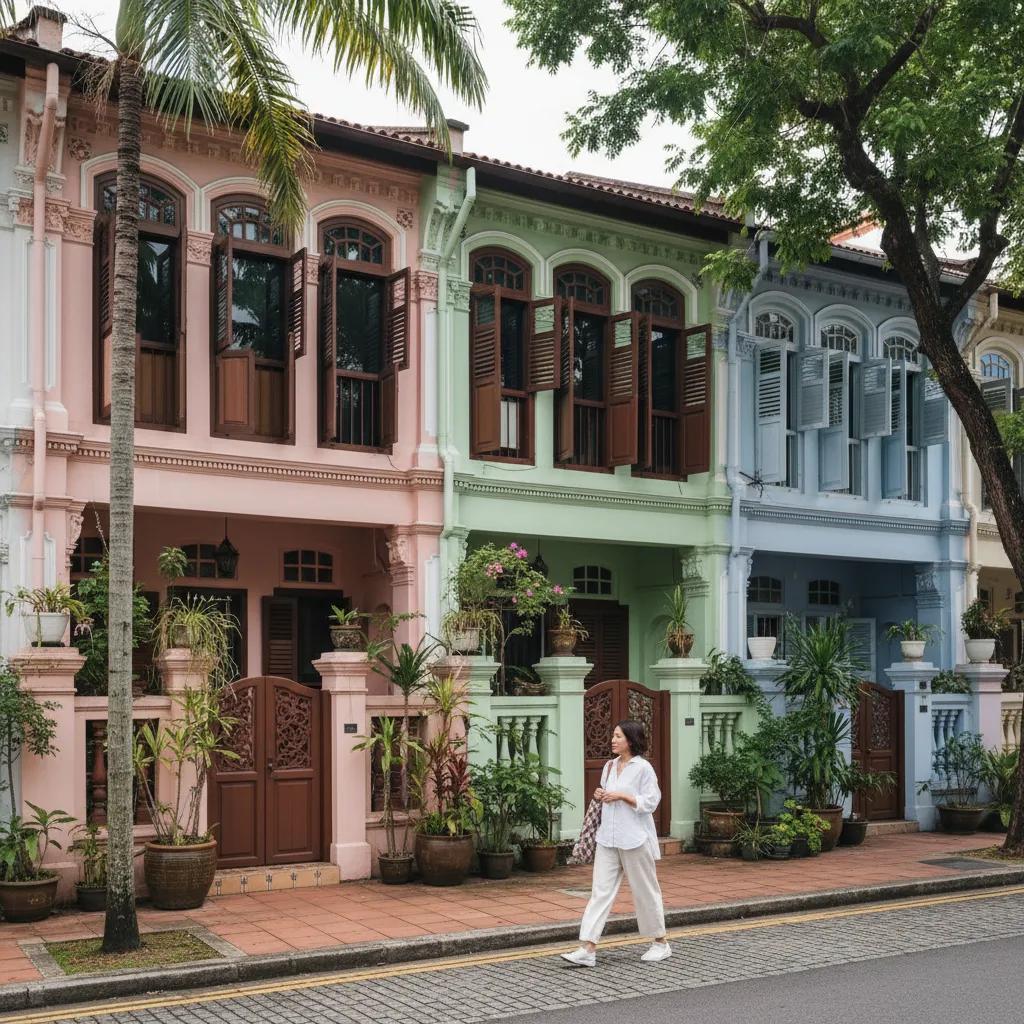
Near the southern part of the road, turn onto Koon Seng Road. This short residential street is famous for its two rows of Peranakan terrace houses painted in soft pinks, greens, yellows and blues. Peranakan, or Straits Chinese, families blended Chinese, Malay and European influences in their food, clothing and homes, and these houses show that mix through colour, ornament and layout.
Remember that these are private homes, not a museum. Keep your voice low, do not step onto porches or lean on gates, and give residents space as they come and go. Photograph from the pavement, and if someone is sitting outside, a smile and a polite greeting go a long way. Quiet visitors help keep this street welcoming for everyone who walks after you.
Learn the Language of a Peranakan Doorway
Stand opposite one house and study the entrance. Many still keep a pintu pagar, a pair of low carved wooden half doors in front of the main door. They let air flow through the house while giving some privacy from the street. Above and around the doorway you may see bats, birds, flowers and fruit in plaster, each one linked to wishes for luck, long life or many children.
Now look at the glazed tiles set into the walls and pillars. Many have bright floral patterns in the European majolica style, which were fashionable among wealthy Peranakan families. Notice too how the front porch forms a small outdoor room between street and home. In the past this was where families greeted visitors, watched the road and chatted with neighbours in the evening breeze.
Explore the Side Lanes
Before you finish, loop through a few side streets around Koon Seng Road and Joo Chiat Place. Here you will find quieter terraces, small temples, neighbourhood shrines and corners where the old village feel survives. Look for houses with jade-green shutters, painted vents and family altars visible through open doors. These lanes are calmer than the main road and good for a slow final stretch.
This is also the place for a short rest. Find a coffee shop corner, order kopi or teh the local way and watch the neighbourhood move. It is a good moment to sketch a doorway, write down the details you liked most or simply plan the next part of your day. Many walkers continue toward Katong next, since the two districts flow into each other without any clear border.
Practical Notes for the Long Road
Wear light clothing, a hat and comfortable shoes, and carry water, because Joo Chiat Road is longer than it looks on a map. Start early in the morning or late in the afternoon to avoid the strongest sun. Sudden tropical showers are common, so pack a small umbrella. The five-foot ways and covered market spaces make easy shelter while you wait for rain to pass.
The walk works best in one direction, so plan how you will arrive and leave. Many people start near the MRT stations close to Geylang Serai and finish around Koon Seng Road, where buses run along nearby roads toward the city and the coast. Dress modestly if you plan to enter mosques or temples, and remove your shoes where you see others doing the same.
Save Joo Chiat Food Stops
Open the Karpo APP before your walk to browse Malay breakfast spots, Peranakan kitchens, coffee shops and dessert counters along Joo Chiat Road. Read what each place is like, think about whether you want a quick bite or a slower sit-down meal and save a short list. By the time you reach the pastel terraces of Koon Seng Road, you will already know where to go for lunch.
Ask Karpo for more information.
Keep reading
- Marina Bay Food Market Grazing Route After a Conference Day
 River Valley Food Market Grazing Route With Young Kids
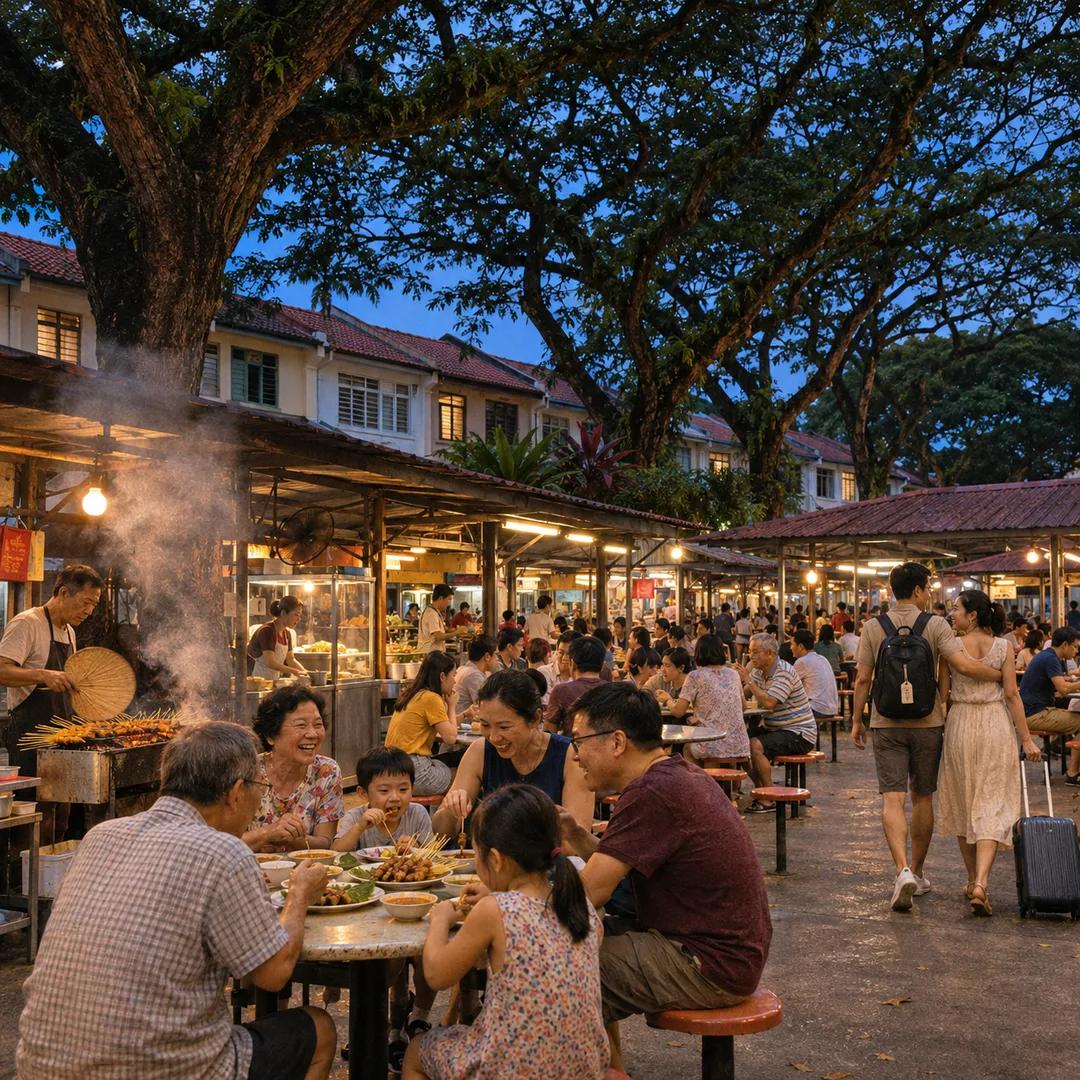 Serangoon Food Market Grazing Route for a Homecoming Weekend