 Marina Bay Food Market Grazing Route After a Conference Day
Neighborhood Guides
Clarke Quay Neighborhood Walking Guide: Royal Hill to River
Walk from Fort Canning Hill's royal shrine, spice garden and old fort gate down to the riverside godowns of Clarke Quay to trace how Singapore began and traded.
This Clarke Quay neighborhood walking guide turns the usual evening visit upside down. Most people meet Clarke Quay at night, when the riverside glows and the bars fill up. Come in the morning instead and you can walk the whole story of the place in order: begin on Fort Canning Hill, where ancient Malay rulers once held court, then follow the slope down to the river where traders, boatmen and porters built the city's first fortunes. Allow about two unhurried hours, with shade breaks.
Climb Fort Canning Hill Early
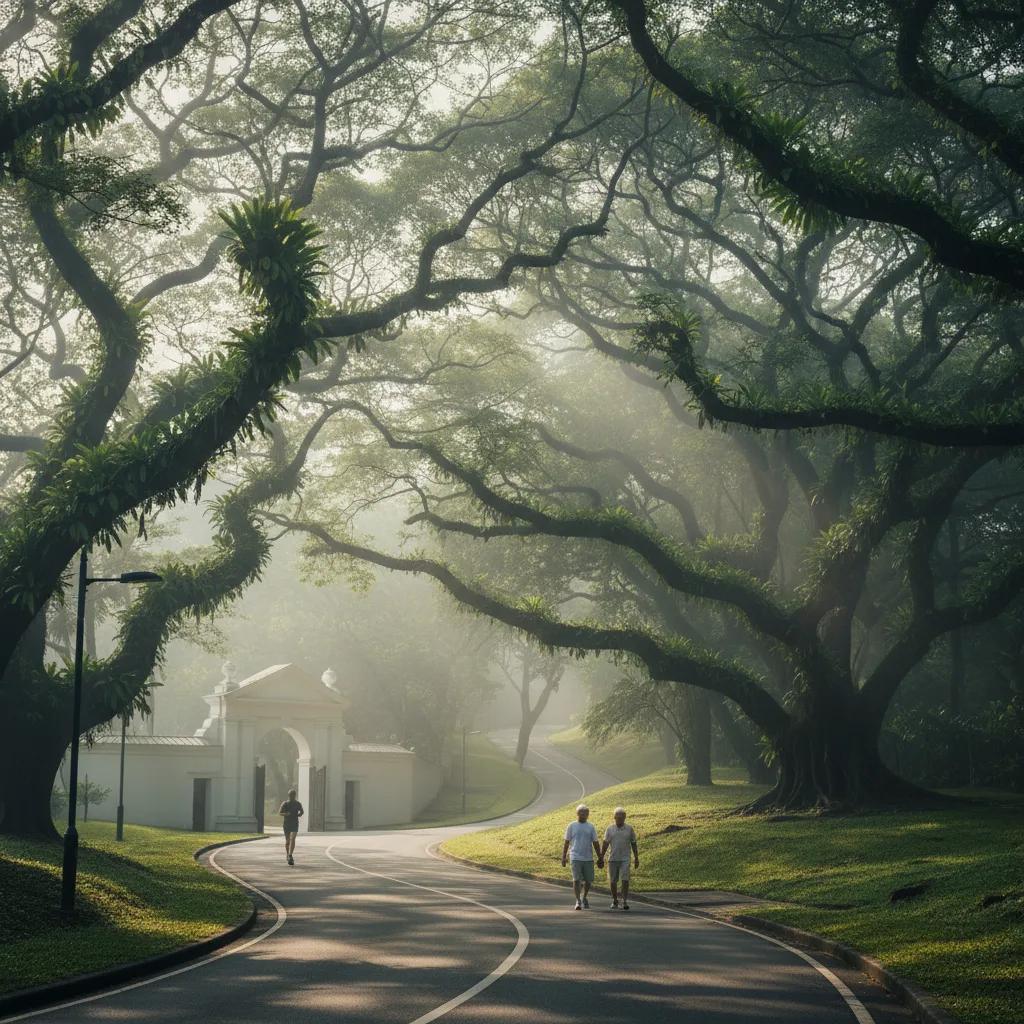
Start at the bottom of Fort Canning Hill and walk up through the park while the air is still cool. Long before the colonial port, this hill was known to the Malays as the Forbidden Hill, a place reserved for royalty, and archaeologists have found fragments of pottery, glass and gold here that point to a busy trading kingdom. Standing among the rain trees, it is easy to understand why rulers chose this spot. The hill catches the breeze and looks down over the river mouth, the obvious place to watch every boat coming in.
The path winds gently, with benches along the way and plenty of shade from huge old trees covered in ferns. In the early morning you share the hill with joggers, tai chi groups and dog walkers, and the city noise feels far away. Take your time and look out for the information boards that explain the different layers of history, from the old kingdom to the British fort that later gave the hill its name.
Visit the Keramat and the Spice Garden
Near the summit, find the keramat, a small shrine traditionally linked to the last king of ancient Singapura. Visitors still leave offerings and sit quietly nearby, so keep your voice low and give the space the same respect you would give a place of worship. It is a moving reminder that, for some people, this is not just a park but a place with spiritual meaning.
A short walk away, the spice garden recalls the early botanical garden that was planted on the hill to test which crops might grow well in the region. Walk between the beds and rub a leaf or two gently between your fingers where it is allowed. Nutmeg, clove, pepper and lemongrass give off scents you probably know from the kitchen but have never smelled growing. Children usually enjoy guessing the plant from the smell before reading the label.
Pass Through the Old Fort Gate
Continue to the old fort gate, the heavy archway that is one of the few surviving pieces of the British fortifications on the hill. Walk under it and imagine the soldiers who were stationed here to guard the harbour below. Nearby, an underground command centre from the Second World War tells the story of the fall of Singapore, and if you are interested in military history it is worth adding to your morning.
From the gate area, find a spot with a view down toward the river. On a clear morning you can trace the line of the water between the towers, which will be your guide for the second half of the walk. It is a nice moment to explain to companions how the river, not the sea front, was the original heart of the city's trade.
Walk Down to the River
Leave the hill on the side facing the river and follow the paths and steps down toward River Valley Road. The change is sudden. One moment you are among old trees and quiet lawns, and the next you are crossing a road with traffic and stepping onto the riverside promenade. This descent is the whole point of the route, because it shows how close the old royal hill was to the busy working river.
If you are walking with older relatives or small children, take the gentler sloped paths rather than the steepest steps. There are covered walkways and benches near the bottom where you can rest before heading along the water.
Read the Story of the Godowns
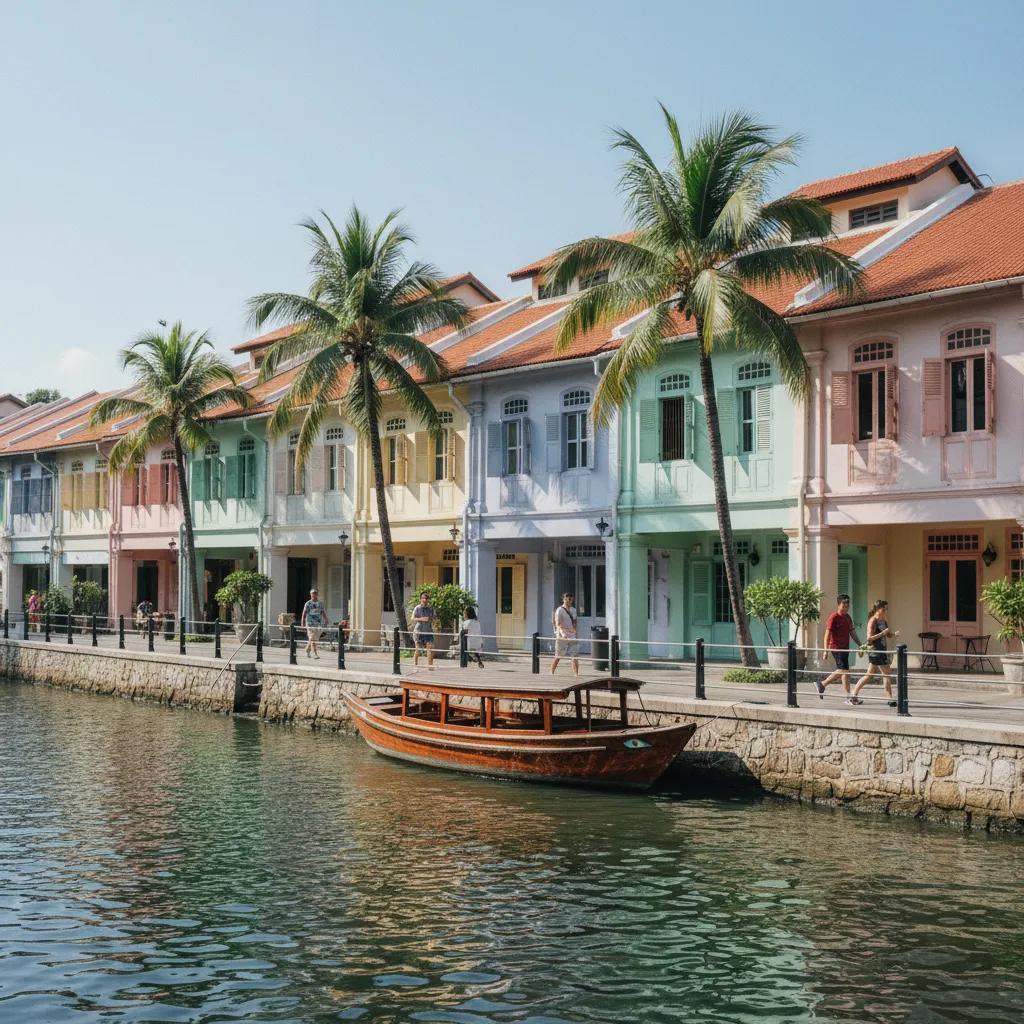
Clarke Quay's colourful two-storey buildings were once godowns, the warehouses where goods were stored after being unloaded from ships anchored out in the harbour. Small wooden lighters called tongkangs and twakows ferried rice, spices, rubber, tin and textiles up the river, and teams of porters carried the heavy sacks on their backs across narrow planks into the godowns. The work was hard and the river crowded, with boats so packed together that it was said you could almost walk across the water.
Walk slowly past the old warehouse rows and look at the details. The roofs, shutters and proportions still tell you these were built for storage, not shopping, even though today they hold restaurants and bars. Find one of the bronze or stone markers along the river that explain the old trade, and look out for the small modern bumboats with painted eyes on their bows, a tradition carried over from the old lighters that boatmen believed helped the boats see their way.
Linger Along the Quiet Morning Promenade
In the morning, the riverside promenade is calm. Cleaners prepare the terraces, office workers cut through on their way to work, and you have the space to stop wherever you like. Walk upstream a little toward Robertson Quay or downstream toward the older bridges, and notice how the river has been cleaned and transformed from a crowded working waterway into a place for walking and cycling.
This is a good time to talk about the great river clean-up, when the boats, workshops and squatter settlements along the banks were relocated and the water was restored. Older Singaporeans often have strong memories of the river before and after, and if you are walking with local friends or family, ask them what they remember.
Practical Notes for the Hill and River
Start early, as both the hill and the river are far more pleasant before the heat of the day. Bring water, sunscreen and a light umbrella for sudden showers. The hill paths are well kept but include slopes and steps, so wear comfortable shoes with grip. There are toilets and water points in the park and near the river.
The route works well in reverse for an evening plan, but the light and the atmosphere change completely. If you only have one visit, the morning version shows you far more of the history, and you can always return later for the riverside at night.
Pick a Riverside Breakfast Spot
Open the Karpo APP before you go and search for breakfast cafes, kaya toast counters and quiet coffee spots around Clarke Quay and Robertson Quay. Read about each one, think about whether your group wants a fast bite or a long sit by the water, and save a couple of options. When you come down from Fort Canning ready for food, you can head straight to the one that fits.
Ask Karpo for more information.
Keep reading
- Marina Bay Food Market Grazing Route After a Conference Day
 River Valley Food Market Grazing Route With Young Kids
 Serangoon Food Market Grazing Route for a Homecoming Weekend