 Marina Bay Food Market Grazing Route After a Conference Day
Neighborhood Guides
Chinatown Neighborhood Walking Guide to Its Old Street Names
Walk Chinatown Singapore street by street to decode its old names, from water carts and coolie lodging houses to death houses, opera theatres and temple gates.
This Chinatown neighborhood walking guide uses the street names as your map. In Singapore's Chinatown, almost every street sign hides a story about who lived there, what they did for a living and how hard their lives could be. Read the names in order and the district turns into an open-air history book. The loop below is compact, mostly flat and best walked in the morning, when shutters are going up and the lanes are still calm, and it takes around ninety minutes.
Start with Kreta Ayer, the Water Carts
Begin near the Chinatown MRT station and look for the name Kreta Ayer on signs and buildings. It is Malay for water cart, and the Chinese name for the district means much the same thing, roughly bullock cart water. In the early days, this part of town had no piped water, so carts pulled by bullocks hauled fresh water from wells and springs and sold it to households and shops. The sound of the carts creaking through the streets was part of daily life.
Stand on a corner for a moment and picture the scene: no air conditioning, no taps, families crowded into narrow shophouses, and every drop of water carried in. It sets the tone for the rest of the walk, because Chinatown's names are rarely about grand events. They are about the practical struggle to live and work in a crowded port.
Walk Pagoda Street and the Coolie Lodgings
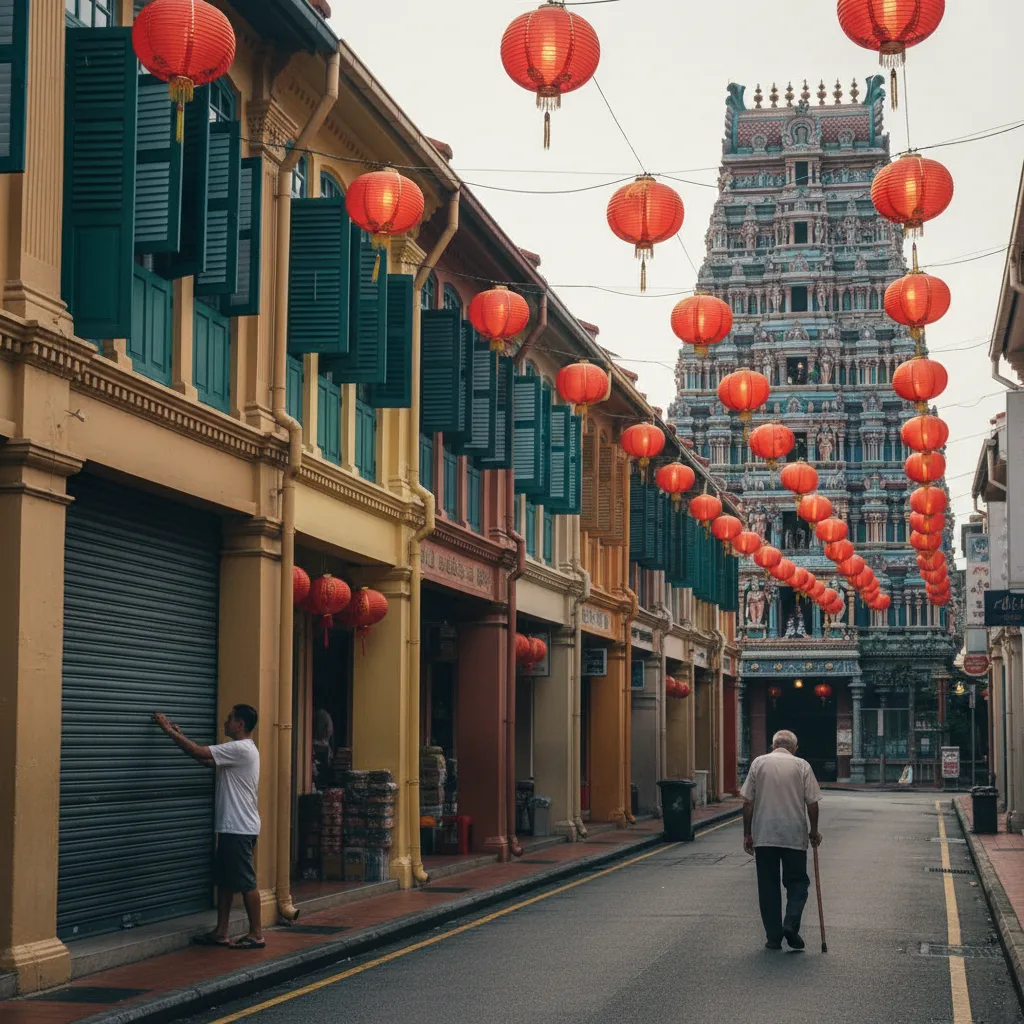
Turn onto Pagoda Street, now lined with souvenir shops and lanterns. The name comes from the tall, colourful tower of the Sri Mariamman Temple at the far end, which early residents described as a pagoda. Look up toward the end of the street and you will see the temple's gateway rising above the shophouses, covered in brightly painted figures.
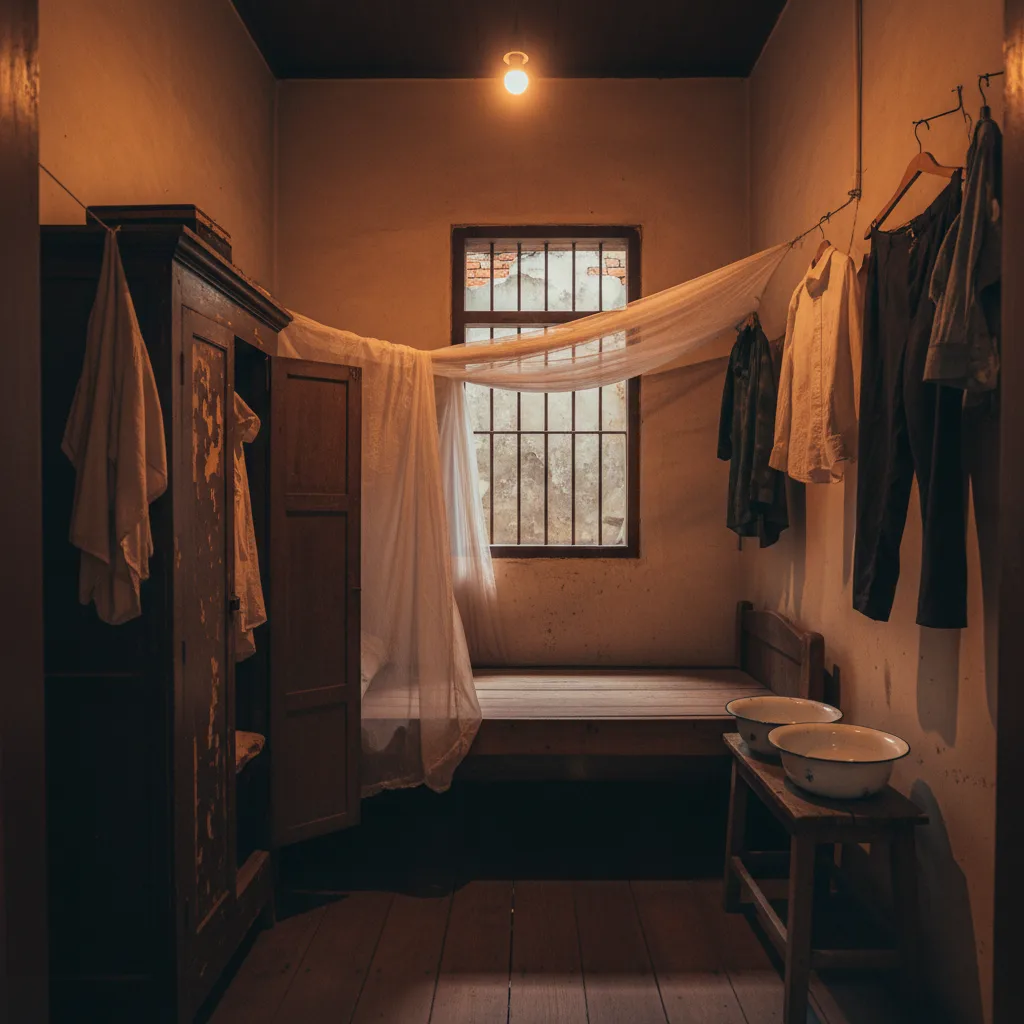
In the past, the street was also known for coolie lodging houses, where newly arrived labourers from southern China slept in rows of bunks or tiny cubicles. Many came deeply in debt to the brokers who had paid their passage, and they worked for years at the docks or in the warehouses to pay it off. The Chinatown Heritage Centre on this street recreates some of these cramped rooms, and a visit inside shows how a whole family could live in a space smaller than a modern bathroom.
Pause at Temple Street
Walk one block over to Temple Street, named after the same Hindu temple. The fact that a key street in Chinatown is named after a Hindu temple tells you a lot about how mixed this district has always been. Tamil workers and traders lived and worshipped here alongside Hokkien, Cantonese, Teochew and Hakka communities, and the temple was built well before many of the Chinese shophouses around it.
If you have time, walk to the temple and look in from the entrance. Visitors are welcome if they dress modestly and remove their shoes before entering. The interior is full of colour, music and the scent of jasmine and incense. It is a strong reminder that Chinatown's story is not only a Chinese story.
Remember the Stories of Sago Street and Sago Lane
Continue to Sago Street and the nearby site of Sago Lane. The names come from the factories that once processed sago, a starch made from palm trunks that was used for food and in textiles. Later, though, Sago Lane became known for something far sadder. It was lined with so-called death houses, where elderly and sick people who had no space at home came to spend their last days, close to the funeral shops that would handle their burials.
Families who lived in tiny cubicles believed it was unlucky for someone to die at home, and many could not afford the space anyway. The lane was filled with coffin makers, paper effigy shops and funeral musicians. Today the old lane has been rebuilt, and there are few physical traces left, but stopping here for a moment is a respectful way to remember the poorest residents of the old district.
Imagine Opera Nights on Smith Street
Head to Smith Street, now known for its food stalls and covered dining area. Many Chinese residents knew it by a name linked to a famous Cantonese opera theatre that once stood here, where crowds packed in to watch performances with painted faces, elaborate costumes and clashing cymbals. The theatre was the heart of local entertainment, and the street around it was busy with tea houses, gambling and other less respectable businesses.
Walk the length of the street and try to picture it on an opera night, lit by lanterns and loud with music. If you are lucky, you may come across a Cantonese opera performance during a festival in the area, when stages are set up in open spaces and older residents bring folding stools to watch. It is one of the few places where you can still glimpse that old world.
Look Closely at Trengganu Street and Mosque Street
Finish with a short loop along Trengganu Street and Mosque Street. Trengganu Street is named after a Malay state, and older Chinese residents sometimes called it Japanese Street, because it was once known for Japanese-run lodging houses and brothels. Mosque Street takes its name from the Jamae Mosque nearby, built by Tamil Muslims from the Coromandel coast of India.
These names show how many communities shaped Chinatown, from Malay rulers and Indian Muslim merchants to Japanese migrants and Chinese labourers. As you walk, look up at the upper floors of the shophouses, which still have the wooden shutters and decorative details of the old homes above the shops.
Practical Notes for Name Hunters
The route is flat and compact, so it suits families, older walkers and wheelchair users, although some five-foot ways have steps between buildings. Walk in the morning to avoid the heat and the crowds. Bring water and an umbrella for sudden showers.
Turn the walk into a game by giving each person a street name to research on the spot and explain to the group. Children enjoy hunting for the signs, many of which show the name in English, Chinese, Malay and Tamil, and you can talk about why the city writes its names in four languages.
Save Chinatown Lunch Ideas
Open the Karpo APP before your walk to browse dumpling shops, roast meat counters and quiet tea rooms around Pagoda Street and Smith Street. Read what each place is like, think about whether your group wants a quick hawker meal or a slower lunch, and save a handful of options. When the street names have made you hungry, you will already have a plan.
Ask Karpo for more information.
Keep reading
- Marina Bay Food Market Grazing Route After a Conference Day
 River Valley Food Market Grazing Route With Young Kids
 Serangoon Food Market Grazing Route for a Homecoming Weekend