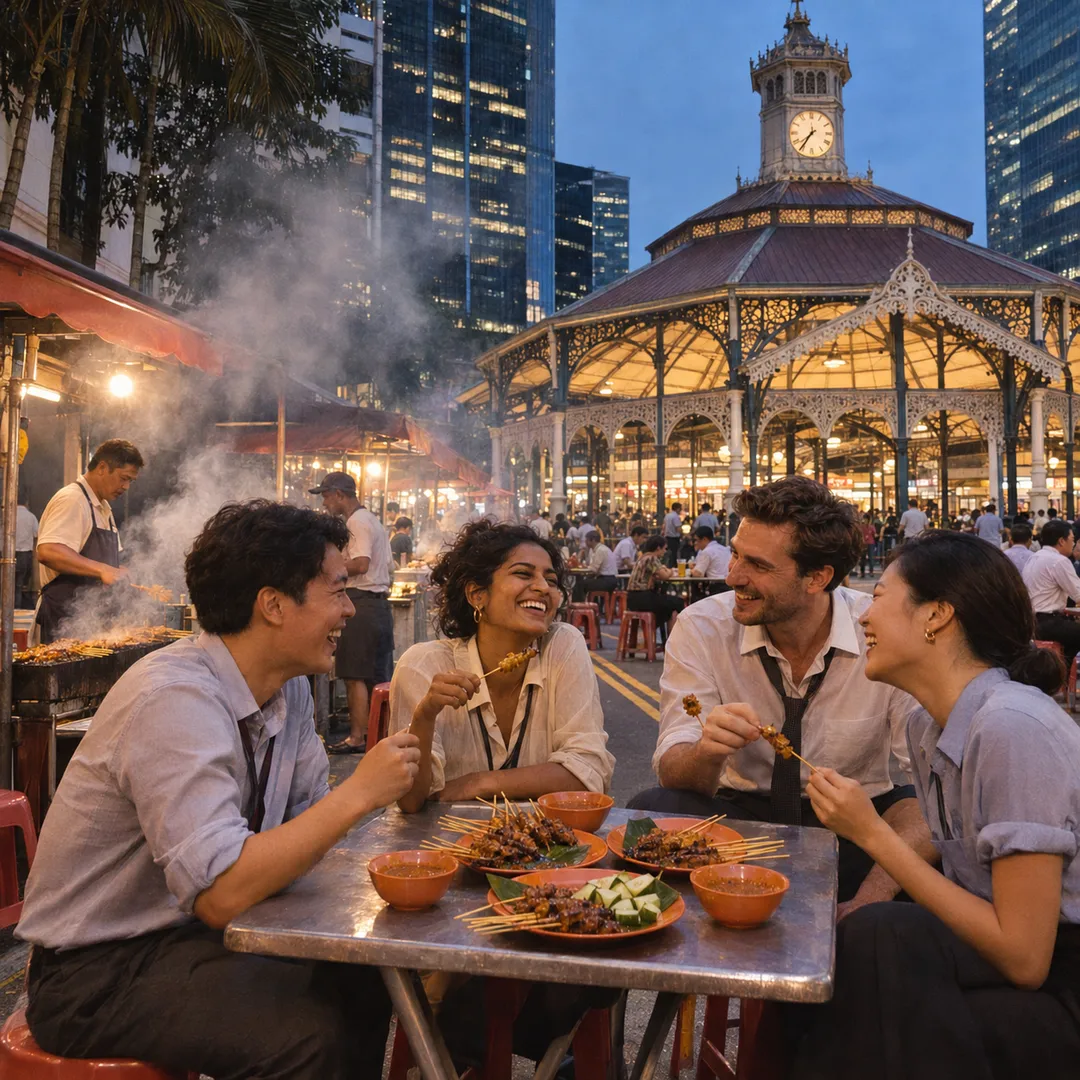
 Marina Bay Food Market Grazing Route After a Conference Day
Neighborhood Guides

Singapore Neighborhood Walk Planner: Marina Bay Route Now
A Marina Bay neighborhood walk planner pairs blue-hour reflections with covered links and a clear return. Use the short version when rain or timing changes.
Marina Bay works best when light, not distance, controls the plan. Tell Karpo APP the starting window, the moment you want the skyline to turn blue, and the time you need to leave. Ask for a waterfront spine with one optional civic detour. A useful answer shows where the route changes direction and where the group can stop without losing the best reflection.
Name The Blue-Hour Goal
Begin where the bay is broad enough for everyone to understand the geography. The first pause should let companions gather without blocking the flow, then the route can move toward closer details in the railing, water, or glass. Include the preferred finish in the opening message. A planner that knows the exit will not spend the final light sending the group away from transport.
A reflection theme gives the evening a stronger shape than a skyline checklist. Ask for water, curved edges, or mirrored surfaces and say whether photographs or conversation matter more. Karpo can compare a direct version with a slower one that has one deliberate viewpoint. Fewer stops mean each change in color is visible, and companions are less likely to spend the whole walk checking a map.
Orient Beside The Water
Rain is a route switch around the bay. Request one covered connection, one outdoor view worth keeping, and an interior pause near the middle. State the maximum exposed minutes and the first section to remove. This makes the fallback operational: the group can shorten the walk without improvising a new destination, and the blue-hour promise remains a mood rather than a fragile schedule.

After dark, navigation matters as much as scenery. Ask for clear turns, a legible path, and a finish beside a known connection. Keep a buffer for photography and slow crossings; do not fill every minute with another viewpoint. A neighborhood walk planner should protect the moment when someone wants to stop and look back at the skyline rather than treating that pause as wasted time.
Build A Reflection Thread
Different photo patience can be handled with one timed branch. Give Karpo a five- or ten-minute limit, a named rejoin point, and a rule that the main group keeps moving. Someone can wait for a reflection while another person chooses the next stretch. Sharing that rule before leaving prevents the familiar waterfront problem in which one person disappears and everyone else stands still wondering where to go.
A civic lawn, gallery edge, or architectural detour can add scale after the water. Mark it optional and explain whether the group wants buildings, a quiet seat, or a direct dinner connection. The planner should place the detour where it can be removed cleanly. That keeps the main promise—blue-hour waterfront atmosphere—intact when the light fades faster than expected.
Make Rain A Switch
If the start slips, cut the farthest bay edge first. Keep one reflection pause and the direct exit, then protect the buffer before the next commitment. Write that exchange in the shared note so companions do not negotiate from scratch. A good route makes the edit visible, which is kinder than quietly extending the finish and leaving someone to run for transport.
Marina Bay can become visually busy, so add a listening moment. Ask for a few minutes in which the group watches the water without collecting another pin. That gap lets people catch up and notice how the skyline changes. It also gives the planner a natural pacing break, making the whole route feel less like a sequence of photo assignments and more like an evening together.
Protect The Return
Weather and clothing should be part of the route brief. Tell Karpo whether umbrellas, heat, or wind limit the group, and ask for a version that keeps the most dramatic view close to the start. A rain-darkened surface may be more interesting than a longer loop, but only if the plan leaves enough time to stop. Practical constraints often improve the composition.
The finish should move toward the next appointment rather than toward one more distant landmark. Ask for a short final connection with room to regroup, refill water, and check the route home. When the last section is direct, companions can keep the blue-hour memory without feeling that the planner has consumed the night. This is where a scenic loop becomes a usable evening plan.
Keep A Quiet Gap
Before setting out, record the start, blue-hour target, rain switch, exposed-minute limit, optional detour, branch rule, and first cut. Add the exact kind of finish you want—transport, dinner, or a hotel return. The handoff should fit in a few lines and make clear which parts are personal choices, not promises about live crowds, opening hours, prices, or seating.
Practical Notes For Marina Bay
Cut The Outer Edge
A compact plan is often the better recommendation for visitors carrying bags or meeting friends later. Ask Karpo to show the short shape first, then a longer alternative only if the group has time. The comparison makes tradeoffs visible and prevents an attractive map from becoming an accidental two-hour commitment. Marina Bay rewards a route that knows when to stop.
Use Karpo APP with the light window, preferred reflection subject, weather tolerance, walking limit, covered-link need, and final destination. Compare the short and rain-ready routes before leaving. This product-flow guide helps shape and adjust a walk; it does not claim live crowd data, opening hours, prices, reservations, or guaranteed seating at any stop. Keep one sentence ready for the group when the route changes: this is the view we keep, this is the pause we protect, and this is the turn we remove. Clear language makes a flexible plan feel deliberate, especially when rain or a late start changes the evening. The evening works when the map protects the light and the landing. Tell Karpo which reflection matters most, where the group must be afterward, and how much rain or wind is comfortable. The short version is often the strongest recommendation: one water view, one pause, one direct exit, and enough buffer to leave without rushing.
Ask Karpo for more information.
Keep reading
- Marina Bay Food Market Grazing Route After a Conference Day
 River Valley Food Market Grazing Route With Young Kids
 Serangoon Food Market Grazing Route for a Homecoming Weekend