 Marina Bay Food Market Grazing Route After a Conference Day
Neighborhood Guides

Singapore Neighborhood Itinerary Builder: Meet in Two Waves
Give early and late arrivals a Singapore afternoon they can share. Choose a stable joining point, a clear cutoff, and a route that survives a delayed friend.
One friend is free after lunch, another is finishing work, and a third will join whenever a family commitment ends. A single start time does not describe this Singapore meetup. You need a plan with a useful early phase and a shared moment that does not keep moving. Approach a neighborhood itinerary builder with the arrival pattern first, then the activities. In the Karpo APP, explain who expects to join when and ask for ideas around that structure. The decisions below help you choose a route your friends can enter at different points without making anyone spend the afternoon chasing the group.
Is the late arrival joining an activity or the group?
First decide what the later friend needs from the plan. Someone may want to attend a particular meal, while someone else simply wants an hour of conversation. Those needs lead to different meeting arrangements. If a shared meal is the main purpose, make that the stable joining point and let early arrivals do something separate beforehand. If the purpose is casual company, a longer settled interval could suit the group better than a sequence of activities with narrow start times.
Discuss this openly before choosing venues. Early arrivals should know whether their first activity is a bonus or an essential part of the meetup. Later arrivals should know whether they are missing something they care about. Avoid promising that a group will wait indefinitely when some people have other commitments. An honest shared plan might say that the first portion is for whoever is available, while everyone aims for one agreed gathering afterward. This gives the afternoon a center without requiring identical schedules.
Choose a place to join that stays put
A moving route creates a practical problem for someone arriving later: by the time they reach the last shared location, the group may have left. A stable joining point reduces that confusion. Choose a place where gathering is suitable for the activity you intend, and agree how long the group expects to remain there. The choice should respect the venue's actual service and capacity. Do not assume a business can hold an empty chair or accommodate an expanding party simply because it appears convenient on a map.
Your request could be: “We are planning a Singapore neighborhood meetup with staggered arrivals. Some friends can explore first, but we want one fixed joining point before the shared activity. Suggest a structure with a flexible beginning and a settled middle.” Add the actual arrival windows and interests when you use the prompt. Ask for ideas that serve the gathering, then decide the joining instructions yourselves. The planning conversation is not tracking your friends or detecting when they enter the district.

Decide when the route is allowed to move
A departure cutoff protects both the people already present and the person traveling to join them. It is an agreement about the meetup, rather than a penalty for being late. For example, your group might choose to remain at the joining point until a stated time and then begin the shared walk. Anyone arriving afterward would receive the next agreed destination directly from a friend. Make that rule explicit so the group does not repeatedly postpone moving while trying to interpret uncertain arrival messages.
The cutoff should match the kind of afternoon you want. A leisurely conversation can tolerate a broad joining window. A timed activity needs firmer coordination and may be unsuitable when several arrivals remain uncertain. If flexibility matters most, select experiences that do not depend on every person starting together. If one event is the entire reason to meet, be clear that late friends may need a different arrangement. Choosing between those priorities early is kinder than making conflicting promises about both freedom and punctuality.
Give early arrivals something complete
The first friends to arrive deserve an enjoyable beginning, rather than an hour devoted to waiting. Choose an early phase that has value on its own and can end cleanly. Browsing a limited area or taking a short look around could work as an idea once suitable places are chosen. Avoid beginning an activity that later friends are especially eager to share. The early phase should add to the afternoon without creating a sense that the real gathering has already happened before everyone arrived.
Keep purchases and appetite in mind. If the main group activity is a meal, early arrivals may prefer a small drink or a nonfood activity. If the plan involves browsing later, the early phase could focus on conversation. Ask Karpo for a suggestion that fills the specific gap rather than requesting a second full itinerary. A follow-up such as “Keep the shared meal, but suggest a light early activity that ends near our joining point” gives the conversation a clear problem to address.
Change one instruction when someone is delayed
When an arrival changes, update the part of the plan that actually depends on it. A delayed friend does not automatically require changing the early activity, the meal, and the ending. Identify whether the shared gathering can proceed at its agreed time, whether the joining point needs to remain fixed longer, or whether the friend should meet the group at a later settled stop. Choose one answer and communicate it clearly. Multiple competing instructions can create more confusion than the delay itself.
For a hypothetical example, imagine that a friend expected during the first gathering now arrives after the shared walk begins. The organizer might tell them to join at the next settled destination and send that destination directly. This is a coordination choice, not a claim that a route app will update everyone automatically. One person should take responsibility for communicating the change, and the delayed friend should have a clear way to reach the group. Keep that human handoff simple enough to understand while traveling.
Practical notes for a flexible gathering
Give the group a short plan with the early option, the fixed joining location, the departure cutoff, and the shared activity. Explain whether any reservation was made and for how many people, using the confirmation you actually hold. A recommendation alone does not reserve space for an uncertain group size. If a chosen business requires a firm party count, handle that requirement directly instead of assuming the itinerary can absorb every change. Flexibility is a property of the arrangements you make, rather than a label attached to the route.
Once everyone has joined, let the meetup become a shared experience rather than an ongoing scheduling exercise. Keep a modest final activity or an easy ending available, especially if people have spent different amounts of time out already. In the Karpo APP, you can ask for ideas suited to the group's remaining time and interests. The most helpful brief begins with the actual arrival pattern. From there, a stable middle and a clear handoff can give friends an afternoon together even when they cannot all begin it together.
Ask Karpo for more information.
Keep reading
- Marina Bay Food Market Grazing Route After a Conference Day
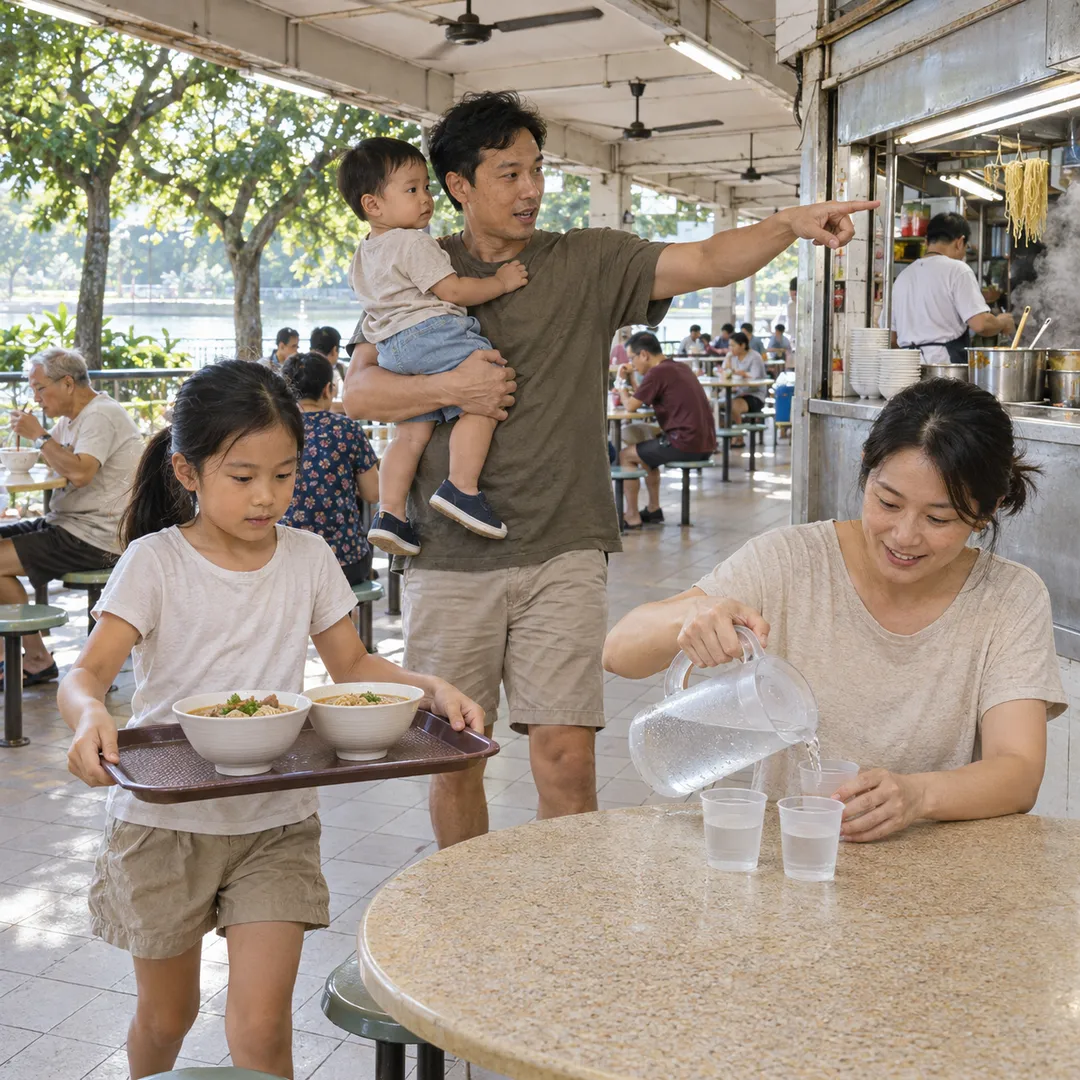 River Valley Food Market Grazing Route With Young Kids
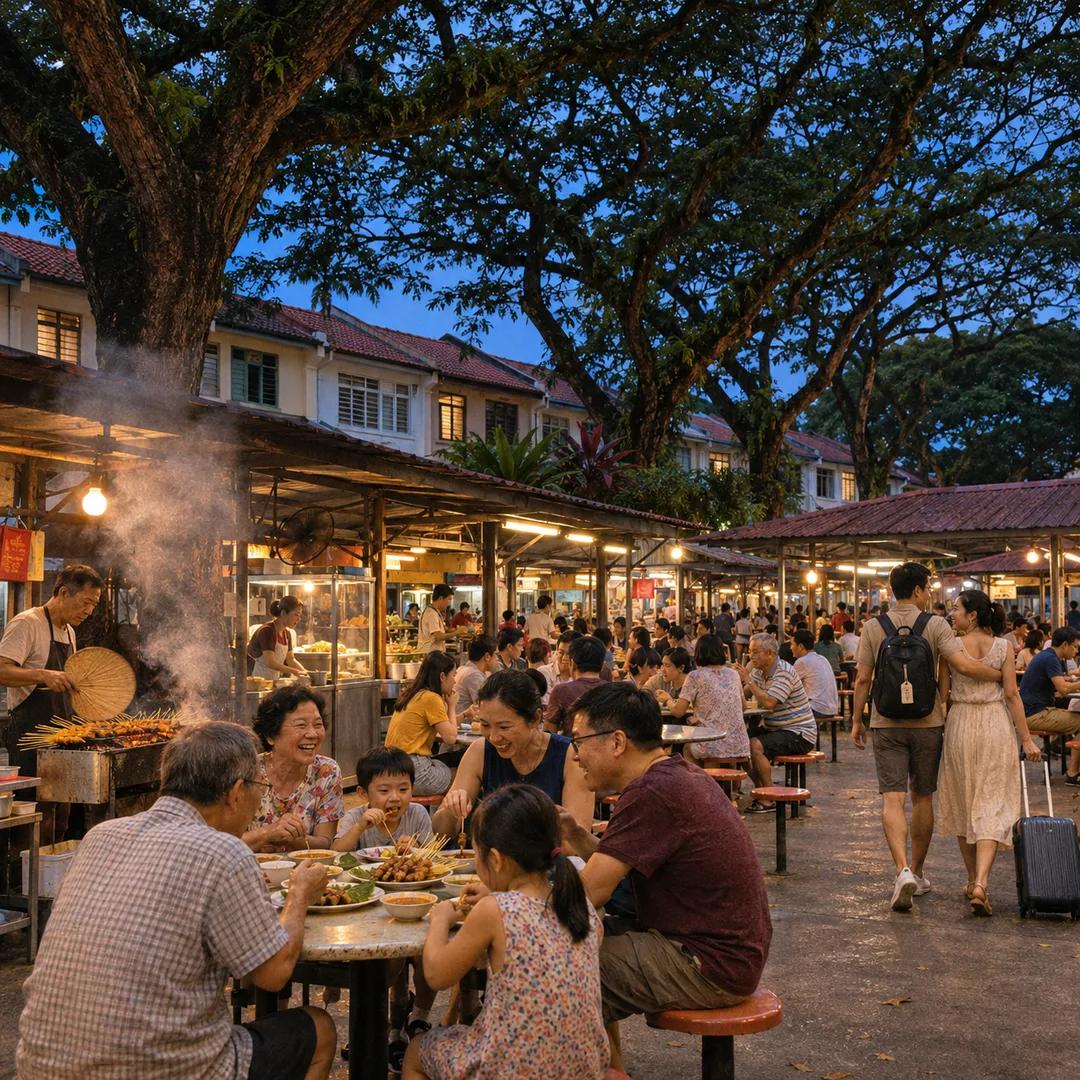 Serangoon Food Market Grazing Route for a Homecoming Weekend