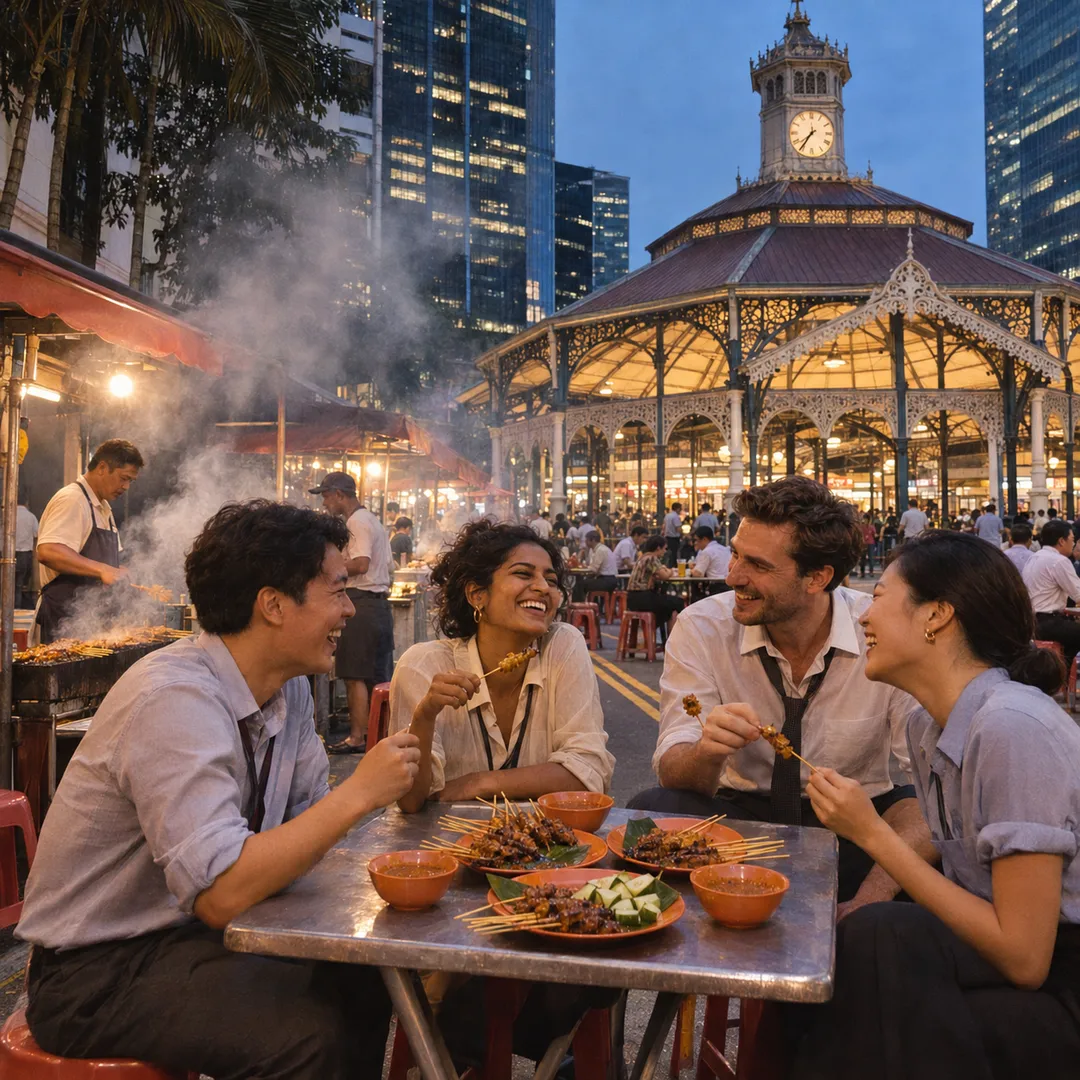
 Marina Bay Food Market Grazing Route After a Conference Day
Neighborhood Guides
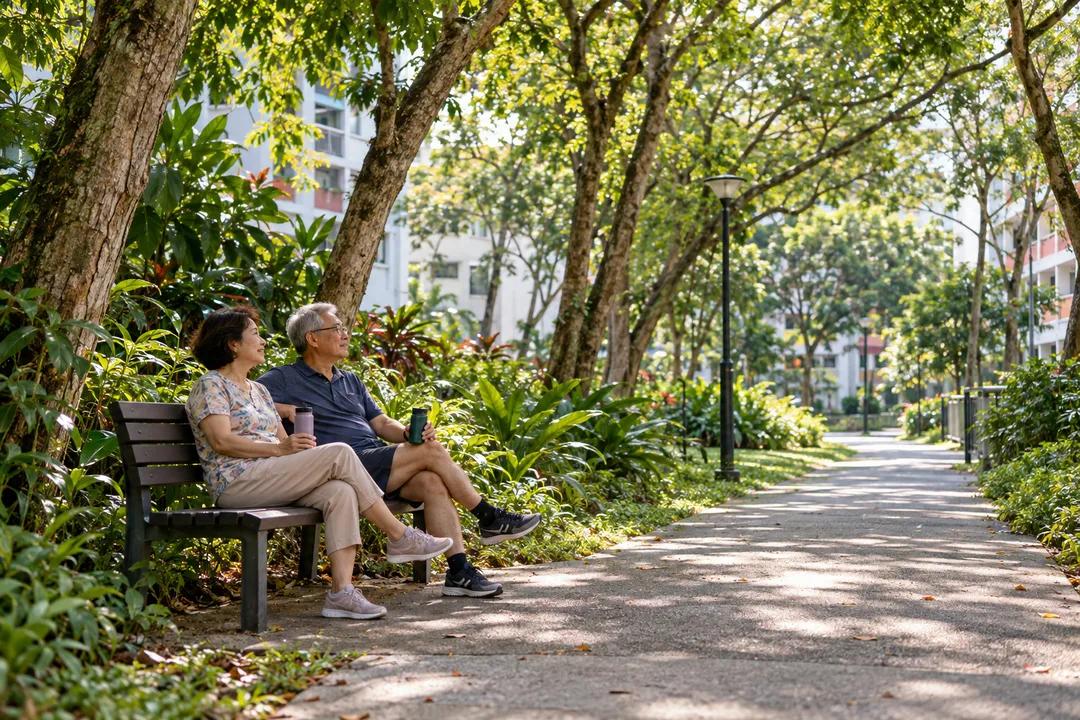
Singapore Neighborhood Itinerary Builder: Go Slow and Rest
Plan a slower Singapore outing around rest and conversation. Define comfortable walking limits, meaningful pauses, and an easy place to finish the afternoon.
A slower outing begins with a different question from a sightseeing checklist: where will you feel comfortable spending time? If a Singapore afternoon is meant for conversation, visiting relatives, or taking things gently, rest belongs in the plan from the beginning. Use a neighborhood itinerary builder to describe that pace before asking for destinations. In the Karpo APP, tell the planning conversation what a comfortable afternoon means for your group. The approach here is to build around pauses and short stretches of activity, so the route feels worthwhile even when you do less than originally imagined.
Describe effort in everyday terms
“Easy walk” can mean very different things to different people. One person may be happy walking continuously but dislike stairs. Another may prefer brief stretches with a seated break between them. State those preferences individually. Explain whether you want to avoid long periods outdoors, carry shopping, push a stroller, or remain close to your starting area. You do not need to disclose a medical history to make a useful planning request. Describe the conditions that would make the outing comfortable, and keep the person's own preferences central.
Try a message such as: “I want a relaxed neighborhood afternoon in Singapore with a relative. We enjoy talking and looking at small shops, but would like seated pauses and short walking sections. Suggest a modest plan rather than a sightseeing circuit.” Add any nonnegotiable needs in direct language. If step-free access is required, say so, but do not treat a general recommendation as proof of an accessible journey. Access to an entrance, a restroom, and a seat are separate questions that need specific information for a chosen place.
Let the first pause establish the pace
Begin with a stop where the group can settle, discuss how everyone feels, and decide what sounds enjoyable next. That opening pause can be part of the experience rather than a delay before the interesting part. A meal, a drink, or another suitable seated activity might serve that role once you have chosen an actual place. Give it enough room in your personal schedule that nobody feels hurried into standing up. A slower afternoon loses its purpose if every pause becomes a brief interruption before the next appointment.
This also gives companions a natural opportunity to adjust the plan without making a formal announcement. Someone can suggest staying longer, skipping browsing, or taking a shorter walk. Make those changes easy to accept. The organizer's job is to protect the comfort that motivated the outing, not to defend the original route. Ask for a small set of ideas that can be shortened cleanly, and resist adding distant options simply because there appears to be spare time on the page.
Count standing as part of the effort
Walking distance does not capture all the physical work of an outing. Waiting for a table, looking at displays, and searching for a meeting point can involve standing even when the route itself is short. Consider those moments when comparing suggestions. A compact plan with several standing activities may feel more demanding than a slightly longer visit built around reliable seated experiences. Your preferences should explain both how far you want to move and how you want to spend time once you arrive.
When you review an idea, picture the full sequence: arrival, any wait, the activity, the departure, and the next connection. Ask which part can be removed if the group needs a longer pause. A useful follow-up might be: “Replace the standing activity with something we can enjoy seated, and keep the remaining outing short.” This is a request for a different kind of afternoon. It does not establish seat availability or an absence of queues at any venue, and the final choice should respect the information available about that place.
Make the middle stretch optional
The middle of the route is a good place for a small exploration because it can expand or contract with the group's energy. Choose one purpose for it: noticing architecture, browsing a category of shops, or simply enjoying a change of surroundings. Avoid turning that stretch into a string of required stops. When the purpose is clear, you can satisfy it with a shorter experience and still feel that the outing has succeeded. The value lies in what you notice and discuss, rather than how many doors you enter.
For an illustrative plan, imagine an opening seated stop, a brief browsing interval, and another chance to rest before departure. The group might spend most of its time at the first stop and decide against the browse entirely. That remains a coherent afternoon if conversation was the priority. Tell your companions at the beginning that the middle section is flexible. Permission to shorten the plan is more useful when it is agreed in advance, so nobody has to apologize for asking to slow down.
Give the ending its own comfort test
Do not use the group's last energy on a final attraction and leave the journey away as an afterthought. Decide what makes a comfortable finish: returning toward the original arrival point, ending near an agreed pickup location, or leaving enough space before another commitment. Consider the needs of the person who wants the gentlest pace. The most energetic companion can always explore further later, while the shared portion should be enjoyable for everyone who agreed to take part.
You could ask Karpo for a shorter ending after looking at an initial proposal: “We like the first part, but want to finish closer to our departure point and avoid adding another activity.” Keep the request focused on what has changed. A stated preference can help narrow the conversation without suggesting that the product knows anyone's physical condition or follows their movements. Your group supplies those judgments. If someone feels tired, the appropriate change can be as simple as stopping earlier rather than seeking a more elaborate replacement.
Practical notes for a gentle afternoon
Bring the items your group normally finds useful, and organize personal essentials independently of the itinerary. Discuss restroom needs, dietary requirements, and access needs when choosing actual venues. Where the information is incomplete, leave the unsupported detail out of the plan rather than filling it with a reassuring assumption. A photograph of a pleasant seat is not evidence that it is available to your party. Equally, an estimated short connection should not be presented as a measured route that suits every walking pace.
Finish by sharing a plan that explains the rhythm: settle first, explore only if it feels good, and end somewhere convenient for departure. In the Karpo APP, your most useful input is the kind of time you want together. You can ask for ideas that respect that intention, then choose according to the people attending. A successful slow outing might contain only a good conversation and a brief look around. When rest was part of the purpose, spending time comfortably is an outcome worth planning for.
Ask Karpo for more information.
Keep reading
- Marina Bay Food Market Grazing Route After a Conference Day
 River Valley Food Market Grazing Route With Young Kids
 Serangoon Food Market Grazing Route for a Homecoming Weekend