 Kovan Hainanese Curry Rice Lunch Picker: Heartland Plates
Restaurants
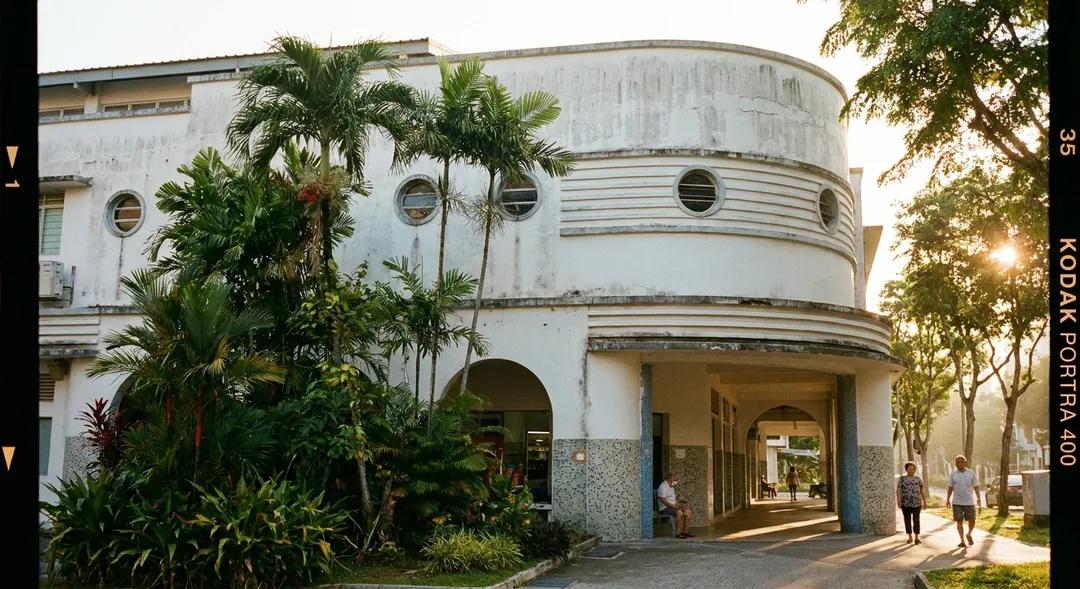
Tiong Bahru Lor Mee Hawker Breakfast Route: Art Deco Loop
Plan a Tiong Bahru lor mee hawker breakfast route from the upper market deck to Seng Poh kopitiams, with vinegar-garlic ratios and Art Deco walking loops.
Planning a lor mee hawker breakfast route through Tiong Bahru works best when two architectural sketchers and a visiting ceramicist friend climb directly to the breezy upper food deck above the wet market before the humid mid-morning heat settles over the estate. Instead of wandering aimlessly between crowded ground-level coffee shops and upstairs stalls, starting along the open courtyard railing lets you secure a shaded fiberglass table where ceiling fans keep the air moving above steaming melamine bowls. From that vantage point, you can compare traditional Hokkien braised starch gravies ladled over flat yellow noodles against crisper fried-fish variations served at corner kopitiams across Seng Poh Road, turning a heavy savory meal into an organized morning exploration of curved pre-war housing blocks, spiral external staircases, and leafy neighborhood pocket parks.
Upstairs Market Gallery Stalls Versus Corner Shophouse Kopitiams
The central decision on a Tiong Bahru morning route comes down to whether your group craves a heritage pork-and-five-spice reduction or a lighter, crunch-driven bowl topped with golden battered fish cutlets. Up on the second-level hawker gallery, veteran cooks keep deep stainless-steel cauldrons simmering with cassia bark, star anise, cloves, and dark soy sauce thickened gently with sweet-potato starch until the surface shines like dark amber lacquer. Regulars carrying canvas market totes queue along the tiled corridor for bowls built around braised pork belly slices, hand-rolled ngoh hiang five-spice meat rolls, dense white-fish nuggets, and halved hard-boiled duck or hen eggs soaked in the dark stock. Because the upper deck wraps around an open garden atrium, steam rises quickly into the rafters rather than trapping heat around your shoulders.
Across the street beneath the rounded streamline-moderne balconies of Seng Poh Road and Lim Liak Street, open-front corner kopitiams offer a contrasting morning rhythm. Stalls operating inside these ground-floor shophouse coffee shops often cater to neighborhood walkers who want maximum textural contrast between the silky gravy and freshly fried toppings. Here, cooks keep a dedicated wok bubbling alongside the gravy pot, dropping seasoned strips of dory or Spanish mackerel and lacy sheets of wanton batter into hot oil so they land on top of the bowl still crackling. If you are eating as a trio, one person can bring a classic braised-belly and flaked-fish bowl from the market gallery while the group compares a crunch-heavy kopitiam version on the second stop, or you can use the Karpo APP to map nearby hawker centers and traditional coffee shops before deciding which block to visit first.
Choosing Noodle Bases and Layering Vinegar, Garlic, and Sambal
A well-paced lor mee breakfast hinges on ordering the right noodle combination and managing condiments at the counter before walking back to your table. Traditional flat yellow Hokkien noodles—known locally as lor mee noodles—have enough alkaline chew and surface width to carry a heavy coat of spiced starch gravy on every strand. However, experienced Tiong Bahru regulars frequently ask the Auntie or Uncle at the ladle for a half-and-half mix of flat yellow noodles and thick rice vermicelli, or even a split of flat yellow noodles and kway teow ribbons. The rice noodles absorb the roasted garlic and dark soy undertones faster than wheat noodles alone, preventing palate fatigue halfway through a generous morning portion.
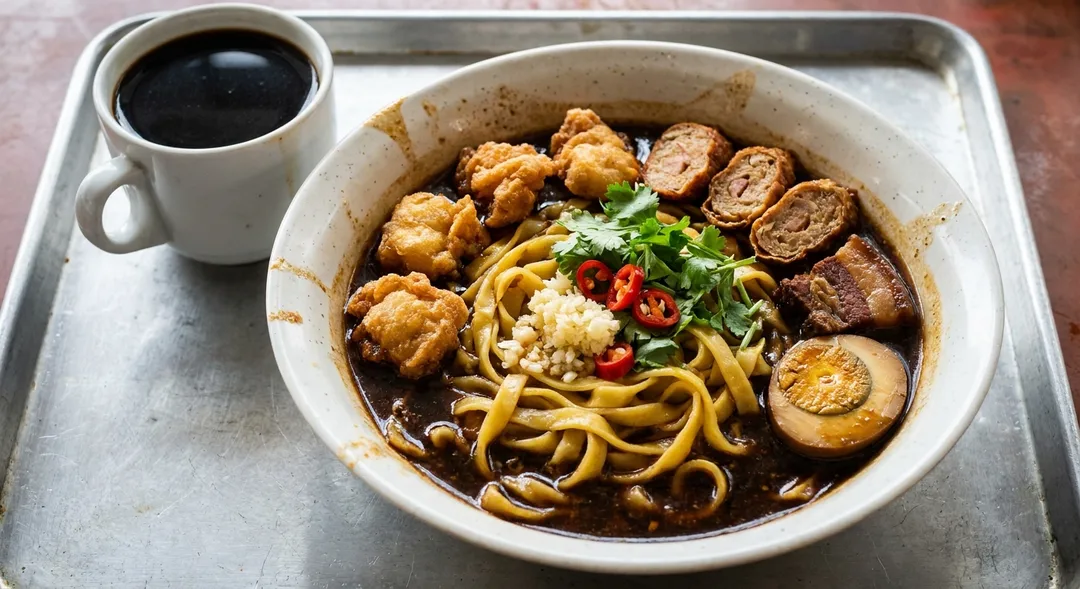
Once the cook ladles the glossy gravy over your noodles and arranges the braised pork, sliced fish cake, and crispy batter scraps on top, you reach the self-serve condiment trays set along the front ledge of the stall. Avoid dumping three heaping spoonfuls of minced raw garlic and black Chinkiang vinegar straight into the center of the bowl before sitting down. Acidic black vinegar and watery garlic liquid accelerate the breakdown of sweet-potato starch, turning a velvety, spoon-coating sauce into a thin broth before you reach your seat. Instead, spoon a modest puddle of black vinegar, a pinch of freshly pounded raw garlic, and a dab of fiery sambal belacan onto one edge of the bowl—or into a small plastic condiment saucer—and dip each forkful of crispy fish and ngoh hiang as you eat.
Pairing Kopi O Kosong and Managing Crispy Toppings in the Humidity
Because lor mee is among the richest savory breakfasts in Singapore's hawker repertoire, what you drink alongside it shapes how energetic you feel for the rest of your morning walk. Skip thick condensed-milk beverages or sweet iced syrups that compete with the caramelized soy and five-spice aromatics of the gravy. Our sketchers and ceramicist always send one person to a neighboring drinks stall for tall glasses of iced barley water with wintermelon strips or small thick-walled porcelain cups of kopi o kosong—black Nanyang coffee roasted with butter and sugar crystals but brewed without sweetened milk. The bitter, dark-roast finish cuts cleanly through the gelatinous richness of braised pork belly and fried batter bits after every few bites.
When carrying trays across the upper hawker deck, ask the stall holder to tuck the crispy fried wanton skins and battered fish pieces onto the high dry rim of the bowl rather than burying them beneath an extra ladle of gravy. Even ninety seconds submerged in steaming starch softens the delicate crust that makes modern lor mee variations so satisfying. If you order an extra side saucer of fried ngoh hiang or crispy flatfish nuggets to share across the table, keep them on a separate plate so everyone can alternate between soft soy-braised egg wedges and loud, shattering crunch.
Walking the Pre-War Art Deco Lanes from Seng Poh to Tiong Bahru Park
Finishing a warm, garlicky bowl of lor mee sets up an unhurried architectural stroll through the low-rise conservation blocks that make Tiong Bahru unique among Singapore housing estates. Descend from the market deck toward Seng Poh Garden, where the bronze dancing-girl sculpture stands framed by curved whitewashed apartment wings inspired by interwar nautical and airplane design. Walking east along Seng Poh Road and turning into Yong Siak Street and Moh Guan Terrace lets your group admire porthole stairwells, rounded cantilevered balconies, and brick-lined back service alleys shaded by mature frangipani and angsana trees.
From Yong Siak Street, follow the quiet residential footpath along Tiong Poh Road where spiral external staircases corkscrew down the rear facades of three-story flats, offering shaded breezeways to pause and sketch architectural details while your breakfast settles. Continue westward along Tiong Bahru Road toward Tiong Bahru Park, where the tilted train playground and shaded rain-tree canopies provide a breezy green finale before connecting to the MRT station or browsing independent ceramic studios and bookshops opening along the side lanes. If your group wants to extend the route toward Bukit Purmei or Redhill on another weekend morning, open the Karpo APP to compare neighborhood hawker layouts and plan your next walking circuit without backtracking.
Ask Karpo for more information.
Keep reading
- Kovan Hainanese Curry Rice Lunch Picker: Heartland Plates
 Tampines Mee Rebus Breakfast Picker: Round Market Bowls
 Jurong West Mee Rebus Breakfast Picker: Boon Lay Bowls