 Sentosa Christmas Light Up Walk Planner for Young Families
Free Things to Do

Singapore Local Event Finder: Keep Your Outing Close
Keep a Singapore event search within your travel comfort zone. Describe the starting point, walking limit and return trip before comparing local ideas.
An event can sound appealing and still be too much of a journey for the time you have. If you are staying close to home in Singapore, begin with that boundary rather than a citywide list. A local event finder request can describe the starting area, the travel effort you will accept, and when you need to return. Take those preferences into the Karpo APP as a clear question about nearby ideas, without assuming a distance filter or a live journey guarantee.
Should I describe minutes or distance?
Use the measure that reflects your real concern. A distance limit can help express the part of the neighborhood you want to stay in. A time limit can express how much of the evening you are willing to spend travelling. They answer different questions. A place that appears close on a map may involve an inconvenient crossing or a route that feels awkward for your party. Describe both measures only when both are important to your decision.
For example, you might request something within a comfortable walk from your starting landmark, with no additional train journey. Or you might accept one direct ride but want the total outing to fit a short window. These are hypothetical preferences, rather than measured routes. Be explicit about whether walking, public transport, or another mode is acceptable. A broad instruction to stay nearby leaves the most important part of your definition unstated: what sort of journey actually feels easy to you.
How specific should my starting point be?
A station, public landmark, or neighborhood can give a useful reference without disclosing a private home address. Pick the reference that matches where your outing will begin. If you are leaving work rather than home, that starting point changes the comparison. Tell the conversation if the end point differs as well. An activity that sits conveniently between two places can make sense even when it is not the nearest option to either place considered on its own.
Avoid giving a precise address merely because you think a recommendation requires one. For an initial search, describe the area and the limit you care about. You can work through the actual route after identifying an interesting candidate. This keeps early exploration proportionate to the decision at hand. You are asking for ideas that fit a local outing, rather than providing detailed personal movements before you have even decided whether to go anywhere that evening.
Does my travel limit include the return?

It should be clear whether your limit applies to one leg or the whole outing. “I have two hours” is ambiguous if the journey consumes a substantial part of that time. Write the available window as departure through return when that is the real boundary. Then consider how much time remains for the activity. A short visit can work well, but only if the program supports arriving and leaving in the way your schedule requires.
The return can also be different from the outward trip. You may be comfortable walking before an event but want a simpler journey afterward, especially when bringing a tired child or accompanying someone who needs a slower pace. State that preference without inventing a transport service or operating time. The plan you choose needs an actual return arrangement. A conversational suggestion helps frame the option, while your route and timing decisions determine whether it fits your available evening.
What about the walk after getting off transport?
Include the final approach when explaining your limits. A convenient station does not by itself tell you how far the entrance is, which entrance serves the activity, or whether the approach includes stairs. If walking effort matters, say so explicitly. You could ask to prioritize a short approach and straightforward access. That request expresses the kind of candidate you want to consider. It does not establish the physical access conditions of an event named in a reply.
Think about the visit itself as well. A nearby venue may host an activity that involves a great deal of standing or movement, while a slightly longer journey may lead to a seated program. Compare total effort instead of ranking options solely by travel distance. If step-free access is essential, the applicable venue or organizer information needs to address it. A general image of a ramp or a description of a neighborhood cannot establish that your specific route and entrance are accessible.
Can a small radius leave too few choices?
Yes, a tight boundary can make the pool of relevant events smaller. Treat that as a tradeoff to choose, rather than a reason to invent something inside the area. Decide which constraint you would relax first: the event category, the day, or the journey. If the date is fixed, a broader interest may help. If the subject matters most, a different day might suit you better. Keep the preference you care about most visible throughout the conversation.
You can also distinguish a scheduled event from an ordinary local outing. A nearby walk or a casual visit may satisfy your desire to leave the house without being an event at all. Ask for that alternative separately if it appeals. This avoids making an evergreen place sound like a dated program simply to fill a shortlist. A reply that acknowledges the limited fit can be more useful than several confident-sounding suggestions that ignore the boundary you set.
How do I compare two nearby candidates?
Look at the arrival effort, the time spent participating, and the ease of getting home. Then consider whether the activity is appealing enough for the total commitment. A shorter trip does not automatically win if the event format misses your interests. Conversely, a highly attractive description may not justify using most of your available time in transit. Asking for the reasons behind each suggestion helps you see whether proximity is actually influencing the comparison or merely appearing in the wording.
Make the alternatives concrete enough to decide between. One might suit a short independent visit, while another might require staying for a complete session. One may need registration, while another has a different entry process. Only use those distinctions when the named event's information supports them. A shortlist should not imply that availability, access, and arrival timing have all been guaranteed. Your decision is about which candidate deserves the next step, followed by the entry process attached to that candidate.
Practical notes for a neighborhood-sized search
Try a message such as: “I am starting around Bishan in Singapore and want a modest local outing on my chosen date. Suggest event ideas with a short approach on foot, and keep the return journey inside my available window.” Replace the vague window with your own times. Add whether admission must be free and which travel modes you will accept. You do not need a complicated prompt, but the boundaries should mean the same thing to you throughout the search.
When a suggestion exceeds your limit, point to the particular problem rather than broadening every condition at once. You might keep the subject and change the day, or preserve the neighborhood and consider another format. Once a candidate fits both your interest and your travel comfort, stop treating closeness as a competition to find the absolute nearest option. The purpose is an outing you can comfortably carry out. Open the Karpo APP with that boundary clearly stated and use it to guide the discussion.
Ask Karpo for more information.
Keep reading
- Sentosa Christmas Light Up Walk Planner for Young Families
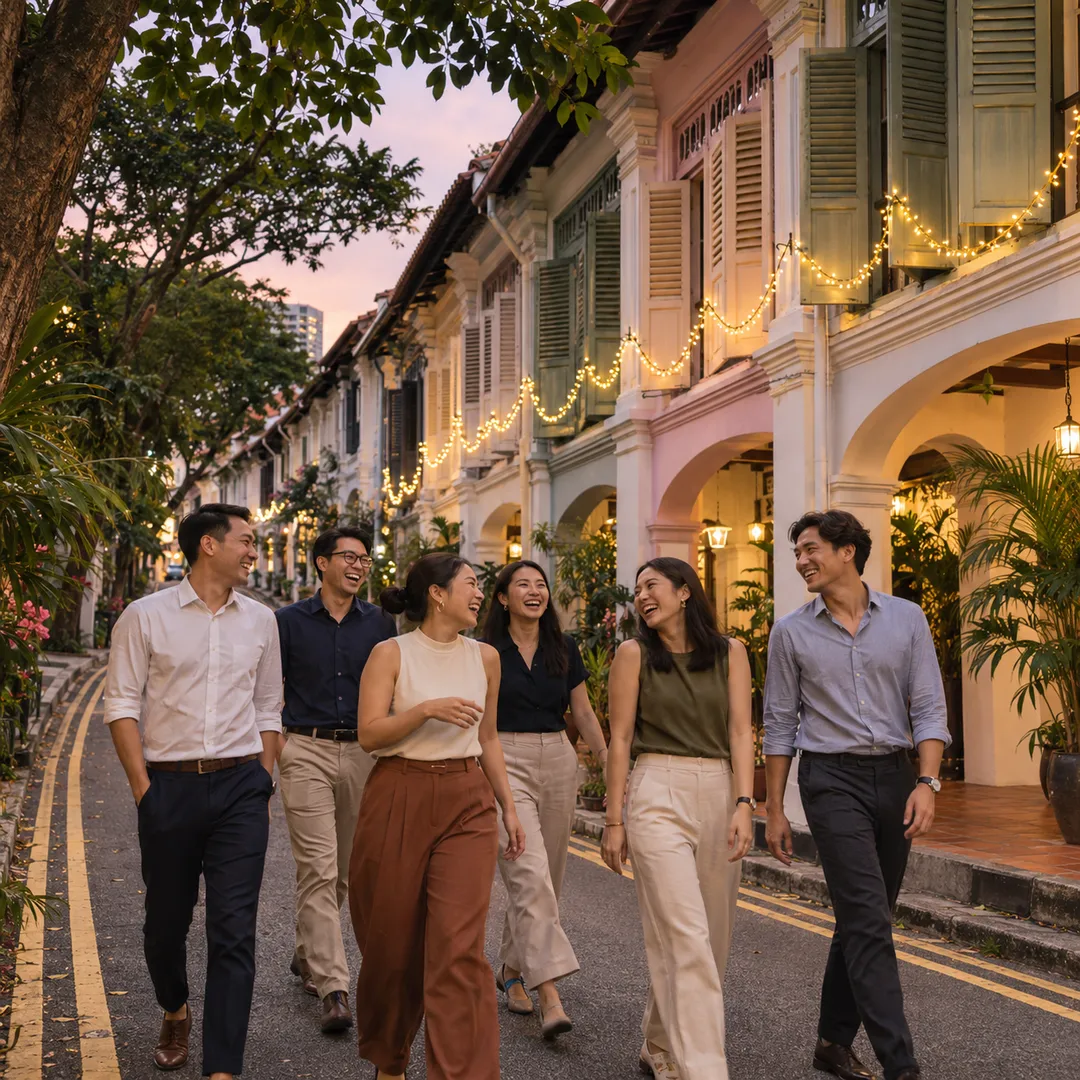 Tanjong Pagar Christmas Light Up Walk Planner for Teams
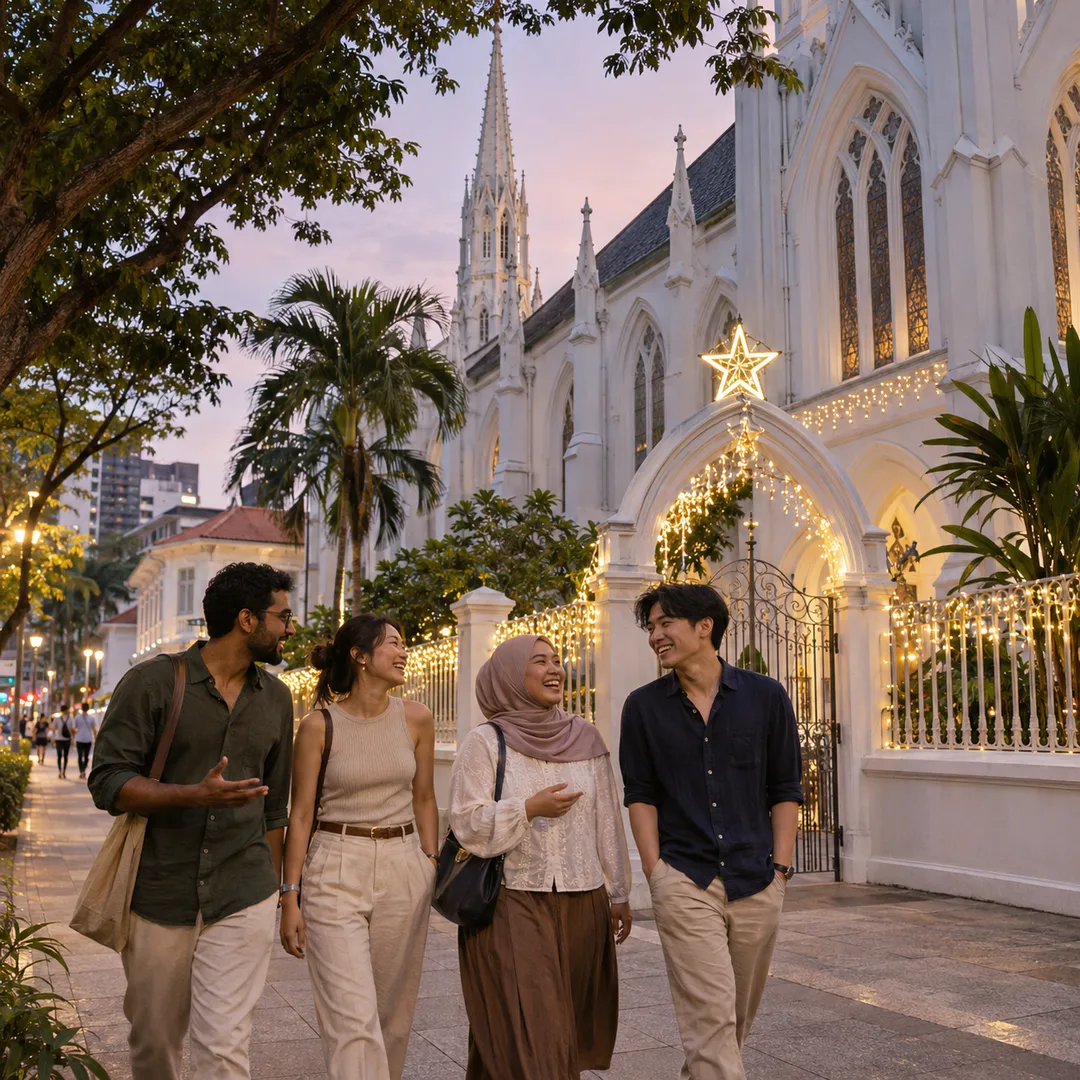 Bugis Christmas Light Up Walk Planner for Interfaith Friends