 Marina Bay Food Market Grazing Route After a Conference Day
Neighborhood Guides
Layover City Walk Planner: Tiong Bahru Art Deco Breakfast
A Tiong Bahru layover walk loops past art deco flats, a busy hawker market and quiet cafés, giving a Changi stopover one compact, very local morning.
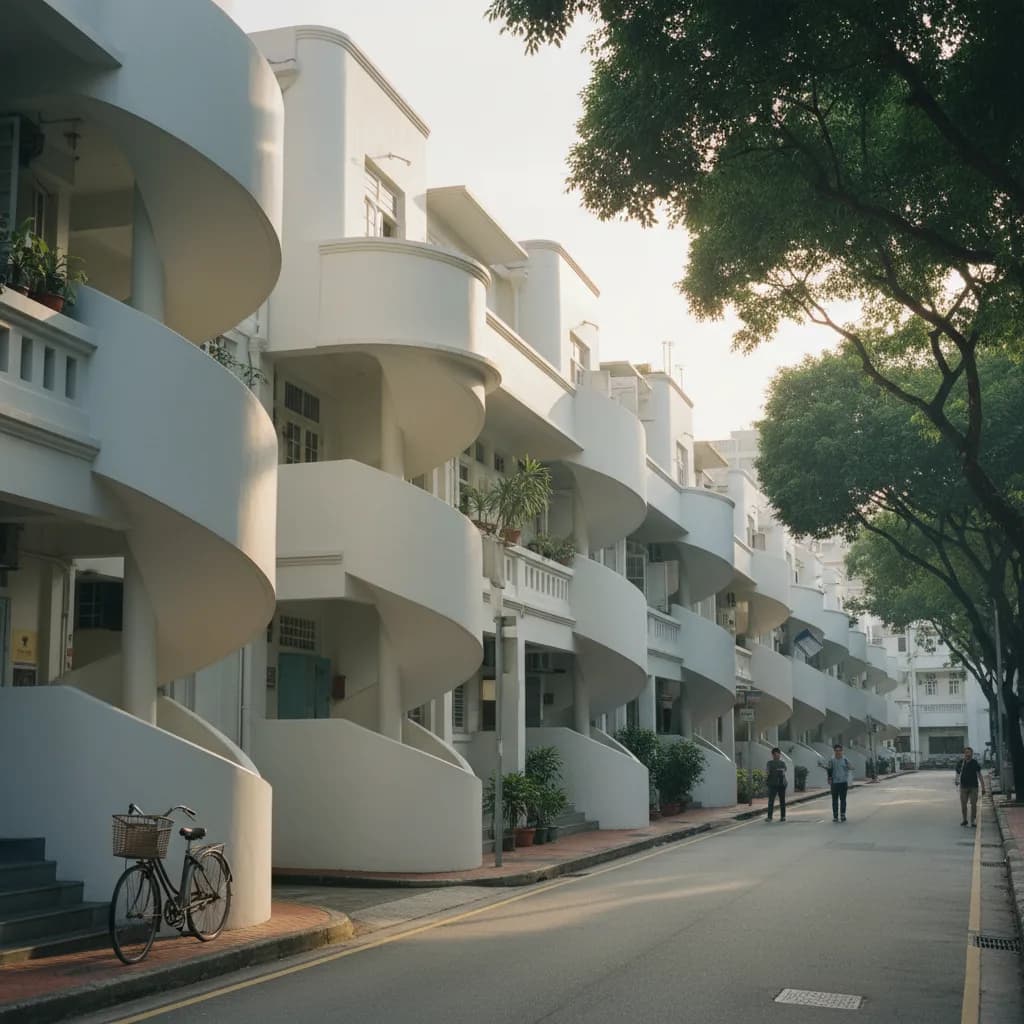
Tiong Bahru is the layover city walk planner answer for travellers who want real neighbourhood life rather than landmarks. It is one of Singapore's oldest public housing estates, a compact grid of low, curved art deco flats with spiral back staircases and rounded balconies. Between them sit a beloved hawker market, independent bookshops and a cluster of cafés. Everything lies within a few minutes of each other, so a short stopover can still feel like a proper morning in someone else's city.
A Neighbourhood Built for Short Visits
What makes Tiong Bahru special on a stopover is its scale. You could walk the whole estate in well under an hour, yet every street has something to notice: a mural on a stairwell, a bird cage hanging from a balcony, an old uncle tending potted plants outside his door. There are no queues for tickets, no entry fees and no maps to decode. You simply walk, look and eat, and that is the whole plan.
Before setting off, do the honest maths on your connection. Subtract the train ride back to Changi, the time you need for immigration and security, and a cushion for surprises. What remains is your walking window. Tiong Bahru fits tight windows better than most districts because the MRT station sits at the edge of the estate, and you are never more than a short walk from the train home.
Getting Here From the Airport
The MRT brings you close to Tiong Bahru with one or two changes, and the ride takes you across much of the island, so it doubles as a quick sightseeing tour. A taxi is faster if you are travelling together or simply too tired for transfers. Set up a contactless card or phone payment before you leave the arrivals hall, so the gantries do not slow you down on the way in or out.
Drop big bags at Changi's baggage counters. The estate's charm is in its narrow pavements and stairwells, and a rolling suitcase spoils it quickly. Carry only a small bag with your passport, water and a fan or cooling towel if you have one. The morning is the best time to come, both for the softer heat and because the market and cafés are at their liveliest before the lunch crowd thins the stalls.
Breakfast at the Hawker Market
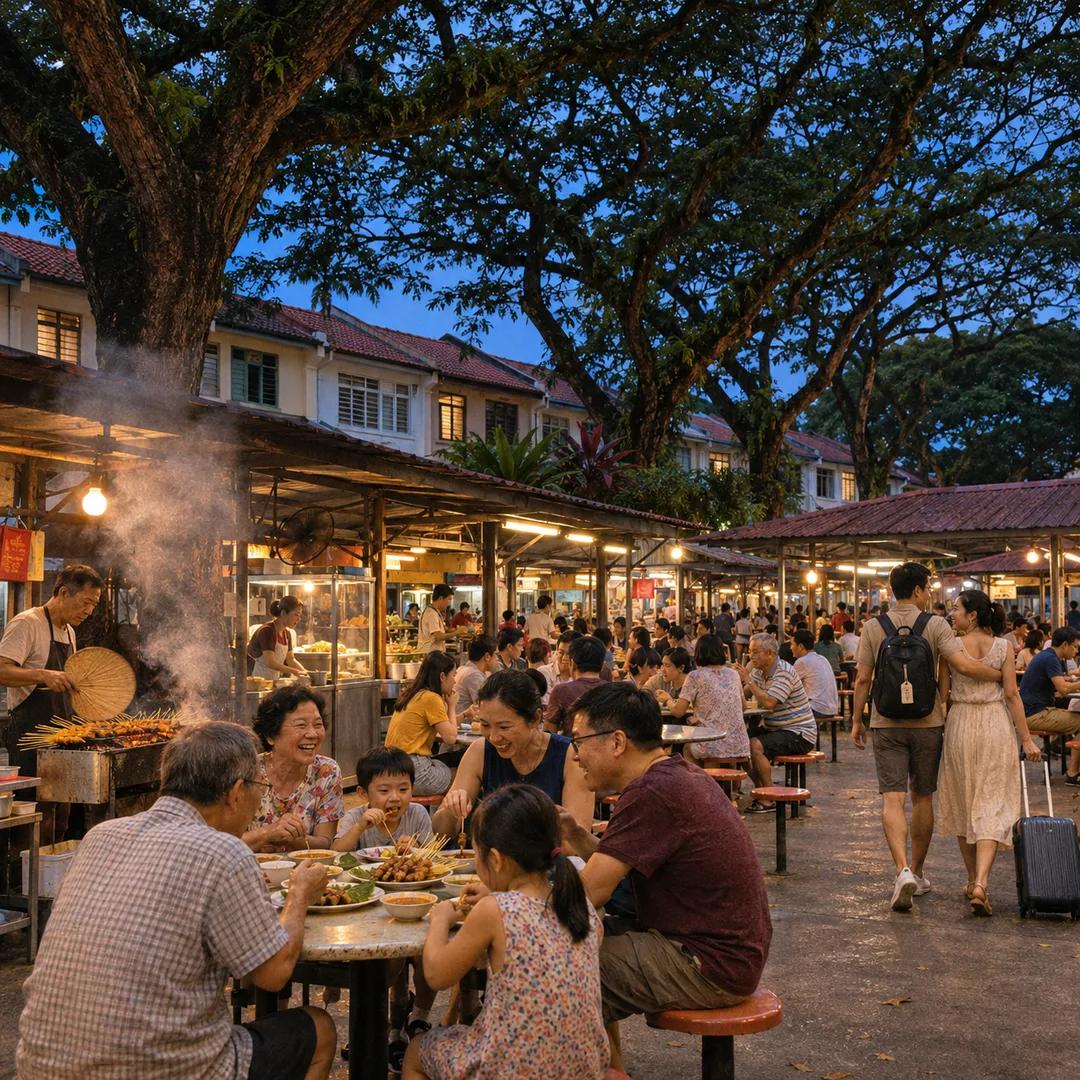
Start at the Tiong Bahru market, a multi-storey hawker centre that locals consider one of the city's essential breakfast stops. Climb to the food floor, claim a table and wander the stalls before choosing. Look for chwee kueh, soft steamed rice cakes topped with fried preserved radish, as well as lor mee, porridge or a plate of fried carrot cake. Pair it with a kopi or teh from a drinks stall and eat slowly.
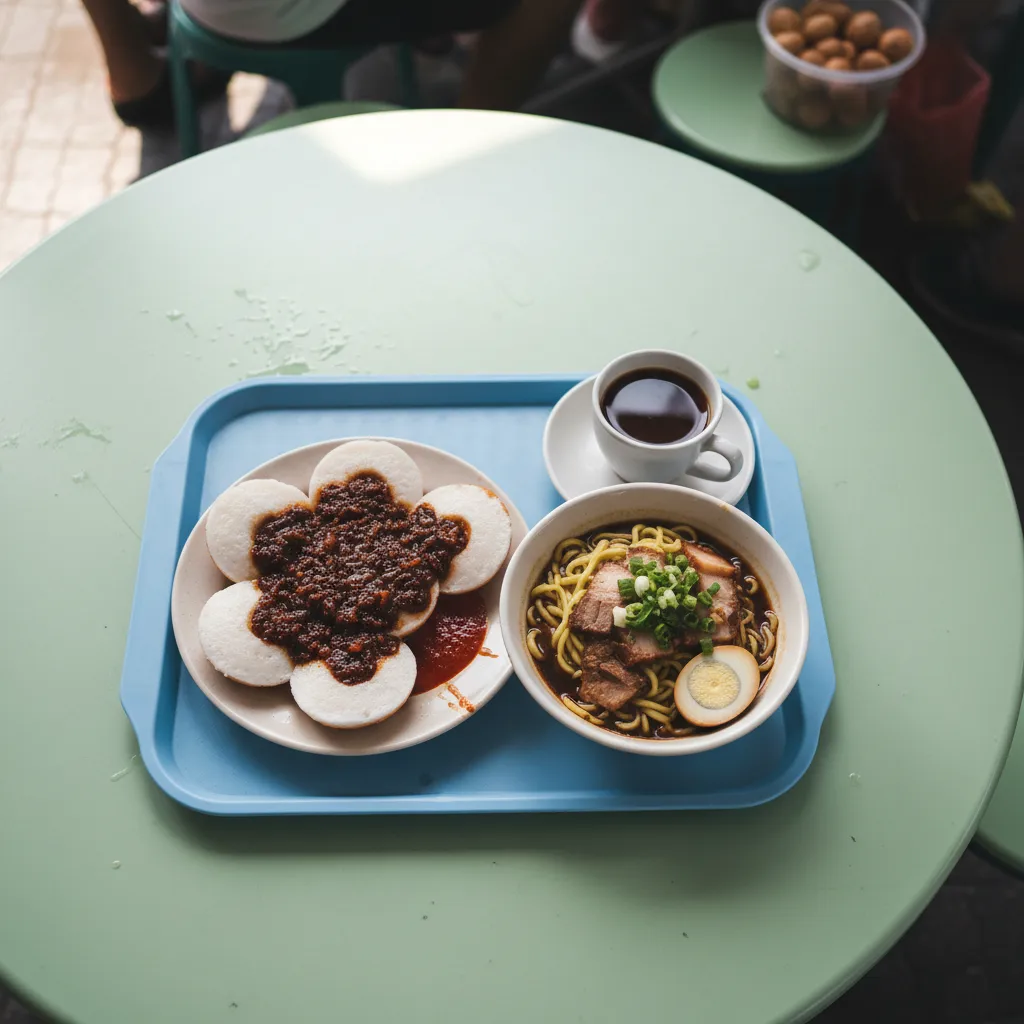
Hawker etiquette is simple but important. Locals often reserve a table by leaving a packet of tissues on it, so do not sit at a table marked that way. Return your tray to the collection points when you finish. Order with a smile and point if language is a barrier. Stallholders are busy, and some sell out of popular items before the morning is over, so if your first choice is gone, the stall next door is usually just as good.
Walking the Art Deco Blocks
After breakfast, wander the residential streets around the market. The older blocks were built before the war, and their streamlined curves, horizontal bands and porthole-like windows give the estate a gentle, nautical feel. Look for the spiral staircases at the back of the buildings, which have become one of the most photographed details in the neighbourhood. Walk the back lanes as well as the front roads, because that is where the architecture shows most clearly.
Remember that people live here. Keep your voice low, do not block doorways or stairwells, and avoid pointing cameras into windows. Many residents have lived in the estate for decades and are used to visitors, but a little courtesy goes a long way. A nod and a smile to an older resident sitting outside is often returned warmly, and those small moments are what make the walk memorable.
Cafés, Books and a Quiet Coffee
Tiong Bahru also has a younger side. Independent cafés, bakeries and design shops occupy the ground floors of several blocks, and a small bookshop draws browsers who come for the curated shelves and the calm. This is where creative workers, young families and weekend walkers drift through. It is a good place to sit for half an hour, rest your feet and watch the estate go about its business.
Be choosy with your time. Some bakeries attract queues that can swallow a big chunk of a short layover. Skip any line that looks longer than ten minutes. You will find good coffee and pastries elsewhere in the estate without waiting. The goal on a stopover is calm, not completeness, and a quiet seat with a view of the curved blocks is worth more than a trendy croissant.
Weather and a Simple Backup Plan
Tiong Bahru has limited covered walkways compared with the city centre, so watch the sky. When rain starts, retreat to the market's sheltered floors or the nearest café and wait it out. Storms in Singapore are often short and intense. Carry a small umbrella, which also helps against the strong sun once the clouds clear, and wear shoes that cope with damp paving.
If you run out of energy, finish at the market with a cold drink and then walk straight to the MRT. There is no need to push on to Chinatown or the river. Those are tempting because they look close on a map, yet a rushed extension tends to cost more than it gives. A good breakfast, an hour of strolling and a calm ride back is a perfectly satisfying stopover.
Practical Notes for Tiong Bahru
Set a departure alarm and stick to it. Carry plenty of water and drink it often, because the morning heat builds quickly. Most cafés take cards, but hawker stalls still prefer cash or local payment apps, so keep some small notes on you. Dress lightly, wear sunscreen and bring a light layer for the chilly airport and the air-conditioned train.
Walk a loop that starts and ends near the MRT station, so the return journey is effortless. Keep your camera discreet around residents, clear your own table at the market and avoid eating on the train. These small habits will make you feel less like a tourist and more like a visitor who has simply dropped in for breakfast.
A Helping Hand From Karpo
For a quick decision on the next stop, open the Karpo APP and describe the moment, whether that is a quiet café near the art deco blocks, a hawker breakfast that suits a short window or a bookshop where you can rest your feet for a while. Karpo suggests nearby places that fit, so you spend more of the stopover in the estate itself. If something about a place must be certain, ask the shop yourself.
Ask Karpo for more information.
Keep reading
- Marina Bay Food Market Grazing Route After a Conference Day
 River Valley Food Market Grazing Route With Young Kids
 Serangoon Food Market Grazing Route for a Homecoming Weekend