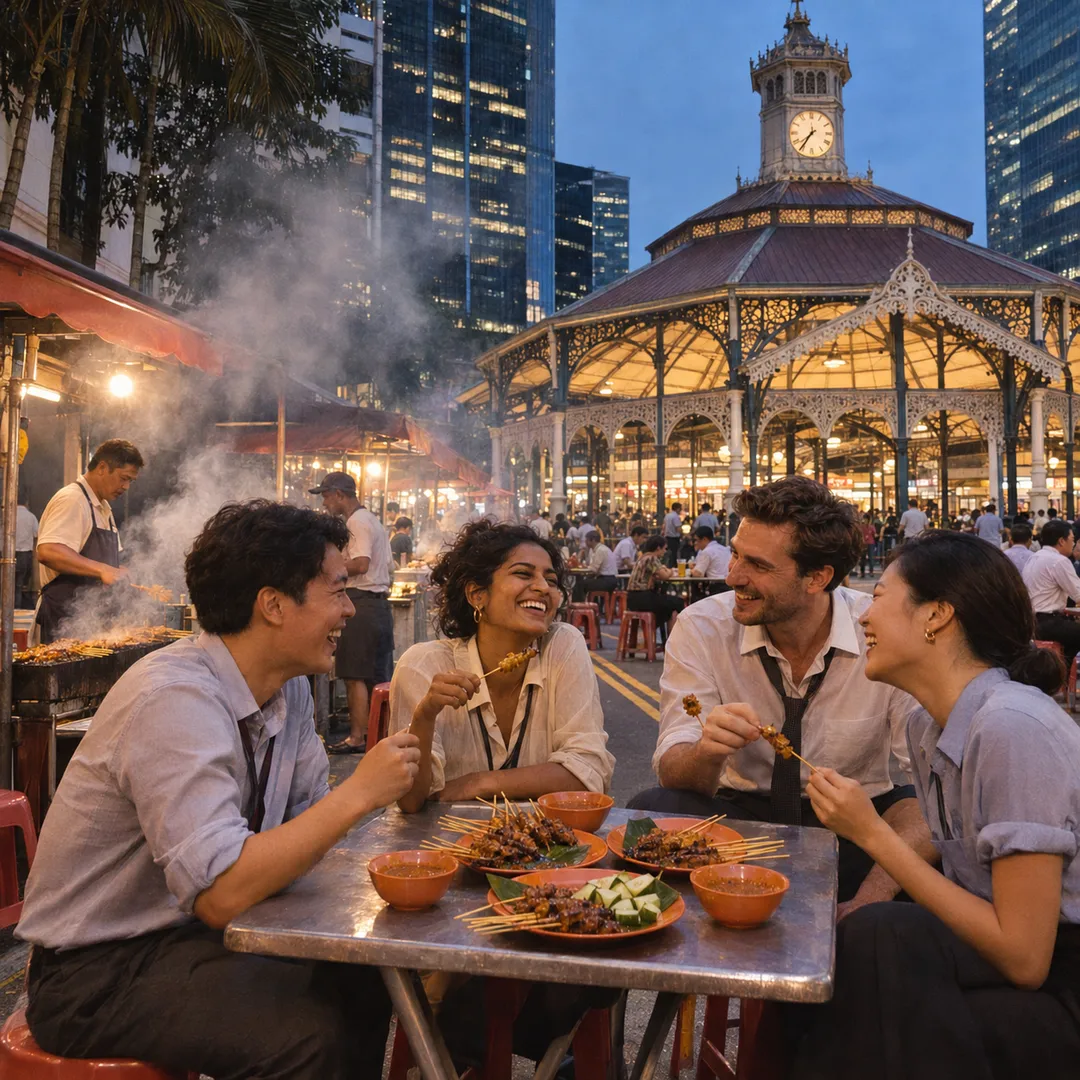
 Marina Bay Food Market Grazing Route After a Conference Day
Neighborhood Guides

Layover City Walk Planner: Katong Peranakan Houses and Laksa
A Katong layover walk pairs the pastel Peranakan terraces of Koon Seng Road with laksa and kueh, and its short ride from Changi suits a tighter connection.
Katong is the smartest layover city walk planner choice when your connection is tight, because it sits on the east side of Singapore, much closer to Changi than the downtown core. The district is the historic home of the Peranakan community, and its streets still show it: pastel terrace houses with ornate tiles, family-run bakeries selling kueh, and coffee shops famous for a rich coconut laksa. You get a full, flavourful neighbourhood without spending half your stopover on a train.
The East Coast Advantage
Most stopover guides send travellers straight to Marina Bay, yet the ride there and back eats a surprising share of a short window. Katong flips that equation. Being in the east, it shortens the journey in both directions and gives you more time on your feet. For a jet-lagged traveller who wants to see something real rather than something famous, that trade is hard to beat.
Start by working out your actual window. Subtract the ride back, the time for luggage and immigration, and a buffer for the unexpected. In Katong even a modest result is useful, because the main sights sit along one long road with side streets branching off. You can walk a short stretch and turn back, or keep going toward the sea if the clock allows.
Getting There From Changi
A taxi or ride-hail is the simplest option from the airport and often the quickest, especially for two or more people. Buses also run along the main roads of the east, and the newer MRT stations along the eastern line bring you close to the heritage streets. Whichever you choose, set up tap payments before leaving the terminal so you do not lose time on the way back.
Store bulky luggage at Changi's baggage counters. Katong's pavements are pleasant but narrow in places, and a suitcase makes the side streets hard work. Carry a small bag with your passport, charger, water and sunscreen. A light layer helps for the cool air-conditioning in cafés and on public transport, and a compact umbrella covers both rain and the strong midday sun.
The Painted Terraces of Koon Seng Road
The most photographed stretch is Koon Seng Road, where rows of Peranakan terrace houses glow in mint, pink, yellow and blue. Look closely at the details: ceramic tiles set into the facades, plaster flourishes around the windows, carved pintu pagar half doors, and five-foot ways decorated with patterned floor tiles. These were the homes of Straits Chinese families whose blended Chinese and Malay culture shaped Singapore's food, fashion and design.
Treat the houses with care, because they are private homes. Photograph them from the road, keep off the doorsteps and do not lean on gates. Early morning gives you the softest light and the fewest visitors. Walk the length of the row on the opposite side of the street to see the whole sequence of colours, then cross over to study the tiles up close. A few minutes here feels like stepping into a picture book.
A Bowl of Katong Laksa
No visit is complete without laksa. The Katong version is famous for its thick, orange coconut curry broth and its short, cut rice noodles, which are eaten with a spoon alone rather than chopsticks. Toppings usually include prawns, fishcake and cockles, with a sprinkle of chopped laksa leaf that gives the dish its herbal fragrance. Several coffee shops along the main road claim to serve the original, and locals argue happily about which is best.

Order a regular bowl rather than a large one if you want to sample more food later. Ask for no cockles if you prefer, since locals often do. The broth is rich, so pair it with an iced drink. Queues at the best-known shops can build at lunchtime. If a line looks long, try another coffee shop nearby. The laksa is excellent across the area, and the time saved is worth more than a famous name.
Kueh, Bakeries and Peranakan Craft
After laksa, wander into one of the long-established Peranakan shops and bakeries. They sell kueh, the colourful steamed and baked cakes made with coconut, pandan and palm sugar, along with pineapple tarts and other treats. Some shops also stock beaded slippers, kebaya blouses and porcelain decorated in the distinctive Peranakan palette of pinks and greens. Browsing them gives you a quick, tactile sense of the culture behind the houses.
Kueh travels reasonably well in a box, making it a sweet souvenir for your onward flight. Choose firmer varieties that will not spoil in the heat, and keep them in your daypack rather than a checked bag. Shopkeepers are often happy to explain the different cakes and their ingredients. Ask which is their personal favourite. That simple question tends to get the best recommendation and a short story as well.
When the Weather or Your Energy Turns
Katong has fewer covered walkways than the city centre, so a sudden storm means ducking into a coffee shop or bakery and waiting. That is no hardship here, because sitting with a drink and a plate of kueh while the rain pounds the street is a pleasant way to pass twenty minutes. Showers usually move on quickly, leaving the terraces looking freshly washed.
If fatigue hits, cut the walk short after laksa and head back to the airport early. Katong's closeness to Changi is your safety net. Skip the long walk down to East Coast Park on a tight window. The seafront is lovely, but it is further than it looks on a map, and the route back is exposed to the sun.
Practical Notes for Katong
Set a departure alarm and leave on time. Traffic in the east can build at peak hours, so add a little extra to your buffer if you are taking a taxi. Drink plenty of water and wear breathable clothes and comfortable shoes. Keep cash for coffee shops and small bakeries, which do not always take cards, and a card or phone for everything else.
Walk a simple route along the main road with one or two detours into side streets, rather than zigzagging across the whole district. Respect residents, keep noise down near the houses and avoid eating on public transport. Katong rewards slow attention. One street of terraces, one good bowl of laksa and one bakery stop add up to a stopover you will remember.
How Karpo Can Help on the Go
When you want the next stop, open the Karpo APP and describe your mood, perhaps a laksa spot without a big queue, a quiet bakery near Koon Seng Road or a shaded café to rest before the airport. Karpo suggests nearby places that suit what you describe, so the short ride from Changi turns into more time on Katong's streets. Message or call the shop itself if a plan hinges on something specific.
Ask Karpo for more information.
Keep reading
- Marina Bay Food Market Grazing Route After a Conference Day
 River Valley Food Market Grazing Route With Young Kids
 Serangoon Food Market Grazing Route for a Homecoming Weekend