 Kovan Hainanese Curry Rice Lunch Picker: Heartland Plates
Restaurants
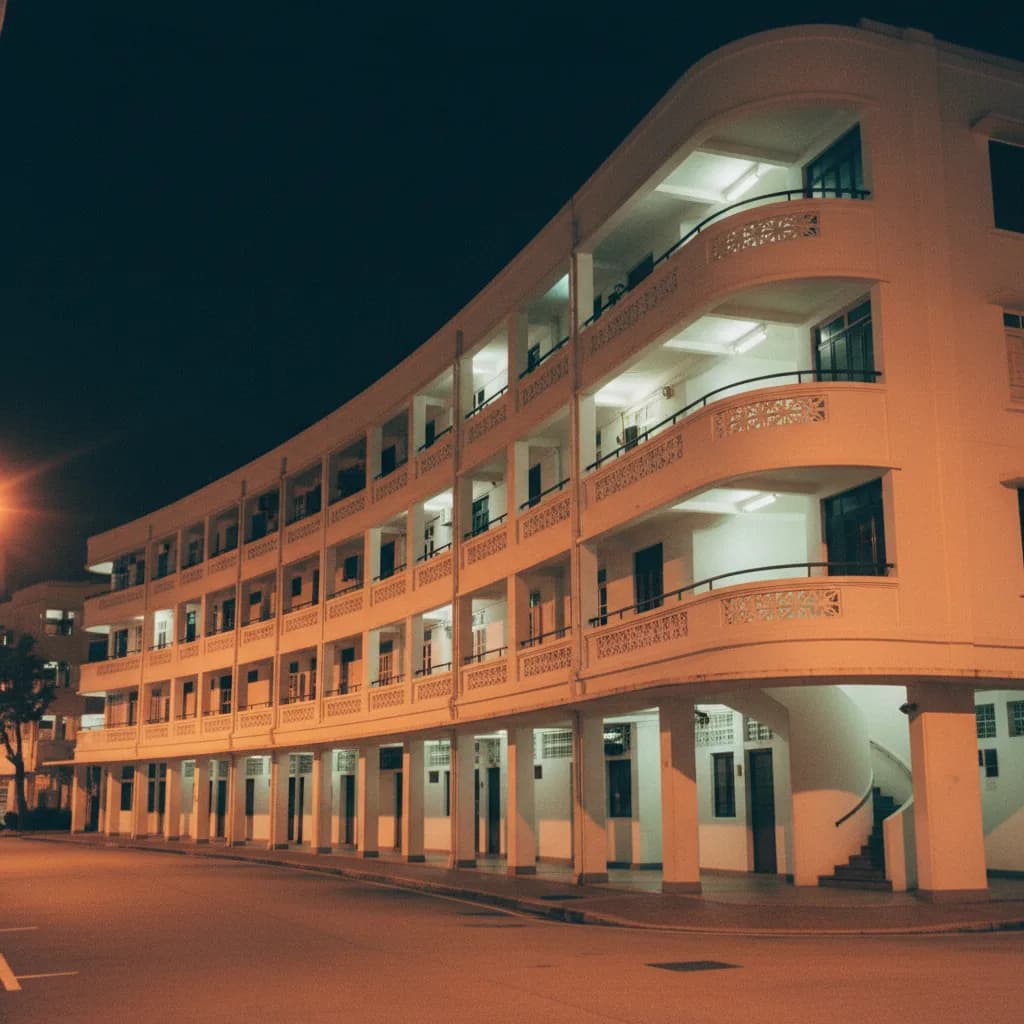
Tiong Bahru Late Night Eats Finder: Supper Past the Flats
Tiong Bahru winds down early, so late food means heading to the estate's edges toward Outram and Chinatown. Here is how to plan supper without wandering.
Tiong Bahru has a reputation built almost entirely on daylight. People come for the curved white flats, the spiral back staircases, the bakeries with queues and the bookshop row on Yong Siak Street, and most of them leave before the street lamps come on. That makes the estate a strange place to look for supper. Arrive hungry after a late film or a long shift and you will find shutters down, bicycles chained to railings and residents walking dogs past dark kopitiam doors. The good news is that Tiong Bahru sits right on the seam between quieter housing estates and some of the busiest supper corridors in the city, so a short, well-chosen walk usually solves the problem.
Why Tiong Bahru Goes Quiet So Early
The estate was built as public housing, and it still behaves like a residential neighbourhood first and a food destination second. Many of the stalls and cafés that made it famous are run by small teams who start before sunrise, which means their day ends when most visitors are only thinking about dinner. The market building at the centre of the estate follows the same rhythm. By the time the evening crowd thins out, the hawker floor upstairs is being hosed down and stools are stacked on tables. Treat that as the character of the place rather than a flaw, and plan around it.
This matters for anyone typing a late night eats finder query into their phone while standing on Seng Poh Road. The map will happily show you dozens of pins nearby, but many of those pins belong to places built around breakfast and brunch. A smarter approach is to decide first which direction you want to walk, toward the hospital side, toward Chinatown or toward the river, and only then pick a place to eat. Direction first, venue second, keeps you from zigzagging between closed doors.
Reading the Edges of the Estate
Think of Tiong Bahru as a quiet core wrapped by busier edges. The core is the grid of low flats around the market, Eng Hoon Street and the small lanes where the heritage trail markers sit. The edges are the main roads that bound it, where traffic, bus stops and larger buildings keep some life going after dark. Supper options cluster along those edges and just beyond them, especially where the estate meets the Outram and Chinatown side. Walking out of the core rather than deeper into it is almost always the right instinct at night.
A useful habit is to look for light rather than signs. Late in the evening, an open coffee shop or zi char kitchen announces itself with fluorescent tubes, plastic chairs spilling onto the walkway and the sound of a wok being scraped. Dark facades with tasteful lettering usually mean a daytime café. If you can see several groups of people still eating at round tables and hear orders being shouted toward the kitchen, you have found the kind of place that keeps a neighbourhood fed after the brunch crowd has gone home.
What Kind of Supper Fits the Mood
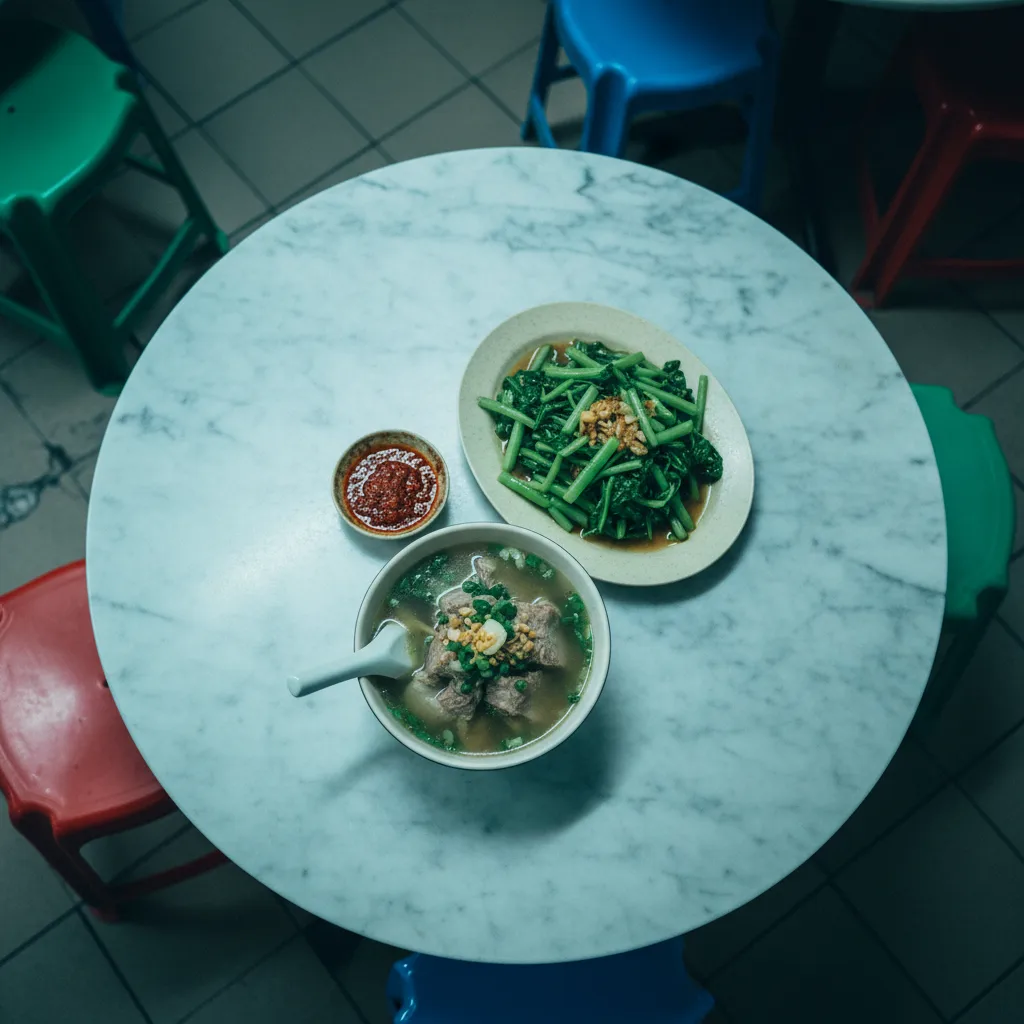
Singapore supper culture leans on a few comforting staples, and knowing what you want narrows the search fast. If you need something warm and restorative after a long day, look for a peppery pork rib soup, a claypot of rice or a simple bowl of porridge with side dishes. If you are a group coming out of a bar or a show, a zi char spread of stir-fried greens, sambal seafood and fried rice shared across the table is the classic answer. If it is just you, a plate of fried noodles from a single hawker stall is often the fastest win.
Each of those choices points you somewhere slightly different. Soup and porridge spots tend to be modest coffee shops with long-serving family owners and a small, fixed menu. Zi char kitchens need space for big tables, so they favour corner units and open walkways along the main roads. Single hawker stalls live in food centres and coffee shops scattered across the wider district. When you tell Karpo what you are craving and that you are starting from Tiong Bahru, you can narrow the list to places that match the dish, not just the distance.
A Simple Walk From the Flats to Supper
Start at the market, then walk past the curved corner blocks and the quiet bird corner area, where older residents once hung their songbird cages. Let the estate do what it does best at night, which is to be calm, lamplit and slightly cinematic. The Art Deco lines of the flats look sharper under street lights than they do in the midday glare, and the empty five-foot ways make it easy to take photographs without crowds. Give yourself ten unhurried minutes here before you get serious about eating.
From there, head out toward one of the main roads at the edge of the estate and keep your eyes open for that tell-tale fluorescent glow. If you are drifting toward Chinatown, the density of supper options rises quickly the closer you get to the shophouse streets and the older food centres there. If you prefer something calmer, staying on the hospital and Outram side usually means smaller coffee shops with fewer tourists and more nurses, taxi drivers and night workers grabbing a meal between shifts. Both directions give you a very different supper story.
How to Order Like a Regular
Supper spots in this part of Singapore reward people who keep things simple. At a coffee shop, find a table first and note its number, because many stalls will ask where you are sitting so they can bring the food over. Order drinks from the drinks stall separately, often from an uncle who will come to the table himself. At a zi char kitchen, let one person in your group take charge, ask what the kitchen is known for that night and order a few shared dishes rather than one plate each. That rhythm keeps the table lively and the bill sensible.
Avoid arriving with a giant group and expecting everything to happen at once. Kitchens at this hour often run with a reduced team, and dishes land as they are ready rather than in courses. Treat that as part of the fun and eat as plates arrive. If you are unsure about spice levels, ask for sambal on the side. Bring a packet of tissues, since chope culture still exists and many stalls do not hand out napkins. Small gestures like returning trays or clearing your own cups are noticed and appreciated by staff working late.
Using Karpo to Plan Your Tiong Bahru Supper
The hardest part of eating late around Tiong Bahru is not finding food. It is avoiding the frustration of walking to a pin that turns out to be a daytime café with its shutters down. Karpo APP helps here by letting you describe what you want, such as a warm soup within a short walk of the estate or a zi char place that can handle a group of six, and then suggesting nearby options to look at. You can compare a few candidates side by side before you leave the flats, rather than gambling on whichever pin is closest.
Before you set out, reach out to the place directly if you are planning anything bigger than a casual meal, especially for larger groups or special occasions. Otherwise, keep the plan loose and let the walk out of the estate be part of the evening. Tiong Bahru at night is one of the most peaceful corners of central Singapore, and pairing a slow stroll through its lamplit blocks with a hearty supper just beyond its edges turns a hungry search into a small, memorable ritual you will want to repeat.
Ask Karpo for more information.
Keep reading
- Kovan Hainanese Curry Rice Lunch Picker: Heartland Plates
 Tampines Mee Rebus Breakfast Picker: Round Market Bowls
 Jurong West Mee Rebus Breakfast Picker: Boon Lay Bowls