 Tampines Board Game Cafe Night Picker for School Holidays
Bars & Nights Out
Holiday Office Party Venue Picker: Chinatown Banquet Tables
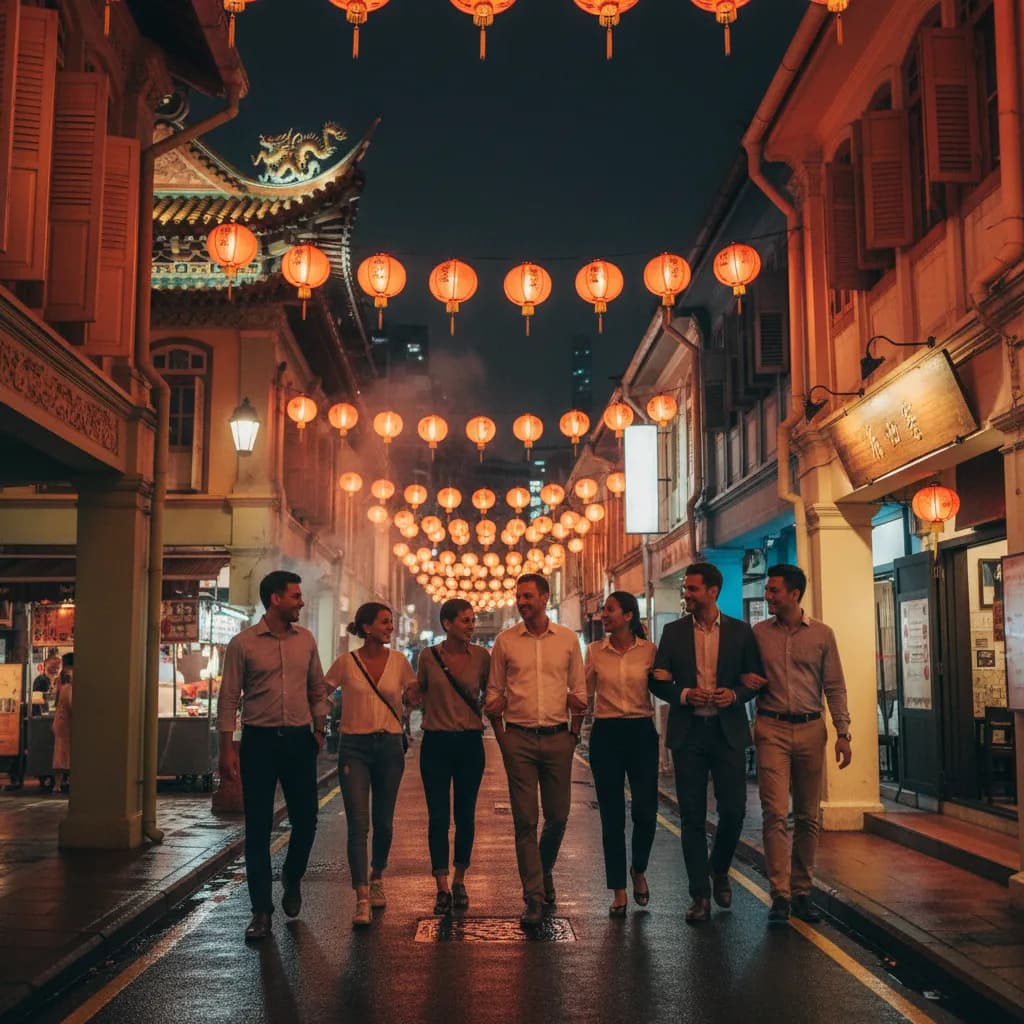
Chinatown suits an office party built on banquet round tables, in December or as a lo hei dinner after New Year. Here is how to pick the date, room and dishes.
In many Singapore companies the year-end question is not only where to hold the party but when. Some teams celebrate in December alongside the rest of the world. Others wait for the Lunar New Year season and hold a company dinner built around lo hei, the noisy, joyful ritual of tossing a raw fish salad as high as possible for good fortune. Chinatown handles both versions brilliantly. The district's streets of heritage shophouses, temples and red lanterns come alive in the festive months, and its Chinese restaurants have been feeding big family celebrations and company dinners for generations. Round tables of ten, a stream of shared dishes and a room that can hold a whole department are exactly what the occasion needs. This picker helps you decide on timing, choose the right kind of banquet room, plan the menu, and give the night a little ceremony without making it stiff.
December Party or New Year Dinner
Start by looking at the calendar and the people. A December dinner fits teams with many international colleagues who will be travelling over Christmas, and it rounds off the working year neatly. The downside is that December is the busiest month for venues, so the best rooms go quickly and you may need to choose a weeknight.
A Lunar New Year dinner, held in the weeks after the holiday, has a different charm. The lanterns and decorations are at their peak, the lo hei toss gives the evening a ready-made highlight, and the dinner doubles as a way to welcome the new year together. Many teams find January and February calmer for scheduling too, once the December rush is over. The trade-off is that colleagues who celebrate with family may have fewer free evenings during the festival itself, so aim for the days after the main holiday.
Choosing a Banquet Room
Chinatown's Chinese restaurants come in a few broad styles. Large traditional dining halls can seat several hundred and are used to company dinners with a stage, a microphone and a lucky draw. Mid-sized restaurants often have private rooms that fit two to five round tables, which is ideal for a department of twenty to fifty. Smaller family places may give you a single private room for one big table.
Visit or call ahead and ask how the room is laid out. Round tables of ten are the standard, so work out your headcount in multiples of ten and plan the seating. If you have a mix of teams that rarely talk, assign tables on purpose so people meet new colleagues. If you want speeches or awards, check whether the room has a small stage or at least a clear spot at the front where everyone can see.
Planning the Menu
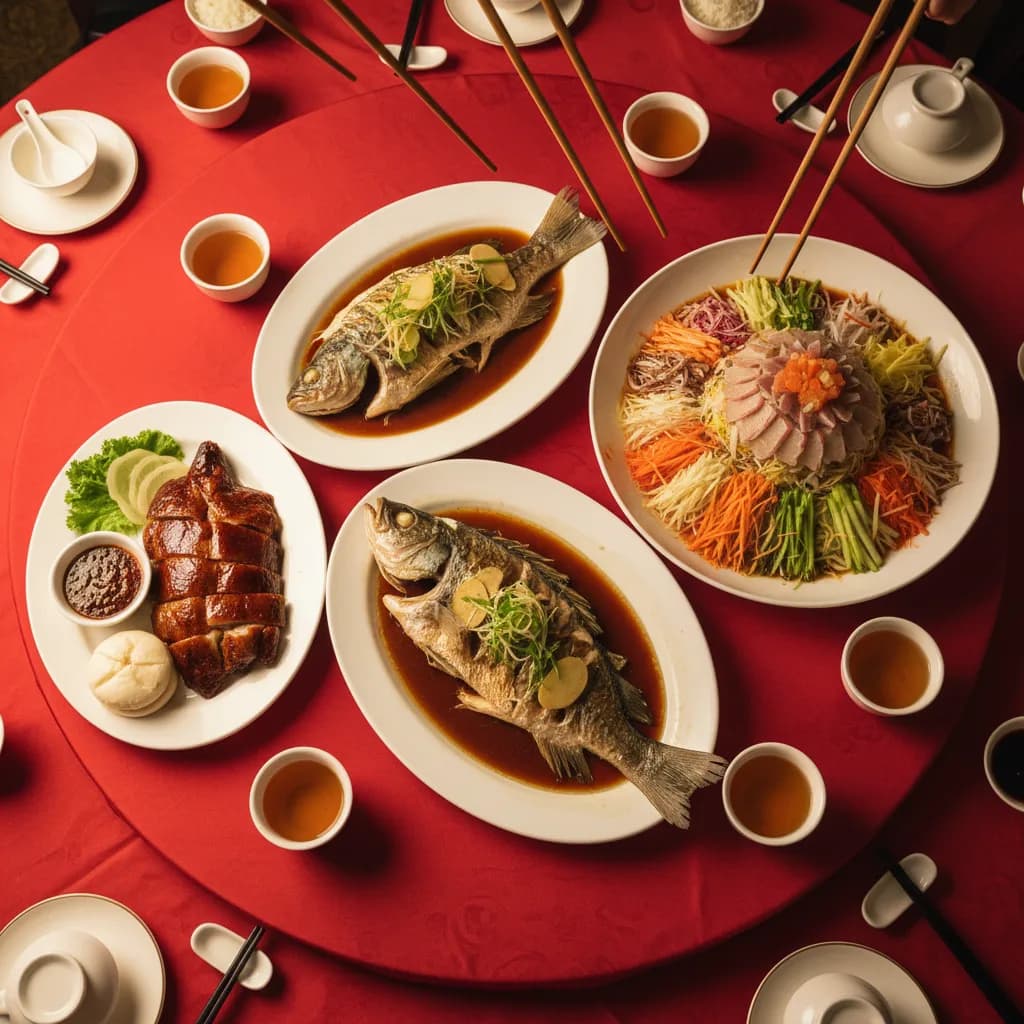
Banquet menus are usually set by table and arrive in courses, which takes most of the work off the organiser. A typical spread includes a cold platter to start, a soup, a whole steamed fish, a roast meat such as duck or pork, a prawn dish, a vegetable dish, a noodle or rice course for longevity and a sweet finish. Talk to the restaurant about dietary needs early. A vegetarian table, or a few substituted dishes for colleagues who avoid pork or beef, is easy to arrange with notice.
For a Lunar New Year dinner, the yusheng is the centrepiece. The server adds each ingredient with a blessing, then the whole table stands, chopsticks raised, and tosses the salad while shouting good wishes. The higher the toss, the better the luck, so encourage the team to be loud. Even colleagues who have never done it before join in after the first few seconds. Take a photo or a short video, because it is often the defining moment of the night.
For a December version, ask whether the kitchen can add a festive touch, perhaps a special roast or a seasonal dessert, so the meal still feels like a celebration rather than a standard dinner.
Adding a Little Ceremony
Chinese banquets lend themselves to small rituals. A toast from the team leader at the start, a walk around the tables during the meal, and a few words of thanks before dessert create a rhythm. If your company gives red packets or small gifts, hand them out in person rather than leaving them on the table, as it makes the gesture feel warmer.
A lucky draw is popular at larger company dinners and gives the evening a fun moment. Keep the prizes practical and varied, and draw them in batches between courses so the momentum stays up.
Before and After the Meal
Chinatown is a great neighbourhood to explore around a dinner. Suggest that the team meets a little earlier and walks through the lantern-lit streets, past the temples and shophouses, before heading to the restaurant together. After dinner, those who want to keep going can find bars on the nearby streets toward Club Street and Ann Siang Hill, or simply stroll and enjoy the decorations.
Remind colleagues that temples are places of worship, so if the walking route passes one, keep voices low and follow any signs about dress and photography.
Questions to Ask the Restaurant
Ask whether the private room is exclusive, how many tables it holds, and whether there is a minimum spend or a fixed price per table. Check what the set menu includes, whether drinks are part of a package, and whether you can bring your own wine or a cake. Ask about audio equipment for speeches, whether you can decorate the room, and how long you can keep it. For company dinners, sort out invoicing and any deposit early with the restaurant's events contact.
Getting There and Getting Home
Chinatown has a busy MRT station and is a short ride from most of the CBD, so many teams can travel together after work. Share the exact restaurant name and entrance in the invite, since several restaurants can sit in the same building or mall. At the end of the night, the main roads are the easiest places for ride-hail pickups.
Shortlisting Rooms With Karpo APP
Open Karpo APP and describe the dinner: forty people, four round tables, Chinatown, a lo hei dinner in late January, one vegetarian table. Karpo can suggest Chinese restaurants and private rooms in the area that suit the plan, plus bars nearby for an after-dinner drink. Compare a few options, share them with the planning committee, and then talk to the restaurant you choose to settle the menu, the tables and the date.
Ask Karpo for more information.
Keep reading
- Tampines Board Game Cafe Night Picker for School Holidays
 Dhoby Ghaut Board Game Cafe Night Picker for a Second Date
 Chinatown Board Game Cafe Night Picker for Three Generations