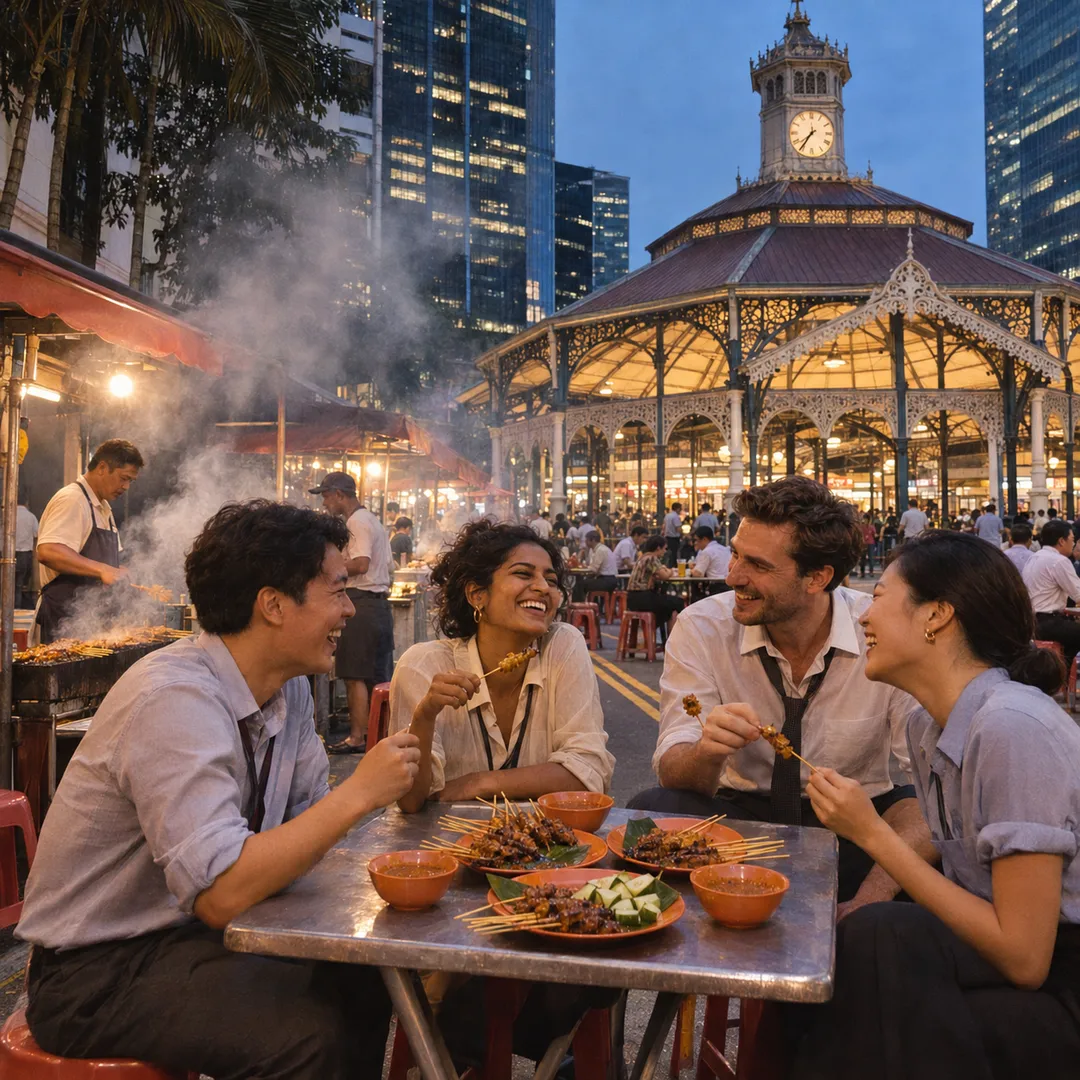
 Marina Bay Food Market Grazing Route After a Conference Day
Neighborhood Guides
Telok Ayer Historic Covered Passage Walk: Heritage Corridors
Trace a historic covered passage walk along Telok Ayer in Singapore, connecting nineteenth-century coastal five-foot ways, temple courts, and clan paths.
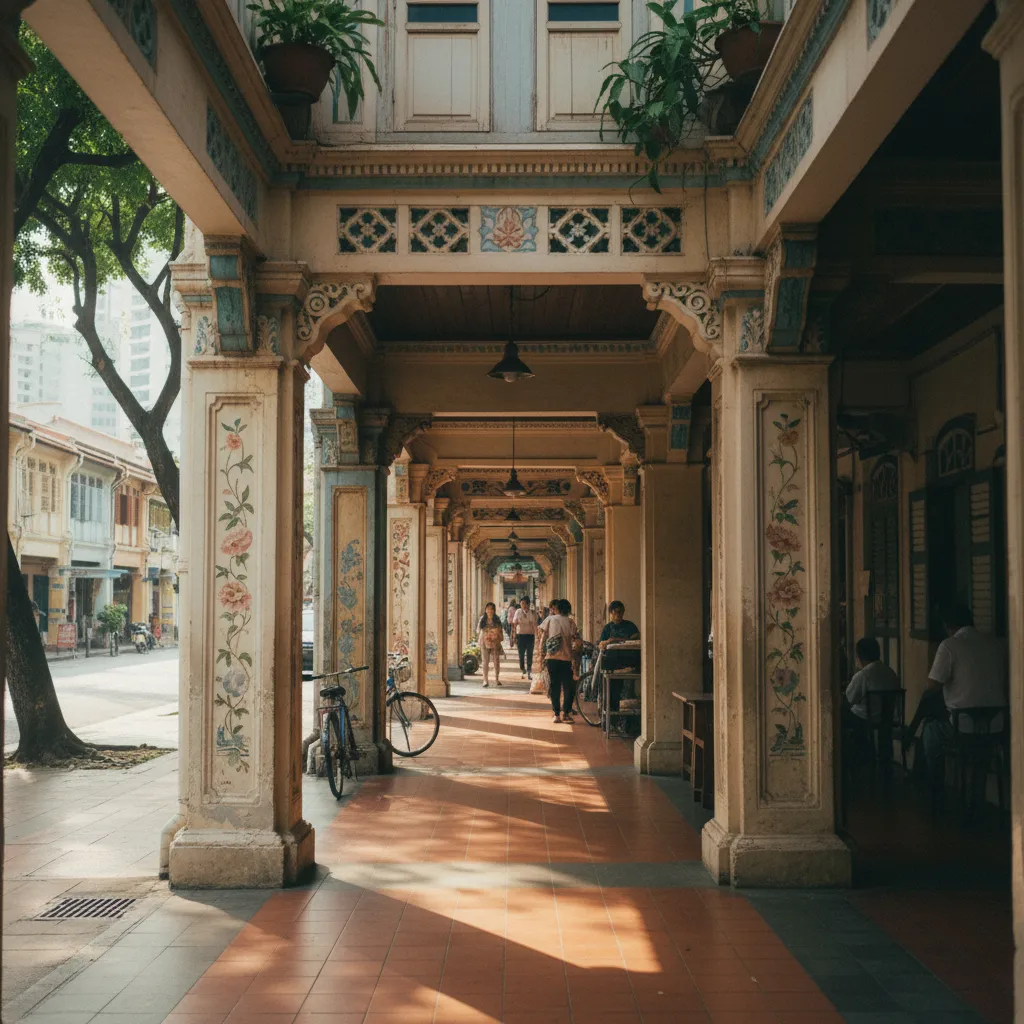
Telok Ayer represents the historic cradle of immigrant Singapore, where nineteenth-century Chinese, Indian, and Malay settlers first landed on the island's southern shoreline. Embarking on a historic covered passage walk along Telok Ayer Street and Amoy Street connects continuous shophouse five-foot ways with monumental Chinese temple courtyards and Islamic shrine colonnades. Supported by historical wayfinding on the Karpo APP, urban walkers can trace Singapore's former coastal boundary beneath cool masonry arcades, experiencing an unbroken pedestrian sanctuary that shields travelers from intense equatorial humidity.
The Coastal Evolution of Telok Ayer's Shaded Corridors
Before extensive land reclamation projects began in the 1880s, the western side of Telok Ayer Street sat directly on the shoreline of the Malacca Strait, with boats unloading passengers and cargo onto sandy banks. The shophouses erected along this historic coast were mandated to incorporate continuous five-foot ways, creating covered pedestrian loggias where maritime traders, coolies, and clan elders conducted commercial negotiations. Today, walking beneath these sheltered colonnades provides an intimate journey through the architectural adaptations that transformed a frontier trading beach into a thriving commercial metropolis.
The shophouses along Telok Ayer and Amoy Street display the refined craftsmanship of the Transitional and Late Shophouse styles, featuring ornate plaster relief carvings, French louvered windows, and heavy timber support beams. Walking along the continuous five-foot ways reveals beautifully preserved encaustic floor tiles, carved granite pillar bases, and recessed entryways designed according to ancient feng shui principles. These shaded corridors offered cool shelter from tropical squalls, allowing business transactions to proceed uninterrupted by monsoon storms. Maritime trading records from early colonial Singapore confirm that Telok Ayer Street functioned as the principal commercial threshold connecting sea vessels directly with urban shophouse merchants.
Sacred Temple Courtyards and Covered Loggias
A defining architectural highlight of this walking route is the Thian Hock Keng Temple, constructed in 1840 by Hokkien immigrants to give thanks to Ma Zu, the Goddess of the Sea, for safe ocean passage. The temple complex features traditional Southern Chinese architecture, organized around open courtyards sheltered by sweeping curved eaves, carved timber beams, and stone dragon pillars assembled without a single nail. Passing from the street-level five-foot way through the temple's covered gatehouse offers an immediate acoustic and spiritual retreat from urban bustle.
Just a short walk southward along the same shaded corridor stands the Nagore Dargah, a historic shrine built in 1828 by Chulia Muslims from southern India, combining classical European fluted pilasters with delicate Islamic minarets and covered street-level verandahs. Adjacent is the Al-Abrar Mosque, constructed in 1855 with Doric columns supporting shaded prayer porticos. The close physical coexistence of these diverse sacred covered spaces along a single street demonstrates Singapore's foundational tradition of religious harmony and shared civic infrastructure.

Optimal Walking Hours and District Pacing
Timing your covered walk along Telok Ayer is ideal on weekday mornings between eight and ten, when the financial district around Raffles Place awakens and the aroma of roasted coffee beans filters through quiet shophouse arcades. Early morning sunlight reflects off the golden temple roofs and illuminates intricate plaster carvings along second-story facades without overwhelming heat. Walkers can explore the quiet temple courtyards in contemplative serenity before morning prayer services commence.
Midday between twelve and two brings a dramatic influx of office professionals filling the trendy cafes, salad bars, and heritage noodle shops housed within the conserved shophouses, transforming the five-foot ways into vibrant social arteries. If seeking quiet architectural study, late afternoon between three and five provides gentle amber lighting, quieter pedestrian lanes, and comfortable temperatures under the sheltered arcades. Saturday mornings also present an exceptionally peaceful atmosphere, as commercial financial offices remain closed.
Weaving Across Amoy Street and Ann Siang Hill
Continuing eastward through the narrow covered connector alleys links Telok Ayer directly to Amoy Street and the verdant slopes of Ann Siang Hill. Amoy Street features exceptionally long, uninterrupted stretches of conserved five-foot ways lined with traditional medicine halls, bespoke tailors, and cutting-edge culinary concepts. Glancing up at the covered ceilings reveals exposed timber floor joists treated with traditional tung oil, showcasing the enduring structural honesty of nineteenth-century shophouse carpentry.
Ascending Ann Siang Hill introduces winding covered loggias that historically housed prominent Chinese clan associations and secret societies, such as the Kwong Wai Siew Peck San Theng. These hillside shophouses incorporate stepped five-foot ways that adapt gracefully to the natural topography, framed by lush tropical banyan trees and historic cast-iron streetlamps. Meandering along this elevated route provides sweeping glimpses of historic terracotta roofscapes framed against the glittering glass skyscrapers of modern downtown Singapore.
Terrain Characteristics, Tile Surfaces, and MRT Integration
Navigating the five-foot ways of Telok Ayer involves walking across diverse flooring materials, including polished cement, glazed Peranakan tiles, and traditional terracotta pavers that demand comfortable walking shoes with reliable traction. Because individual shophouse owners constructed their properties with minor height variations, walkers should maintain mindful awareness of single-step transitions between adjacent building bays. Wheelchair access is feasible along major stretches via street-level ramp cutouts.
Public transit connections are exceptionally convenient, with Telok Ayer MRT station on the Downtown line located directly beneath the central intersection of the walking route. Tanjong Pagar station and Chinatown station lie within a seven-minute walk from the western and southern boundaries, providing multi-line connectivity across the MRT network. Clean, accessible public restrooms are situated within the Telok Ayer MRT station concourse and at the adjacent Amoy Street Food Centre.
Exploring Telok Ayer's Maritime Heritage with Karpo APP
Discovering the maritime lineage of Telok Ayer is immensely rewarding when utilizing the curated historical maps on the Karpo APP. The interactive interface illustrates the historic high-water coastline, demonstrating how modern downtown streets were reclaimed from the sea over successive decades. Audio-visual markers highlight surviving granite sea-wall foundations and explain the maritime symbolism carved into temple friezes.
Moreover, the app directs pedestrians to quiet shaded courtyards and heritage teahouses tucked away from midday financial crowds. Dynamic route adjustments help walkers seamlessly link Telok Ayer with adjacent Chinatown and Marina Bay trails while maintaining continuous covered protection. Navigating these historic waterfront loggias through the Karpo APP guarantees a deeply informed and comfortable cultural walking experience.
Ask Karpo for more information.
Keep reading
- Marina Bay Food Market Grazing Route After a Conference Day
 River Valley Food Market Grazing Route With Young Kids
 Serangoon Food Market Grazing Route for a Homecoming Weekend