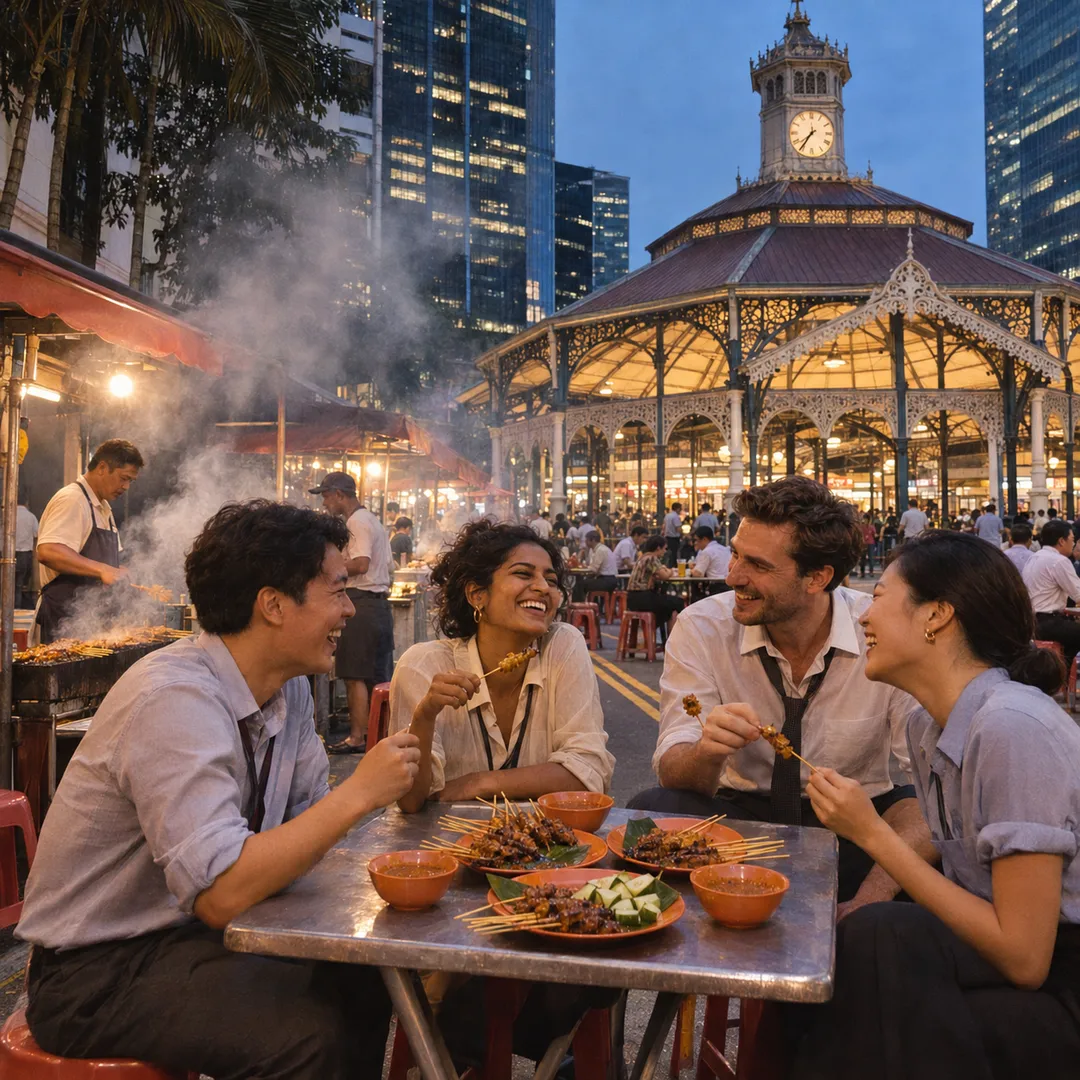
 Marina Bay Food Market Grazing Route After a Conference Day
Neighborhood Guides
Marina Bay Historic Covered Passage Walk: Waterfront Loops
Enjoy a historic covered passage walk across Marina Bay in Singapore, linking colonial Fullerton stone archways, historic godowns, and covered loops.
Marina Bay represents Singapore's dynamic twenty-first-century civic and financial centerpiece, yet its modern waterfront is directly anchored by magnificent colonial covered stone colonnades and historic godown watergates. Embarking on a historic covered passage walk around Marina Bay and the historic mouth of the Singapore River connects monumental neoclassical stone arcades, converted customs piers, and sheltered waterfront promenades. Utilizing route guidance on the Karpo APP, urban walkers can traverse centuries of maritime history in complete covered comfort, shielded from equatorial heat and tropical rainstorms.
The Monumental Stone Colonnades of The Fullerton Hotel
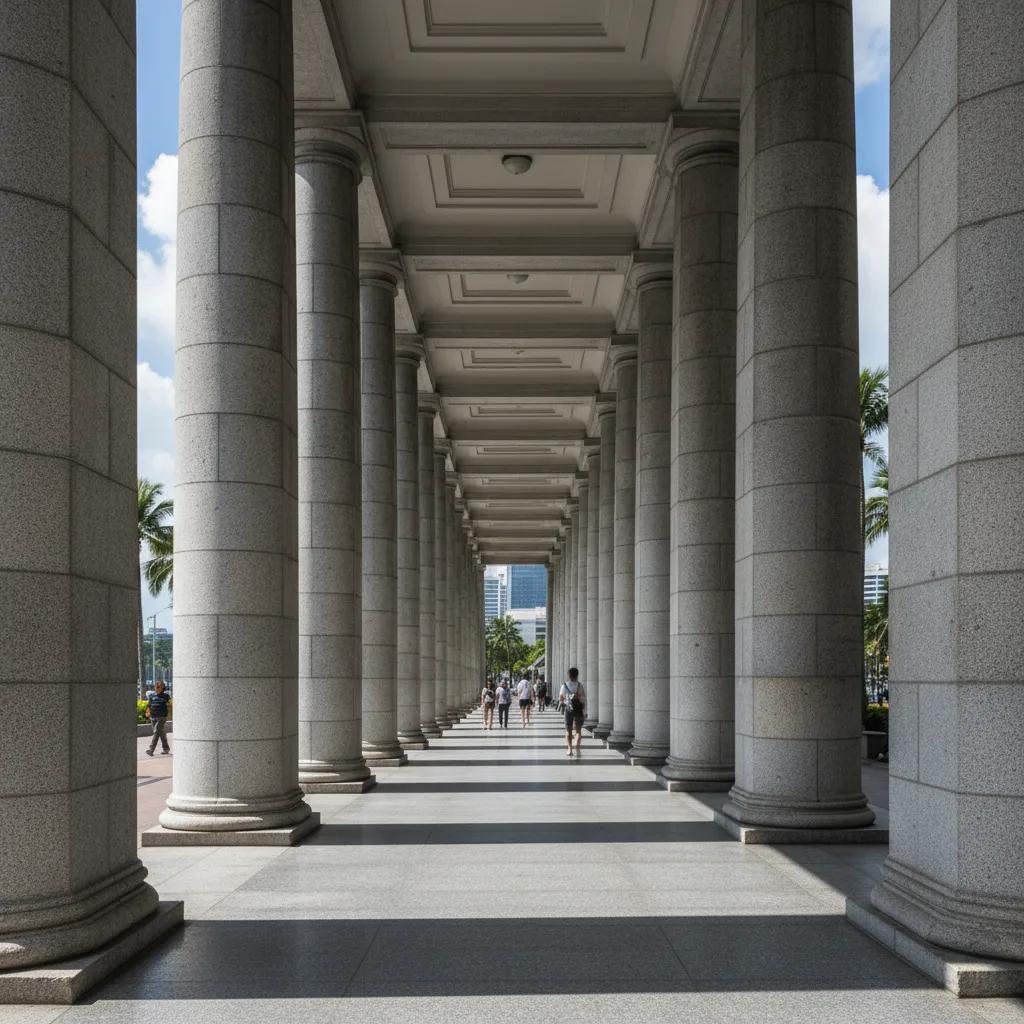
Beginning your walk at the monumental Fullerton Building (now The Fullerton Hotel), constructed between 1924 and 1928 as the General Post Office and Singapore's Chamber of Commerce, introduces one of Southeast Asia's grandest neoclassical civic structures. The building's colossal Fluted Doric colonnades span four stories in height, while its ground-floor pedestrian loggia provides a magnificent covered stone walkway facing the Singapore River. Walking beneath these massive granite columns evokes the colonial era when merchants gathered to collect maritime mail arriving from across the British Empire.
Passing beneath the deep stone portico of the Fullerton reveals historic brass postal drop boxes, engraved stone foundation plaques, and an internal pedestrian underpass connecting directly to the waterfront promenade. The monumental stone archways provide an impressive thermal buffer, creating a naturally cool walking corridor where river breezes circulate between massive stone piers. Stepping from the shaded colonnade onto the adjacent Cavenagh Bridge, built in 1869 with ornate cast-iron suspension trusses, offers a breathtaking view of conserved river godowns framed against the financial skyline. Archival harbor commission plans demonstrate that Clifford Pier's concrete passenger concourse was engineered to withstand severe tropical squalls while providing smooth pedestrian connectivity to downtown.
Historic Watergates and Maritime Godowns Along the Riverbank
Wandering along the covered riverbank promenade toward the historic Boat Quay district exposes the architectural remnants of nineteenth-century maritime commerce. Historic godowns (warehouses) constructed along the river's curving south bank featured covered timber-and-tile arcades facing the water, allowing coolies to unload cargo from bumboats (tongkangs) directly into secure warehouses sheltered from tropical rains. Today, these conserved shophouses retain their distinctive curved rooflines, exposed brick masonry piers, and shaded ground-floor loggias.
Continuing eastward through the subterranean pedestrian passages beneath Anderson Bridge reveals historical watergate arches where small river barges once docked during high tide to unload fresh provisions. The cool stone tunnels have been thoughtfully transformed into heritage walking galleries showcasing archival maritime photographs and historical maps of the Singapore River's development. This seamless covered connection allows pedestrians to navigate between the river's mouth and the open bay without crossing busy vehicular intersections.
Clifford Pier and the Historic Covered Passenger Gate
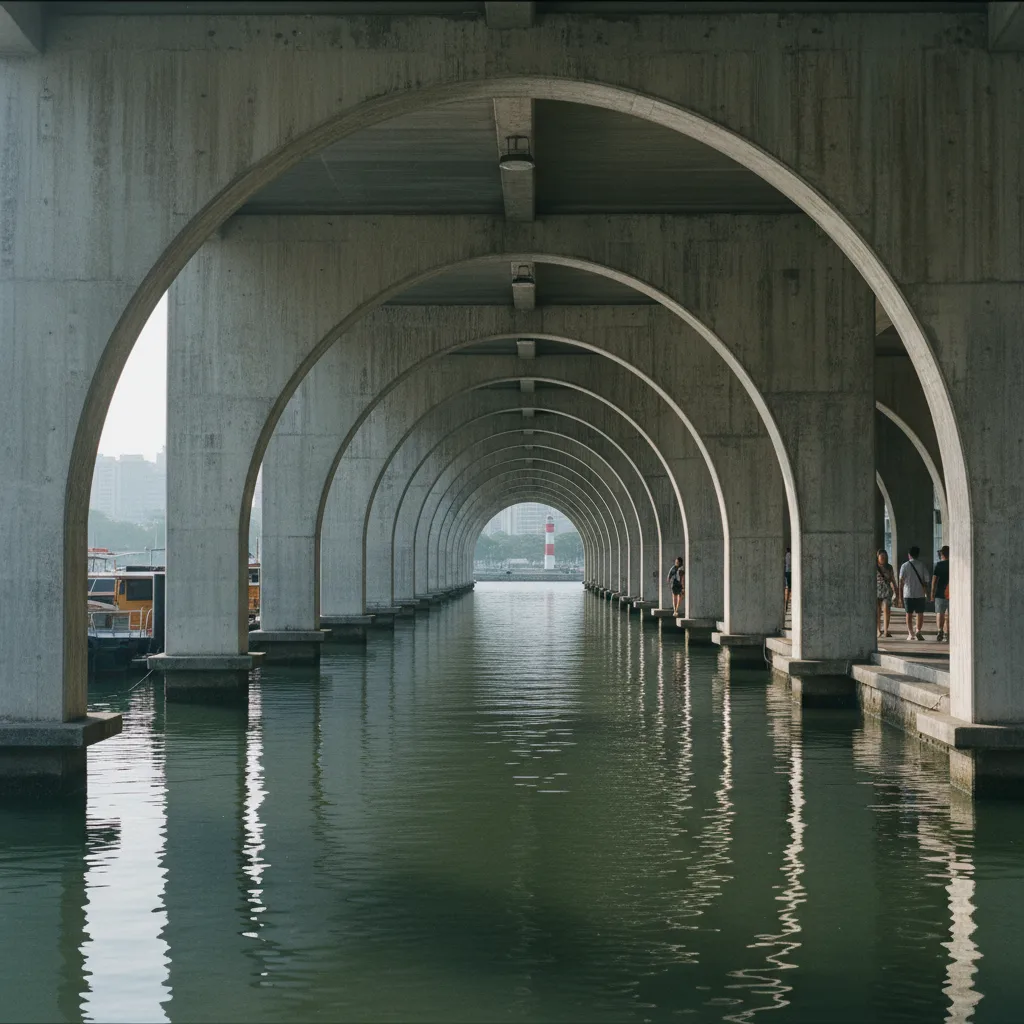
A defining architectural landmark along this waterfront walking route is Clifford Pier, completed in 1933 to replace Johnston's Pier as the primary maritime landing depot for sea passengers arriving in Singapore. The pier building features an extraordinary modernist Art Deco roof structure composed of sweeping concrete parabolic arches spanning a vast covered concourse. Historically known as the 'Red Lamp Pier' due to the red beacon light suspended from its roof to guide sea vessels at night, Clifford Pier's covered hall welcomed generations of royalty, diplomats, and sea travelers.
Walking along the polished timber-planked floor beneath Clifford Pier's monumental concrete trusses provides a magnificent sheltered vantage point overlooking the open waters of Marina Bay. The building's continuous perimeter glass louvers admit gentle sea breezes while completely excluding tropical rain, creating a naturally ventilated waterfront sanctuary. Today housing fine dining restaurants and cultural heritage exhibitions, Clifford Pier stands as an enduring monument to Singapore's maritime gateway heritage, bridging historic sea passenger traffic with modern waterfront leisure.
Timing Your Waterfront Walk Across Changing Skies
Exploring the covered colonnades and waterfront passages of Marina Bay is exceptionally scenic in the late afternoon between four-thirty and six-thirty. As the intense daytime heat subsides, the low equatorial sun casts a warm golden hue across the limestone facades of the Fullerton Building, creating stunning reflections across the glassy waters of the bay. Walkers can stroll comfortably beneath the deep stone arches while watching tour bumboats cruise peacefully along the river.
Evening strolls after seven present a dazzling architectural transformation, as dramatic architectural lighting illuminates the Doric columns of the Fullerton and the parabolic arches of Clifford Pier. Cool night breezes sweep across the bay, while the glittering lights of the Central Business District skyscrapers and the iconic Marina Bay Sands light show illuminate the skyline. For quiet architectural contemplation and photography without crowds, early morning visits between seven and eight-thirty provide pristine light and peaceful, uncluttered stone walkways.
Pedestrian Flow, Flat Promenades, and Raffles Place MRT Links
Walking surfaces along this Marina Bay itinerary feature wide, smooth granite flagstones, polished timber decking, and seamlessly integrated ramp connections that provide completely barrier-free pedestrian accessibility throughout the route. The wide waterfront promenades comfortably accommodate strollers, wheelchairs, and power-assisted mobility devices, making it one of the most accessible heritage walking routes in Southeast Asia. Wide overhead bridge underpasses eliminate all street-level traffic crossings.
Public transportation access is unparalleled, with Raffles Place MRT station on the North-South and East-West lines situated a four-minute walk from the western portico of the Fullerton Building, and Downtown MRT station located five minutes to the south. Both transit stations offer fully air-conditioned, covered underground exits that lead directly into the sheltered waterfront network. Premium public restroom amenities are readily accessible within The Fullerton Hotel's lower concourse, inside One Fullerton, and at the adjacent Customs House complex.
Waterfront Wayfinding with Karpo APP in Marina Bay
Navigating Marina Bay's monumental colonial architecture and contemporary promenades is made effortless with the intuitive interface of the Karpo APP. The platform tracks historic shoreline contours, illustrating how colonial watergates and landing piers adapted into contemporary pedestrian walkways. Detailed audio guides explain the classical Doric symbolism of the Fullerton Building and illuminate Clifford Pier's innovative 1930s engineering.
Furthermore, the app provides real-time walking advice to help travelers bypass open-air heat exposure by utilizing interconnected subterranean concourses and covered colonnades. Recommendations for waterfront coffee pavilions and evening light-show viewing spots ensure every pause is comfortable and visually stunning. Traversing Marina Bay's historic covered passages with the Karpo APP delivers a world-class architectural and maritime heritage walking tour.
Ask Karpo for more information.
Keep reading
- Marina Bay Food Market Grazing Route After a Conference Day
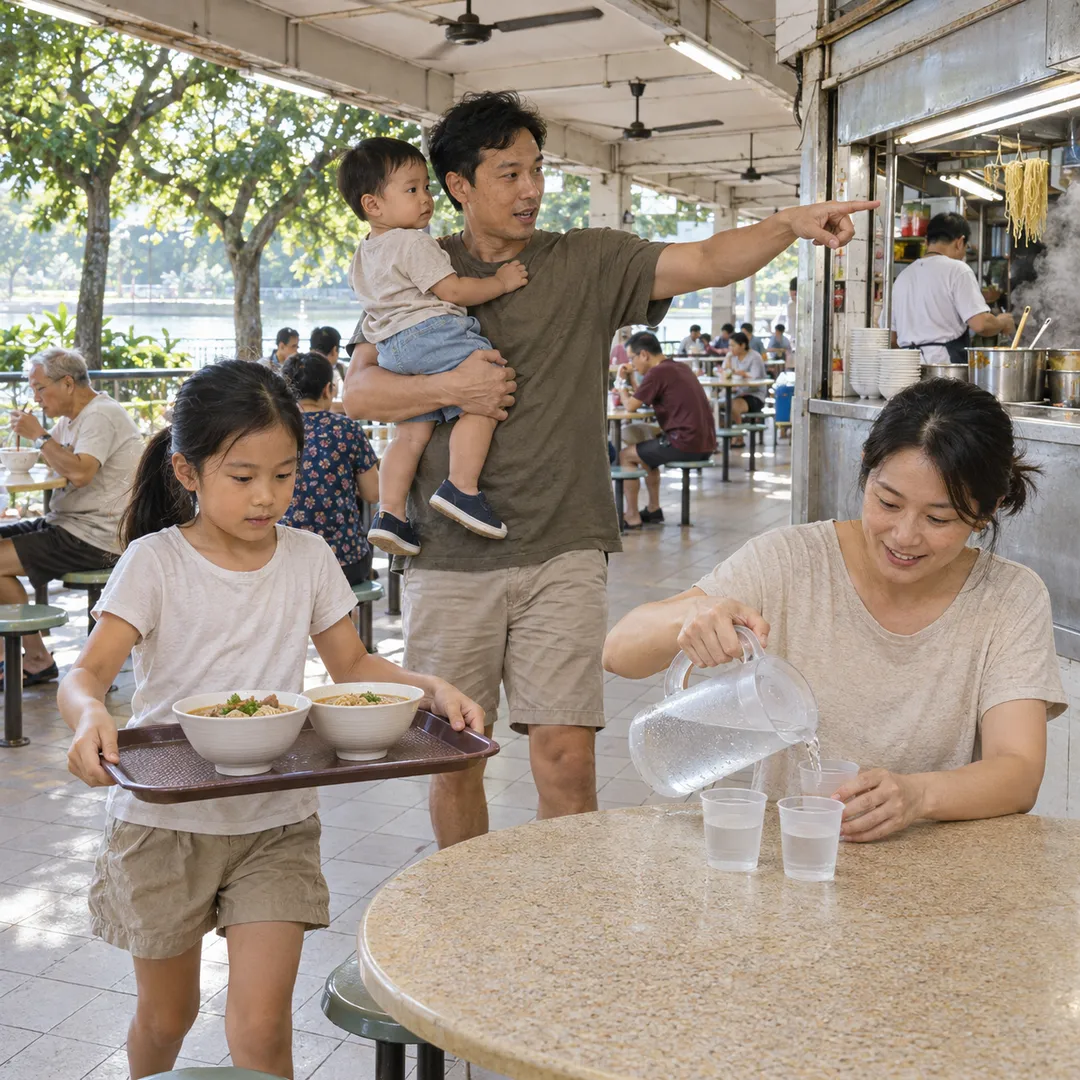 River Valley Food Market Grazing Route With Young Kids
 Serangoon Food Market Grazing Route for a Homecoming Weekend