 Marina Bay Food Market Grazing Route After a Conference Day
Neighborhood Guides
Kampong Glam Historic Covered Passage Walk: Shaded Ways
Plan a historic covered passage walk around Kampong Glam in Singapore, exploring shaded shophouse five-foot ways, textile alleys, and Arab Street paths.
Kampong Glam stands as the historic royal seat of the Malay royalty in Singapore and the traditional heart of the Arab, Bugis, and Javanese merchant communities. Embarking on a historic covered passage walk through Kampong Glam leads pedestrians along continuous five-foot ways, shaded textile arcades, and fragrant bazaar corridors lining Arab Street, Bussorah Street, and Haji Lane. Assisted by the Karpo APP, cultural travelers uncover the rich tapestry of Islamic architectural motifs, traditional batiks, and shaded shophouse loggias that provide continuous refuge from equatorial sun and tropical storms.
The Royal and Mercantile Heritage of Sultan Gate
Beginning your walk at Sultan Gate, adjacent to the historic Istana Kampong Glam (now the Malay Heritage Centre), immerses visitors in an urban plan established following the 1819 Treaty between Sir Stamford Raffles, Sultan Hussein Shah, and Temenggong Abdul Rahman. The surrounding streets were subdivided into bustling merchant quarters where traders from Hadramawt, Sumatra, and Java established businesses. Shophouse five-foot ways along Sultan Gate feature deep overhanging eaves and arched masonry porticos that protected precious silk, spices, and fragrant oud oils from monsoon rains.
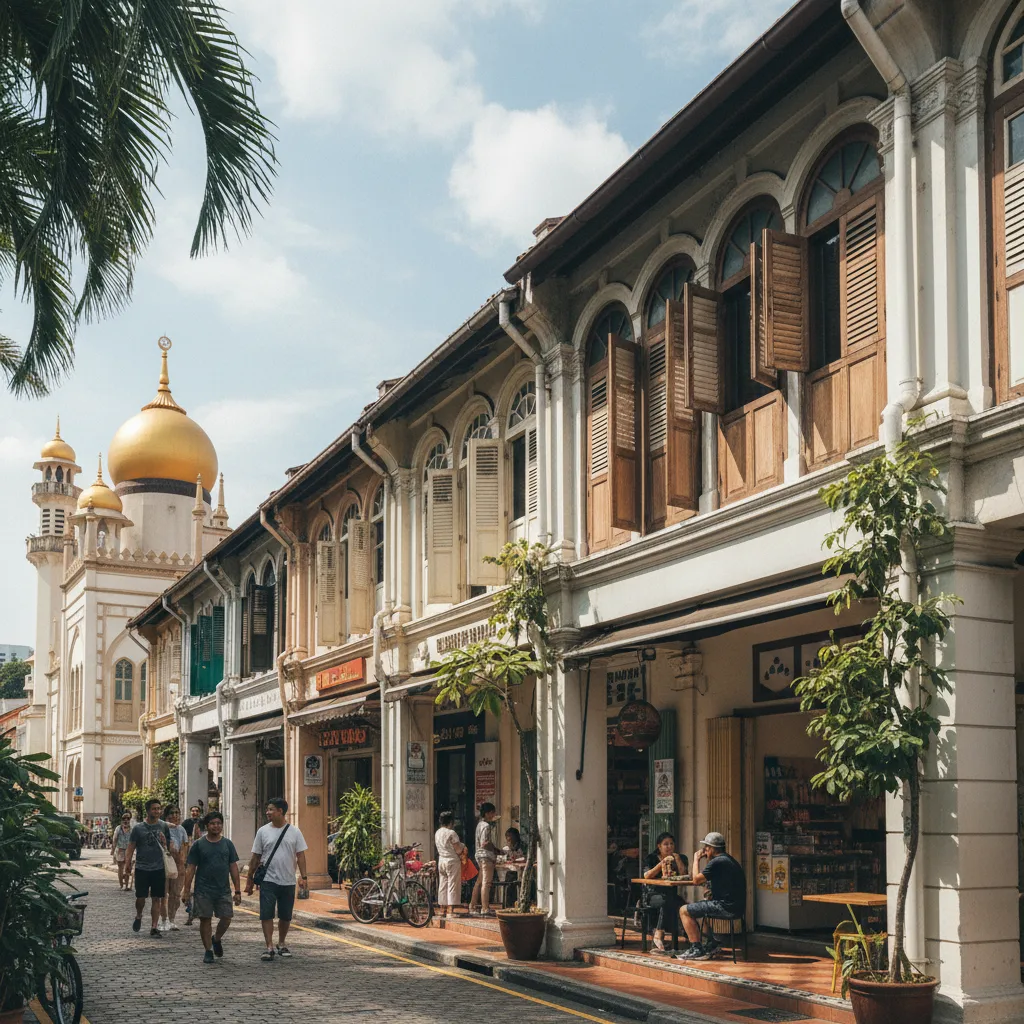
Wandering along the covered arcades facing the golden dome of Sultan Mosque on Bussorah Street presents a breathtaking vista framed by symmetrical rows of conserved shophouses. The covered five-foot ways here feature wide granite pavers, painted timber columns, and traditional carved Malay fascia boards known as papan cantik, which trim roof eaves with delicate lace-like woodwork. These sheltered verandahs historically functioned as communal gathering spaces where pilgrims embarking on the annual Hajj voyage gathered to finalize travel documents and purchase supplies. Historical accounts of the Kampong Glam royal district document how Arab merchants and Bugis traders established shaded commercial avenues that supported regional pilgrimage networks for generations.
Textile Arcades and Artisan Alleys Along Arab Street
Crossing into Arab Street brings walkers beneath the vibrant textile arcades that have defined the neighborhood's commerce for over a century. The covered five-foot ways are densely stacked with rolls of fine silk, intricate Indonesian batik fabrics, Middle Eastern carpets, and delicate lace imported from Europe. The covered pedestrian space creates an intimate sensory corridor filled with the rustle of woven textiles, the scent of burning frankincense, and the visual feast of kaleidoscopic fabric patterns.
Branching off Arab Street into narrow lanes like Baghdad Street and Muscat Street reveals secluded artisan workshops specializing in non-alcoholic attar perfumes, custom leather sandals, and traditional songkok headwear. The continuous roof canopies create a comfortable microclimate, shielding pedestrians from direct solar radiation while allowing cross-ventilation to circulate naturally through open transom vents above shophouse doorways. This functional covered architecture fostered vibrant street-level barter and cultural exchange across generations of trading families.
Timing Your Visit Around Prayer Calls and Evening Life
Exploring Kampong Glam's covered passages is especially atmospheric in the late afternoon between three and five. As the afternoon heat begins to dissipate, the call to prayer (Adhan) echoes melodiously from Sultan Mosque, infusing the sheltered walkways with a deeply spiritual ambiance. Shopkeepers sit outside their five-foot ways chatting with neighbors, while the warm late-day sun illuminates the colorful facade plasterwork and intricate geometric window grilles.
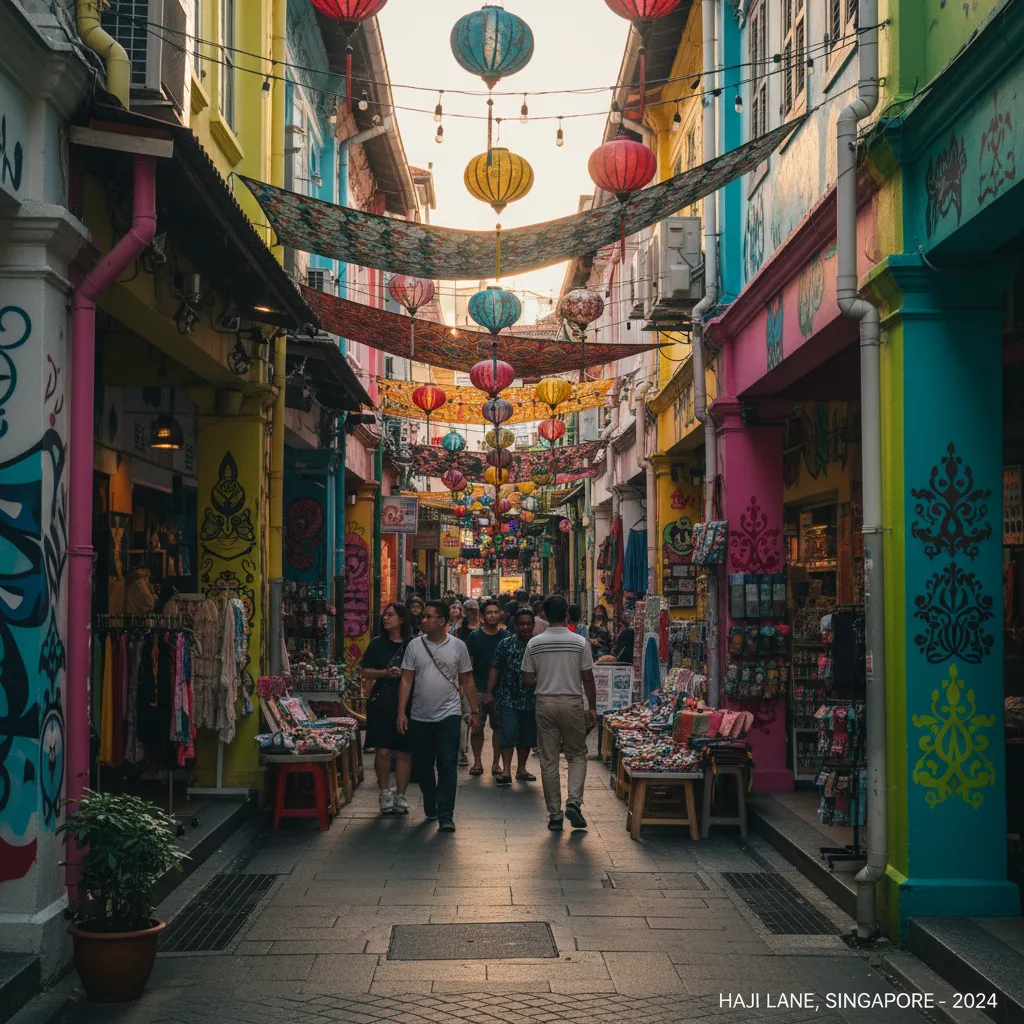
Evenings after six bring a dramatic transformation, particularly along Haji Lane and Bali Lane, where historic covered passages become lively pedestrian hubs filled with boutique shoppers, indie fashion designers, and outdoor diners. The warm glow of hanging Turkish mosaic lamps illuminates the covered loggias, casting intricate patterns across the tiled pavements. For photography lovers seeking quiet architectural appreciation without bustling crowds, weekday mornings between nine and eleven provide tranquil, uncluttered corridors.
Weaving Through Haji Lane's Creative Mews
Venture into Haji Lane, celebrated as one of Singapore's narrowest and most visually dynamic conserved street corridors. Originally providing modest lodging for poor pilgrim families and coppersmiths, Haji Lane's shophouses feature compact five-foot ways and vibrant contemporary wall murals painted across historic plaster facades. Walking beneath the second-story timber cantilevered windows reveals independent fashion boutiques, vintage vinyl record shops, and artisanal tea counters tucked inside compact spaces.
Connecting Haji Lane across Ophir Road leads toward North Bridge Road and the historic golden archways of the Golden Landmark bazaar. This covered commercial thoroughfare maintains traditional Muslim haberdashery shops, traditional medicine clinics, and modest tailoring stalls. The transition from Haji Lane's trendy indie energy to North Bridge Road's venerable family-run shops demonstrates how Kampong Glam's covered pedestrian infrastructure accommodates diverse cultural expressions while preserving its core heritage identity.
Walking Accessibility, Paving Surfaces, and Bugis MRT Links
Surfaces along Kampong Glam's five-foot ways feature smooth terracotta tiles, cut granite pavers, and occasional polished terrazzo steps that require comfortable, supportive walking footwear. Bussorah Street has been fully pedestrianized with level stone paving, providing seamless barrier-free access directly to the entrance plaza of Sultan Mosque. Mindful awareness is advised along narrower sections of Arab Street where merchandise displays occasionally share space with the five-foot way walkway.
Public transit access is outstanding, with Bugis MRT station on the East-West and Downtown lines situated a five-minute walk from the southern boundary of the neighborhood. Jalan Besar MRT station on the Downtown line serves as a convenient northern entry point, located six minutes from Arab Street via Ophir Road. Clean, accessible public restrooms are available within the Sultan Mosque community annex, inside Bugis Junction shopping center, and within the Malay Heritage Centre grounds.
Navigating Kampong Glam with Karpo APP Insights
Unlocking the rich mercantile tapestry of Kampong Glam becomes effortless when following the architectural paths within the Karpo APP. The platform highlights authentic perfume houses where bespoke attar scents are blended according to century-old recipes, guiding walkers directly to master perfumers tucked inside shaded arcades. Interactive historical markers detail the royal architecture of Sultan Hussein Shah's palace and decode intricate Islamic geometric tilework.
Furthermore, the app provides real-time walking advice to help visitors navigate prayer times and avoid weekend evening congestion along Haji Lane. Tailored route extensions link Kampong Glam with neighboring heritage districts like Jalan Besar and Rochor Canal via covered corridors. Exploring these vibrant cultural passages through the Karpo APP ensures a captivating, well-organized journey through Singapore's historic royal quarter.
Ask Karpo for more information.
Keep reading
- Marina Bay Food Market Grazing Route After a Conference Day
 River Valley Food Market Grazing Route With Young Kids
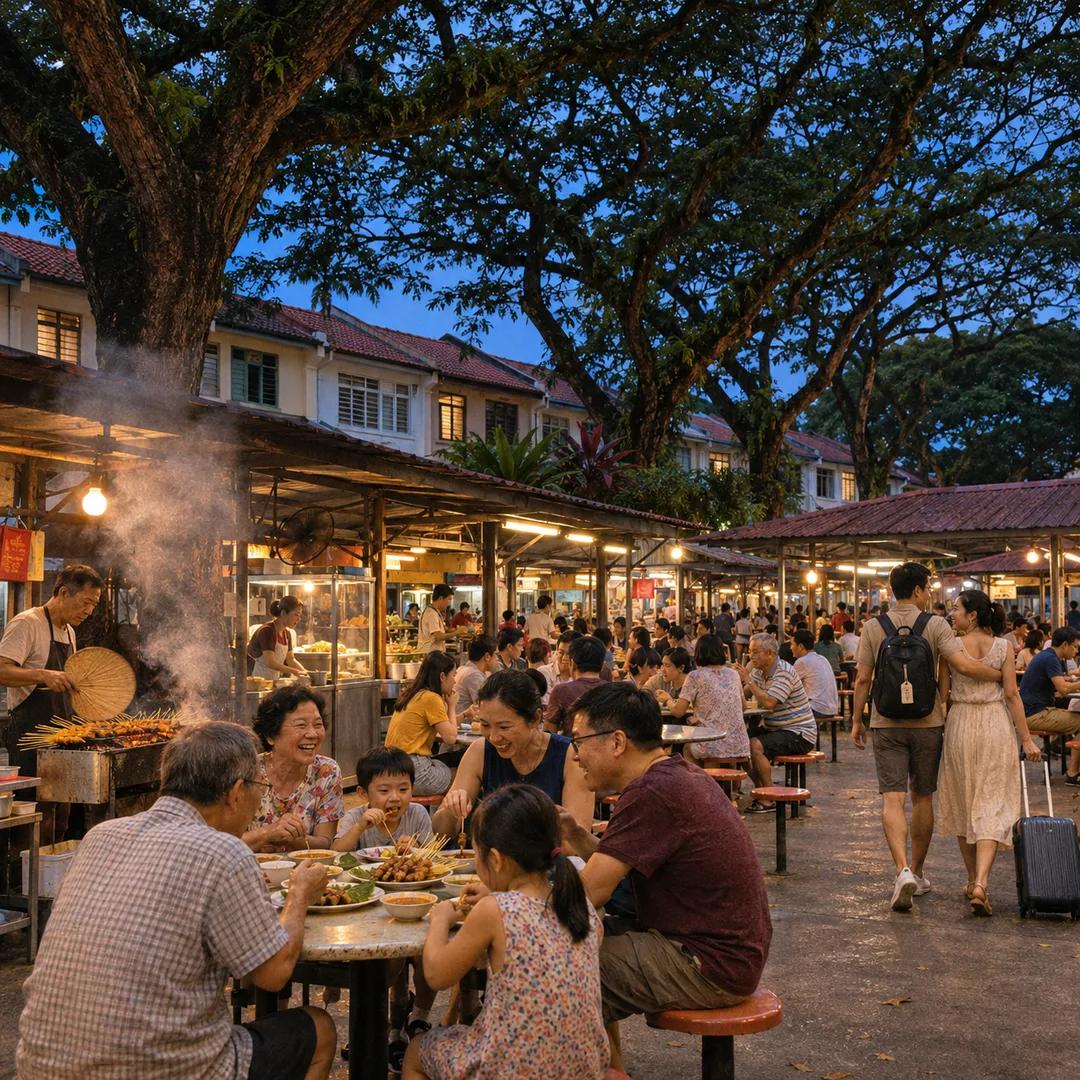 Serangoon Food Market Grazing Route for a Homecoming Weekend