 Marina Bay Food Market Grazing Route After a Conference Day
Neighborhood Guides
Joo Chiat Historic Covered Passage Walk: Peranakan Paths
Follow a historic covered passage walk around Joo Chiat in Singapore, admiring ornate Peranakan shophouse arcades, ceramic tile floors, and pastel ways.
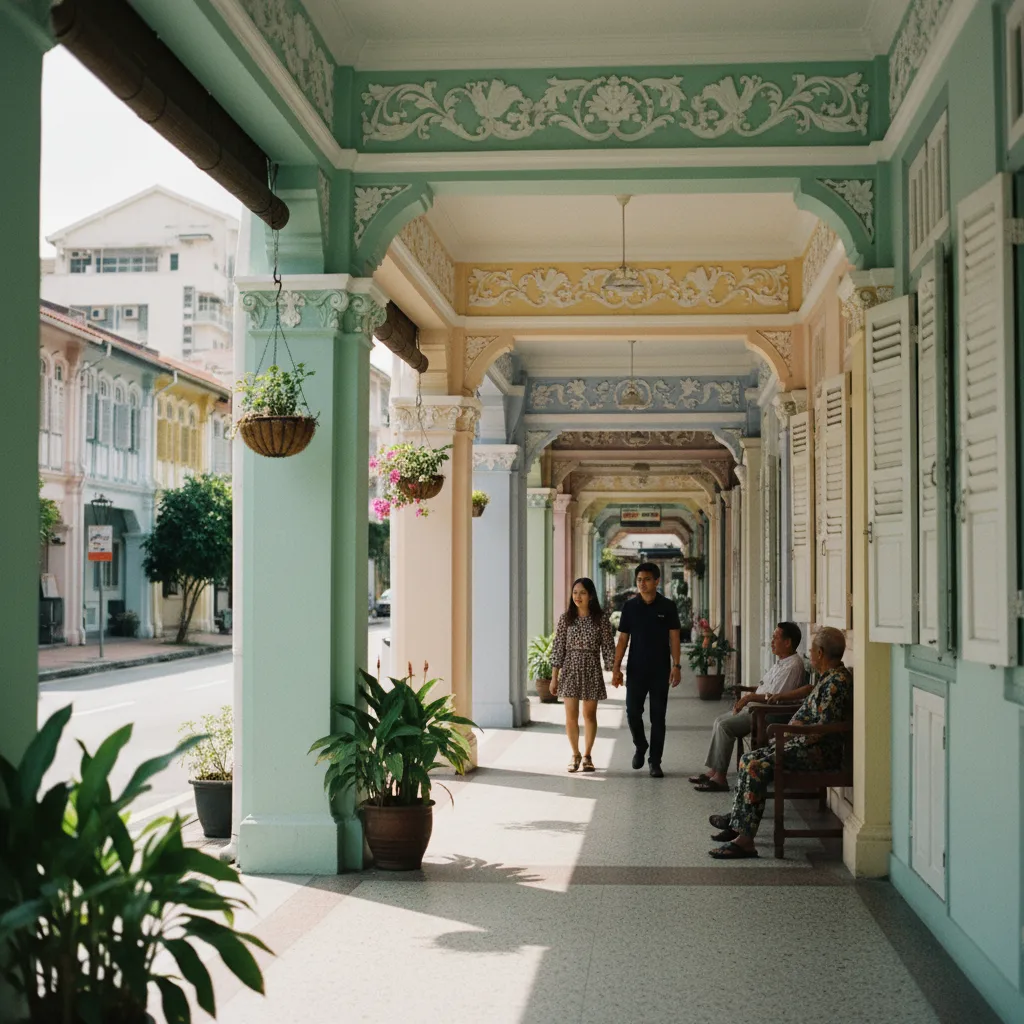
Joo Chiat and Katong represent the cultural heartland of Singapore's Peranakan (Straits Chinese) and Eurasian communities, celebrated for their unique architectural fusion of Chinese, Malay, and European decorative motifs. Embarking on a historic covered passage walk through Joo Chiat Road and Koon Seng Road immerses visitors in a mesmerizing wonderland of pastel shophouse five-foot ways, ornate floral ceramic floor tiles, and intricately carved timber fretwork. Guided by the Karpo APP, cultural walkers discover how wealthy twentieth-century merchants turned tropical covered loggias into vibrant showcases of Straits Eclectic craftsmanship.
The Straits Eclectic Splendor of Joo Chiat's Five-Foot Ways
Commencing your walking route along Joo Chiat Road near the junction of East Coast Road introduces pedestrians to one of Singapore's most complete ensembles of conserved pre-war shophouses. Named after Chew Joo Chiat, a wealthy plantation owner known as the 'King of Katong,' the area developed rapidly during the 1920s as wealthy Peranakan and Chinese families built lavish shophouse residences. The ground-floor five-foot ways feature deep sheltered verandahs framed by masonry arches adorned with bas-relief plaster mouldings of Chinese mythical beasts, European cornucopias, and Malay timber carvings.
Walking beneath the covered porticos reveals an astonishing display of imported Majolica ceramic tiles manufactured in England and Belgium, lining the walls and floors with vibrant floral, peacock, and geometric patterns. Double-leaf timber entrance doors, traditionally lacquered in dark green or natural teak, feature carved open-work transoms that encouraged sea breezes to circulate through the shaded hallway while keeping interior rooms cool and ventilated. These continuous covered arcades provided an elegant, shaded promenade where neighborhood matriarchs could stroll and socialize in complete comfort. Peranakan family memoirs describe how generations of Straits Chinese residents strolled beneath Koon Seng Road's shaded pastel colonnades while observing traditional seasonal festivals.
Koon Seng Road's Iconic Pastel Terraces
A defining architectural highlight of this walking route is Koon Seng Road, renowned worldwide for its pristine row of pastel-painted Peranakan shophouse terraces constructed between 1920 and 1927. The covered five-foot ways along Koon Seng Road are exceptionally well preserved, featuring intricate cement-tile floor patterns, raised marble threshold steps, and elaborate glazed ceramic wall panels depicting auspicious peonies and lotus blossoms. The pastel palette of turquoise, rose pink, sunny yellow, and seafoam green creates an ethereal visual corridor beneath the overhanging eaves.
Notice the exquisite decorative plaster pilasters that separate each shophouse bay, featuring Corinthian capitals intertwined with Chinese auspicious symbols of longevity and wealth. The timber sun-shading louvered windows on the upper floor project slightly over the five-foot way, creating natural eaves that cast deep, cooling shadows onto the pedestrian path below. Walking along Koon Seng Road offers an intimate encounter with the artistic zenith of Straits Chinese residential architecture, where every surface reflects meticulous artisanal devotion.

Optimal Walking Hours and Katong Cultural Rhythms
Scheduling your covered passage walk in Joo Chiat is most rewarding in the morning between eight and ten, when the tropical heat is mild and the neighborhood awakens with traditional food preparation. The aromas of simmering laksa broth, fragrant pandan leaves, and freshly steamed nonya kueh drift through the five-foot ways as heritage confectionery shops and traditional coffee shops prepare for morning customers. Morning sunlight highlights the glossy finish of antique ceramic wall tiles, providing optimal illumination for architectural photography.
Afternoon hours between two and four offer quiet, contemplative walking, as the shaded arcades provide cool respite from intense overhead solar radiation. In the late afternoon after five, gentle coastal sea breezes blow in from the East Coast shoreline, enlivening local boutique cafes and artisanal craft stores operating along Joo Chiat Road. Evening strolls are accompanied by warm golden illumination from shophouse lanterns, making it a delightful time to explore local dining enclaves under covered verandahs.
Connecting Traditional Trades to Tembeling Road Mews
Branching off Joo Chiat Road into narrow connector alleys brings you toward Tembeling Road and Everitt Road, where quiet residential shophouse mews retain a tranquil village atmosphere. These secondary covered walkways historically housed traditional tradesmen, including rattan weavers, wooden clogs craftsmen, and Peranakan beaded slipper embroiderers. Several historic shophouse frontages still maintain original folding wooden shopfront panels that were dismantled each morning and stacked neatly against the wall to open the five-foot way to trade.
Continuing southward connects seamlessly with East Coast Road, where the historic Red House Bakery and Katong Antique House stand as venerable neighborhood landmarks. The continuous covered arcades along East Coast Road allow walkers to explore traditional nonya delicacy shops and Eurasian bakeries without stepping into the unshaded sun. Meandering through these interconnected heritage corridors demonstrates how the five-foot way system fostered a close-knit, highly walkable community where commercial, residential, and social life intertwined seamlessly.
Navigating Surfaces, Tile Maintenance, and Transit Access
Surfaces along Joo Chiat's five-foot ways feature antique encaustic tiles, smooth terrazzo, and polished concrete pavers that require supportive walking shoes with good grip, especially during wet weather when glazed ceramic surfaces can become slick. Walkers should maintain gentle mindfulness of occasional threshold step-ups between adjacent properties, which reflect historic individual property boundaries. Most major street intersections have been fitted with curb-cut ramps to assist stroller and wheelchair accessibility.
Public transportation access is readily available, with Marine Parade MRT station on the Thomson-East Coast line located an eight-minute walk to the south, and Eunos MRT station on the East-West line positioned ten minutes to the north via Still Road. Multiple regular bus lines traverse Joo Chiat Road and East Coast Road, offering direct connections to downtown Singapore. Clean, accessible public restrooms are located within I12 Katong shopping mall and at the Joo Chiat Complex community hub.
Peranakan Heritage Navigation via Karpo APP
Immersing yourself in Katong's Straits Chinese architecture is made thoroughly enriching through the custom heritage layers of the Karpo APP. The platform provides detailed architectural breakdowns of Peranakan facade embellishments, explaining the auspicious symbolism behind plaster phoenixes, peony tiles, and French louvered windows. Interactive walking routes guide pedestrians along tranquil residential back alleys, avoiding busy vehicular traffic on Still Road.
Additionally, the app curates recommendations for authentic Peranakan confectionery shops, heritage laksa stalls, and traditional beadwork ateliers operating within conserved shophouses. Practical route alerts help walkers time their visits to catch morning sunlight on Koon Seng Road's pastel facades while steering clear of midday sun. Utilizing the Karpo APP ensures an authentic, deeply informed, and comfortable walking exploration across eastern Singapore's most picturesque heritage district.
Ask Karpo for more information.
Keep reading
- Marina Bay Food Market Grazing Route After a Conference Day
 River Valley Food Market Grazing Route With Young Kids
 Serangoon Food Market Grazing Route for a Homecoming Weekend