 Chinatown New in Town Weekend Planner: Errands and Temples
Weekend Plans
Singapore Hidden Courtyard Garden: Peranakan Shade and Color
Peranakan Museum offers a shaded Singapore courtyard pause beside patterned tiles and greenery. Read the textures before its intimate displays.
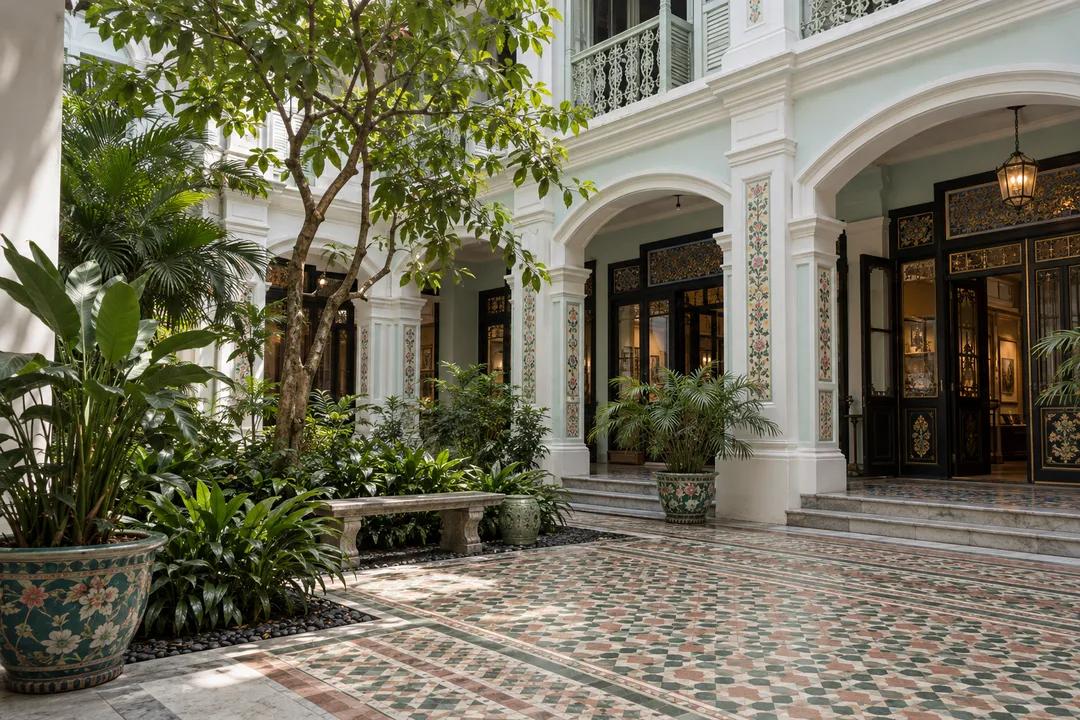
For a hidden garden pause in Singapore, begin at the Peranakan Museum Courtyard: read its patterned tiles, shaded planting, and architectural color as a calm threshold before moving into the museum sequence. The space rewards a slow look rather than a quick photograph, especially when the surrounding city feels loud.
Arrive Through Color
The first impression is often chromatic. Patterned tiles set a visual rhythm underfoot, while shade gathers around living greenery. Instead of treating the courtyard as a waiting area, notice how color travels from floor to wall and then into leaves. A blue or terracotta note can make a small planting bed feel architectural. Stand just inside the threshold and let your eyes adjust before deciding where to go next.
A Reading Method: Layer, Edge, Pause
Use three questions to read the garden. What is the strongest repeated pattern? Where does shade end and open light begin? Which detail makes you pause without asking for attention? This method suits the Peranakan Museum Courtyard because its meaning sits in relationships: tile beside foliage, ornament beside plain stone, and an enclosed view opening toward museum rooms. Walk one short line, stop, and repeat the questions from a new angle.
Design Details in Context
The supplied museum description points to patterned tiles, shaded courtyard planting, and Peranakan architectural details. Keep the history modest: these details are presented as part of a cultural museum sequence, where built form and collections support one another. Look for the way a decorative edge frames a doorway or how a roofline sets a scale for the plants below. You do not need to assign a date or maker to every motif to understand the design fact that pattern is doing spatial work.
Move Into the Museum Sequence
Treat the courtyard as the opening movement of a longer visit. After the first circuit, enter the galleries and notice whether your attention has changed. Intimate cultural displays can feel more legible after the garden’s quiet compression. The sequence works in both directions: a return to the courtyard may make the museum’s color vocabulary feel more physical, while a gallery visit can send you back outside looking for repeated forms.
Etiquette and Pacing
Keep voices low enough that other visitors can hold their own observations. Leave the central sightlines open, and step aside before taking a photograph. Avoid touching tiles, leaves, or decorative surfaces. A measured pace is practical: spend several minutes on the first view, make one complete loop, then choose one detail for a second look. If a group arrives, let it pass rather than squeezing through a narrow pause point.
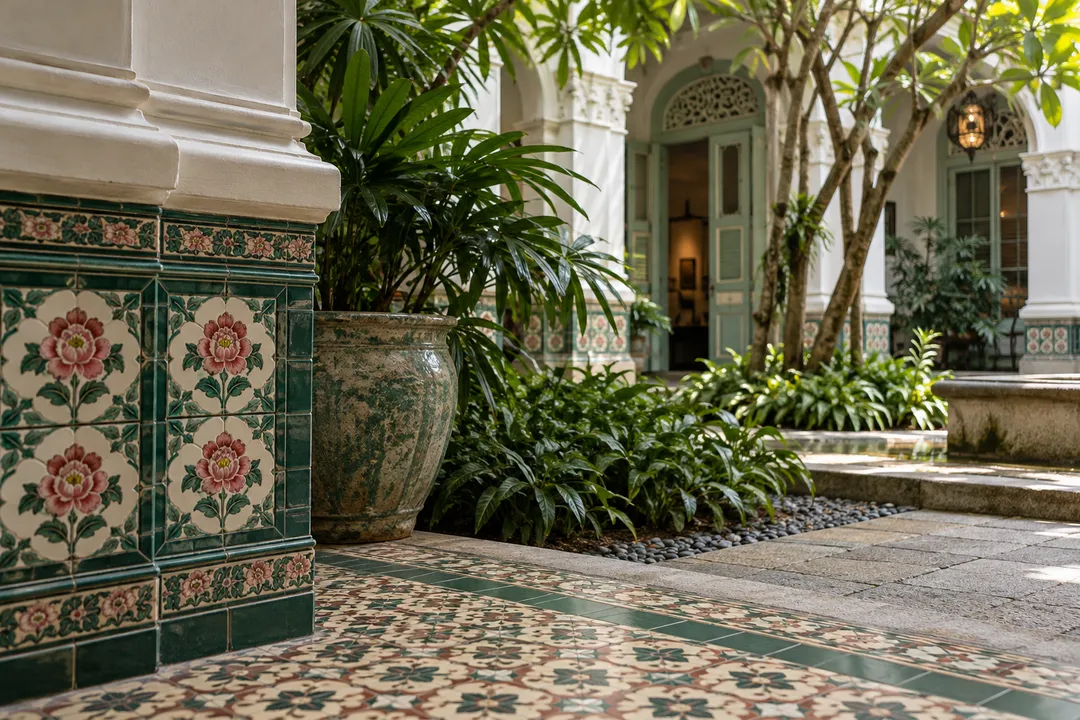
Freshly generated photographic interpretations suggest tile, shade, and foliage; they are not documentary images of the Peranakan Museum.
A Practical Route
Start at the clearest entrance and take the shaded edge first. Follow the tile pattern until it meets a planting bed, then turn toward the most detailed architectural frame. Cross only where the path is plainly intended, and pause at the point where greenery partially screens a museum threshold. Continue inside for a compact gallery sequence, returning outside afterward for a final comparison. This route creates a beginning, middle, and end without rushing the small space.
Armenian Street Wanders
Continue on foot through the Armenian Street area after the museum. Read the neighborhood as a series of transitions: older facades, tree shade, quieter side lanes, and sudden views toward civic buildings. Let the walk be observational rather than destination-driven. Notice thresholds, tiled details, and planted pockets that echo the museum’s blend of ornament and everyday life. A short loop works well after the indoor galleries because it keeps the scale intimate while widening the color palette.
Photographing the Atmosphere
The two illustrations accompanying this article are AI-generated photographic interpretations, not documentary photographs. Use them as mood prompts only. In the actual courtyard, look for reflected light on tile, soft shadow under leaves, and the way a doorway crops the view. A close frame of texture can be more faithful to the garden’s character than a wide shot that includes every wall. Leave room for other visitors and keep equipment compact.
Practical Notes
Before leaving the museum, make one final comparison between a courtyard pattern and an indoor display surface. The connection can be visual, tactile, or simply a shared sense of repetition. Keep the comparison personal and modest; the value is in carrying a clear observation from one space to another.
One useful exercise is to choose a single color and follow it through the visit. Start with a tile, find a related note in the architectural trim, and then look for a quieter version in a leaf or shadow. The exercise keeps your attention anchored while allowing the museum sequence to unfold naturally. It also prevents the courtyard from becoming a backdrop detached from the cultural displays. Color becomes a thread that ties the outdoor pause to the rooms beyond it.
If you are visiting with a companion, take turns choosing the next pause point. One person can select a patterned edge while the other selects a planting detail. This creates a shared route without requiring constant conversation. Families can adapt the same approach by asking children to find repeated shapes rather than touching surfaces. The courtyard remains welcoming when curiosity is expressed through looking, not handling.
Weather can change the reading without changing the design. After rain, tile may hold a muted reflection and leaves may appear darker against the walls. In brighter conditions, shade makes the architectural details more graphic. Allow the atmosphere to guide the length of your stop. A short visit can still feel complete if you leave with one clear relationship in mind, such as tile beside foliage or ornament beside a plain threshold.
Wear comfortable shoes for museum floors and nearby streets. Bring water for the neighborhood walk, and allow extra time for gallery transitions. The courtyard is best approached as a quiet threshold: observe first, photograph second, and keep the route flexible around other visitors.
Ask Karpo for more information.
Keep reading
- Chinatown New in Town Weekend Planner: Errands and Temples
 Kampong Glam New in Town Weekend Planner: Mosque to Murtabak
 Holland Village New in Town Weekend Planner: Meet People