 Chinatown New in Town Weekend Planner: Errands and Temples
Weekend Plans
Singapore Hidden Courtyard Garden: Gallery Rain-Tree Light
National Gallery Singapore pairs rain-tree shade with pale civic architecture. Follow this courtyard walk for changing light and an outdoor art reset.
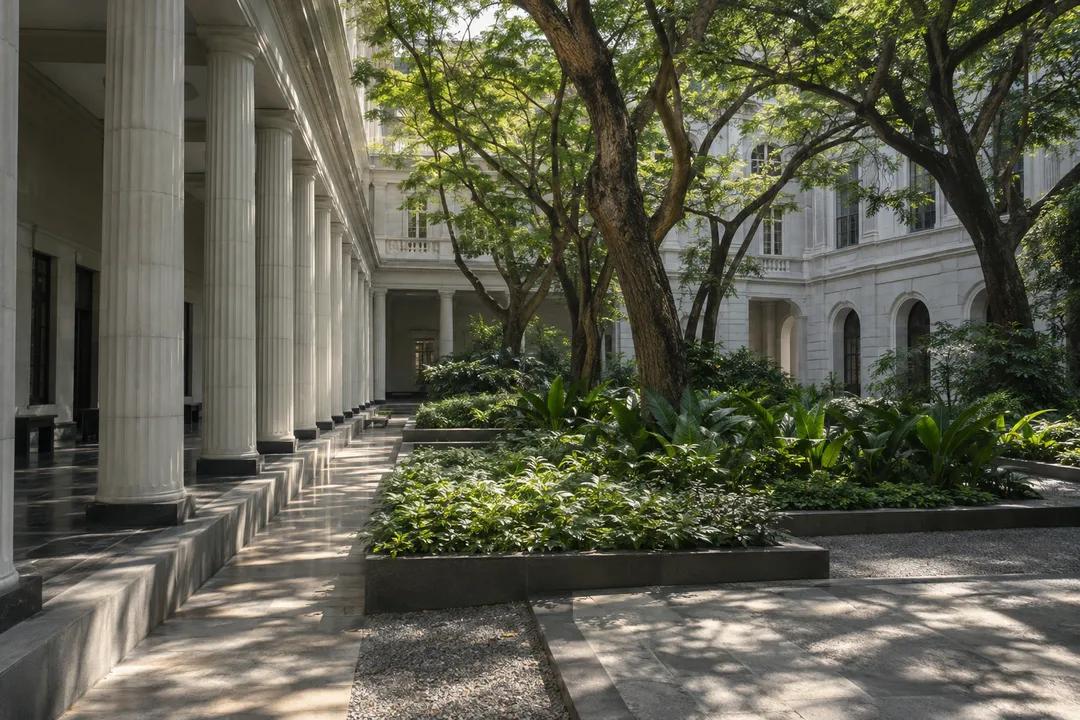
National Gallery Singapore offers a useful hidden courtyard garden study in the middle of the Civic District. Pale façades, rain-tree shade and planted courts create a sequence of light changes that rewards a slow visit. Follow this guide when you want an art day with an outdoor reset, using architecture and foliage as your route markers instead of racing from one room to the next. The strongest visits leave a little space between looking tasks. After tracing a rain tree or a dark border, pause without naming anything and let the scene settle. That short interval makes small shifts easier to notice when you resume, especially where a planted edge meets a hard architectural line. A companion can follow a different detail, then compare notes at the next threshold instead of trying to see everything together.
Opening frame
Begin with the brightest edge
A closer look
Start outside and look back toward the gallery’s pale structure. The first courtyard impression is often about brightness: sun on stone, a sharp roof line and greenery that cuts the glare. Move only when your eyes have adjusted. Then step toward shade and watch the same surfaces soften. That simple transition is the core of the visit. It gives you a way to experience the garden as changing light, not a static backdrop, and it sets a quieter pace for the galleries.
A practical rhythm
Read rain-tree canopies as architecture
What to notice
A broad rain-tree canopy behaves like a roof with moving seams. Notice how branches divide the sky, how shadows pool on paving and how the planted edge edits your view of the building. You can sketch the canopy as a loose plan: thick line for trunk, broken line for branch, dots for leaf clusters. This is not a botany lesson. It is a way to understand why the courtyard feels sheltered even when the sky remains open. The tree supplies a second building above you.
A gentle route
Make an art-to-garden loop
Shared etiquette
Choose one artwork or gallery theme, then return outdoors and look for a related quality. A work about colour can lead you to a leaf shadow; a geometric room can send you toward paving lines. The connection does not need to be official. It is your personal loop between curated interior and living exterior. Keep the comparison modest so it remains honest. A hidden courtyard garden becomes more memorable when it changes your seeing rather than pretending to explain the collection.
A visual prompt
Use benches as punctuation
Keep it comfortable
If you find a bench, treat it as punctuation in a sentence. Sit long enough to notice one change in the scene, then move on. Avoid turning a shared seat into a work table or spreading bags across it. The most useful pause may be at the edge where people pass, because movement reveals the scale of the court. You can also stand beneath the canopy and listen for the difference between footsteps on open paving and footsteps under shade.
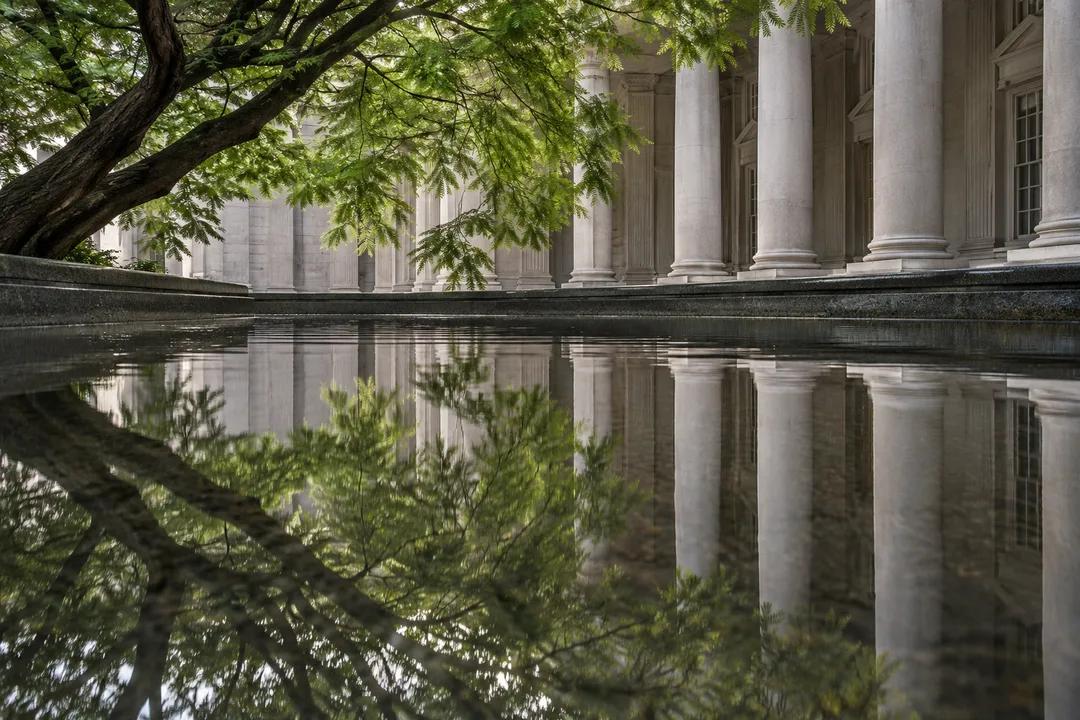
Freshly generated images interpret rain-tree and colonnade textures and do not document this site.
Practical notes
Plan for weather without fighting it
One memory to keep
Rain can make a gallery courtyard more legible. Darkened stone, brighter leaves and reflected façades create a temporary version of the space. If the weather turns wet, use covered transitions and let the storm become part of the visual sequence. If the ground is slippery, shorten your route and focus on the sheltered views. A good plan does not promise a perfect sky; it gives you several ways to enjoy the same architecture when conditions change.
Next step
Bring someone into the frame carefully
A compact sketch route
You can draw a useful map of the gallery’s green spaces in five marks: a tree canopy, a wall, a doorway, a bench and the direction of strongest light. Add arrows only where your body changed pace. This is not a plan for another visitor to follow exactly. It is a record of how the architecture edited your attention. The exercise takes less than ten minutes and works even when a courtyard is busy. Later, you will remember the sequence of transitions more clearly than a list of rooms.
A pause for younger visitors
Children often notice the gallery court before they have words for it. Give them a small mission: find a shadow that moves, a plant that repeats a shape and a place where the building looks tallest. Let them lead for one turn, then bring them indoors for a short gallery focus. The alternation keeps the day lively without turning the garden into a playground. It also teaches that museums are not only containers for objects; they are environments with temperature, sound and living edges.
When the light is flat
An overcast sky can make the courtyard feel quieter and more evenly scaled. Use that condition to notice colour relationships that strong sun hides. Pale masonry may pick up green reflections; dark branches may separate from the canopy; wet paving may hold a soft mirror. If your photographs look muted, keep them that way. The subdued palette is part of the experience. A hidden courtyard garden does not need dramatic weather to be compelling. It needs enough time for small differences to register.
End with an open question
Leave the gallery asking one question rather than carrying a verdict. Which element made the court feel enclosed: the tree, the wall, the shadow or the way people moved through it? Your answer may change after the Civic District walk. That is useful. The garden is a starting lens for the city, not a solved composition. Let the question travel with you and see where the next street repeats or breaks the relationship between living shade and public architecture.
A quiet reset between galleries
A five-minute outdoor reset can be enough. Put the phone away, place both feet on the paving and let your eyes settle on one canopy edge. Notice a single change—someone crossing, a cloud passing, a leaf turning. Then return indoors with that detail still in mind. The pause is small, but it protects the rest of the visit from becoming a blur of labels and rooms. A hidden courtyard garden earns its place in an art itinerary by restoring attention, not by adding another attraction to count.
A final observation
Give the courtyard one more minute after the first impression. Follow a shadow from canopy to paving, compare two greens and note where the building returns to view. These small observations make the route feel authored by your attention.
Ask Karpo for more information.
Keep reading
- Chinatown New in Town Weekend Planner: Errands and Temples
 Kampong Glam New in Town Weekend Planner: Mosque to Murtabak
 Holland Village New in Town Weekend Planner: Meet People