 Chinatown New in Town Weekend Planner: Errands and Temples
Weekend Plans
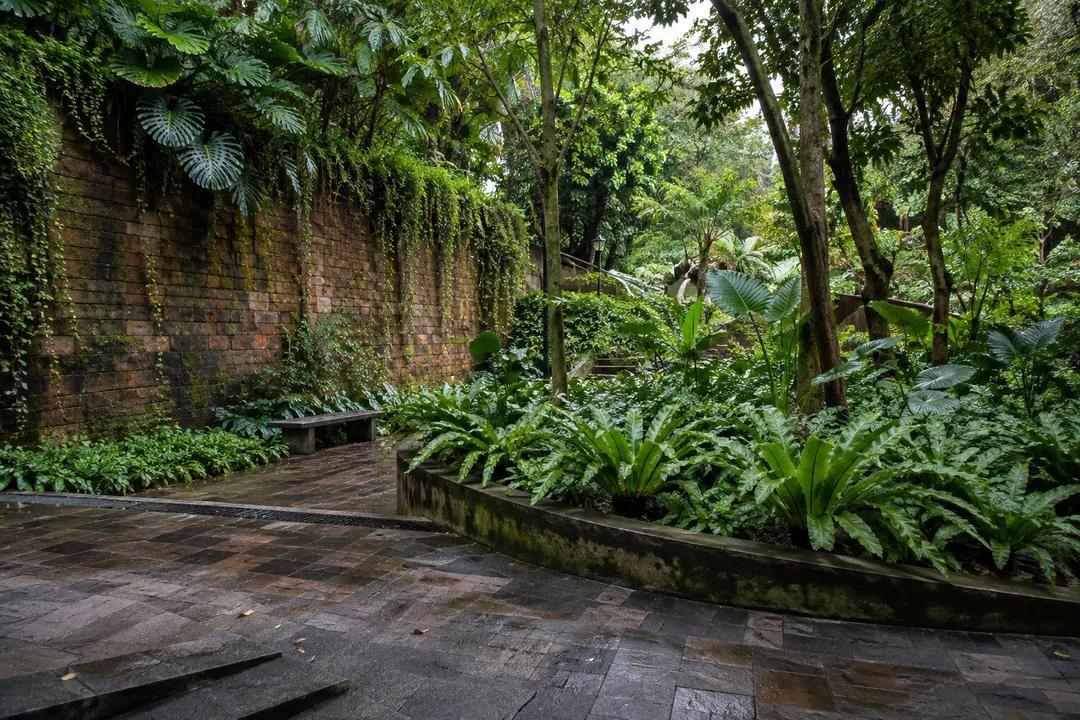
Singapore Hidden Courtyard Garden: Fort Canning Ferns
Fort Canning’s ferny walls and shaded steps create a courtyard garden mood in Singapore. Use material and slope prompts for a calm park walk.
Fort Canning gives Singapore a different kind of hidden courtyard garden experience: a historic hill landscape where brick, steps and ferny shade create small rooms within a larger park. Use this guide for a plant-and-material walk that stays attentive to enclosure without pretending every green pocket is a formal courtyard. The reward is a sequence of cool edges, open views and details that ask for patience. Keep the route open to small changes in weather. Ferns can look sharply graphic in bright light and almost smoky beneath cloud, while old masonry holds a different warmth underfoot. Rather than chasing a single perfect frame, make two short passes from different directions. The second pass often reveals a path junction, low wall or layered canopy that the first walk hid behind the slope.
Opening frame
Find the first enclosed pocket
A closer look
Begin where a wall, slope or thick planting narrows the view. Fort Canning is generous in scale, yet its best quiet moments arrive when the path briefly compresses. Stop before the opening and read the edges: brick or stone at one side, a canopy above, and a darker strip of ground leading forward. This is your hidden courtyard garden starting point. Notice how the hill makes enclosure through topography as much as through walls.
A practical rhythm
Let ferns lead your attention
What to notice
Ferns are excellent guides because their forms vary without demanding a plant label. Look for feathered fronds, curled new growth and layers that catch moisture. Compare a fern growing at ground level with one lifted on a bank. The difference shows how the park’s vertical structure works. If you are sketching, use repeated arcs rather than trying to draw every leaflet. The exercise keeps you moving while still rewarding close observation, especially in the softer light beneath the trees.
A gentle route
Follow brick as a quiet thread
Shared etiquette
Historic brick can anchor a tropical walk. Track where it appears, disappears and reappears beside steps or retaining edges. Warm masonry against cool foliage gives the eye a stable rhythm. Touch only surfaces that are clearly open to contact; many old walls are best appreciated visually. Imagine the route as a conversation between human construction and weather. Moss, stains and repaired joints are not defects to hide. They show how the hill has absorbed the city around it.
A visual prompt
Use the slope to change scale
Keep it comfortable
A short climb can change the garden’s scale more dramatically than a long flat path. From below, a wall may feel like a room boundary. From above, it becomes a low line beneath a canopy. Build your walk around two or three such shifts instead of chasing every branch. Pause after each change and describe what became visible. This keeps the visit exploratory while avoiding the pressure to cover the whole park in one go.
Practical notes

Freshly generated images interpret fern and brick textures and do not document this site.
Keep the forest social
One memory to keep
Fort Canning is shared by walkers, runners and people taking a break. Hold to the side on narrow paths and let faster traffic pass. Speak softly in the small planted pockets; sound carries under leaves. If you stop to photograph a wall or fern, stand clear of steps. A courteous group can enjoy the feeling of seclusion without claiming the space. That balance is part of the hidden courtyard garden idea: quiet emerges from behaviour as much as from design.
Next step
Create a fern-and-city contrast
A route for mixed energy
If your group includes a runner and a slow observer, agree on broad meeting points before entering the quieter pockets. The faster person can make a short loop while the observer studies a wall or fern, then you continue together. This keeps the garden from becoming a negotiation at every turn. It also respects people who use the hill for exercise. A hidden courtyard garden is a shared landscape, and the plan works best when different speeds can coexist without anyone feeling chased or held back.
Look for water without hunting it
Moisture is often present as a trace rather than a feature: a dark seam in brick, a sheen on a leaf, a cooler patch of soil. Notice these signs instead of searching for a dramatic pool. They show how the hill’s climate participates in the garden. A close look at a wet surface can be a better pause than a landmark photograph because it connects weather, material and planting in one small frame. Let the evidence stay subtle. The walk becomes more interesting when you are not waiting for every scene to announce itself.
A shaded writing prompt
At a comfortable clearing, write three verbs that describe your movement: climbed, turned, paused, listened, widened. Then add one noun for each: brick, fern, skyline, canopy. The resulting pairs form a miniature field note. They are more precise than a generic sentence about “lush nature” and easier to use when planning another walk. Invite a companion to do the same and compare how differently you experienced the same hill.
Leave the park with a boundary
At the final opening, identify the boundary you will remember most clearly. It could be a fern bank, a low wall or the moment the skyline appeared. A boundary is a useful memory because it holds the garden’s contrast. Once you cross it, let the city become louder again. The visit is complete when you can feel the difference without needing to keep looking back.
A final sensory inventory
Before you leave, list one sound, one smell and one surface. The sound may be leaves or shoes; the smell may be wet earth or warm brick; the surface may be rough masonry or a smooth railing. Keep the list literal. Sensory accuracy makes the memory durable and keeps the walk grounded in your own experience. When you later plan another Singapore garden, these three cues can guide you toward a place with a similar balance of enclosure and openness.
Let the route breathe
A hill garden feels generous when you leave a little space between decisions. Pause at the next broad landing, check how the group feels, and choose whether to continue or turn back. That small check keeps the walk welcoming for different ages and energy levels. It also lets the landscape remain the guide rather than a timetable.
A final observation
Let one wall or fern bank become the day’s reference. Return to it after the wider view and describe how your pace changed. That return adds depth without requiring a longer route or a crowded list of landmarks.
Ask Karpo for more information.
Keep reading
- Chinatown New in Town Weekend Planner: Errands and Temples
 Kampong Glam New in Town Weekend Planner: Mosque to Murtabak
 Holland Village New in Town Weekend Planner: Meet People