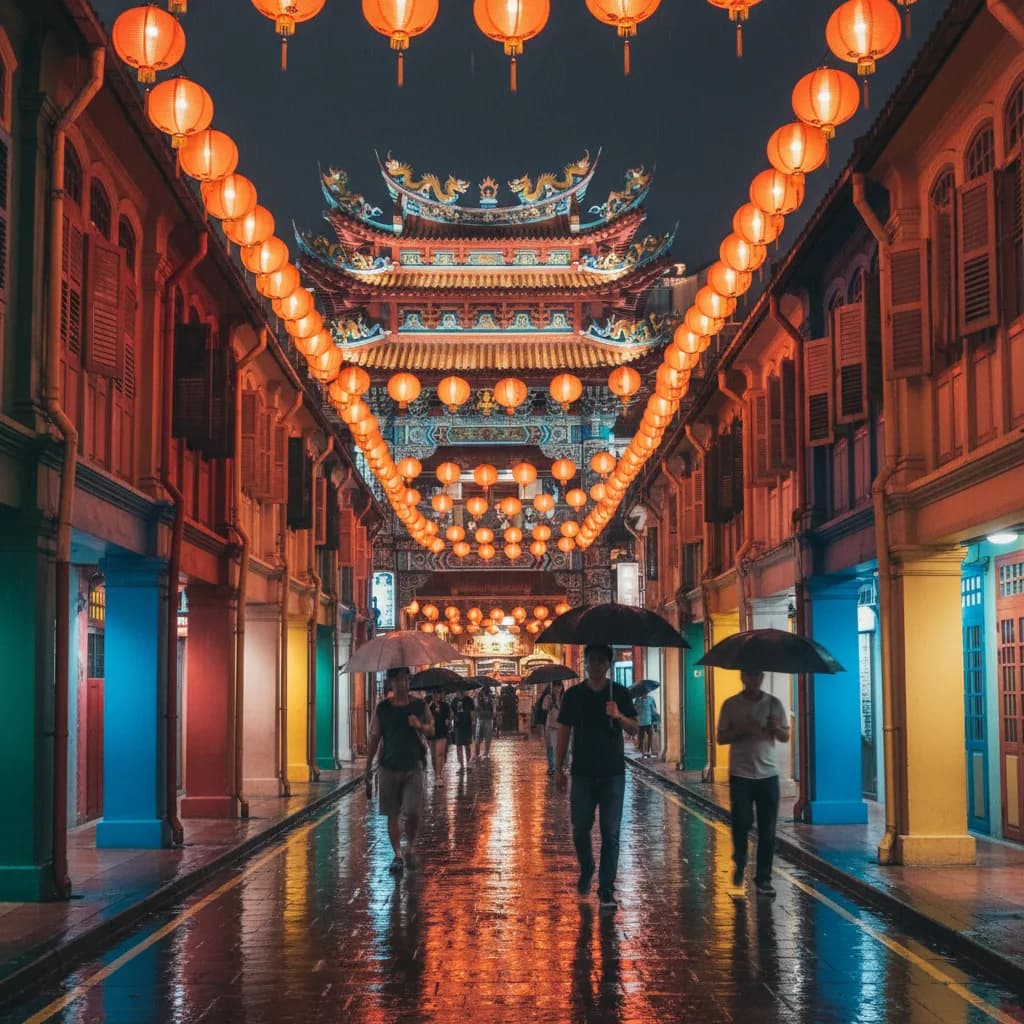
 Chinatown New in Town Weekend Planner: Errands and Temples
Weekend Plans
Singapore Hidden Courtyard Garden: CHIJMES Lawn and Walls
CHIJMES frames green lawn with heritage architecture in Singapore. Explore a hidden courtyard garden angle through white walls, planted edges and open sky.
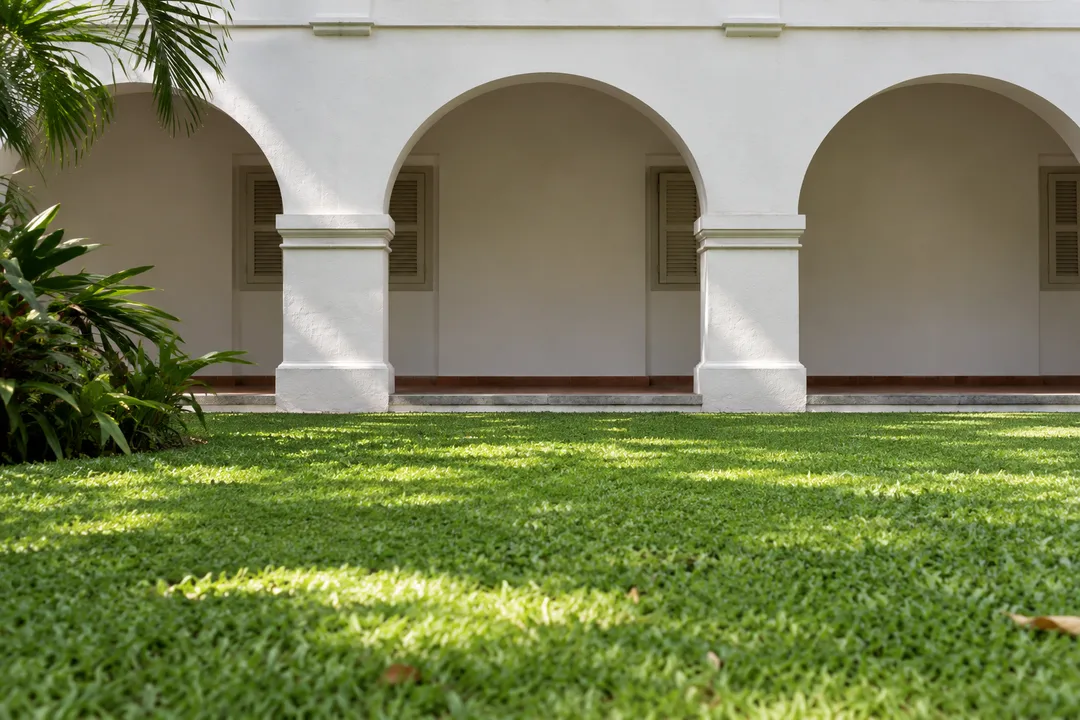
CHIJMES places green lawn within a Singapore heritage courtyard setting, with pale buildings around the view and CHIJMES Hall as an architectural backdrop. A hidden courtyard garden visit here is about that meeting of enclosure and openness. It is not a trek through dense woodland or a secluded wilderness. Look at how a small stretch of green changes the experience of the surrounding walls, then follow the contrast out into the Civic District.
The lawn is the empty part that matters
The operator describes The Lawn as a green outdoor space against CHIJMES Hall. Instead of asking what object you should stand beside for a photograph, begin with the apparently empty area between you and the architecture. The green surface gives the eye a pause before it reaches the building. This is an interpretation of the composition, rather than a claim about how every visitor experiences it. You can test it yourself by looking at the facade with and without the lawn in your field of vision.
An empty-looking space is not necessarily unused or available for your own activity. CHIJMES presents The Lawn as an event setting as well as part of its landscape. Keep that distinction in mind when imagining the visit. The useful experience can be a view from the visitor circulation space. You do not need to occupy the middle of the lawn to understand how it changes the courtyard, and this article does not promise access to an event area or an interior hall.
White walls make green more visible
Pale surrounding surfaces can make the edges of greenery especially noticeable. Look for a leaf outline against a wall, then compare it with the same kind of shape seen against other leaves. In the first view, the plant has a clear silhouette. In the second, its edge may dissolve into a larger mass. You are not looking for a rare species or an exceptional botanical specimen. The interest is in the way a built setting gives ordinary growth a different visual presence.
You can turn that comparison into a quiet game with a companion: each choose one boundary in the courtyard and explain what it separates. A wall divides inside from outside, a planted edge separates growth from circulation, and the horizon of a roof distinguishes architecture from sky. These are suggested observations, not an organised activity supplied by the venue. They make the garden angle more specific than simply describing the whole complex as charming and moving straight to the next attraction.
An inward place inside an active city block
The courtyard idea matters because it changes the direction of attention. A street encourages you to look along it toward the next crossing or destination. An enclosure turns attention back across a shared space. At CHIJMES, let that inward view be the reason to pause. You can appreciate the arrangement without assigning a personal story to every person around you. Other visitors are not characters to invent for an account of the site, and their reasons for being there may be entirely different from yours.
If you are visiting with someone who dislikes garden tours, there is no need to introduce the stop as a horticultural lesson. Ask what makes the space feel like a courtyard rather than an ordinary strip of landscaping. Their answer might concern the surrounding walls, the view of the sky or the relationship between routes. That gives you a shared subject grounded in what is visible. You can disagree without needing to decide whether one of you appreciates gardens more than the other.
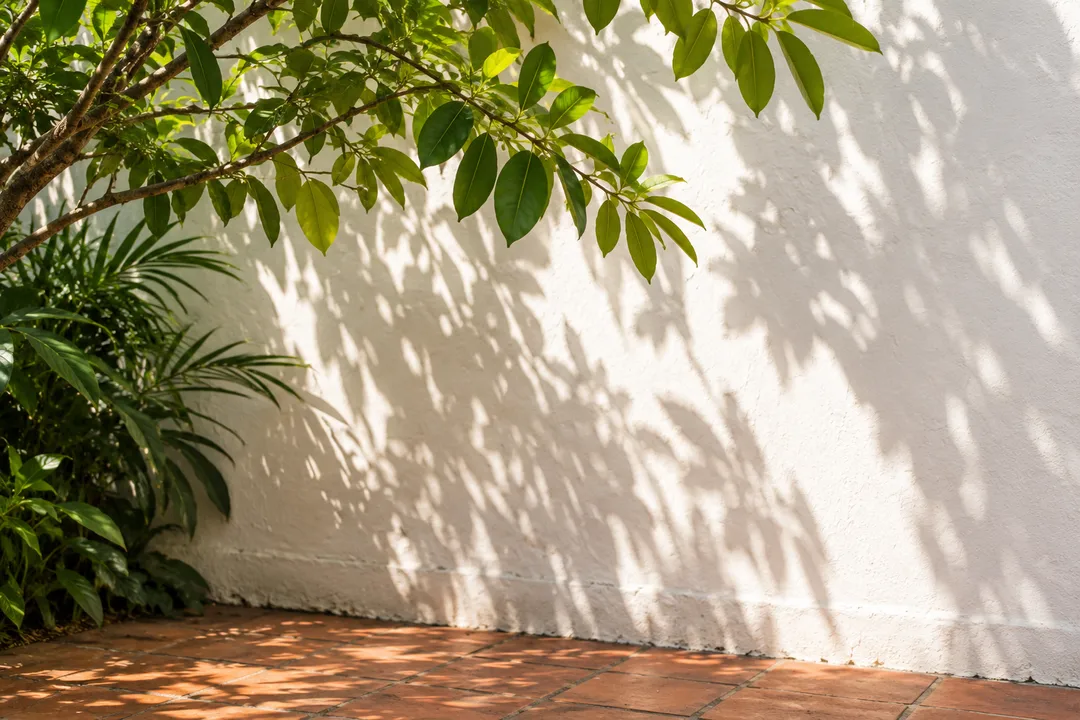
The images illustrate lawn, pale walls and foliage through AI-generated photography-style scenes; they do not document CHIJMES.
Give the architecture a supporting role
The hall is a strong backdrop, but an article about a courtyard garden need not become a checklist of architectural details. Make one composition that leaves the lawn in the foreground and one that concentrates on a planted edge. The contrast can show how much the building controls the view. Do not manufacture a historical explanation from that feeling. The operator's history material is the appropriate place for the complex's past, while this visit can remain focused on the relationship between the green space and its enclosure.
For a small drawing, outline the lawn as a shape before adding any detail of the building. That reverses the usual impulse to start with the most elaborate feature. It can be revealing to see how little information is needed to make the space recognisable as an enclosed outdoor room. Use a compact notebook rather than spreading paper across a route. If somebody passes through your view, let them pass. They are using the place, not disrupting your private studio.
A social courtyard need not be silent
CHIJMES brings together dining and other visitor activity around its outdoor spaces. Expectation is important: inward-looking architecture is not a guarantee of silence. Choose this garden angle when you enjoy the contrast between greenery and a social setting. If you need a completely solitary retreat, skip the assumption that a white wall and a lawn will produce one. The word hidden can describe a space revealed within a block without promising that nobody else has discovered it.
For a meeting with friends, agree on whether the courtyard is the destination or a point from which to continue. That small decision prevents a brief look from becoming an indefinite wait for someone to suggest the next activity. One person may want photographs, another a walk and another a place to talk. Give each preference a clear place in the plan. None of them requires you to claim the central lawn, interrupt an event setup or enter a space simply because a doorway looks inviting.
Let the Civic District supply the next contrast
When you leave the inward view, look at the change in scale along the surrounding streets. The sky becomes less like a framed ceiling, and the next decision becomes directional: which way to walk, where to cross and whether to continue. Carry the green-and-white contrast into the route by looking for another instance of planting beside a pale facade. Use ordinary public pedestrian space. A theme is enough to connect the walk without assigning every building a place on an ambitious itinerary.
Keep the onward section short if the courtyard was meant as a break between other plans. A pause loses its value when it automatically creates several additional destinations. You can finish after one interesting comparison and still have made a worthwhile visit. If the weather discourages walking, choose an indoor continuation on its own merits. Do not insist on another garden simply to maintain a theme that no longer suits the people with you.
Practical Notes for looking without taking over
Respect event boundaries and staff direction, keep paths clear and avoid stepping into planting to improve a picture. The operator's presentation of The Lawn as an event space means an uninterrupted empty view should never be treated as a promise. Photograph around other people rather than asking them to disappear from a place they are using too. The generated illustrations accompanying this article show the visual ideas of green, pale walls and enclosure without claiming to record the site itself.
Ask the Karpo APP for an onward Civic District idea if you want help deciding what sort of experience should follow. Describe whether you want to keep walking, change to something indoors or make another social stop. The courtyard's value is the change in attention it offers: from finding the next destination to noticing the space between surrounding buildings. Leave with that observation rather than a claim to have uncovered a garden nobody else knows.
Ask Karpo for more information.
Keep reading
- Chinatown New in Town Weekend Planner: Errands and Temples
 Kampong Glam New in Town Weekend Planner: Mosque to Murtabak
 Holland Village New in Town Weekend Planner: Meet People