 Chinatown New in Town Weekend Planner: Errands and Temples
Weekend Plans

Singapore Hidden Courtyard Garden: ACM River Light
Asian Civilisations Museum offers a calm Singapore courtyard pause by the river. Notice columns, daylight and planting before returning to the collection rooms.
The Asian Civilisations Museum Courtyard offers a calm Singapore pause beside riverfront galleries: look at its columns, filtered daylight, and planting before crossing back into the collection rooms. The garden-like space is most rewarding when you use it to reset your sense of scale between displays.
Begin With the Riverfront Light
Approach with the riverfront brightness behind you and notice how quickly the light softens. Columns divide the view into narrow vertical panels, while planting fills the lower register. The contrast is gentle rather than dramatic. Give yourself a minute to stand still, letting the eye move from sky to stone to leaf. That pause explains why the courtyard can feel separate from the busy waterfront even when the city remains close.
Read the Thresholds
Use the museum thresholds as your guide. Each doorway or opening edits the view, revealing a little planting, a strip of floor, or a column in profile. Walk toward one threshold, stop before crossing it, and look back. The return view may show a different balance of shade and brightness. This alternating movement—forward, pause, back—turns a compact space into a sequence rather than a single scene.
Columns as a Measuring Tool
The supplied focus emphasizes courtyard columns, riverfront light, and museum thresholds. Read the columns as a measuring tool instead of assigning them a grand story. Their spacing gives the courtyard a steady rhythm, and their shadows mark time without needing a clock. Compare the width of a column with the height of nearby plants. The relationship makes the planting feel intentional and helps you notice how architecture can frame a living edge.
Ceramic and Textile Associations
The museum’s ceramic and textile associations can guide your visual attention, but keep the connection light. Outside, seek repeated ideas of surface and pattern: a glossy leaf beside matte stone, a woven-looking shadow, or a border that resembles a textile edge. Inside the galleries, let those associations become more explicit through the collection. You are not searching for one exact object; you are carrying a sensory vocabulary from the courtyard into the rooms.
Slow Conduct Between Galleries
Pause at the side of a path before photographing, especially when visitors are moving between rooms. Keep conversations soft and avoid leaning against columns or planting borders. A good pace is one full loop at walking speed, followed by a second pass devoted to light. If a school group or tour is using the threshold, give it priority and return after the flow clears. The courtyard rewards patience more than possession of the best angle.
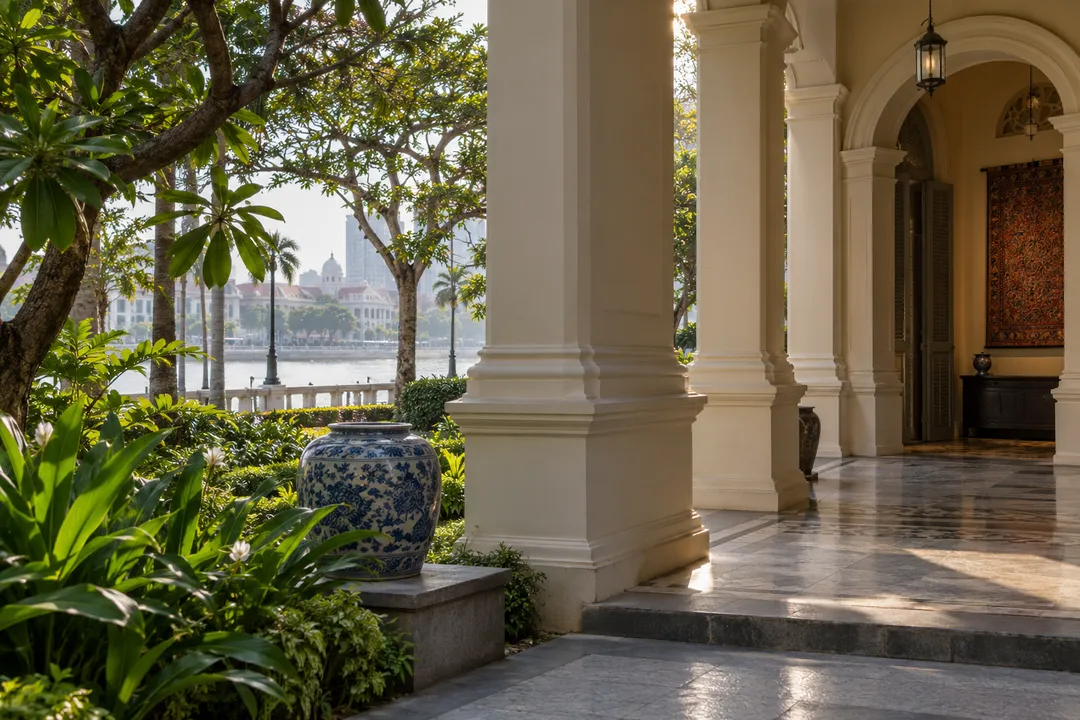
These newly generated images interpret columns, river light, and planting; they do not document the Asian Civilisations Museum courtyard.
Route in Three Movements
Take the route in three movements. First, trace the column line from the brightest opening toward the deepest shade. Second, angle across to a planting edge and look back through two thresholds at once. Third, enter a gallery, view a small cluster, and return to compare the indoor surfaces with the outdoor light. Finish at the river-facing side, where the city’s brightness can reset your eyes before you continue.
Empress Place Corners
After the museum, explore the Empress Place area on foot. Follow the river edge, then turn toward civic facades and small planted margins. Notice how open promenades, covered walkways, and shaded entrances alternate. The nearby walk does not need a fixed destination; its pleasure is in finding another framed view. Keep the pace unhurried so the courtyard’s quiet interval continues into the larger district.
The AI Image Disclaimer
The two illustrations for this article are AI-generated photographic interpretations, not documentary photographs. Treat them as visual mood boards, not evidence of exact planting or light. At the venue, look for the real conditions: filtered daylight on stone, a leaf catching brightness, and the way a column turns a broad riverfront view into a narrow composition.
Practical Notes
On a second pass, choose one column as a visual anchor and watch how many kinds of light cross it. Bright riverfront glare, soft reflected light, and shadow from planting can all occupy the same surface. This exercise keeps the courtyard tied to its setting beside the water while preserving its role as a museum threshold. It also gives you a concrete memory to carry into the ceramic and textile rooms.
If the courtyard is crowded, take the shortest clear line through it and return later for a fuller pause. A flexible route is more respectful than insisting on a particular angle. The space works because people can pass through without losing its calm. Let your own visit expand or contract around that shared circulation.
You can make the courtyard feel larger by changing your height of attention. First look at the column capitals or upper edges where daylight gathers. Then lower your gaze to planting and floor joints. Finally, look through a threshold toward the riverfront brightness. This three-level scan turns a short pause into a layered reading and helps distinguish architectural structure from temporary movement around you.
Visitors who enjoy objects may carry one material question into the galleries: where does a surface appear glossy, woven, polished, or porous? The courtyard does not need to reproduce a ceramic or textile exactly. It can simply sharpen your sensitivity to finish and pattern. When you return outside, compare an indoor memory with the actual texture of a column or leaf. The contrast is the point, not a forced match.
If the riverfront feels busy, spend longer in the deepest shade before leaving. A shaded pause can restore attention after crowded rooms. Conversely, if the courtyard is quiet, make the final stop at the brightest opening and watch silhouettes pass through the light. This small adjustment keeps the visit responsive while preserving the same three-part route of columns, planting, and thresholds.
Choose shoes that are comfortable for gallery floors and a riverside stroll. Carry water, and leave time for the transition between indoor rooms and outdoor shade. Keep the courtyard route adaptable, allowing other visitors to pass through thresholds without obstruction.
Ask Karpo for more information.
Keep reading
- Chinatown New in Town Weekend Planner: Errands and Temples
 Kampong Glam New in Town Weekend Planner: Mosque to Murtabak
 Holland Village New in Town Weekend Planner: Meet People