 Chinatown New in Town Weekend Planner: Errands and Temples
Weekend Plans
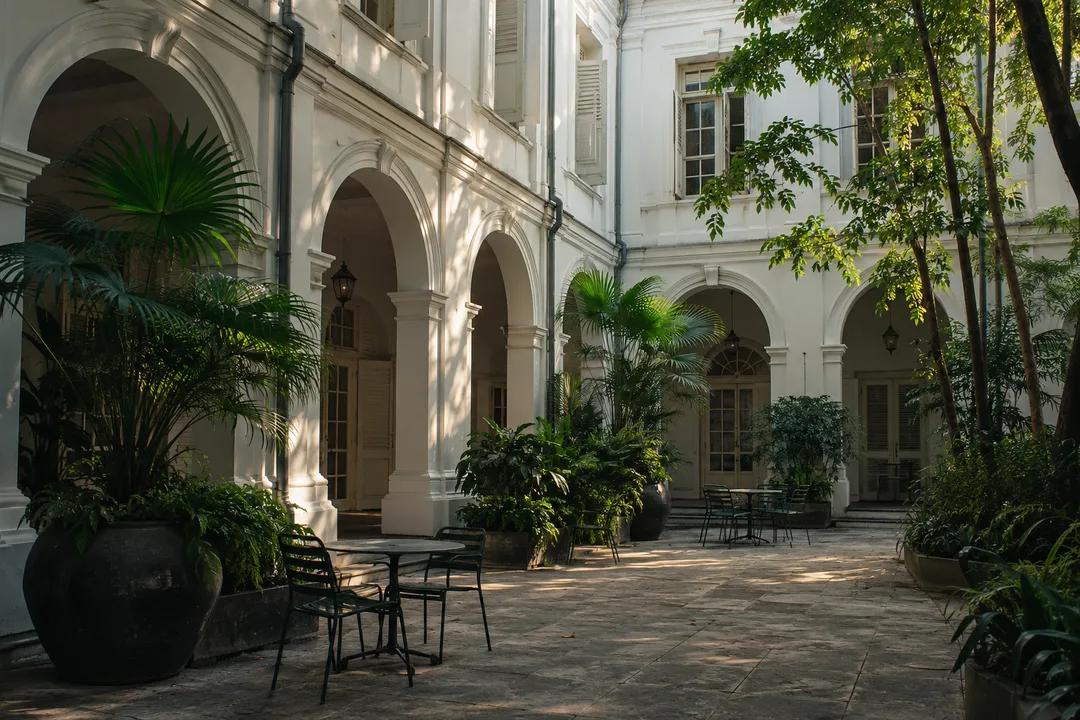
Singapore Hidden Courtyard Garden: Arts House Shade Walk
The Arts House courtyard in Singapore offers shaded masonry, tropical leaves and a quiet civic pause. Follow texture-led prompts for a gentle walk.
A courtyard at The Arts House can make the civic centre feel briefly private. Start with the green court itself, where planted edges meet old masonry and the surrounding building becomes a calm frame. This hidden courtyard garden guide is for a visit built around looking rather than racing between sights. Give the first few minutes to shade, texture and the small changes in sound that appear when you step out of a busy route. The court is most rewarding when you let it set the tempo. From there, a short walk through Singapore's civic district can become a continuation of the same conversation between enclosure, leaf and stone.
Enter Through Texture
Let the Court Set Your Pace
First Look: Wall, Leaf, Threshold
Begin at the edge instead of walking straight to the middle. Let your eyes travel from the paving to the planted border, then up toward the wall and the openings beyond it. That low-to-high sequence gives the court a readable shape before you start taking pictures. Listen for the contrast between a sheltered corner and the wider city outside. Notice where the foliage interrupts a hard line, where a repair changes the colour of the masonry, and where the light makes a doorway look deeper than it is. These are observations rather than clues to decode. A measured first pass keeps the garden from becoming background scenery.
A Three-Stage Observation Loop
Read Shadow as Architecture
Find the Living Edges
Use the court as a three-part visual exercise. First, choose one broad view that shows the relationship between the planted area and the building. Next, follow a single line—an edge of paving, a low wall or a row of leaves—until it disappears. Finally, return to the original view and ask what your eyes missed. A companion can take a different role, looking only for reflected light or for places where the canopy changes the apparent height of a wall. Comparing those notes is more satisfying than trying to name every plant. The building supplies the geometry; the greenery supplies the interruptions.
Route with One Deliberate Turn
Follow the Cooling Materials
The Etiquette of a Shared Pause
Do not treat tropical planting as one undifferentiated green mass. Separate broad leaves from narrow blades, glossy surfaces from matte ones, and upright stems from plants that lean into a passage. Look at how each form behaves against the architecture. A leaf that catches a bright patch becomes a marker; the same leaf in shade becomes a soft silhouette. Resist the temptation to invent a species story from a quick glance. Naming visible shapes is enough. It keeps the attention honest and turns an ordinary pause into a small lesson in composition, with the court's masonry acting as a steady counterweight to growth.
Photograph From the Perimeter
Leave Room for Passing Bodies

Freshly generated images interpret shaded civic garden textures and do not document this site.
What to Bring, What to Leave
The most considerate way to use a shared court is to stay light on equipment and generous with space. A notebook, a small camera or simply a pair of attentive eyes is enough. Keep conversation low near a threshold, step aside when someone needs to pass, and avoid turning a doorway into a portrait set. If a seat is occupied, observe from the perimeter rather than waiting in front of it. The best photograph may be the one made without moving furniture, asking strangers to pose or blocking a route. Courtyard atmosphere depends on circulation as much as on planting, so your behaviour is part of the scene.
Practical notes for a civic garden
Turn Toward the River Light
Keep One Detail in Memory
Once you have read the court, extend the outing through the civic district with one intentional turn. A route toward open river light changes the visual register: solid walls give way to brighter gaps, and the sheltered green becomes a remembered reference rather than the entire destination. Another option is to stay among arcades and narrow passages, comparing how different kinds of cover alter the sound of footsteps. You do not need a checklist of landmarks. Choose the next street because it echoes one feature you noticed—a repeated vertical, a patch of shade, or a planted edge that softens a hard boundary. That makes the walk feel authored without becoming rigid.
A Slower Next Step
Make the Visit Conversational
A Colour Game for Mixed Ages
Families can share the space without turning the visit into a race. Invite each person to pick one colour from the architecture, then look for three natural versions of it in the court. Warm brick might reappear in a stem; a cool painted surface may find an echo in a glossy leaf. Keep the challenge observational and let everyone choose a different answer. Children can draw an arrow showing how they entered and a circle around the quietest view. Adults can add one sentence about the way the canopy changes the building's outline. The activity gives the group a common language while preserving the stillness that makes a courtyard worth visiting.
When the Afternoon Changes
A later visit can reveal a different balance between leaf and masonry, even when the layout has not changed. Begin by finding the portion of the court that still carries direct light, then watch the shaded boundary advance as the afternoon softens. Look for the moment a plant shifts from a crisp outline to a dark, layered shape. If you plan to continue toward the river, leave a buffer for this transition; rushing out can erase the very change you came to notice. Before departing, turn around once. Remember where light withdrew first, which opening became a deep rectangle, and which planted edge stayed readable longest.
Give the Courtyard a Margin
Build a little slack into the plan. A conversation may last, a short programme may change your rhythm, or rain may make the covered edge more appealing than the next landmark. Leaving margin means you can finish an observation instead of abandoning it for the sake of a timetable. If a friend wants context, describe the texture or boundary that caught your attention; a personal detail will travel better than a list of facts. Solo visitors can let notes remain fragmentary. The aim is to make a small urban enclosure available to attention, then carry that attentiveness into whatever ordinary street comes next.
Close on Three Boundaries
Before stepping back into the civic district, name three boundaries you actually saw: perhaps a wall, a canopy and a threshold, or three different edges of your own choosing. Then decide which boundary you would seek in another city. This closing gesture keeps the Arts House court from becoming a claim of secret access or guaranteed solitude. Its value lies in proportion, planting and considerate use—the way a public setting can create a moment that feels personal without being private. Carry one remembered contrast into the rest of your Singapore plans: cool stone against leaf, shadow beside light, or a narrow passage opening into sky.
Ask Karpo for more information.
Keep reading
- Chinatown New in Town Weekend Planner: Errands and Temples
 Kampong Glam New in Town Weekend Planner: Mosque to Murtabak
 Holland Village New in Town Weekend Planner: Meet People