 Kovan Hainanese Curry Rice Lunch Picker: Heartland Plates
Restaurants
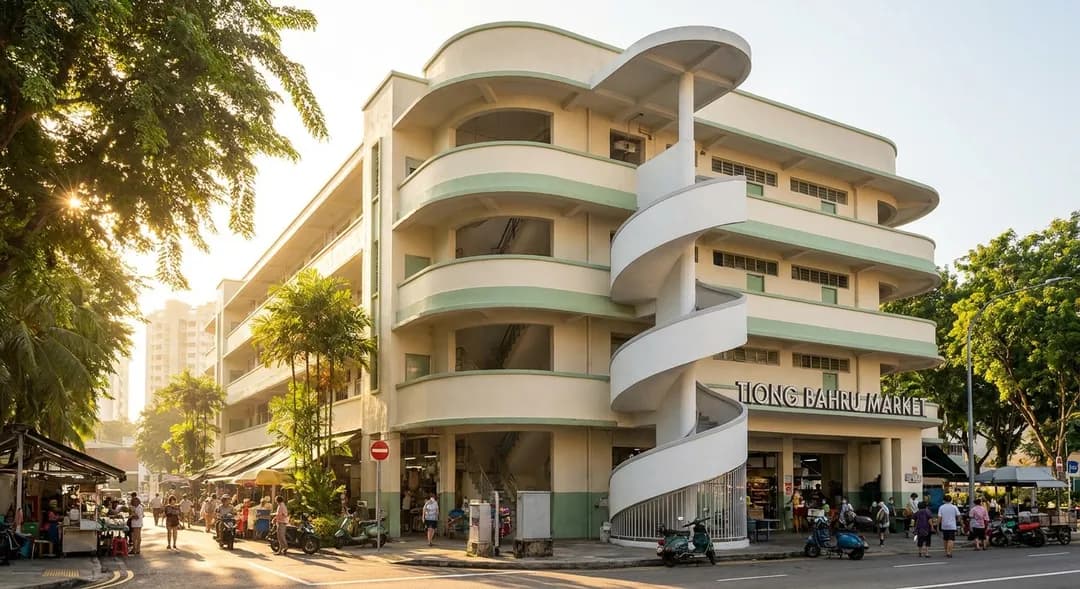
Tiong Bahru Heritage Food Court Finder: Art Deco Trail
Explore Tiong Bahru Art Deco market pavilions with heritage filters to experience communal morning tea traditions and breezy spiral staircase halls.
Stepping into the tranquil residential enclave of Tiong Bahru transports urban wanderers into one of Southeast Asia's most celebrated early twentieth-century public housing estates, where communal market dining and architectural elegance intertwine seamlessly. Utilizing an insightful heritage food court finder allows travelers to appreciate the neighborhood's distinctive Streamline Moderne aesthetic while discovering an expansive second-floor hawker center renowned for heritage breakfast dishes. Surrounded by rounded corner residential blocks, sweeping curved concrete balconies, and external spiral staircases, the contemporary Tiong Bahru Market serves as the vibrant social nucleus of this conserved precinct. Karpo APP guides your neighborhood excursion with curated walking paths, architectural insights, and contextual history, helping you explore Tiong Bahru's storied market tradition with complete cultural appreciation.
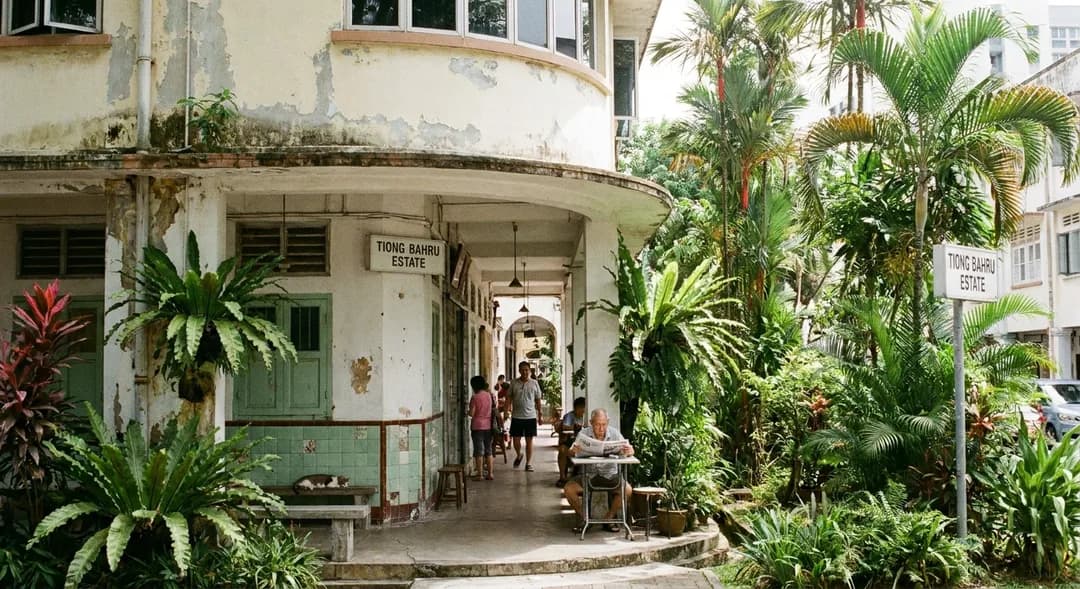
Streamline Moderne Architecture And Estate Heritage
Developed during the nineteen thirties by the colonial Singapore Improvement Trust, Tiong Bahru represented an innovative vision of planned urban living designed to relieve overcrowded tenements in the nearby central district. Architects drew inspiration from contemporary British garden cities and international Streamline Moderne movements, incorporating curved aerodynamic corners, long horizontal banding, and porthole window motifs evocative of ocean liners. When the central municipal market underwent redevelopment in the early two thousands, municipal planners deliberately mirrored these architectural signatures in the new two-story civic complex, outfitting the exterior with fair-faced brickwork, wide open balconies, and central circular skylights that illuminate the communal gathering zones throughout the daylight hours.
The physical layout of Tiong Bahru Market establishes a clear functional separation between commercial daily provisions and social dining. The ground floor houses an energetic wet market where purveyors display fresh tropical fruit, seasonal seafood, and fragrant local herbs, while the upper level accommodates a cavernous food hall organized around an open central courtyard. High vaulted roofs and continuous louvered perimeter vents facilitate natural cross-ventilation, capturing refreshing maritime breezes that keep the vast dining space pleasantly temperate throughout warm tropical afternoons without relying on mechanical refrigeration or closed air curtains.
Morning Communal Tea Culture And Historic Bird Singing Memories
The social atmosphere inside Tiong Bahru's second-floor food court reaches its peak during the morning hours, when multigenerational families and long-time neighborhood elders gather around marble-topped tables for traditional breakfast. Scented steam from ceramic cups of dark local coffee mingles with the buttery fragrance of toasted bread and slow-poached eggs, creating an inviting sensory backdrop. This daily communion reflects decades of established residential camaraderie, where stallkeepers recognize regular patrons by name and prepare customized beverage orders with practiced ease, sustaining a sense of belonging in the heart of a rapidly evolving metropolis.
In decades past, this neighborhood was internationally celebrated for its spirited bird-singing corners, where local hobbyists suspended ornate bamboo cages from high wooden poles to let their prized songbirds practice melodious trills while owners socialized over tea. While the original corner near Seng Poh Road has transitioned into a quiet historic marker, the spirit of relaxed community congregation remains deeply embedded in the market's upper dining gallery. Visitors sitting near the perimeter balustrades can observe older residents reading vernacular newspapers while neighborhood pet owners converse gently in the breezy courtyard below, sheltered by mature tropical trees.
Legendary Breakfast Recipes And Traditional Culinary Methods
Tiong Bahru Market stands as an undisputed temple of heritage Singaporean breakfast specialties, sheltering stalls whose recipes trace their lineage back more than sixty years to the estate's founding era. Legendary purveyors of chwee kueh steam silky mounds of rice flour cake in individual aluminum cups, crowning them with fragrant spoonfuls of slow-cooked preserved radish infused with garlic and shallot oil. Nearby, Teochew fishball noodle artisans toss springy egg noodles in piquant vinegar-chili dressings, accentuating the dish with handmade fish dumplings prepared from fresh daily catches delivered each morning.
The meticulous culinary preparation evident across these stalls requires uncompromising discipline and physical stamina. Dough for traditional Cantonese roasted pastries is kneaded and layered before sunrise, producing golden egg tarts and flaky savory parcels with unmistakable architectural precision. Watching seasoned cooks manage boiling broth kettles with synchronized rhythm underscores the artisanal nature of Singapore's hawker heritage. Patrons appreciate the transparent honesty of open stall windows, where every step of the culinary craft remains visible to waiting diners, fostering deep trust between makers and consumers.
Walking The Shaded Lanes Of Seng Poh And Moh Guan
After dining within the upper pavilion, venturing down the market's dramatic spiral staircases leads into an enchanting walking circuit along Seng Poh Road and Moh Guan Terrace. The horseshoe-shaped residential blocks enclose landscaped internal courtyards shaded by mature tropical angsana and rain trees, offering peaceful pedestrian refuges shielded from automotive traffic. Walking along these quiet residential lanes reveals delicate wrought-iron window grilles, vintage terrazzo doorsteps, and whimsical outdoor street art murals depicting historic neighborhood life and mid-century family memories.
In recent years, the perimeter streets of Tiong Bahru have embraced an eclectic blend of independent bookstores, artisan bakeries, and design ateliers that coexist harmoniously with traditional hardware merchants and neighborhood barbershops. This sympathetic adaptive reuse preserves the neighborhood's low-rise scale while fostering a dynamic creative community. Strolling through the shaded five-foot-ways allows you to admire conserved SIT housing blocks, discovering how thoughtful urban conservation can honor historic housing design while sustaining a vibrant modern social fabric that welcomes generations of diverse residents.
Transit Connections And Visitor Guidelines For Tiong Bahru
Visiting Tiong Bahru is straightforward thanks to convenient public transportation links connecting the estate with central Singapore. Tiong Bahru MRT Station on the East West Line is situated roughly ten minutes on foot from the market, offering an enjoyable walk along tree-lined residential streets. Alternatively, Havelock MRT Station on the Thomson-East Coast Line provides direct access to the eastern gateway of the estate, allowing pedestrians to enter through the historic conservation blocks along Zion Road without facing complex highway crossings.
To maximize your experience, plan an arrival between eight and ten in the morning, when the market's culinary stalls are fully operational and the outdoor light beautifully illuminates the curved Art Deco facades. Carrying small denominations of cash ensures smooth transactions with traditional vendors, while modest, respectful demeanor preserves the peaceful residential ambiance valued by local inhabitants. Karpo APP serves as your reliable cultural companion, offering interactive estate maps and architectural walking itineraries throughout historic Tiong Bahru.
Ask Karpo for more information.
Keep reading
- Kovan Hainanese Curry Rice Lunch Picker: Heartland Plates
 Tampines Mee Rebus Breakfast Picker: Round Market Bowls
 Jurong West Mee Rebus Breakfast Picker: Boon Lay Bowls