 Kovan Hainanese Curry Rice Lunch Picker: Heartland Plates
Restaurants
Little India Heritage Food Court Finder: Tekka Market Trail
Locate Little India heritage food halls across Serangoon Road using cultural precinct filters to explore vibrant multi-ethnic stalls along the Rochor corridors.
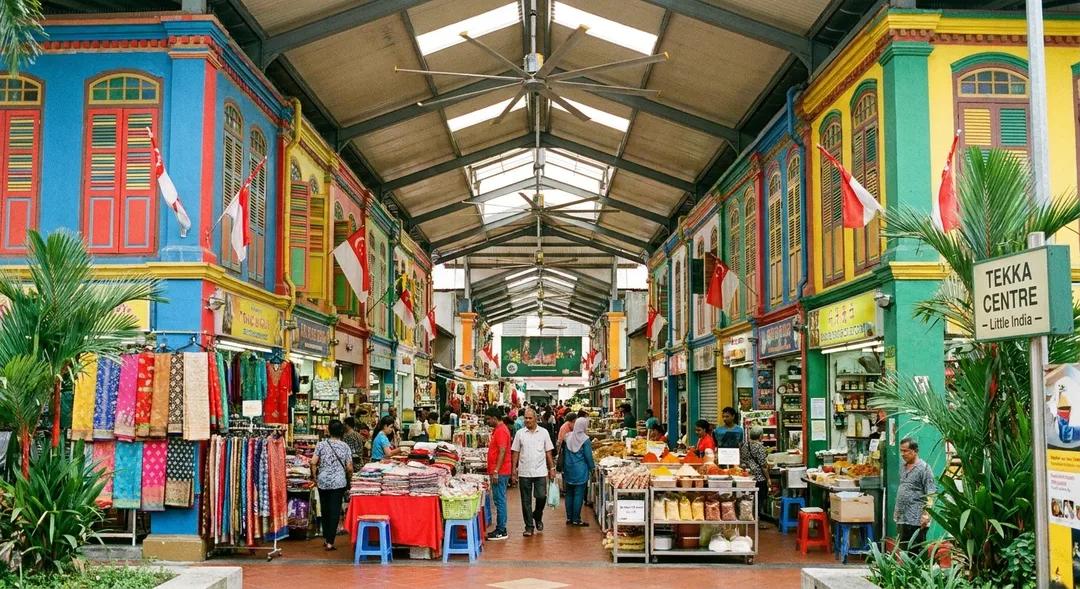
Immersing yourself in the sensory vibrancy of Little India brings cultural travelers to Tekka Centre, one of Singapore's most dynamic and culturally diverse heritage market complexes. Utilizing an insightful heritage food court finder enables visitors to navigate this expansive public facility, which combines a thriving ground-floor hawker hall, an energetic fresh produce market, and a colorful upper-level textile bazaar under one massive roof. Situated at the junction of Serangoon Road and Bukit Timah Road, Tekka Centre has served as the commercial and social anchor of Singapore's South Asian community for generations. Karpo APP guides your walking excursion through Little India's conserved historic corridors, providing architectural context, cultural insights, and intuitive spatial orientation throughout this historic trade quarter.
From Kandang Kerbau Cattle Pens To Modern Civic Center
The historic roots of Tekka Centre trace back to the mid-nineteenth century, when the surrounding Rochor district was known in Malay as Kandang Kerbau, meaning cattle enclosure. European and Indian cattle traders established pens and abattoirs along the banks of the Rochor Canal, drawing generations of immigrant laborers, merchants, and artisans to settle in the immediate vicinity. In nineteen fifteen, municipal authorities constructed a permanent municipal market known colloquially as Tekka Pasar, named after the wild bamboo clusters that formerly grew along the waterway, cementing the area's commercial identity.
The original colonial brick market structure stood across the road until nineteen eighty-two, when vendors were relocated into the current multi-story complex, originally named the Zhujiao Centre before community petitions successfully restored its beloved historical moniker of Tekka. Today, the complex features broad open-sided concrete galleries designed for maximum airflow, brightly painted exterior columns, and generous pedestrian plazas that accommodate thousands of daily shoppers and diners from every walk of life, preserving the energetic spirit of early street trading in a durable modern framework.
Multi-Ethnic Culinary Traditions Beneath One Breezy Roof
What makes dining at Tekka Centre an extraordinary cultural experience is its seamless integration of distinct South Asian culinary traditions alongside authentic Chinese and Malay hawker stalls. The food hall is celebrated nationwide for its extraordinary array of Indian Muslim, North Indian, and South Indian cuisines. Fragrant pots of spiced dum biryani, simmered with basmati rice, saffron, and tender meats, are dished onto fresh banana leaves alongside tangy vegetable curries, crisp papadums, and cooling cucumber raita that soothe the palate.
A few stalls away, skilled roti prata masters knead, stretch, and twirl elastic wheat dough through the air with mesmerizing agility before searing it on flat cast-iron griddles until golden and flaky. Diners dip the warm, crispy flatbreads into rich dhal and fish curry, pairing their breakfast with tall glasses of freshly pulled teh tarik or sweet mango lassi. Meanwhile, veteran Chinese and Malay hawkers serve traditional braised duck rice, Hainanese chicken rice, and spicy mee rebus, embodying Singapore's cherished multicultural harmony in every shared meal across shared tables.
The Rhythms Of An Authentic Community Gathering Space
The atmosphere within Tekka Centre is delightfully authentic and unfiltered, operating as a vital community lifeline rather than a polished tourist venue. From early morning onwards, local families, construction workers, community elders, and international travelers gather across hundreds of shared tables, conversing in Tamil, Malay, English, and various Chinese dialects. The sensory stimulation is immense, with the rich aromas of crushed cardamom, roasted cumin, and fresh ginger drifting through the breezy corridors, accompanied by the gentle clinking of stainless-steel thali platters.
Directly adjacent to the dining hall, the ground-floor wet market provides an exhilarating glimpse into local culinary sourcing. Fishmongers display fresh snapper, mackerel, and crabs on beds of crushed ice, while butchers and produce vendors carve halal meats and arrange pyramids of fresh turmeric, curry leaves, and green chilies. Walking through these lively market aisles offers a deeper appreciation for the fresh, raw ingredients that fuel the neighboring food stalls, highlighting the intimate bond between daily food commerce and neighborhood survival across the generations.
Strolling Conserved Shophouse Corridors Along Serangoon
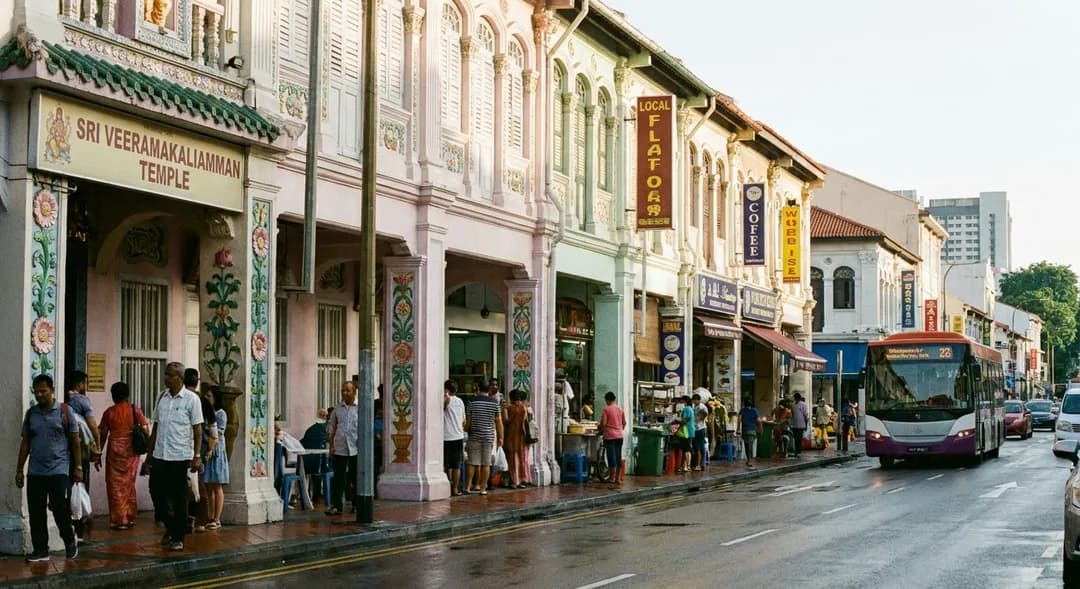
After dining at Tekka Centre, stepping out onto Serangoon Road invites an unforgettable walking tour through the conserved historic heart of Little India. The wide pedestrian sidewalks and covered five-foot-ways are lined with conserved two-story shophouses painted in vibrant tropical hues of saffron yellow, turquoise, and magenta. Traditional goldsmiths, floral garland makers weaving fragrant jasmine blossoms, and spice grinding shops spill out onto the pavement, creating an intoxicating tapestry of sights and scents that reflects centuries of continuous merchant commerce.
Winding through Campbell Lane and Dunlop Street leads to the Indian Heritage Centre, a striking contemporary glass-fronted museum whose architectural facade reflects the historic streetscape while housing rich exhibitions on South Asian migration to Southeast Asia. Further north along Serangoon Road, the towering gopuram of the Sri Veeramakaliamman Temple rises majestically over the rooftops, adorned with intricate sculptures of Hindu deities. These historic landmarks highlight how Little India maintains its distinct cultural identity while welcoming visitors from across the globe into its vibrant civic life.
Transit Connectivity And Guidelines For Visiting Tekka
Visiting Tekka Centre is remarkably straightforward thanks to exceptional public transit integration. Little India MRT Station, an important interchange between the North East Line and Downtown Line, features direct escalators that emerge right into the covered outdoor plaza of the complex. Arriving visitors can step directly from air-conditioned subway platforms straight into the bustling market hall without crossing busy roadways, making the journey completely weatherproof regardless of sudden tropical downpours. In addition, numerous cross-island municipal bus routes stop directly along Bukit Timah Road, providing frequent connections from Bugis, Orchard Road, and Marina Bay.
To experience Tekka Centre at its most vibrant, consider arriving during late morning between nine and eleven, when the breakfast flatbread stalls are at their peak and the adjacent produce market is bustling with activity. Carrying small denomination cash facilitates effortless transactions with traditional vendors, and wearing comfortable, casual attire suits the open-air tropical pavilion. Taking time to wander slowly through the ground-level arcades allows you to absorb the full cultural richness of the enclave. Karpo APP provides an indispensable cultural guide, offering curated walking maps and architectural highlights throughout historic Little India.
Ask Karpo for more information.
Keep reading
- Kovan Hainanese Curry Rice Lunch Picker: Heartland Plates
 Tampines Mee Rebus Breakfast Picker: Round Market Bowls
 Jurong West Mee Rebus Breakfast Picker: Boon Lay Bowls