 Kovan Hainanese Curry Rice Lunch Picker: Heartland Plates
Restaurants
Chinatown Heritage Food Court Finder: Maxwell Walk
Navigate Chinatown historic covered food courts using heritage filters to locate traditional Cantonese stalls and shaded timber walkways across Ann Siang Hill.
Navigating the conserved heritage food courts throughout Singapore's Chinatown district reveals an architectural and social lineage shaped across more than a century of continuous civic habitation. Rather than wandering haphazardly through crowded commercial alleys under the tropical midday sun, beginning your cultural food walk with a structured heritage food court finder enables you to locate authentic communal dining pavilions anchored within gazetted historic conservation zones. From the soaring pitched timber trusses of Maxwell to the multi-level shophouse perimeters bordering Amoy Street, these communal dining complexes preserve authentic culinary techniques passed down through generations of immigrant cooks. Karpo APP provides an intuitive platform to map conserved food centers by architectural layout, pedestrian walkways, and cultural heritage credentials, allowing travelers to experience Singapore's living street food legacy with confidence and spatial clarity.
Architectural Origins Of Conserved Covered Food Pavilions
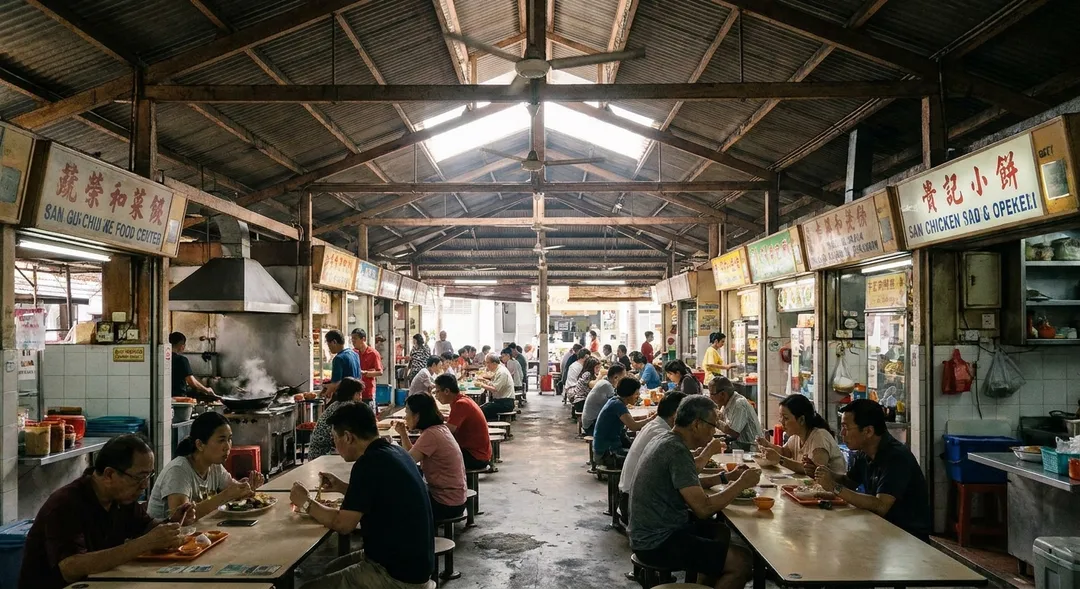
The physical configuration of Chinatown's premier covered food halls reflects deliberate twentieth-century municipal efforts to transition open-air street hawkers into sanitary, permanent civic shelters without dismantling communal dining traditions. Maxwell Food Centre stands directly upon the historic site of a pre-war market hall constructed during the late nineteen twenties, featuring tall central clerestory roofs designed to maximize natural upward thermal ventilation in equatorial weather. Walking beneath these broad industrial rafters, visitors notice how natural daylight filters evenly across polished terrazzo flooring and rows of round communal tables. The surrounding perimeter retains glimpses of pastel-painted colonial shophouse facades along South Bridge Road, grounding your dining experience within Singapore's protected historic urban core.
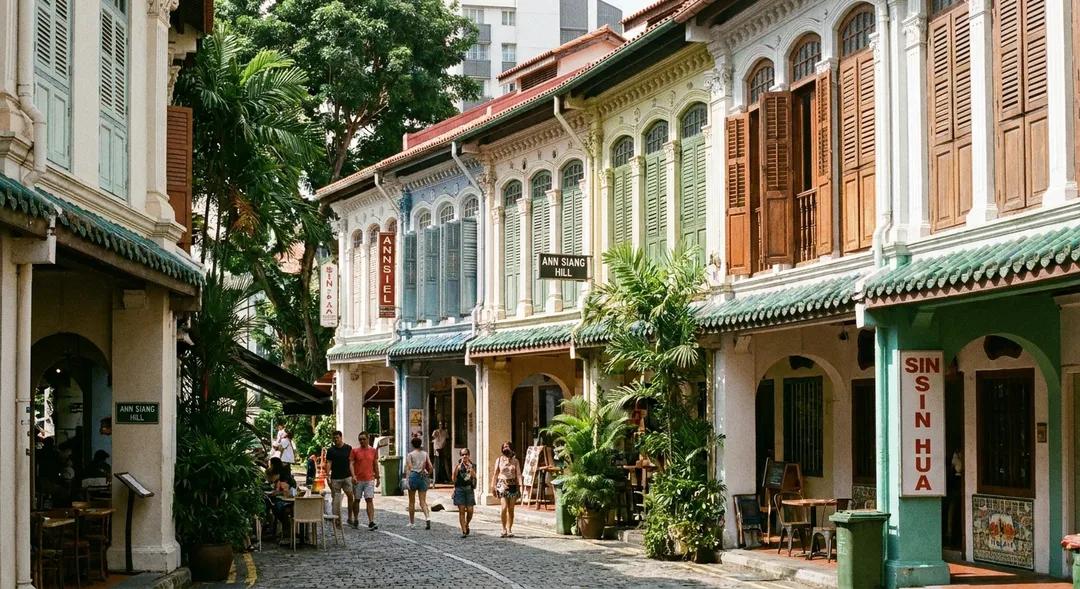
A short stroll northward leads to Amoy Street Food Centre, a split-level modernist pavilion ingeniously integrated into the sloping hillside of Ann Siang. Constructed during the early nineteen eighties to accommodate street vendors displaced by downtown urban renewal, this facility features open concrete balustrades, broad perimeter staircases, and unobstructed breezeways that channel cooling gusts from the nearby harbor basin. Here, the juxtaposition between traditional hawker stalls and towering contemporary financial district glass towers illustrates Singapore's layered urban transition. The ground-level rows foster an intimate morning market atmosphere, while the upper gallery accommodates office workers and neighborhood residents conversing over steaming porcelain bowls.
Communal Dining Rituals And Table Etiquette Along Ann Siang
Observing the daily social choreography within Chinatown's heritage dining halls offers a window into Singapore's unique communal culture. Long wooden and fiberglass tables invite shared seating, where local seniors carrying morning newspapers sit harmoniously alongside young creative professionals and curious global wanderers. A cherished custom involves placing a packet of tissue paper or an umbrella across an empty chair to reserve your spot while ordering, an informal local social contract known as chope that remains universally respected. Taking time to absorb these subtle courtesies enriches the journey, transforming a routine midday meal into an authentic encounter with everyday neighborhood life.
The soundscape of these covered pavilions forms an essential element of their heritage appeal. Resonant clatter from metal woks, rhythmic slicing against thick tamarind wood chopping blocks, and melodic sing-song dialect calls create an energetic ambient symphony beneath the vaulted ceiling. Unlike air-conditioned suburban shopping mall dining basements, these breezy halls encourage lingering conversations as giant overhead ceiling fans maintain continuous air movement. Pedestrians often pair a hearty meal with a leisurely stroll through the quiet pedestrianized lanes of Ann Siang Hill, admiring restored louvered shutters, decorative ceramic tiles, and historic clan association headquarters.
Preserving Intergenerational Culinary Craftsmanship
The true soul of Chinatown's historic food courts resides in the dedicated stallholders who have spent decades perfecting singular traditional recipes. Generational master cooks arrive before dawn to prepare slow-simmered broths, hand-roll delicate wheat noodles, and tend glowing charcoal braziers according to treasured family formulas. Distinct culinary lineages, including Hainanese chicken rice masters, Teochew fish soup specialists, and Cantonese roast meat roasters, operate side by side in narrow, stainless-steel culinary modules. Observing their practiced, fluid motions behind steaming display windows highlights the intense discipline and artisanal pride required to sustain Singapore's street food culture.
Modern apprenticeships and succession initiatives increasingly ensure that these irreplaceable recipes survive into the coming decades. Second and third-generation hawkers now work alongside their aging parents, maintaining the exact balancing of star anise, dark soy sauce, and white pepper while introducing sustainable packaging and tidy presentation standards. This deliberate intergenerational transfer ensures that the distinctive smoky aromas and authentic culinary memories defining Singapore's UNESCO-recognized hawker culture continue to anchor the downtown community against rapid metropolitan change.
Connecting Shaded Heritage Walks And Temple Precincts
A major advantage of exploring Chinatown through its conserved food courts is the effortless connectivity to surrounding civic and religious monuments. Leaving the western exit of Maxwell places you immediately opposite the majestic multi-tiered timber pagoda of the Buddha Tooth Relic Temple, whose ornate Tang dynasty architecture frames the streetscape. Winding eastward through Mosque Street and Pagoda Street, sheltered pedestrian arcades shield walkers from sudden tropical downpours while offering views of traditional Chinese medicine halls, tea merchants, and historic shophouse facades. The compact street grid encourages spontaneous detours down peaceful side alleys.
Continuing toward Telok Ayer Street, the historic coastline route formerly visited by early seafaring arrivals, you encounter Thian Hock Keng Temple and the historic Nagore Dargah heritage shrine. These centuries-old places of worship stand as architectural testaments to the diverse seafaring communities who built Singapore's trading economy. The heritage food courts serve as natural community anchors along this historic corridor, providing welcoming resting spots where walkers can recharge with cold sugarcane juice or traditional local coffee before continuing their architectural exploration.
Transit Connections And Practical Walking Recommendations
Reaching Chinatown's historic food courts is remarkably simple through Singapore's comprehensive underground railway network. The Maxwell MRT Station on the Thomson-East Coast Line features an exit situated right along the pedestrian concourse outside the food pavilion, while Chinatown MRT Station connects both the Downtown and North East Lines within a short sheltered walk. Clear multilingual directional signage assists arriving visitors in navigating subterranean concourses directly into the historic shophouse district, avoiding street-level traffic congestion entirely.
To experience these historic halls at their most atmospheric, consider arriving during late morning when the full array of specialty stalls is operating and local residents gather for leisurely meals. Carrying modest local currency facilitates effortless transactions at traditional counters, and comfortable walking footwear is recommended for exploring the stone-paved lanes and conservation stairways connecting South Bridge Road with Ann Siang Hill. Karpo APP provides an indispensable cultural guide, highlighting architectural points of interest and pedestrian walking circuits throughout historic Chinatown.
Ask Karpo for more information.
Keep reading
- Kovan Hainanese Curry Rice Lunch Picker: Heartland Plates
 Tampines Mee Rebus Breakfast Picker: Round Market Bowls
 Jurong West Mee Rebus Breakfast Picker: Boon Lay Bowls